Why Is My AC Fan Running After Shutdown?
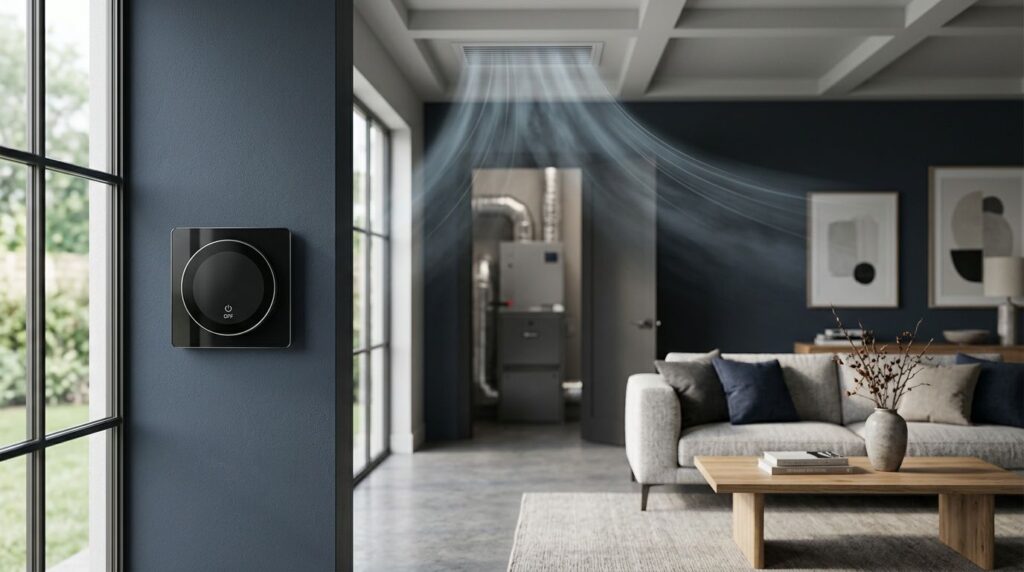
You turn the thermostat off, but the fan keeps blowing. That can feel like the system is ignoring your commands, especially when the house is already comfortable and the unit has been working hard all afternoon. Finding an AC fan running after shutdown is a common source of frustration for homeowners who just want their system to power down completely.
Sometimes, having your AC fan running after shutdown is perfectly normal behavior for your cooling system. Other times, it points to a thermostat setting, a stuck relay, or an electrical problem that needs professional attention. The first step in troubleshooting this issue is figuring out whether the indoor blower or the outdoor condenser fan is the one still running.
Key Takeaways
- Distinguish between fans: Indoor blowers often have a normal “fan-off” delay after a cycle, but an outdoor condenser fan that remains on after the thermostat is off usually indicates a mechanical or electrical issue.
- Check your thermostat: Before calling for repairs, ensure your thermostat fan setting is set to “AUTO” rather than “ON,” as the latter forces the blower to run continuously.
- Identify potential failures: Persistent fan operation often points to a stuck contactor in the outdoor unit, a faulty control board, or an electrical wiring problem that requires professional diagnosis.
- Prioritize safety: Never attempt to inspect or remove panels from high-voltage electrical components yourself; always contact a qualified technician to troubleshoot and repair electrical faults.
First, Identify Which Fan Is Still On
Central air conditioning systems rely on a central AC fan setup that involves two distinct components. The indoor blower moves conditioned air through your vents, while the outdoor condenser fan pulls air through the unit outside to release heat.
Those fans do not always follow the same rules.
The indoor blower may run briefly by design
When a cooling cycle ends, the indoor blower can continue for a short time. This is called a fan-off delay. It uses the cool air still sitting around the evaporator coil instead of leaving it trapped inside the equipment.
A blower that runs for a minute or two after the cooling cycle stops is usually not a concern. It may even help with efficiency and comfort.
The situation changes if the blower runs for 20 minutes, never shuts off, or keeps moving warm and humid air through the house.
A brief indoor fan delay is common. A condenser fan that keeps running long after the system shuts down deserves a closer look.
The outdoor fan should usually stop with the cooling system
The condenser fan and compressor normally operate together during a cooling call. Once the thermostat reaches the set temperature, the outdoor unit and the compressor should both shut down.
Some systems may have a short programmed delay. Still, a condenser fan that runs continuously after the thermostat is off can point to a stuck contactor, failed control board, or a wiring issue.
Don’t reach into the unit or remove the electrical panel. The outdoor equipment uses high voltage, even when it appears to be off.
Check the Thermostat Fan Setting Before Assuming the Worst
The simplest answer is often sitting on the thermostat screen. Most units allow you to adjust the thermostat fan setting between options marked AUTO and ON.
When the fan is set to ON, the indoor blower runs almost continuously. The compressor will still cycle on and off as needed to reach your desired temperature, but the blower keeps circulating air between cooling cycles.
Switch your fan to the auto position and wait a few minutes. If the blower stops after its normal delay, the system may be working exactly as it should. If your fan won’t stop, ensuring your device is in the auto position is the first step toward troubleshooting the issue.
This setting can get changed by accident during a routine adjustment. It often happens after a power outage, a battery change, or when someone is learning how to navigate a new smart thermostat or a complex digital thermostat. If you have recently upgraded your hardware, double check that your fan is currently in the auto position to avoid unnecessary energy consumption.
Why some homeowners choose the ON setting
Continuous fan operation can help even out temperatures in a house with hot bedrooms or weak airflow. It may also keep air moving through the filter more often.
There are tradeoffs, though. During humid West Alabama weather, a nonstop blower can sometimes bring moisture back into the air before the evaporator coil has time to drain and dry.
For most homes, AUTO is the better everyday setting. We can look at airflow, duct layout, and thermostat placement if certain rooms stay uncomfortable.
Common Reasons an AC Fan Keeps Running
Once the thermostat setting is ruled out, the next question is whether the equipment is receiving a signal to stay on. Several parts can cause that problem.
A stuck contactor can keep the outdoor unit powered
The contactor is an electrical switch inside the outdoor condenser. It receives a low-voltage signal from the thermostat and sends power to the compressor and fan.
Over time, the contactor’s metal contacts can pit, overheat, or weld together. When that happens, the outdoor unit may keep running after the thermostat has stopped calling for cooling.
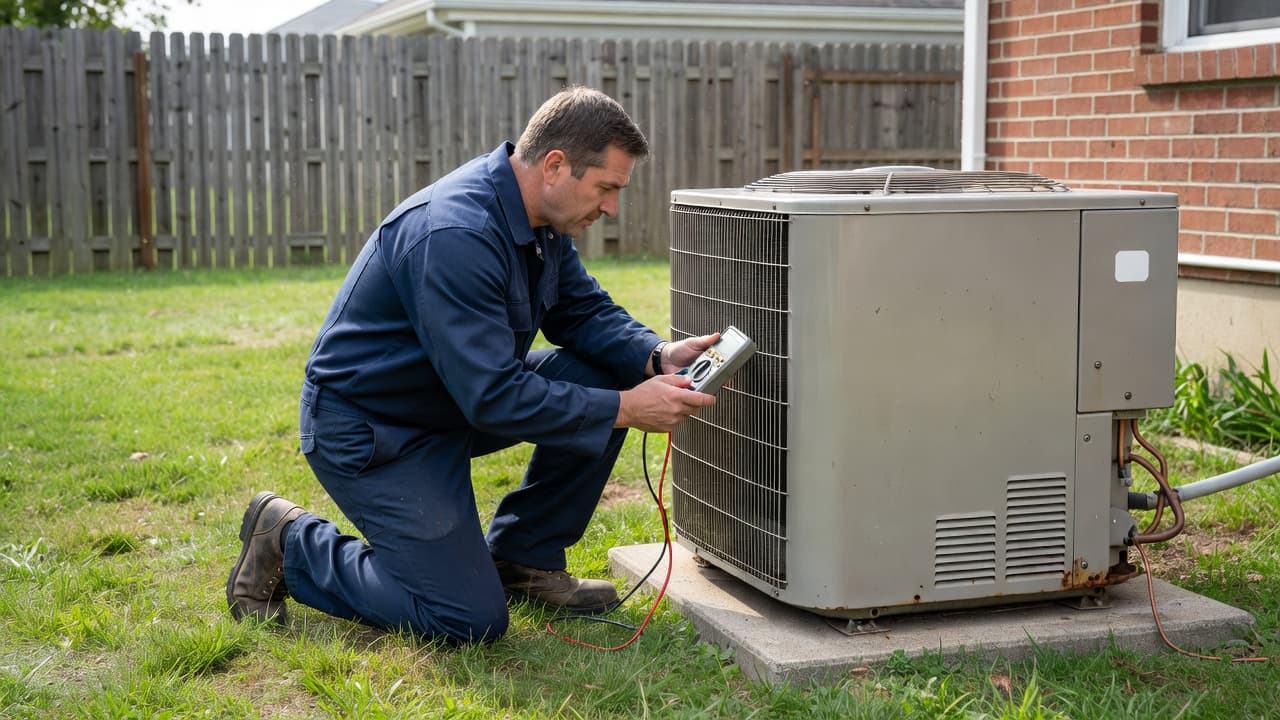
This isn’t a repair to guess at. A technician needs to test the control voltage and inspect the contactor safely. Replacing the wrong part can leave the real issue unresolved.
A bad relay or control board may hold the blower on
The indoor blower motor relies on relays and a control board to turn on and off. A stuck relay switch can remain in the closed position, keeping the fan motor energized. Additionally, a faulty fan limit switch may prevent the system from cycling off correctly.
This problem is more common in older equipment, but it can happen on newer systems too. A control board may also fail after a power surge, lightning event, moisture issue, or damaged wiring connection.
If the indoor fan runs even with the thermostat set to OFF, the thermostat itself may not be the cause. We need to test the control board instead of replacing parts based on a hunch.
Thermostat wiring can send the wrong signal
A loose wire, damaged insulation, or a faulty thermostat can create a constant fan call. This wiring issue can happen after a thermostat replacement or remodeling work near low-voltage wiring. In some cases, a short circuit in the wall can mimic a call for cooling.
Smart thermostats need compatible wiring and proper setup. Some systems need a C-wire or an adapter to provide steady power. Without the right connection, the thermostat can behave in odd ways.
We see this often when a homeowner installs a new thermostat during summer and the fan starts acting differently afterward.
A variable-speed system may behave differently
Some high-efficiency systems use variable-speed blower motors. These units may run at a very low speed for longer periods to circulate air, manage humidity, or meet programmed comfort settings.
That doesn’t mean every long fan cycle is normal. If the blower used to shut off and now runs constantly, something changed. We should compare the system’s current behavior with its normal operation and manufacturer settings.
A heat pump can have its own control issues
Heat pumps provide both heating and cooling, so they have extra controls and wiring. A fault in the defrost board, reversing valve circuit, or thermostat setup can affect how the fans operate.
If your heat pump blows cool air or the outdoor fan runs at the wrong time, skips cycles, or comes with unusual noise, schedule service. Heating and cooling equipment works as a system. A fan issue can be tied to more than one component.
Safe Checks We Can Make Before Calling for Service
We don’t need to take panels off or touch wiring to gather useful information. A few simple checks can help us describe the problem clearly when we schedule service.
- Set the thermostat to OFF. Then, ensure the fan option is set to the auto position rather than the ON setting. Wait several minutes to see whether the indoor unit completes a normal shutdown delay.
- Look at the outdoor unit from a safe distance. Check whether the fan is spinning, whether you hear the compressor, and whether the system is making a loud buzz or electrical hum.
- Check the air filter. A badly clogged filter won’t usually cause the blower fan to run after shutdown, but it can create airflow problems that make the entire system work much harder.
- Notice what changed before the issue began. A recent thermostat installation, storm, power outage, tripped breaker, or maintenance visit can help narrow down the cause.
- Watch for water, ice, or odors. Water near the indoor unit, ice on refrigerant lines, or a musty smell may point to another problem that needs professional service.
Avoid flipping breakers on and off repeatedly. That won’t fix a stuck control or relay, and repeated cycling can create more stress on sensitive electrical components.
When a Fan Problem Needs Same-Day AC Repair
A fan that runs longer than usual is not always an emergency. Still, some symptoms mean we should not wait for a routine appointment.
Call for professional AC repair services if we notice smoke, sparking, a burning smell, severe buzzing, or a breaker that keeps tripping. Shut the system off at the thermostat. If there is an immediate electrical hazard, turn off the HVAC breaker only if it is safe to do so.
We should also act quickly when the outdoor unit keeps running while the home is not cooling. A stuck contactor can keep the compressor running until it overheats or fails. If the compressor continues to run without pause, it may lead to permanent damage.
For homes with infants, older adults, pets, or residents with heat-sensitive health concerns, no cooling during extreme temperatures in Northport or Tuscaloosa can become urgent fast.
Northport HVAC provides 24/7 help across Northport, Tuscaloosa, Coker, Samantha, and nearby West Alabama communities. Every HVAC professional on our team can test the thermostat, wiring, electrical controls, fan motor, and system operation without guesswork.
We give clear upfront pricing before repairs begin. If a repair makes sense, we explain the failed component and the work required. If the equipment has repeated problems, we can compare repair and replacement honestly.
Preventing Fan and Control Problems
Consistent HVAC maintenance cannot prevent every electrical failure, but it provides a valuable opportunity to catch worn parts before they leave your system running when it should be powered down.
During a seasonal tune-up, we inspect electrical connections, contactors, capacitors, control boards, blower operation, and overall system performance. We also check the evaporator coil, condensate drain, filter condition, and airflow to ensure everything is running efficiently.
Keeping your outdoor unit free of leaves, grass clippings, mulch, and stored items also matters. The system needs adequate clearance to move heat away from your home during a long Alabama summer.
For landlords and property managers, a pre-season inspection helps reduce surprise calls when tenants need Tuscaloosa air conditioning the most. A short visit before peak heat arrives is much easier to manage than dealing with a cooling system that will not shut down on a busy July weekend.
Frequently Asked Questions
Is it normal for my AC fan to stay on after the cooling stops?
It is perfectly normal for the indoor blower to run for a minute or two after the cooling cycle ends, as this allows the system to utilize remaining cool air. However, if the fan continues to run indefinitely or if the outdoor unit does not turn off, it indicates an underlying problem.
Can a wrong thermostat setting cause the fan to run constantly?
Yes, if your thermostat fan setting is set to “ON” instead of “AUTO,” the indoor blower will operate continuously even when the cooling cycle is not running. Simply switching the setting to “AUTO” often resolves the issue and prevents unnecessary energy consumption.
What should I do if my outdoor AC unit won’t stop running?
If the outdoor condenser unit continues to run after the thermostat is turned off, this may be a sign of a stuck contactor or a control board failure. You should shut off the system at the thermostat and contact a professional technician, as this can lead to compressor damage if left unaddressed.
Should I turn off the power at the breaker if the fan won’t stop?
If you smell burning, see smoke, or notice the system is acting dangerously, you may turn off the HVAC breaker if it is safe to do so. Otherwise, it is best to avoid cycling the power repeatedly, as this can stress sensitive electrical components while you wait for a service professional.
A Fan That Won’t Stop Is Worth Checking
An indoor blower that runs briefly after a cooling cycle ends may be perfectly normal. However, a fan that runs endlessly, blows warm air, trips circuit breakers, or keeps the outdoor unit operating is not something we should ignore.
The key is knowing which fan is running and whether the thermostat is still calling for it. Always verify that your thermostat is set to the auto position, as this simple step often resolves the issue. That small detail helps separate a normal fan delay from a deeper control problem that requires professional AC repair services in Northport AL.
A properly working system should cool the house, drain moisture, and shut down completely when the job is done. If you notice persistent issues despite checking your settings, it is best to consult an HVAC professional to diagnose the root cause and ensure your system is running efficiently.