AC Contactor Failure Signs and Repair Options
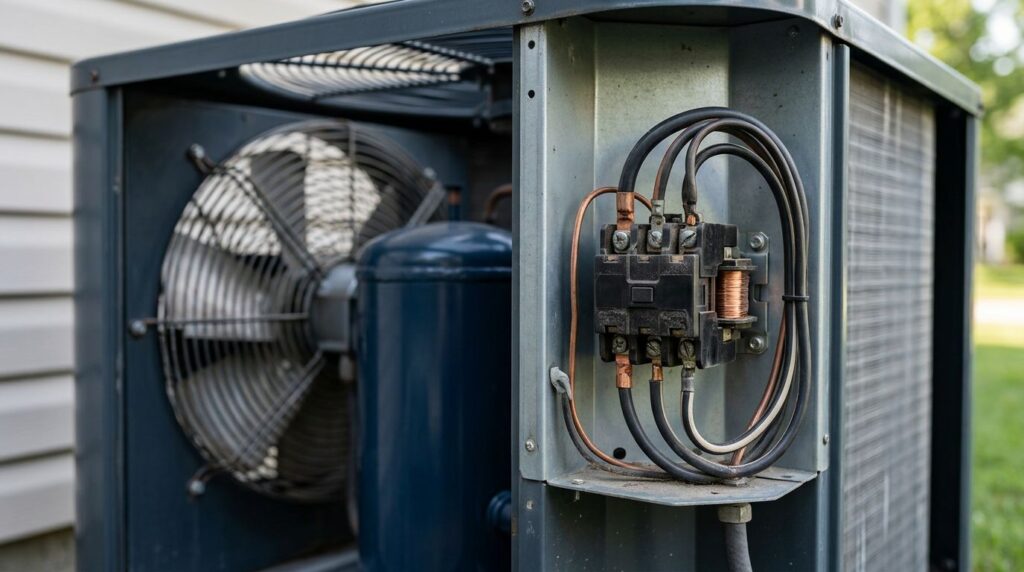
Your thermostat can call for cold air while the outdoor unit never starts. The clearest AC contactor failure signs include repeated clicking, a silent condenser, warm air indoors, or an outdoor unit that won’t shut off.
A failing contactor often looks like a bigger problem at first. Because capacitors, breakers, thermostats, wiring, and compressors can cause similar symptoms, a measured diagnosis protects both your budget and your equipment.
The Small Switch That Starts Outdoor Cooling
An AC contactor is a heavy-duty electrical relay inside the outdoor condenser. It controls the line voltage that powers the compressor and condenser fan when your thermostat calls for cooling.
What happens during a cooling call
When the thermostat senses that your home is too warm, it sends a low-voltage signal to the contactor coil. The energized coil pulls internal metal contacts together, which lets power reach the outdoor equipment.
Once the thermostat reaches its setting, the signal stops. The contactor releases, and the outdoor unit shuts down.
That switch makes countless cycles during an Alabama cooling season. Over time, normal electrical arcing can wear the contact surfaces.
Why contactors wear out or stick
Pitted contact surfaces, loose wire connections, overheating, insects, dirt, and a weak coil can all affect a contactor. A damaged contactor may fail to close, fail to open, or pass inconsistent voltage to the equipment.
Electrical contactor manufacturers identify pitting, overheating, frequent cycling, and failure to engage as common contactor warning signs. Still, the contactor may only be reacting to another fault, such as weak control voltage or a damaged wire.
AC Contactor Failure Signs That Deserve Attention
The outdoor unit’s behavior usually gives the best clues. These AC contactor failure signs don’t prove which part failed, but they help explain why professional testing matters.
The condenser stays silent or starts unpredictably
If the indoor blower runs but the outdoor condenser does not, the contactor may not be closing. You might also notice the system works one afternoon, then fails again during the next heat cycle.
Watch for these patterns:
- The thermostat is set to cool, yet the outdoor unit never starts.
- The condenser begins after several tries, then shuts off unexpectedly.
- You hear repeated clicking or chattering from the outdoor cabinet.
- The house receives warm air even though the indoor blower keeps running.
- The outdoor unit continues operating after the thermostat has stopped calling for cooling.
A bad capacitor, a tripped breaker, a failed control board, or compressor trouble can create some of the same symptoms. A contactor issue has a recognizable pattern, but it doesn’t have a safe DIY shortcut.
Buzzing, heat, and visible damage around the unit
A loud buzz or chatter can happen when the contactor coil struggles to hold the contacts closed. If the cabinet smells hot or electrical, turn the cooling system off at the thermostat and arrange service.
A technician may find blackened terminals, melted insulation, charring, or worn contact faces. The pitting and heat damage shown in common bad contactor symptoms can raise electrical resistance and create more heat during operation.

Photo by José Andrés Pacheco Cortes
Safe Checks Before Scheduling Service
You can gather useful details without removing any panels or touching electrical components. These observations help us narrow the diagnosis when you call.
Record what the system is doing
Start with a few basic checks:
- Confirm that the thermostat is set to “cool” and below the current indoor temperature. Set the fan to “auto” unless you have a reason to run it continuously.
- Replace a gray, matted, or overdue air filter. A new filter won’t repair a contactor, but restricted airflow can cause other cooling problems.
- Stand clear of the outdoor unit and listen for clicking, buzzing, grinding, or a fan that starts without cooling.
- Note when the issue occurs. Intermittent failure during the hottest part of the day is helpful information for the technician.
Don’t remove the condenser access panel or press the contactor manually. The cabinet contains high voltage, and capacitors can retain an electrical charge after power stops.
Conditions that call for urgent help
Stop operating the system if you smell burning, hear a loud persistent buzz, see smoke, or notice visible sparking. Stay away from the unit and call 911 if there is smoke or fire.
When indoor temperatures are rising quickly, young children, older adults, pets, or tenants may need relief fast. In those situations, same-day air conditioning service can provide a safer path than repeated restarts. Emergency AC repair also makes sense when the system has fully stopped during severe heat.
How Local HVAC Technicians Confirm a Bad Contactor
A reliable diagnosis starts with testing the entire control path, not replacing the first part that looks worn. Our local HVAC technicians check how the thermostat, low-voltage circuit, disconnect, capacitor, contactor, fan, and compressor work together.
Testing the controls before replacing parts
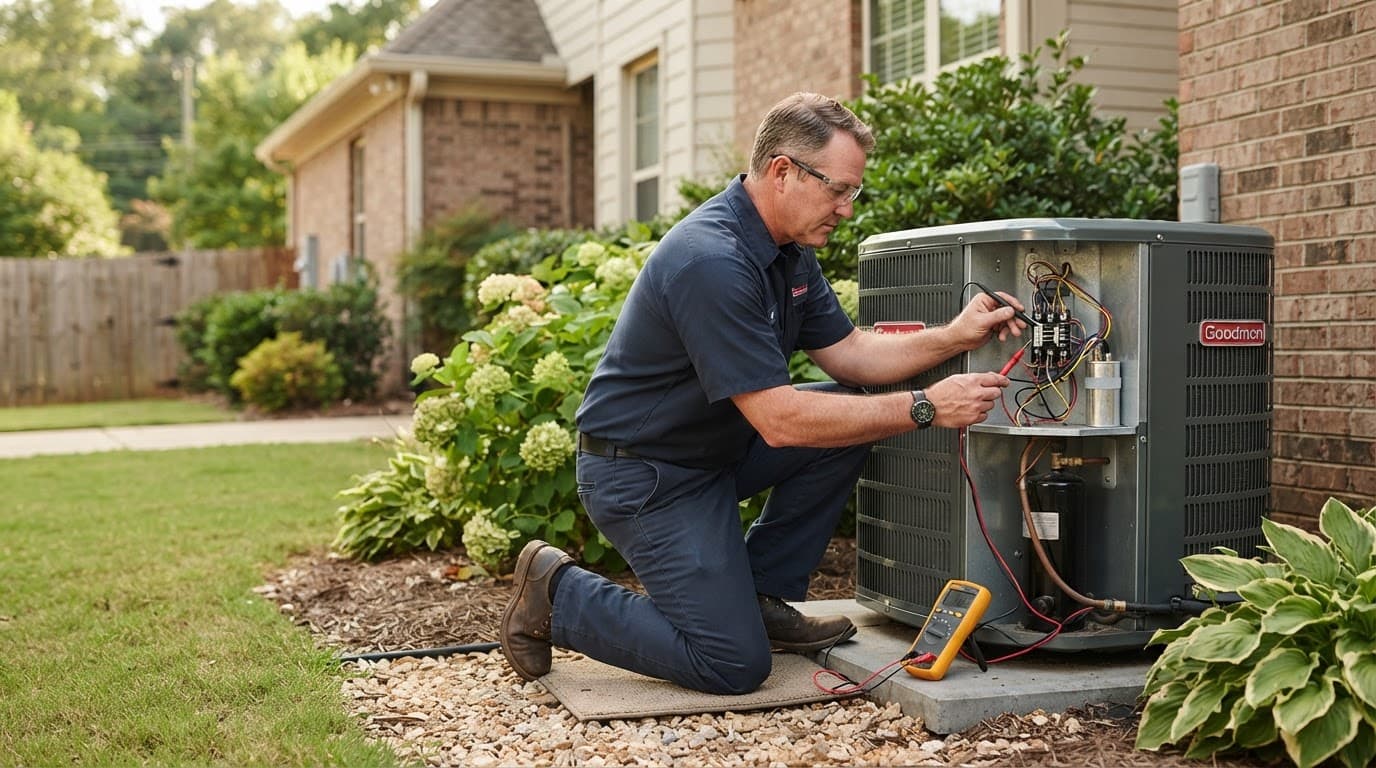
After making the equipment safe, a technician inspects the contactor, wiring, terminals, fuses, and disconnect. They then verify whether the contactor receives the low-voltage signal and whether it closes correctly.
If the coil gets the correct signal but won’t pull in, the contactor may have failed. If it closes but does not pass power through worn contacts, replacement is often appropriate. No signal at the coil points attention upstream to the thermostat, transformer, safety switch, or control wiring.
The electrical precautions used for this work match the hazards described in central HVAC contactor replacement training. High-voltage diagnosis belongs with trained professionals.
Matching the repair to the actual fault
We don’t treat AC contactor failure signs as a parts list. A repair may involve replacing the contactor, securing a damaged connection, correcting a control-voltage issue, or addressing a failed capacitor.
At Northport HVAC, our licensed, insured, NATE-certified team services Trane, Carrier, Rheem, Lennox, Goodman, and Mitsubishi systems. For homeowners who need AC repair in Northport and Tuscaloosa, we explain the failed part, the repair options, and the upfront price before work begins.
Repair Choices and Prevention After a Contactor Failure
A burnt or stuck contactor usually calls for a component repair, not an automatic system replacement. The right contactor must match the unit’s electrical requirements, coil voltage, and wiring configuration.
When replacing the contactor makes sense
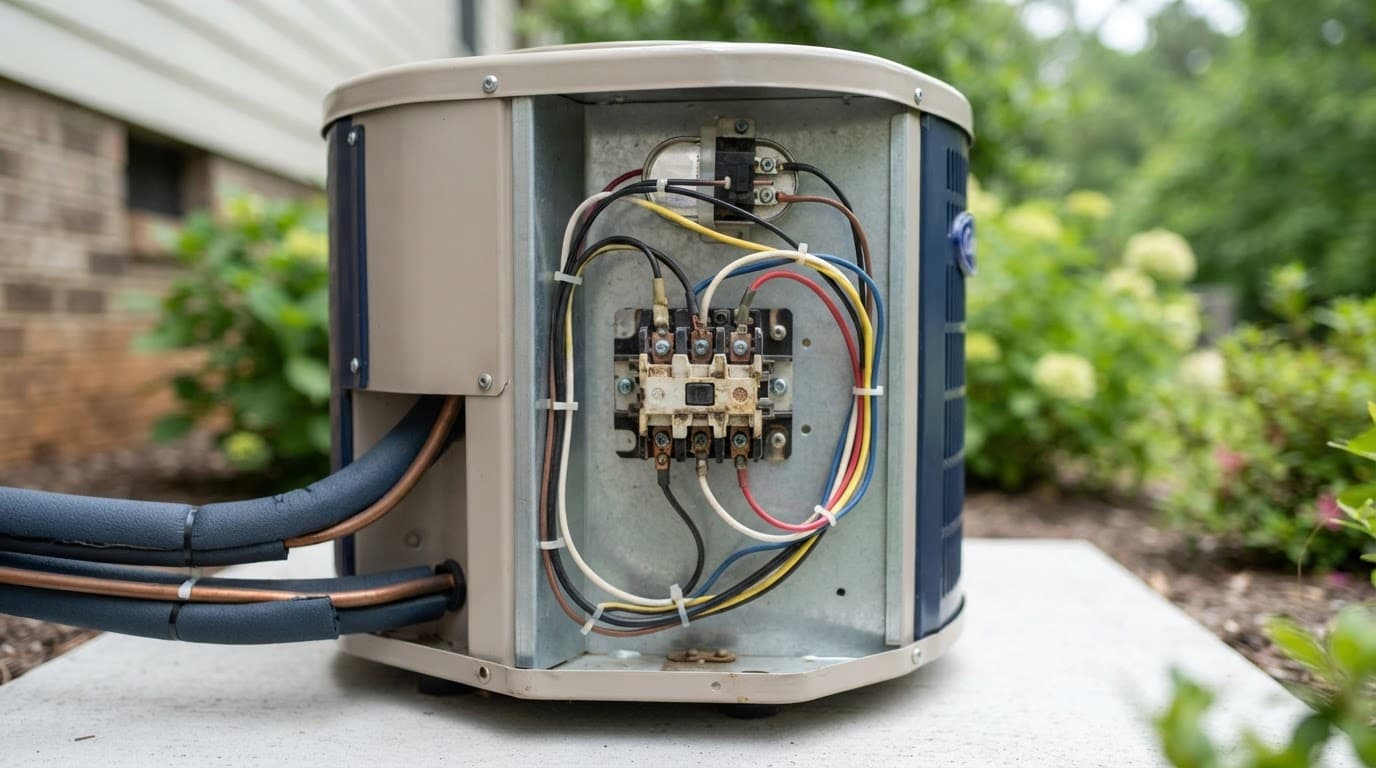
Contactor replacement is often practical when the compressor, fan motor, refrigerant circuit, and control system test normally. The technician removes the failed part, installs a compatible replacement, checks the connections, and verifies a normal cooling cycle.
A loose terminal may need repair as well, but the cause of that heat must be addressed. Replacing only the visible damaged piece can lead to another failure if voltage issues, damaged wiring, or moisture remain.
When the decision goes beyond one part
A Tuscaloosa air conditioning system with repeated no-cooling calls may have several problems at once. Compressor damage, refrigerant issues, deteriorated wiring, or frequent repairs can justify a broader repair-versus-replacement conversation.
Routine heating and cooling maintenance helps catch worn electrical connections before they become a no-cooling call. We inspect accessible wiring, contactors, coils, drains, airflow, and cabinet condition during a tune-up.
Keep leaves, mulch, and vegetation away from the outdoor unit. However, don’t pressure-wash the condenser or open internal panels. Gentle exterior care and regular service reduce stress without creating new damage.
A Clear Diagnosis Protects Your System
West Alabama heat can make a clicking or silent outdoor unit feel like an emergency. Still, a contactor is only one part of a connected system.
A failed contactor is often a manageable repair when the rest of the equipment tests well. Watching for AC contactor failure signs, recording the system’s behavior, and calling for a proper diagnosis can keep a small electrical repair from turning into a larger interruption.