Heat Pump Blowing Cool Air? Find the Cause Fast
A heat pump can feel different from a furnace, but it should not blow cold air when running in heat mode. If you have a heat pump blowing cool air, the cause may be simple thermostat settings, a normal defrost cycle, or a problem that needs a technician.
The big clue is timing. Does the air turn cool for a few minutes, or has it stayed cool while the house temperature keeps dropping? That difference helps narrow the issue quickly.
Start with the easy checks, then watch for the signs that mean it is time to stop troubleshooting and schedule service.
Key Takeaways
- Heat pump supply air is usually warmer than room temperature, but it may not feel furnace-hot at the vent, meaning you might not always feel warm air right away.
- A brief cool-air period can be normal when the outdoor unit enters defrost mode.
- A thermostat set to “Fan On” can circulate unheated air between heating cycles.
- A clogged air filter, blocked returns, low refrigerant, and outdoor-unit problems can all leave a heat pump blowing cool air.
- If the system will not warm the house, keeps icing up, or trips breakers, turn it off and call for professional heat pump service.
Why a Heat Pump Blowing Cool Air Is Not Always a Breakdown
A heat pump does not create heat through combustion like a gas furnace. When operating in heating mode, it pulls heat from the air outside and moves it indoors, even when the outdoor temperature drops significantly.
That process makes the air at your vents feel less intense than traditional furnace heat. The air coming out of a working heat pump often feels closer to human body temperature rather than the scorching heat you might expect.
The real test is whether your home temperature rises and holds at the thermostat setting. If it does, the system may be operating normally even if the vent air feels different than you expected.
There is one other normal situation that catches homeowners off guard: defrost mode. When frost builds on the outdoor coil, the system briefly reverses itself to melt it. During that cycle, the indoor air may feel cool unless the auxiliary heat comes on.
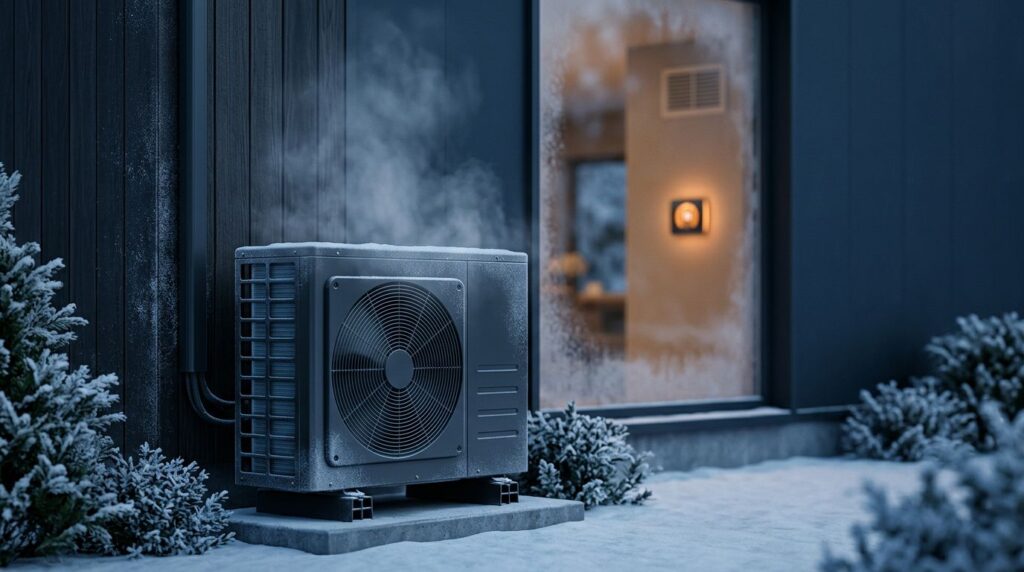
You may also see steam rising from the outdoor unit. That is usually water vapor, not smoke. Defrost should end after several minutes. If cool air continues long after the outdoor coil has cleared, something else is likely going on.
Check These Settings Before Calling for Heat Pump Service
A few safe checks can solve the problem or give us a better starting point. Do not remove electrical panels or attempt repairs inside the outdoor unit.
Set the thermostat correctly
Confirm your thermostat settings are correct, ensuring the system is set to “Heat,” not “Cool” or “Emergency Heat.” Set it several degrees above the current room temperature, then give the system time to respond.
Next, check the fan setting. It should usually be on “Auto.”
When the fan is set to “On,” the blower runs even when the heat pump is not actively heating. That pushes room-temperature air through the vents, which can feel chilly in winter.
If your thermostat has an “Aux Heat” or “Emergency Heat” setting, do not leave it on as a daily workaround. Auxiliary heat often uses electric heat strips and can raise power use. It is better used when a technician recommends it or when the heat pump itself cannot operate.
Look at the filter and airflow
A dirty air filter can create more trouble than most people expect. It restricts airflow across the indoor coil, which can lead to poor heating, icing, high system strain, and safety shutoffs.
Pull the air filter out under good light. Replace it if it looks gray, packed with pet hair, damp, or overdue. For many homes, a standard pleated filter changed regularly works better than a very dense filter left in place for months.
Walk through the home too. Open the supply vents in rooms you use, and make sure curtains, rugs, or furniture are not covering return grilles. A large sectional pressed against a return can choke airflow all day.
Check the outdoor unit without opening it
Your outdoor unit needs room to breathe. Shut off nothing and remove no panels, but clear leaves, mulch, pine straw, and loose debris from around the cabinet.
A light layer of frost can be normal in winter. A outdoor unit covered in heavy ice buildup is not. Do not chip ice away with a tool or pour hot water on the equipment. You can bend coil fins, damage wiring, or create another freeze when temperatures drop.
Common Mechanical Reasons Heat Pumps Blow Cool Air
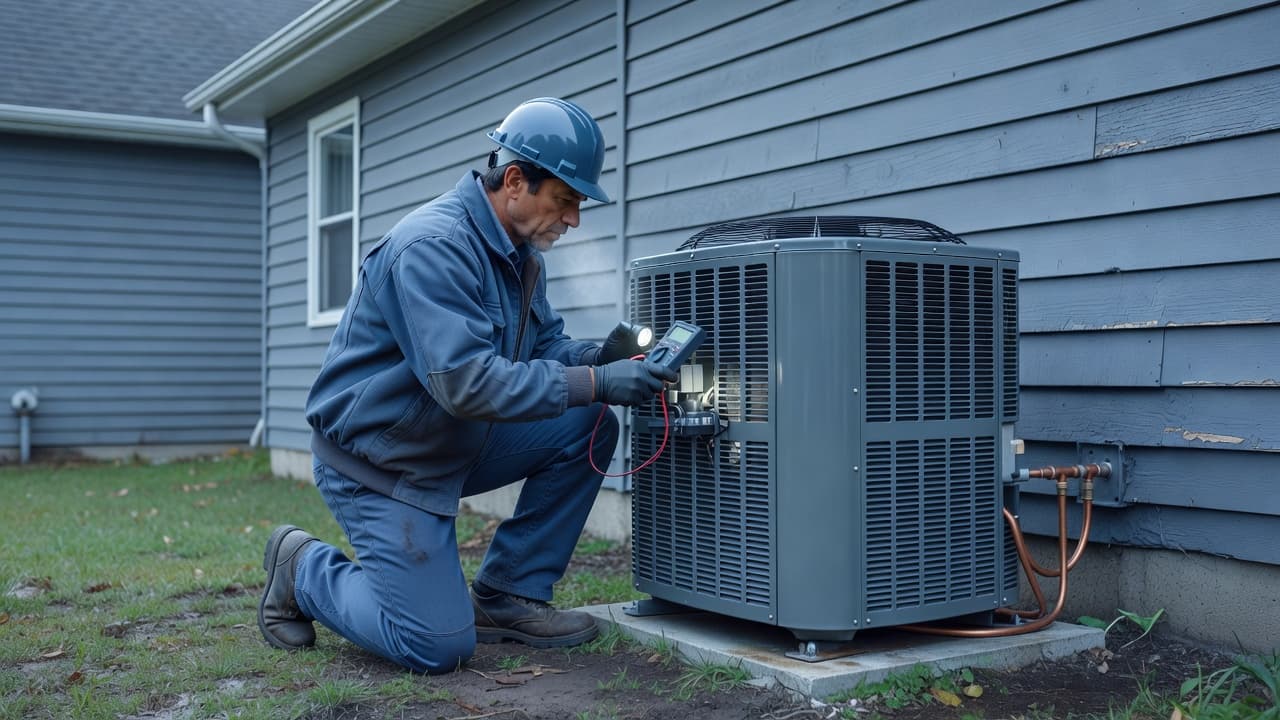
Once the thermostat, filter, and visible airflow checks are ruled out, the issue often needs a proper diagnosis. Heat pumps use electrical controls, refrigerant, reversing valves, coils, and motors that all have to work together.
Low refrigerant or a refrigerant leak
Refrigerant carries heat through the system. If the level is low, a refrigerant leak may be present, which prevents the heat pump from collecting and moving enough heat indoors and places added strain on the compressor. You may notice longer run times, weak heating, ice on refrigerant lines, or rooms that never reach the thermostat setting.
A heat pump does not use up refrigerant like fuel. Low refrigerant usually points to a leak or an installation-related issue. Adding refrigerant without finding the cause can turn a temporary fix into a repeat problem.
A reversing valve stuck in the wrong position
The reversing valve changes the system between cooling and heating. If it sticks or fails, the equipment may stay in cooling mode even though the thermostat says “Heat.”
This is one reason a reversing valve that fails to shift properly needs more than a quick glance at the thermostat. Diagnosing this issue involves pressure readings, electrical testing, and checking the system’s operation under load.
Defrost controls or sensors are failing
The outdoor coil needs to defrost at the right time. If a sensor, control board, or defrost component fails, the unit can ice over and lose heating capacity.
A frozen outdoor coil blocks airflow much like a winter coat wrapped around the unit. The system may keep running, but it cannot pull enough heat from outside air.
A heat pump that repeatedly freezes is not asking for more runtime. It is telling you that airflow, refrigerant performance, or defrost operation needs attention.
Auxiliary heat is not coming on
Most heat pumps have backup heat, often provided by auxiliary heat strips. These strips help during defrost cycles and colder weather, when the heat pump alone cannot keep up.
A failed heat strip, breaker, relay, sequencer, or thermostat wire can leave the blower running with cool air, in which case an HVAC technician should inspect the internal heating elements. We see this often when a system seems almost normal until the first hard cold snap.
Electrical or motor trouble
A failing capacitor, contactor, blower motor, control board, or loose electrical connection can produce inconsistent heating. The system may start, stop, run the fan without heat, or trip a breaker.
Do not keep resetting a breaker that trips again. Turn the system off and arrange service. Electrical faults can damage other components if the equipment continues trying to run.
When Cool Air Means You Should Turn the System Off
Some symptoms call for a faster response. Continuing to run a struggling heat pump can worsen the repair and leave you without heat when you need it most.
Turn the thermostat off and call for service if you notice:
- Thick ice buildup covering the outdoor coil or refrigerant lines.
- Burning smells, buzzing, grinding, or loud banging.
- A circuit breaker that trips more than once.
- Water pooling around the indoor air handler.
- Cold air that continues for more than one defrost cycle.
- A home temperature that keeps falling despite a call for heat.
For a rental property, act before a tenant loses heat overnight. We provide emergency heating repairs throughout Northport, Tuscaloosa, Coker, Samantha, and nearby West Alabama communities.
Northport HVAC works on Trane, Carrier, Rheem, Lennox, Goodman, and Mitsubishi mini-split equipment. Our licensed, insured, NATE-certified team checks the actual cause before recommending a heat pump repair. You should know what failed, what the repair involves, and what it costs before work begins.
For scheduled repairs, tune-ups, and system concerns, see our heat pump service in Northport. We bring the same straightforward approach to heating calls that homeowners expect for AC repair in Northport AL, Tuscaloosa air conditioning service, and emergency AC repair.
Keep Heat Pump Problems From Returning
Routine preventive maintenance gives us time to check the parts that commonly cause winter comfort problems. We inspect thermostat operation, electrical connections, airflow, coil condition, refrigerant-related performance, drains, safety controls, and defrost operation.
Checking your air filter regularly between visits matters just as much for comfort and energy efficiency. Pets, renovation dust, household size, and run time all affect how quickly a filter loads up. Check it often instead of relying on one fixed replacement date.
Keep the outdoor unit clear and avoid closing multiple vents around the house. If one distant bedroom stays cold while the rest of the home warms up, the ductwork may need attention too. Loose connections, crushed flex duct, and long attic runs can leave warm air short of the room that needs it.
Reliable heating and cooling is not about guessing at one part. It comes from checking the whole system, then fixing the actual issue.
Frequently Asked Questions
Why is my heat pump blowing cool air?
A heat pump may blow cool air briefly during its normal defrost cycle or if the thermostat fan setting is left on “Fan On” rather than “Auto.” A clogged air filter, low refrigerant, or a stuck reversing valve can also cause the system to deliver unheated air.
Is it normal for a heat pump to feel less hot than a furnace?
Yes, heat pumps extract heat from the outside air and typically deliver air closer to human body temperature rather than the scorching heat produced by gas furnaces. The true test of your system is whether your home reaches and holds the temperature set on your thermostat.
When should I turn off my heat pump and call a technician?
You should turn off your heat pump and schedule professional service immediately if you notice thick ice buildup on the outdoor unit, burning smells, repeated circuit breaker trips, or if cold air continues for more than one defrost cycle.
Warm Air Should Return Without the Guesswork
A heat pump can deliver gentler heat than a furnace, but it should still keep your home comfortable. Brief cool air during defrost can be normal. Cool air that lingers, ice that returns, or a thermostat that never reaches its setting is not.
A clean filter and correct thermostat settings are worth checking first. After that, a proper diagnosis is the fastest way to get dependable heat back in your home.