Why Your Air Conditioner Won’t Turn On and What to Check
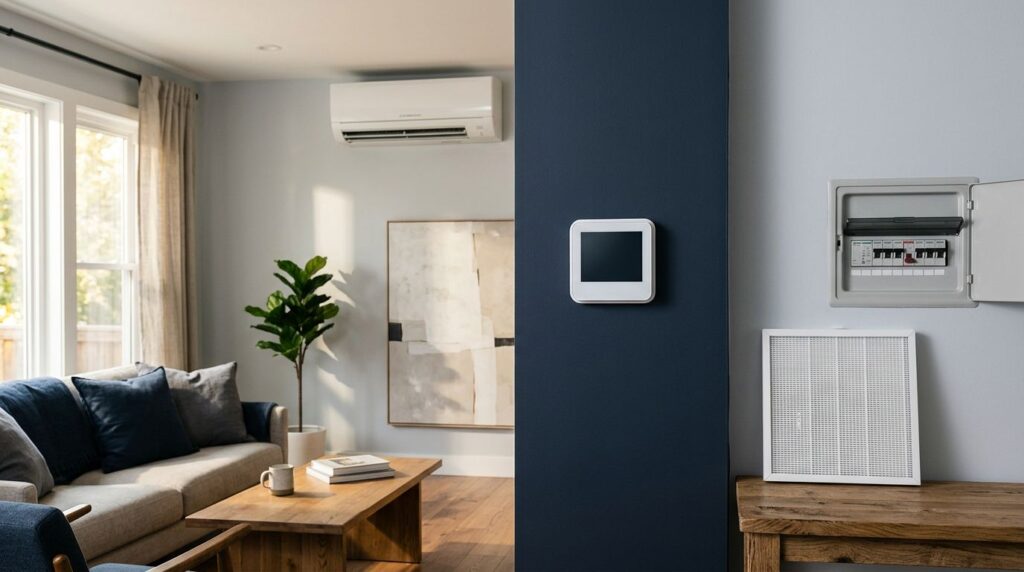
Nothing gets your attention like an AC system that does nothing when the house is already warm. If your air conditioner won’t turn on, the cause may be as simple as a thermostat setting or a tripped breaker. It can also point to an electrical, drainage, or equipment problem that needs a technician.
Start with the safe troubleshooting steps below. Don’t keep resetting a system that trips breakers, smells hot, or makes loud noises. That can turn a repairable issue into a larger one.
Key Takeaways
- Start troubleshooting an air conditioner that won’t turn on by checking basic settings like thermostat configurations, batteries, and the electrical circuit breaker.
- Inspect for common airflow restrictions, such as a clogged air filter or blocked return grilles, which can cause the system to freeze or shut down via safety controls.
- Avoid repeatedly resetting a tripped circuit breaker, as this can indicate a more serious electrical fault, failing compressor, or shorted motor.
- Professional help is required for complex issues like failed capacitors, faulty contactors, clogged condensate drain lines, and refrigerant leaks.
- Immediate emergency repair should be called if you notice burning odors, loud mechanical noises, repeated breaker trips, or visible ice on the system.
Why an Air Conditioner Won’t Turn On
An air conditioner needs several parts to work in the right order. The thermostat has to call for cooling. A reliable power supply must reach the indoor and outdoor units. Every safety switch must stay closed. Then the blower motor, capacitor, contactor, and compressor need to respond.
That chain gives us a useful place to start. If the thermostat screen is blank, think power or batteries. If the thermostat works but no equipment responds, check breakers and the outdoor disconnect. If the indoor blower runs but the condenser unit stays silent, the problem may be outside.
West Alabama heat puts equipment under heavy demand for long stretches. A dirty filter, blocked drain, weak electrical part, or worn contactor can show up fast during a hot Northport or Tuscaloosa afternoon.
The age of the system matters, but it isn’t the full story. A newer unit can stop because of a clogged condensate drain or bad capacitor. An older unit may have a failed motor, damaged wiring, or compressor trouble. Proper system diagnostics separate the easy fix from the expensive guess.
A running thermostat does not prove the air conditioner has power. The indoor and outdoor equipment may be on separate breakers or shutoff points.
Safe Checks When an Air Conditioner Won’t Turn On
A few homeowner troubleshooting steps can save time and help narrow down the issue. Stay outside electrical panels and equipment cabinets. Air conditioners use high voltage, and capacitors can hold a dangerous electrical charge after power is off.
Check thermostat settings, temperature, and batteries
Set the thermostat to “cool,” not “heat” or “off.” Lower the setting at least a few degrees below the current indoor temperature. If the fan setting is on “on,” switch it to “auto.” The “on” setting can make the blower run even when the cooling equipment is not operating.
Replace weak batteries if your thermostat uses them. A blank or dim screen is an obvious clue, but batteries can also cause an intermittent thermostat to lose its settings.
If you recently installed a smart thermostat, check that it has power and is connected to Wi-Fi only after confirming the basic cooling settings. A connection issue won’t stop every model from cooling, but a setup or wiring issue can.
Look at the electrical panel, tripped circuit breaker, and disconnect box
Find the electrical panel and look for a breaker labeled AC, air conditioner, condenser, or HVAC. A tripped circuit breaker may sit halfway between on and off. Push it fully to off, then turn it back on once.
Go outside and check the disconnect box mounted near the condenser. It should be in the on position. Do not open the panel or touch wiring inside it.
If the tripped circuit breaker happens again, stop there. Repeated trips can come from a failing compressor, damaged wire, shorted motor, or another electrical fault. Resetting it over and over is not troubleshooting.
Check the clogged air filter, returns, and visible outdoor debris
A completely packed clogged air filter can cause an airflow restriction strong enough to freeze the indoor evaporator coil. Some systems then shut down through a safety control. Replace a gray, matted, bowed, or overdue filter with the correct size and type.
Don’t assume the thickest filter is always better. A dense filter your system wasn’t designed to handle can reduce airflow. In many homes, a standard pleated filter changed on schedule works better.
Make sure supply vents are open. Move curtains, pet beds, storage bins, and furniture away from return grilles. A sectional pressed against a return can starve the system of airflow all day.
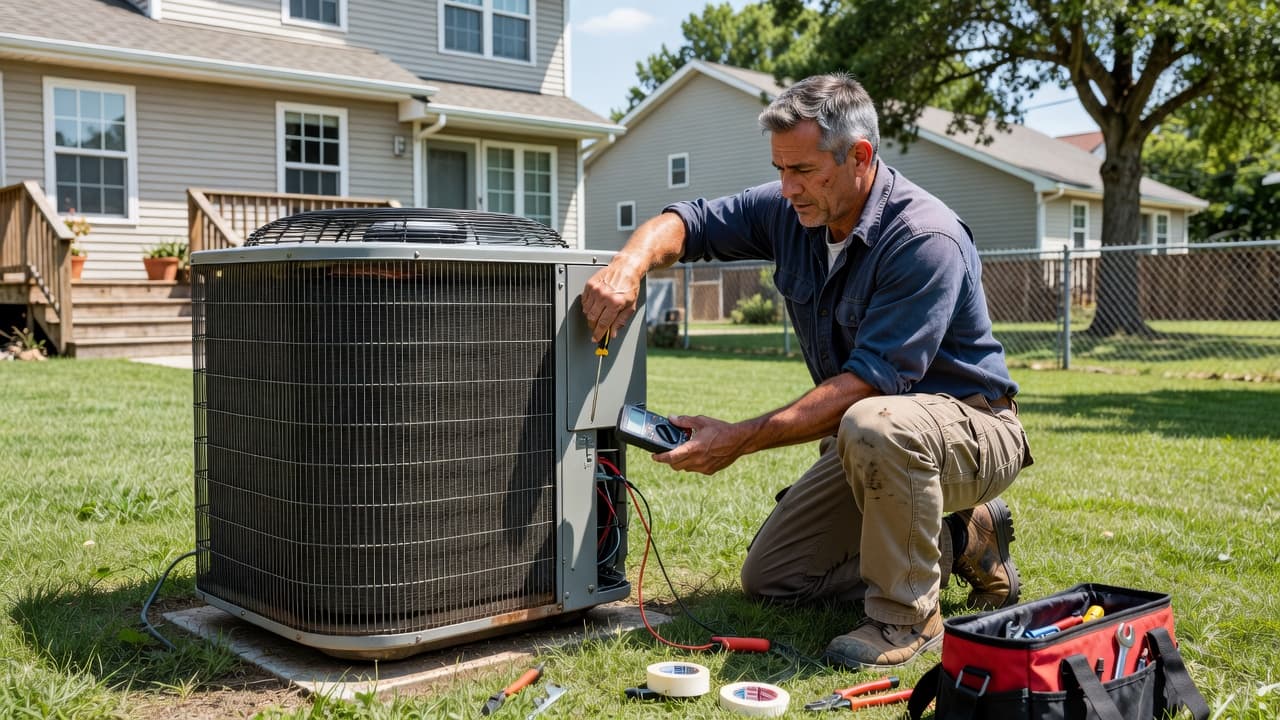
Outside, remove leaves, grass clippings, mulch, and stored items from around the condenser. Don’t use a pressure washer, and don’t remove the fan assembly. Thin aluminum fins bend easily, and internal parts are not a DIY cleaning project.
Equipment Problems That Need a Technician
When the safe checks don’t bring the system back, the failure is often inside the electrical or refrigerant-related parts of the system. This is where testing matters. Several problems can produce the same symptom.
| What you notice | Possible cause | What to do |
|---|---|---|
| Thermostat works, but nothing starts | Breaker, blown fuse, control board, or wiring problem | Arrange service if breakers and settings are normal |
| Indoor blower runs, outdoor unit is silent | Capacitor failure, contactor, disconnect, or condenser motor | Turn cooling off and schedule a diagnosis |
| Unit hums but fan will not start | Weak capacitor or failing fan motor | Shut it down to prevent motor damage |
| System starts, then stops quickly | Drain safety switch, electrical overload, or overheating | Avoid repeated restarts |
| Ice appears on the refrigerant line | Restricted airflow or a refrigerant leak | Turn cooling off and call for service |
A failed capacitor is common during peak cooling season. This part gives the compressor and fan motor the boost needed to start. The outdoor unit may hum, click, or remain completely quiet. Capacitors are not safe to handle without training, and dealing with a sudden capacitor failure requires professional help.
A contactor is another common culprit. It is an electrically controlled switch that sends power to the outdoor unit. Pitted contacts, insect damage, loose wiring, or a failed coil can stop the condenser from receiving power.
Drainage problems can also leave you wondering why the AC quit. As the system removes humidity, water should flow through the condensate drain line. If algae, dust, or slime blocks that drain line, water can back up. Many systems have a float switch that shuts cooling down before the pan overflows.
We also see frozen coils after filter neglect, closed vents, blower trouble, a potential compressor issue, or a refrigerant leak. Turn the system off if you see ice on the indoor coil area or a refrigerant leak on the copper tubing. Running a frozen system can damage the compressor.
For Tuscaloosa air conditioning problems that involve no cooling, weak airflow, ice, or repeat shutdowns, the symptom is useful, but it is not the diagnosis. A technician should check thermostat operation, electrical components, airflow, drain performance, coils, and refrigerant-related operation before recommending a repair.
Signs It’s Time for Prompt AC Repair
Some situations need more than a routine appointment. Protect the house and the equipment first.
Call for help without delay if you notice any of these signs:
- A tripped circuit breaker happens each time the AC tries to start.
- You smell burning plastic, hot wiring, or see smoke.
- The outdoor unit grinds, screeches, bangs, or buzzes loudly.
- Water is collecting around the air handler or dripping through a ceiling.
- Refrigerant lines or the indoor coil have visible ice.
- The home is occupied by young children, older adults, pets, or anyone who cannot safely tolerate indoor heat.
Turn the thermostat off if the system smells hot, trips power, or makes harsh mechanical noises. Leave the fan off if there is ice, since continued operation can add moisture and prolong the thaw.
For fast help, our page on same-day AC repair in Northport AL explains the service options available when cooling stops during hot weather. We provide professional AC repair that Northport AL homeowners, landlords, and property managers can understand, with clear findings and upfront pricing before repairs begin.
Emergency AC repair is the right call when there is an electrical hazard, water damage risk, or dangerous heat inside the property. A qualified HVAC professional should be called immediately when these warning signs appear, because a minor issue can wait only when the system is safe and the home remains reasonably comfortable.
Keeping the Next No-Start Call Away
Regular maintenance catches many causes of sudden failure before July heat exposes them. During a heating and cooling visit, we check electrical connections, capacitor condition, drain operation, coil cleanliness, blower performance, thermostat response, and overall system operation, and enrolling in a maintenance plan helps keep these checks on schedule.
Addressing a clogged air filter or a tripped circuit breaker early prevents bigger headaches down the road. Homes with pets, smokers, frequent visitors, or renovation dust often need more frequent checks. Inspect the filter monthly until you know how quickly it loads up.
Keep the condenser clear and keep returns open. Don’t close several supply vents to force air toward one room. That can raise pressure in the duct system and make airflow worse elsewhere.
When repairs are needed, look for an HVAC professional who explains what failed, how they tested it, and what the approved work includes. Northport HVAC services Trane, Carrier, Rheem, Lennox, Goodman, and Mitsubishi mini-split equipment across Northport, Tuscaloosa, Coker, Samantha, and nearby West Alabama communities.
Frequently Asked Questions
Why is my thermostat working, but my air conditioner won’t turn on?
Even if the thermostat screen is lit and calling for cooling, the indoor and outdoor equipment may not be receiving power. Check your main electrical panel for a tripped breaker and ensure the outdoor disconnect box is switched on. If these are normal, the issue could be a faulty component like a bad contactor or control board.
Can a dirty air filter cause my AC to stop working entirely?
Yes, a completely clogged air filter restricts airflow severely, which can cause the indoor evaporator coil to freeze solid. Many modern systems feature safety controls that shut the entire unit down to prevent further damage when this happens. Replacing a dirty filter with the correct size usually resolves this restriction.
Is it safe to reset a tripped AC circuit breaker?
You can attempt to reset a tripped breaker once by switching it fully to off and then back to on. However, if the circuit breaker trips a second time immediately when the air conditioner tries to start, you must stop and call a professional. Repeated tripping points to a dangerous electrical short or failing motor.
What should I do if I see ice on my air conditioner?
If you notice ice on your refrigerant lines or indoor coil, turn your air conditioning system off immediately. Running a frozen AC can severely damage the compressor, so let it thaw while you check for restricted airflow or call a qualified HVAC technician for diagnostics and repair.
A Working AC Starts With the Right Diagnosis
An air conditioner won’t turn on for many reasons, ranging from simple fixes to complex system failures. Start your troubleshooting steps with the thermostat, filter, breaker, disconnect, and visible airflow restrictions.
If those items look normal, don’t gamble on repeated resets or panel removal, and instead call for professional AC repair. A clear diagnosis protects both your comfort and your equipment.