AC Capacitor Failure Signs in Alabama Summer
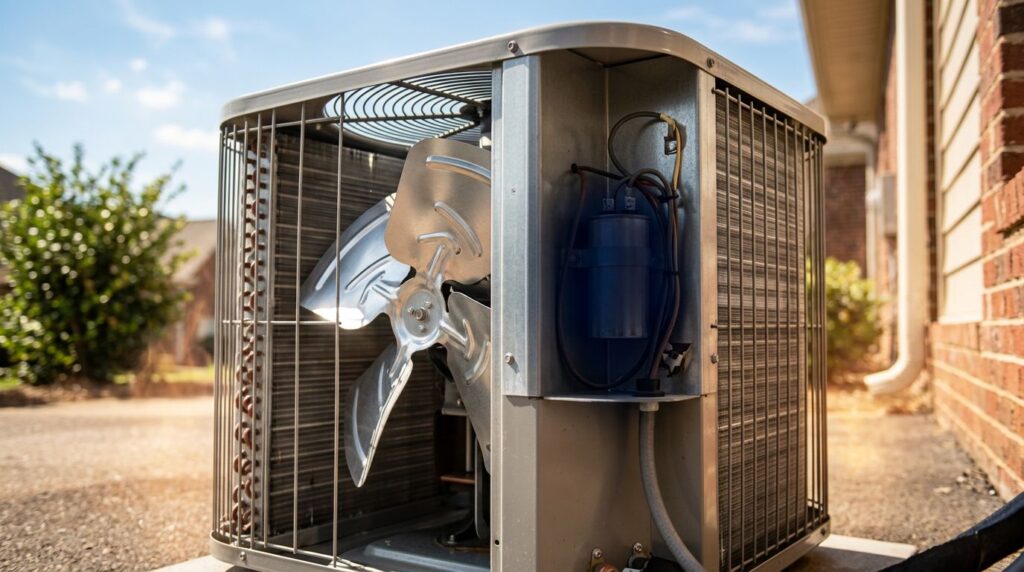
An AC that makes a humming noise but will not start can turn a normal Alabama afternoon into a long, hot problem. When the thermostat calls for cooling and the system hesitates, trips, or blows warm air, an AC capacitor failure may be part of the issue.
We see this often during Northport and Tuscaloosa heat waves. Your HVAC system works harder for longer, and if the outdoor unit has a weak electrical component, it can finally give out when you need cold air most.
The earlier we catch the warning signs, the better chance we have of avoiding a full system shutdown.
Key Takeaways
- Critical Function: The AC capacitor acts as a jump-starter for your system, providing the energy boost necessary for the compressor and condenser fan motor to function correctly.
- Common Warning Signs: Pay attention to a humming outdoor unit, delayed cooling starts, fan motors that run slowly or not at all, and repeated tripped circuit breakers.
- Avoid DIY Repairs: Capacitors hold dangerous electrical charges even when the power is off; attempting to replace them yourself is a significant safety risk.
- Importance of Full Diagnosis: A failing capacitor may be a symptom of a larger issue, such as a strained motor or an electrical fault, making professional testing essential to prevent repeat breakdowns.
What an AC Capacitor Does Inside Your System
An air conditioner needs a strong electrical push to start its motors, and that is where the capacitor comes into play. It stores and releases energy, acting much like a jump-start for your outdoor equipment. Within your condenser unit, you will typically find a dual-run capacitor that serves two vital functions. It contains a start capacitor to give the system an initial jolt of power, while the run capacitor maintains the steady energy flow required to keep the compressor and the condenser fan motor operating efficiently. If either side of this component weakens, your system may struggle to run even if the thermostat settings appear normal.
Heat is notoriously hard on electrical parts. Long cooling cycles, extreme outdoor temperatures, power surges, and general wear and tear from age all contribute to a bad AC capacitor. West Alabama summers are unforgiving, leaving outdoor equipment with very little downtime.
A capacitor is not a component we recommend homeowners test or replace themselves. These parts can hold a dangerous electrical charge even after the system is turned off. For safety, a professional must always discharge the capacitor before performing any maintenance. Furthermore, the condenser unit contains high-voltage wiring, moving fan blades, and sharp metal panels that pose significant risks to anyone without proper training.
A humming outdoor unit that does not start is not a sign to keep resetting the thermostat. Repeated start attempts can put extra strain on the compressor.
When we arrive for a service call, we inspect the component using a professional multimeter to compare the current reading against the manufacturer rated range. We also check the rest of the starting circuit, as a failing capacitor can often mimic the symptoms of a failed contactor, a loose wire, a damaged fan motor, or a more serious compressor problem.
Common Signs of a Failing AC Capacitor
A capacitor usually gives some warning before it fails completely. The signs can come and go at first, especially when the system has not been running all day. If you suspect you have a bad AC capacitor, keep an eye out for these specific behaviors.
Your Outdoor Unit Hums but the Fan Does Not Turn
This is one of the most common calls we receive for AC repair in Northport AL. You may hear a low humming noise outside, but the fan blade stays still and the home does not cool.
The outdoor unit may be receiving power, but the fan motor may not be getting the electrical boost it needs. Shut the system off at the thermostat if this happens. Letting a humming condenser sit without the fan running can lead to the compressor overheating.
Do not try to spin the fan with a stick or your hand. That old trick can create a safety issue and does not tell us whether the capacitor is the only failed part.
The AC Takes Too Long to Start
A healthy system often starts within moments of the thermostat calling for cooling. With a weak capacitor, you may experience hard starting, where you hear a click, followed by a pause, then a delayed activation.
Sometimes the equipment starts after several seconds. Other times, it shuts back down and tries again later. That stop and go behavior is incredibly hard on the compressor. If your system has started normally for years but now seems reluctant, don’t wait until the next 98 degree day. A slow start is an early warning that your system is struggling.
Cooling Works at Night but Fails During the Day
This pattern catches homeowners off guard. The AC may cool after sunset, then struggle again when the afternoon sun is beating down on the unit.
Higher outdoor temperatures make it harder for the condenser to reject heat. A marginal component may handle a mild evening cycle but fail when the system faces peak demand. Not only does this make the house uncomfortable, but it also leads to higher energy bills as the equipment runs inefficiently for longer periods.
You Hear Clicking, Humming, or Short Cycling
A single click when an air conditioner starts is normal. Repeated clicking or brief cycles that end quickly are not cause for celebration.
Those sounds can point to capacitor trouble, but they can also come from a contactor, control board, pressure switch, or electrical connection. We don’t diagnose by sound alone. Additionally, if you inspect the part and notice any physical bulging on the top or sides of the cylinder, you are certainly looking at a bad AC capacitor that needs immediate replacement.
| What you notice | What may be happening |
|---|---|
| Humming outdoor unit | Fan or compressor is trying to start without enough electrical support |
| Repeated clicking | The system is attempting to start or a control part is cycling |
| Fan starts slowly | The fan side of a dual-run capacitor may be weak |
| AC starts, then stops | Overheating or a safety control may be shutting the system down |
The main point is simple. Odd noises paired with poor cooling deserve a service visit before the system quits entirely.
The Outdoor Fan Runs Slowly or Stops
When the condenser fan does not run at full speed, heat builds up around the outdoor coil. You might notice weak airflow, or the fan moving slower than usual, stopping after startup, or cycling on and off.
In some cases, the system may struggle to move heat, resulting in warm air coming from your indoor vents. That is a situation where we recommend shutting the system down and calling for help. A failed fan motor can cause similar symptoms, so we test both the capacitor and the motor instead of replacing one part based on a guess.
Your Circuit Breaker Trips or the AC Blows Warm Air
A weak capacitor can contribute to high electrical strain during startup. That may trip a circuit breaker, although this also can point to a more serious electrical or mechanical problem.
Warm air is another classic sign of trouble. If the unit does not operate correctly, refrigerant cannot move through the system as designed. The indoor blower may still push air through your vents, but it will not feel cold. Don’t keep resetting a breaker that trips again. A breaker is there to protect the wiring and equipment, and we need to find out why it opened before the system runs again.
What We Recommend Before Calling for Repair
We can rule out a few simple issues without opening the condenser. Start with the thermostat. Set it to cool, lower the temperature setting a few degrees below room temperature, and confirm the display has power.
Then check the air filter. A packed filter does not cause every capacitor problem, but restricted airflow can make an already stressed system work longer. Make sure supply vents and return grilles are open and not blocked by furniture or curtains.
Outside, look at the outdoor unit from a safe distance. Remove loose leaves, grass clippings, or other debris around the system. Do not remove panels, touch wiring, or spray water into electrical areas.
Call a qualified HVAC technician for service right away if you notice any of these problems:
- A burning smell, smoke, or melted-looking wire insulation
- A breaker that trips more than once
- A loud hum with no outdoor fan movement
- Water near electrical components
- A system that will not cool during extreme heat
We also recommend turning the thermostat off if the condenser will not start. The indoor blower may continue running, but it will not solve the problem with the cooling system.
Why a Quick Capacitor Replacement Isn’t Always the Answer
Capacitors are common repair parts, but an effective air conditioner repair begins with a full diagnosis. We check the exact microfarad rating and voltage requirements, inspect the contactor, examine wiring connections, and test how the fan and compressor respond to electrical signals.
A capacitor may fail from age alone, but it can also fail because the fan motor is drawing too much power, the condenser is overheating, or the electrical supply has an underlying issue. Performing a simple capacitor replacement without identifying the root cause can lead to another breakdown shortly after.
This process is critical for homeowners and property managers who oversee an entire HVAC system. If one unit repeatedly experiences electrical issues, we need to look beyond the part itself. Dirty condenser coils, poor airflow, damaged wiring, and worn motors can all negatively affect performance and stress your equipment.
We service major equipment brands, including Trane, Carrier, Rheem, Lennox, Goodman, and Mitsubishi mini-splits. Each system has its own electrical layout and approved component specifications.
The replacement component must match the equipment requirements exactly. A part that looks similar to the old one is not automatically the correct choice for your unit.
When to Call for Emergency AC Repair in Northport and Tuscaloosa
A capacitor problem can move from inconvenient to urgent fast when indoor temperatures rise. This is especially true for older adults, infants, pets, and anyone with health conditions affected by heat.
If the outdoor unit will not start, the breaker trips, or the house is getting hotter by the hour, call for emergency air conditioner repair. We provide 24/7 help for heating and cooling problems across Northport, Tuscaloosa, Coker, Samantha, and surrounding West Alabama communities.
Our local HVAC technician arrives ready to test the system safely and explain what we find. We provide upfront pricing before repairs begin, so there are no surprise charges after the work is done.
For a failed capacitor, the repair is often straightforward. If testing reveals an issue with the fan motor, the compressor, or the refrigerant levels, our team will provide a clear recommendation and the estimated replacement cost based on the overall condition of your system.
Keeping Summer Strain Off Your AC System
Routine maintenance for your HVAC system cannot prevent every electrical failure, but it gives us a chance to find weak components before a hot weekend exposes them. By scheduling a seasonal tune-up, you can ensure peak efficiency, which helps reduce your monthly energy bills. During these visits, we inspect electrical connections, test capacitor performance, clean equipment as needed, and look for airflow problems.
A clean filter also matters. Check it regularly during heavy cooling months, then replace it when it is loaded with dust. Dirty filters restrict airflow, which forces your system to work harder and adds unnecessary strain to the fan motor. When these filters are neglected, it can leave parts of the home hot, humid, and uncomfortable.
Keep at least a clear working area around the outdoor condenser. Shrubs, weeds, stacked items, and grass buildup can trap heat around the unit. The system needs room to move air across its coil to function properly.
Duct cleaning may help if heavy dust and debris are affecting indoor air quality or circulation. It will not repair a bad capacitor, a refrigerant leak, or a failing motor. We always look for the real source of the problem to ensure your cooling system remains reliable throughout the season.
Frequently Asked Questions
Can I spin the fan with a stick to get it started?
No, you should never attempt to spin a stalled fan blade with a stick or your hand. This is extremely dangerous and does not address the underlying electrical issue, potentially causing further damage to the system or injury to yourself.
Why does my AC work at night but fail during the day?
High daytime temperatures force your AC to work much harder to reject heat, putting maximum stress on electrical components. A weakened capacitor may have enough energy to function during cooler nighttime hours but will fail when the system is pushed to its limits during a hot afternoon.
Is a humming outdoor unit always caused by a bad capacitor?
While a humming unit is a primary symptom of a failing capacitor, it can also indicate a faulty contactor, a seized motor, or an underlying compressor problem. A qualified technician must use a multimeter to test the electrical circuit and determine the exact cause of the failure.
Should I just replace the capacitor if my unit won’t start?
We advise against guessing, as installing a new capacitor when there is an underlying mechanical or electrical fault can lead to premature failure of the new part. A professional technician will test the start and run side of the capacitor along with the rest of the electrical system to ensure a long-term repair.
Don’t Let a Small Electrical Part Stop Your Summer
A capacitor is a small component, but it performs a vital role in keeping your home comfortable. Humming sounds, delayed starts, slow fan operation, warm air blowing through the vents, and repeated breaker trips are all warning signs that homeowners should take seriously.
Catching the symptoms of an AC capacitor failure early can help protect your compressor from permanent damage and spare your family a miserable afternoon without cooling. If you suspect you are dealing with a bad AC capacitor, reach out to our team for dependable Northport HVAC service. We are ready to diagnose the problem, perform the necessary repairs, and get your system back to work as quickly as possible.