Yellow Furnace Flame: A Home Safety Warning
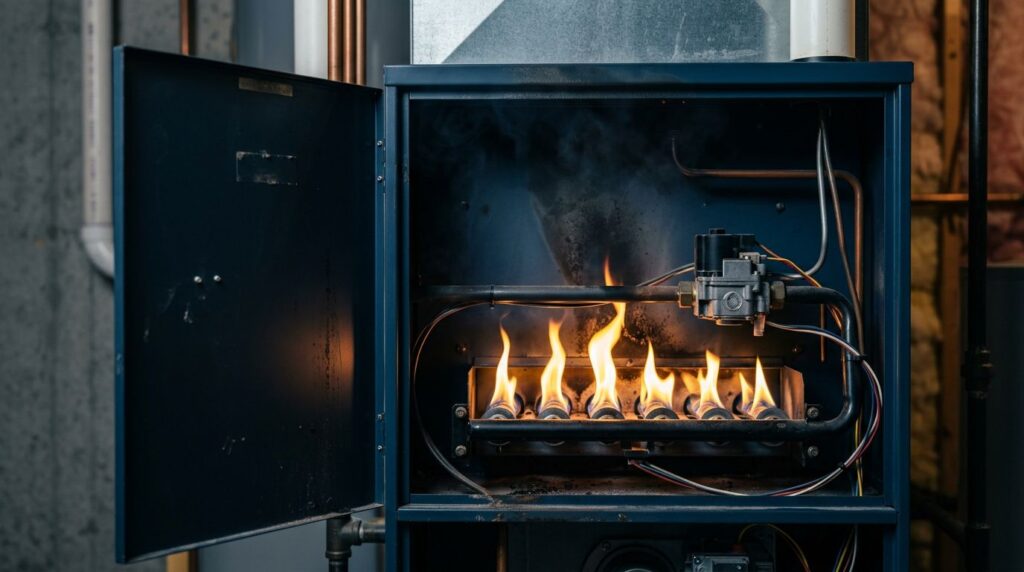
A furnace flame shouldn’t look like a campfire. A steady blue flame usually means your gas furnace is burning fuel as designed. If an older unit uses a pilot light, the same warning applies when its flame stays abnormal.
But a yellow furnace flame, especially one that stays yellow or orange across the burners, can signal a combustion or safety problem, such as soot buildup or carbon monoxide risk. Turn the heat off if you can do so safely, and arrange a professional inspection before running it again. If you smell gas, hear an alarm, see smoke, or feel unwell, leave immediately and call emergency services or your gas utility from outside.
Key Takeaways
- A healthy gas furnace flame is usually steady and mostly blue. A small yellow tip can be normal, but a flame that stays yellow, orange, unstable, or sooty needs prompt attention.
- Dirty burners, restricted combustion air, blocked venting, contamination, and incorrect gas pressure can cause abnormal flame color and incomplete combustion.
- A yellow flame does not prove carbon monoxide is present, but it is a warning to turn the furnace off safely and arrange a professional combustion and safety inspection.
- If a carbon monoxide alarm sounds, you smell gas, see smoke or flame rollout, or feel unwell, leave immediately and call emergency services or your gas utility from outside.
- Carbon monoxide detectors are essential backup protection, but they do not repair a furnace problem or replace professional service.
Why a yellow furnace flame demands a prompt check
Natural gas needs the right amount of oxygen to burn cleanly. A quick furnace flame color check should show mostly blue, steady flames.
When oxygen is limited or the burner has a problem, the fuel may not burn completely. This incomplete combustion can turn the flame yellow, orange, lazy, tall, or uneven. It may also leave black soot around the burner area or furnace cabinet.
A yellow flame does not automatically prove there is carbon monoxide in your home. Still, it is a warning that the furnace needs to be checked, not watched for another week.
What a healthy gas furnace flame looks like
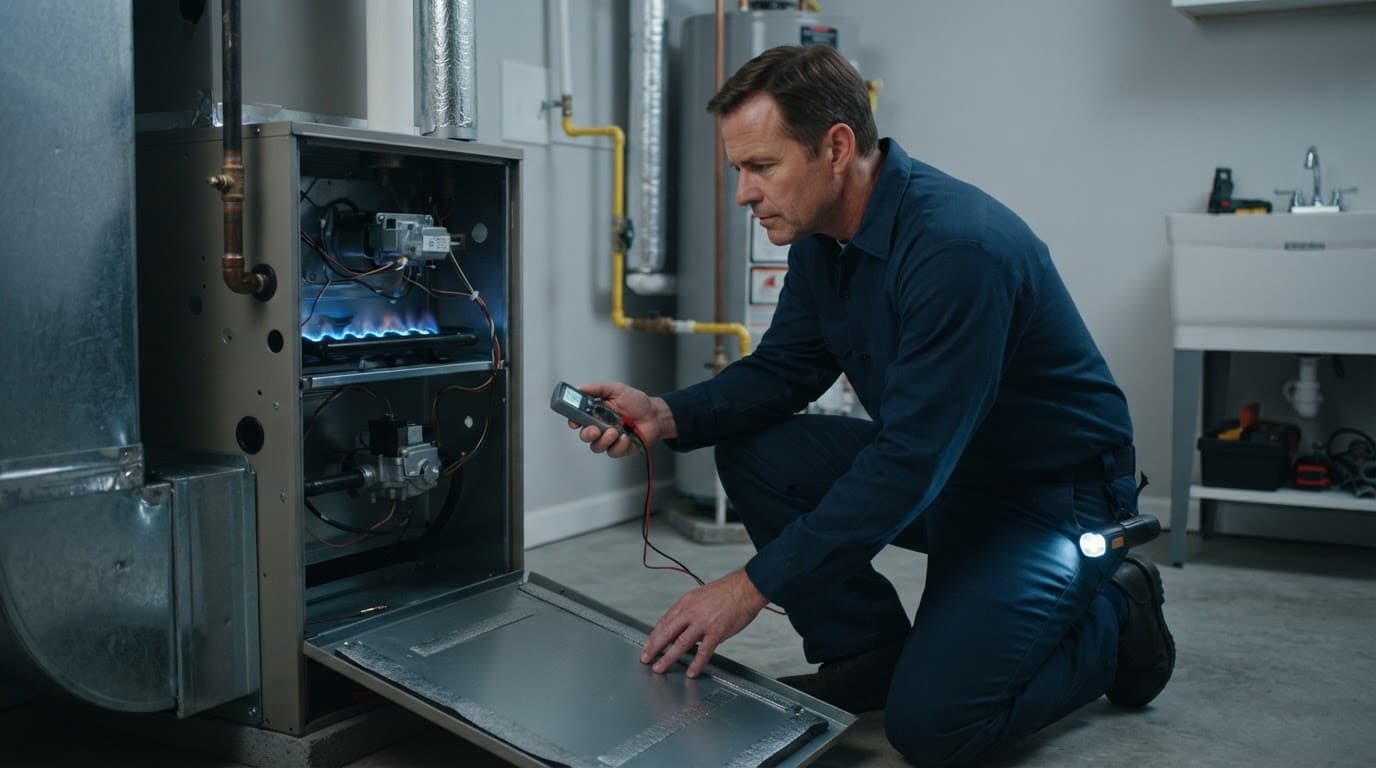
A normal burner flame is usually:
| Flame characteristic | What it often means |
|---|---|
| Mostly blue and steady | Clean, efficient combustion |
| Small yellow tip only | Often normal, especially at the tip |
| Sustained orange flame across most of the burner | Abnormal combustion or contamination |
| Flickering flame, lifting, or rolling outward | A potential burner or venting concern |
The flame should light smoothly and remain stable while the furnace runs. On older systems with a pilot light, the pilot should also be mostly blue. A yellow pilot light deserves the same professional call.
A small yellow tip can be normal. A burner flame that is mostly yellow, orange, unstable, or sooty is not a normal furnace condition.
Common reasons furnace flames turn yellow or orange
The furnace’s gas valve meters natural gas to the burners. Inside the combustion chamber, the burners mix that fuel with combustion air before hot gases pass through the heat exchanger. This design keeps combustion gases separate from the air moving through your home.
A problem anywhere in that sequence can change the way a furnace flame looks.
Dirty burners, poor airflow, and gas pressure problems
Dirty burners can collect dust, rust, spider webs, soot, and residue that block burner openings. This changes how gas and air meet, which can create an uneven yellow flame. Regular maintenance, including scheduled cleaning and heating tune-ups, helps reduce contamination. On older equipment, contamination or limited combustion air can also affect a pilot light assembly.
Restricted combustion air can cause the same issue. Ventilation issues, such as a blocked air intake valve on models equipped with one, clogged vent termination, lint, leaves, or insect nests, can deprive the burners of combustion air. High-efficiency furnaces often use PVC intake and exhaust pipes, and both need to stay clear.
Gas pressure matters too. Pressure that is too high or too low can create poor burner performance. Homeowners should not adjust the gas valve themselves. A technician tests gas pressure and the air intake valve where applicable, then checks burner operation, venting, and safety controls.
A crack in that component can also create serious safety concerns. The way the flame looks cannot confirm a crack. However, flames that shift when the blower starts, roll out of the burner area, or produce soot need immediate inspection.
Can a dirty filter, dust, or humidifier change the flame?
A dirty air filter usually restricts household airflow and may trigger overheating protection. It is not usually the direct reason a burner turns yellow. The filter affects air moving across the heat-transfer surface, not the burner air-to-fuel ratio.
Household dust can sometimes affect the way the flame looks. Mineral particles released by an ultrasonic humidifier may create a temporary yellow or green flame tint.
That said, don’t dismiss a yellow flame as “just dust” unless a qualified technician has ruled out burner, venting, and combustion problems. If the discoloration remains after the humidifier is off and the area is clean, schedule service.
Incomplete combustion and carbon monoxide risk
Incomplete combustion happens when fuel does not burn fully. It can produce carbon monoxide, soot, and other combustion byproducts instead of mostly carbon dioxide and water vapor.
Carbon monoxide is colorless and odorless. You cannot see or smell it, so reliable CO alarms matter in every home with fuel-burning equipment. Restricted airflow can affect combustion, and flame color alone cannot confirm a cracked internal heat-transfer surface.
When to shut the furnace down and leave
If you only see a yellow flame and there is no gas odor, smoke, or alarm, turn the thermostat to “off” and call for furnace service. Do not remove panels, brush burners, adjust equipment controls, or try to relight the pilot light on an older unit yourself. A yellow pilot light still requires service, even if no alarm sounds.
Leave the building immediately if any of these signs are present:
- A carbon monoxide detector alarms, especially if anyone feels sick.
- You smell natural gas, hear hissing near the furnace, or suspect a gas leak.
- Flames roll out of the burner area or you see smoke, heavy soot, or scorching.
- Anyone has headache, dizziness, nausea, confusion, chest discomfort, or unusual weakness while the furnace is running.
Once outside, call 911, the gas utility, or emergency services as appropriate. Do not go back inside to silence an alarm, open windows, or collect belongings.
A carbon monoxide alarm is more urgent than any visible flame change. Leave first, then make the call from outside.
Detectors are a backup, not a repair
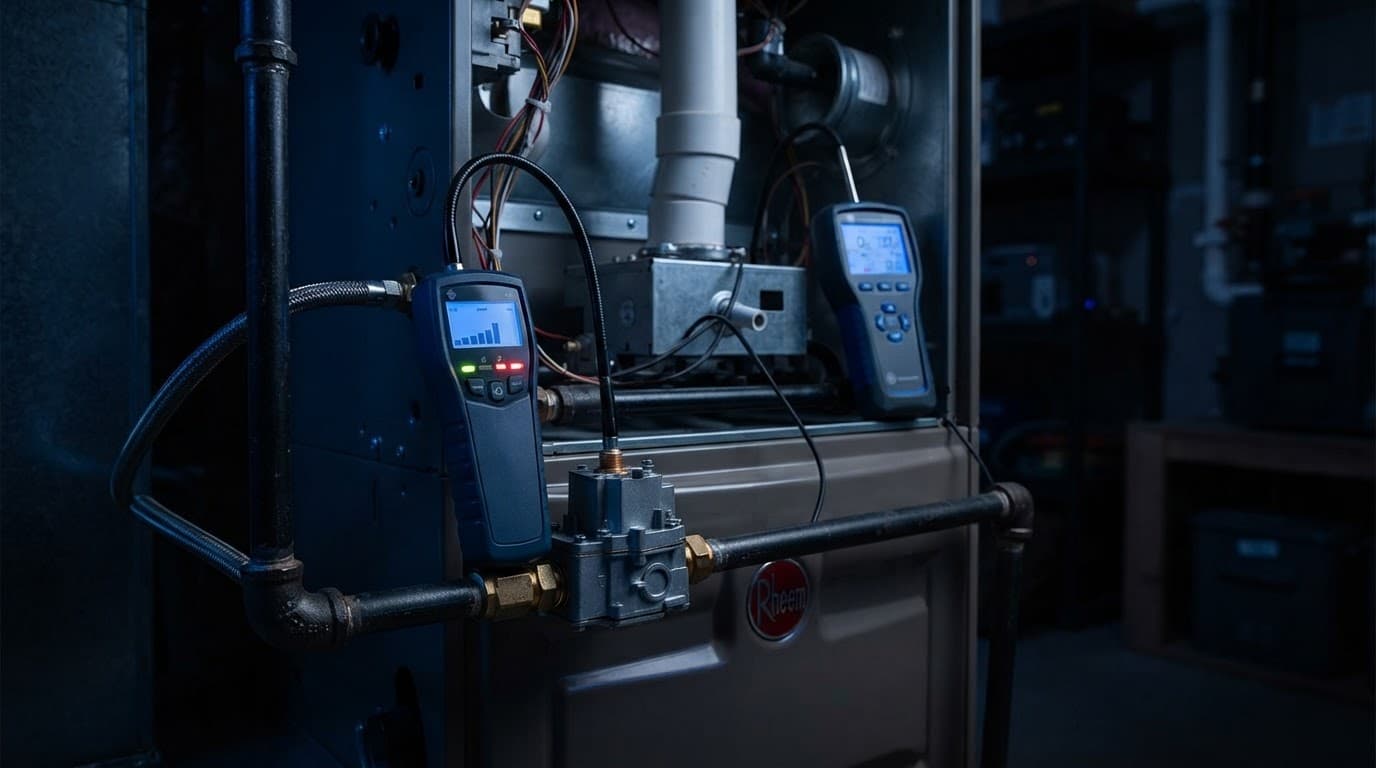
Install a carbon monoxide detector on each level of your home and near sleeping areas, following the manufacturer’s placement instructions. Test it regularly, replace batteries when required, and replace the device when it reaches its listed service date.
The detector does not fix a furnace problem. It warns you when dangerous levels are present. The furnace still needs a full combustion and venting inspection.
Safe next steps for a yellow burner flame
We recommend a simple, cautious response. The goal is to stop unsafe operation without creating a second problem.
- Turn the thermostat off if there is no gas odor or immediate danger.
- Keep the heating system off until it has been evaluated.
- Confirm that each carbon monoxide detector has working batteries.
- Look only from outside the cabinet for visible soot, a blocked vent outlet, or signs of flame rollout.
- Call a licensed HVAC technician for a combustion and furnace safety inspection. Don’t relight or adjust an older pilot light yourself.
A professional inspection can include burner cleaning, combustion testing, and gas pressure checks. It may also cover combustion-air and air intake valve checks, venting, the heat exchanger, limit switches, and other safety controls. The technician should explain what was found before recommending a repair.
For homeowners and property managers in West Alabama, heating and furnace repair services in Northport can identify the reason for an abnormal flame before it becomes a no-heat call or a safety hazard.
Northport HVAC provides heating service across Northport, Tuscaloosa, Coker, Samantha, and nearby communities. Our licensed, insured, NATE-certified local team works on Trane, Carrier, Rheem, Lennox, Goodman, and other major systems.
Frequently Asked Questions
Is a small yellow tip on a furnace flame normal?
A small yellow tip can be normal, especially at the end of an otherwise steady blue flame. A flame that is mostly yellow or orange, unstable, tall, or accompanied by soot is not a normal furnace condition.
What causes a furnace flame to turn yellow?
Common causes include dirty burners, restricted combustion air, blocked intake or venting, contamination, and incorrect gas pressure. A technician should inspect and test the furnace rather than relying on flame color alone.
Should I turn off a furnace with a yellow flame?
If there is no gas odor, smoke, alarm, or immediate danger, turn the thermostat to “off” and keep the furnace off until it has been inspected. Do not adjust the gas valve, remove panels, or relight an older pilot light yourself.
Can a yellow furnace flame mean carbon monoxide?
A yellow flame can indicate incomplete combustion, which may produce carbon monoxide, but the flame alone cannot confirm that CO is present. Carbon monoxide is odorless and colorless, so install and test detectors near sleeping areas and on each level of the home.
When should I leave the house because of a furnace problem?
Leave immediately if a carbon monoxide alarm sounds, you smell gas, hear hissing, see smoke or flame rollout, or anyone develops headache, dizziness, nausea, confusion, or unusual weakness. Call 911, your gas utility, or emergency services from outside, and do not go back in to collect belongings or silence an alarm.
A blue flame is the standard worth protecting
A furnace burner should show the correct flame color: steady and mostly blue, with a clean burn. A persistent yellow or orange appearance can signal incomplete combustion, restricted air, or a venting problem.
Don’t gamble with a fuel-burning appliance. This warning is a reason to stop, check detectors, and arrange qualified service.