Do HVAC Surge Protectors Prevent Alabama Storm Damage?
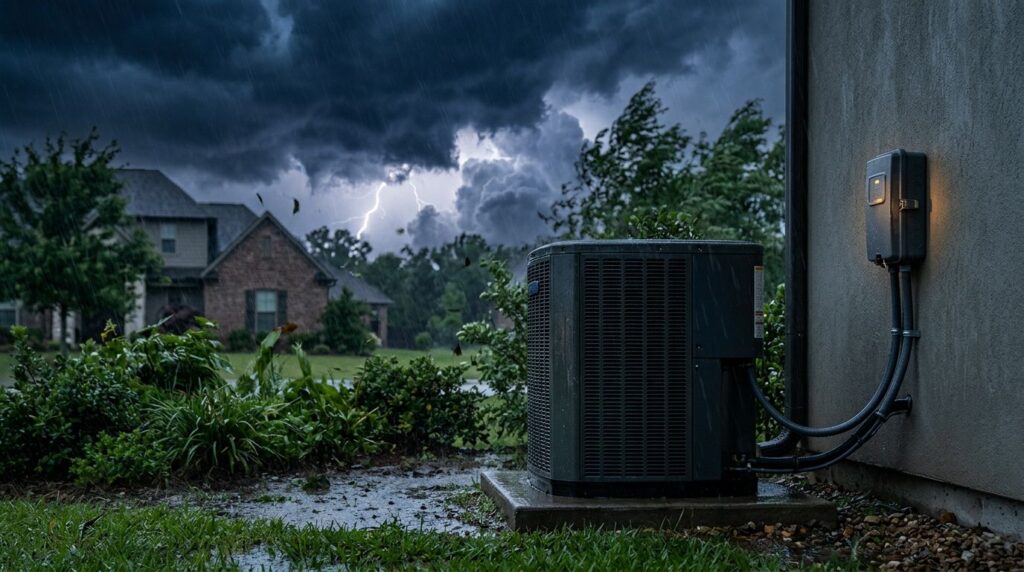
A summer storm can leave your outdoor condenser looking fine while a power surge damages a circuit board inside your air conditioner. HVAC surge protectors reduce that electrical risk, but they can’t promise complete protection from every kind of storm damage.
In Northport and Tuscaloosa, a lightning strike, utility interruptions, and power restoration after an outage can all send damaging voltage through a home’s electrical system. We recommend treating surge protection, earth ground, and protection for variable-speed equipment as parts of a larger plan for protecting modern heating and cooling systems.
Key Takeaways
- HVAC surge protectors can reduce the risk of electrical damage to sensitive components such as inverter control boards, variable-speed motors, thermostats, and communicating equipment.
- Surge protection cannot prevent physical storm damage from lightning, wind, hail, flooding, falling limbs, or a direct strike that overwhelms the electrical system.
- Layered protection may include a Type 1 SPD at the service entrance, a Type 2 SPD at the main panel or HVAC disconnect, and verified bonding and earth ground.
- Surge protection devices must match the HVAC system’s voltage, phase, and electrical configuration, and panel or disconnect installation should be completed by a qualified professional.
- After severe weather, check the SPD status indicator and HVAC equipment for damage, and arrange service promptly if the system will not cool, repeatedly trips breakers, or shows burning smells or visible damage.
What Surge Protection Can and Cannot Prevent
A surge protection device detects brief voltage transients and diverts excess energy along the grounding path toward earth ground. That response can help protect sensitive parts in an outdoor condenser and air handler. These include an inverter control board, other control boards, variable-speed blower motors, thermostats, and communicating equipment.
A Type 2 SPD can protect a branch circuit near the main panel. A second Type 2 SPD can protect equipment near the disconnect box. A Type 1 SPD protects at the service entrance, before power reaches downstream circuits.
Modern variable-speed systems rely on more electronics than older fixed-speed systems. A damaged inverter control board in an outdoor condenser, or control boards in an air handler, can create a repair bill of roughly $800 to $2,500. The replacement cost may involve an ECM motor or IGBT power modules, depending on the equipment and replacement-part availability.
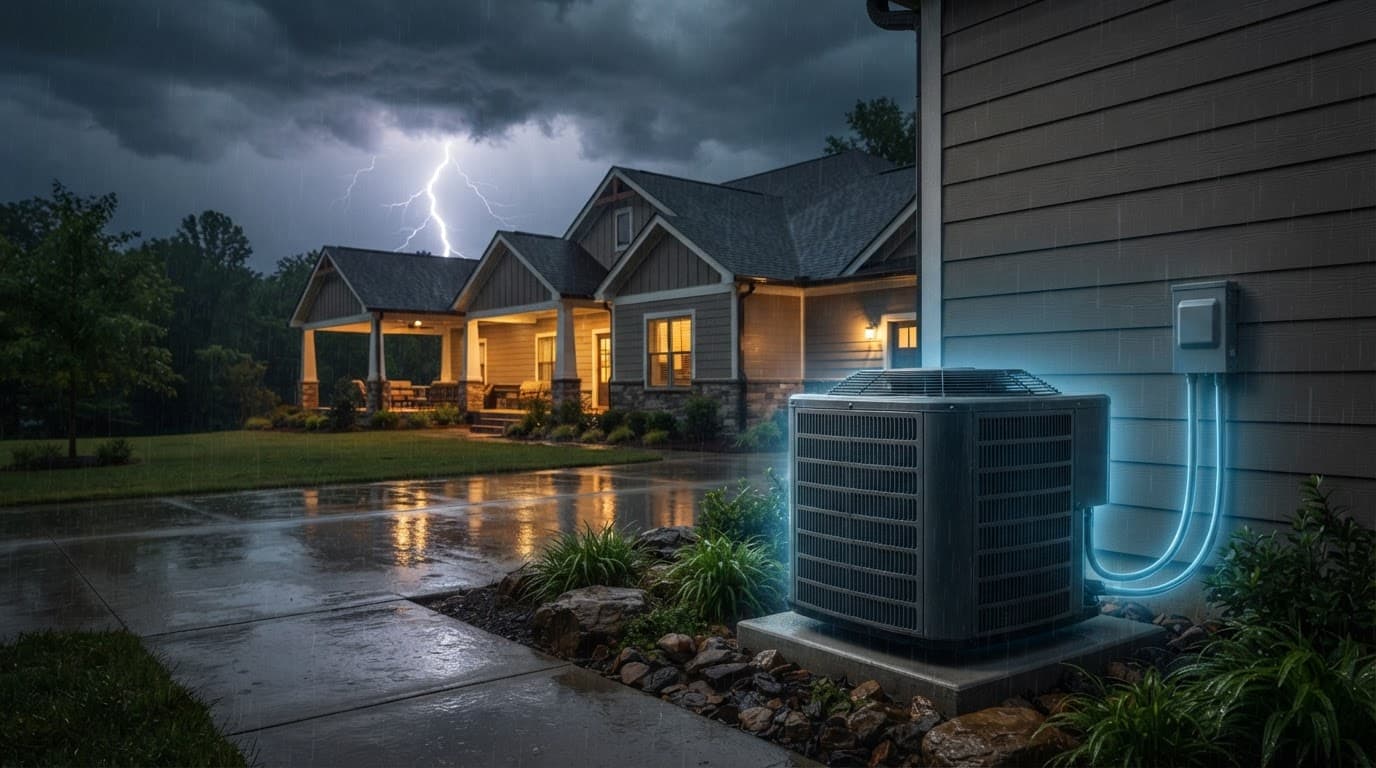
A surge is different from physical storm damage
Surge protection won’t stop a falling limb, floodwater, hail, wind damage, or a direct lightning strike that overwhelms the home’s electrical system. It also can’t repair weak wiring, poor grounding, or a failing compressor.
A nearby strike can still create a damaging power surge through utility lines or the ground. Poor grounding can limit protection when the system lacks a reliable path to earth ground. During active weather, follow updates from the National Weather Service Birmingham forecast office and avoid opening an electrical panel or touching outdoor equipment.
Surge protection lowers the odds of electrical damage. It doesn’t make an air conditioner stormproof.
Use Layered Protection for HVAC Equipment
A whole-home surge protector at the main panel is a strong first layer. However, a surge protection device may not catch every voltage transient before energy reaches a long HVAC circuit, an outdoor condenser, or an air handler.
Equipment-level protection adds a Type 2 SPD near sensitive equipment with a dependable grounding path to earth ground. Modern variable-speed systems use sensitive control boards, so layered protection can reduce exposure along the circuit.
For better coverage, we often suggest discussing a layered plan with an electrician and HVAC professional. The right layout depends on the home’s service equipment, grounding, system voltage, and the manufacturer’s installation instructions. Service equipment should also provide a verified connection to earth ground.
Match the surge device to its location
| Device type | Typical location | Main purpose |
|---|---|---|
| Type 1 SPD | Service entrance or main electrical equipment | Reduces surges entering from utility power |
| Type 2 SPD | Main panel or dedicated HVAC circuit | Protects branch circuits and connected equipment |
| Type 3 SPD | Standard outlet near electronics | Adds point-of-use protection for plug-in devices |
A Type 1 SPD at the service entrance helps divert incoming energy before it spreads through branch wiring. A Type 3 surge protector strip isn’t suitable for a hardwired 240-volt air conditioner.
A dedicated HVAC circuit can use a Type 2 SPD at its disconnect box. The outdoor disconnect box may also need another Type 2 SPD to protect the outdoor condenser.
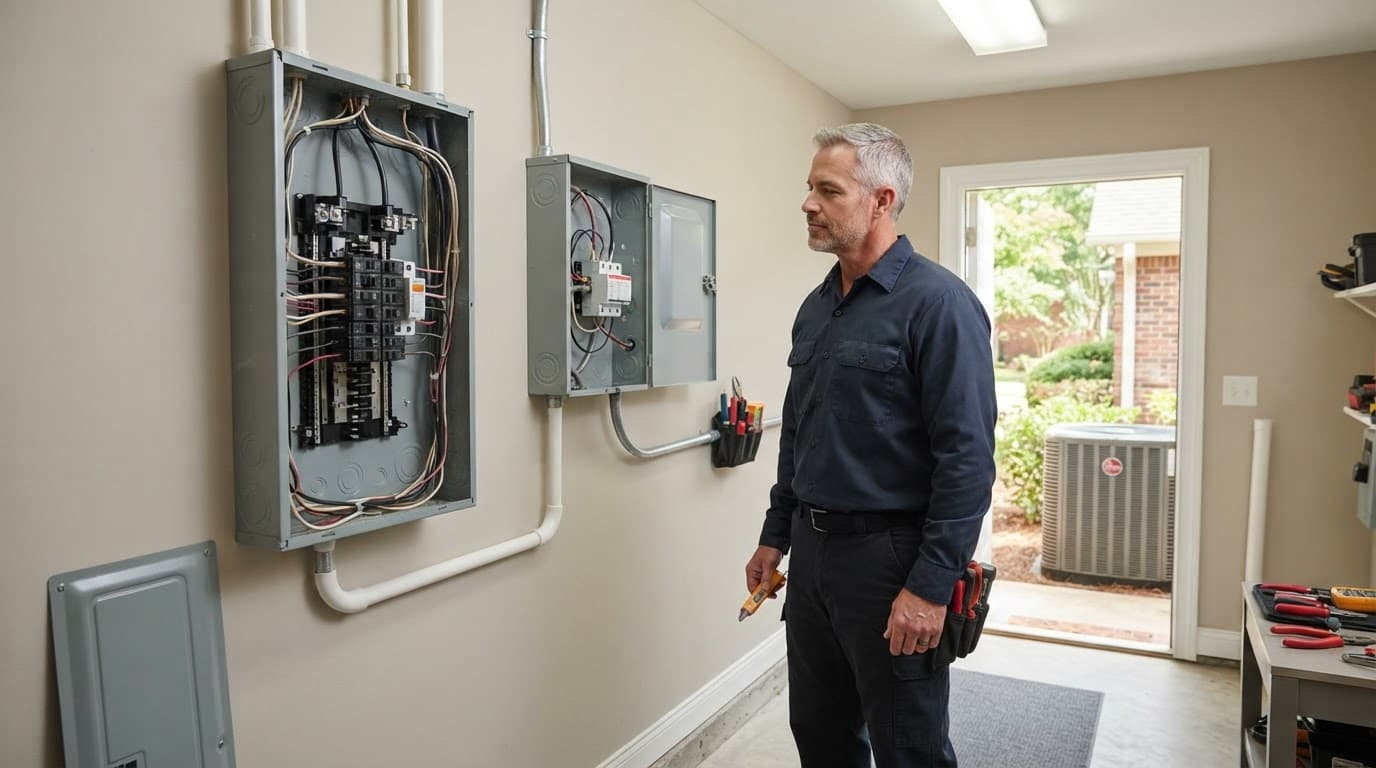
A whole-home protector is a first layer
Whole-home protection helps shield refrigerators, televisions, appliances, and HVAC circuits at once. Yet the outdoor condenser and air handler contain expensive electronics, so a second layer near the equipment can reduce exposure further.
Depending on the layout, a Type 2 SPD at the air handler’s disconnect box can add equipment-level protection.
We recommend asking for a review of the electrical path, not buying a device based on price alone. Selection should account for discharge current, equipment location, the main panel, equipment disconnect box, and indoor equipment connection. Confirm bonding and a reliable connection to earth ground before recommending a Type 2 SPD where needed. Final inspection should confirm that the grounding path remains connected to earth ground.
Choose an HVAC-Rated Device and Qualified Installer
A surge protection device should match the system’s voltage, phase, and electrical configuration. Your main panel and HVAC model both matter. This is especially true for variable-speed Trane, Carrier, Rheem, Lennox, Goodman, and Mitsubishi systems. An air conditioner with an inverter control board needs a Type 2 SPD matched to its control configuration.
Read the ratings before approving installation
Look for these details on the product label or specification sheet:
- A recognized listing, such as UL 1449, that confirms the intended SPD type, such as a Type 2 SPD for a branch circuit.
- A voltage rating that matches the HVAC circuit.
- A suitable nominal discharge current and maximum surge-current rating for the circuit.
- A voltage protection rating, often called VPR, to compare similar devices by let-through voltage and clamping voltage.
- A visible status indicator or alarm that reports when protection has failed, helping identify risk to control boards.
Service-entry and branch-circuit protection serve different purposes. A Type 1 SPD is generally installed at service equipment, while a Type 2 SPD protects equipment downstream from the main panel. Confirm the connection to earth ground and the bonding path before approving the device.
UL’s surge protection testing guidance explains why product testing, certification, and proper installation matter. Poor connections or a weak earth ground can limit protection against voltage transients and increase replacement cost. A plug-in surge protector strip isn’t a substitute for a hardwired device at the HVAC circuit, either.
Leave panel and disconnect work to professionals
Electrical panel work and condenser disconnect wiring carry shock and fire risks. A qualified electrician should install or modify the device and evaluate the main panel and disconnect box together. A Type 1 SPD may protect service equipment, but it doesn’t replace correct branch-circuit protection.
At the outdoor condenser, the technician should verify the disconnect box, conductor size, and bond to earth ground. The outdoor condenser and the air handler should be checked separately, each with its own disconnect box and grounding path. A Type 2 SPD may suit the outdoor condenser when its ratings match the circuit. A Type 2 SPD may also suit the air handler after the installer confirms its voltage and phase. The disconnect box serving the air handler should remain accessible, and its variable-speed motor or control configuration also matters. Its grounding path should terminate at a verified earth ground.
At Northport HVAC, we can assess electrical symptoms during a service call and coordinate the HVAC side of the work. We can also confirm whether a Type 2 SPD fits the equipment and whether its status indicator remains visible after installation. For Tuscaloosa air conditioning concerns, our Tuscaloosa HVAC services include diagnostics for control boards, motors, capacitors, and other storm-related failures.
Inspect Protection After Severe Weather
Many residential Type 2 SPD units use a metal oxide varistor. These sacrificial devices absorb surge energy over time, so they can lose protective capacity while the air conditioner still appears to run normally. Service equipment may use a Type 1 SPD, while the main panel may have a Type 2 SPD for downstream circuits.
Check the status indicator
After severe weather, inspect the status indicator on the Type 2 SPD serving the outdoor condenser. Check the outdoor condenser’s disconnect box and the air handler’s disconnect box for heat or damage. Then inspect the air handler and its control wiring, including the equipment disconnect box. Verify the earth ground connection, then include earth ground testing in the post-event evaluation.
Review the indicator light during seasonal maintenance and after a major electrical event. Follow the device manual, because light colors and alert methods vary by model.
A status light reports the protector’s condition, not the condition of the air conditioner.
If the status indicator shows a fault, lost protection, or no normal indication, arrange replacement promptly. A failed device may no longer handle its rated discharge current. Don’t assume the breaker needs resetting or that the surge protector has fixed itself. A hardwired unit isn’t reset like a surge protector strip, and replacing it promptly may avoid a higher replacement cost later.
Call for service when cooling does not recover
After power returns, use the thermostat normally once. Turn the system off and arrange emergency AC repair if you notice:
- Repeated breaker trips or a blank thermostat.
- Buzzing, burning smells, smoke, or visible damage.
- An outdoor fan that will not start.
- No cooling, weak airflow, or frequent short cycles.
Our local HVAC technicians test the electrical components instead of replacing parts by guesswork. For AC repair in Northport, AL, heating and AC repair in Northport can help identify whether a surge damaged the air handler, variable-speed controls, control boards, contactor, capacitor, motor, or another component.
Frequently Asked Questions
Do HVAC surge protectors prevent all Alabama storm damage?
No. They can reduce the risk of electrical damage from voltage transients, but they cannot prevent damage from flooding, hail, wind, falling limbs, or every direct lightning strike.
What type of surge protector does an air conditioner need?
A hardwired Type 2 SPD is commonly used for a dedicated HVAC circuit or near an equipment disconnect box. The device must match the system’s voltage, phase, and electrical configuration, while a Type 1 SPD serves a different role at the service entrance.
Is a whole-home surge protector enough for HVAC equipment?
A whole-home SPD provides an important first layer, but it may not catch every transient before it reaches a long HVAC circuit. An additional Type 2 SPD near the outdoor condenser or air handler can provide equipment-level protection when properly selected and grounded.
Should I inspect the surge protector after a storm?
Yes. Check the status indicator and look for heat, visible damage, burning smells, repeated breaker trips, or cooling problems, but do not open an electrical panel or touch unsafe equipment. Have a qualified electrician or HVAC professional inspect failed protection, grounding, and storm-related equipment problems.
Protect the Equipment Before the Next Storm
For Alabama homes with modern electronics, layered protection is a practical choice. A Type 1 SPD at the service entrance can work with a Type 2 SPD closer to the equipment.
This approach helps protect an outdoor condenser and air handler, each with its own disconnect box. Properly selected and maintained protection can reduce a preventable source of HVAC damage.
After severe weather, ask an electrician to confirm the earth ground and inspect each disconnect box and the device’s status indicator. This reduces risk, but it can’t prevent every storm-related problem.