HVAC Installation Checklist for Northport Homeowners
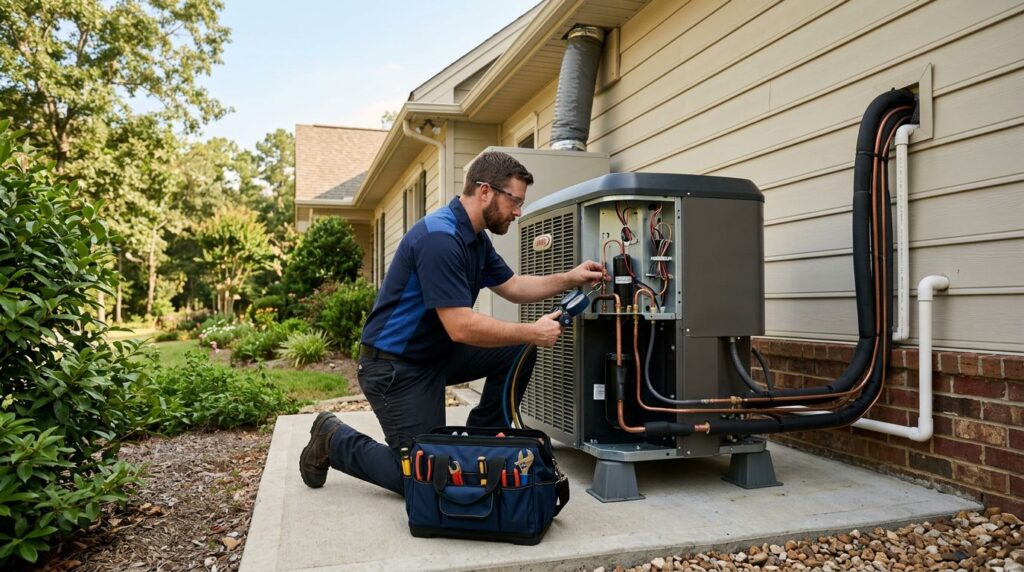
New equipment can look perfect on the first afternoon and still disappoint through an Alabama summer. A condenser on a new pad says little about system sizing, airflow, drainage, or the measurements used to set it up.
That is why an HVAC installation checklist should go beyond brand names and efficiency labels. In Northport, high humidity, hot attics, and ductwork hidden above ceilings or below floors can affect a new system’s performance from day one.
Before equipment is selected, confirm the contractor has completed a documented site assessment and used Manual J. Continue these checks before signing a proposal, while work is underway, and during the final walkthrough.
Key Takeaways
- Require a documented Manual J load calculation instead of sizing the new system by the old unit’s tonnage.
- Confirm that the outdoor unit, indoor coil or air handler, furnace, thermostat, and refrigerant are matched according to manufacturer requirements.
- Inspect ductwork, returns, airflow, insulation, and condensate drainage before installation and test each applicable drain and safety control.
- Expect measured startup work, including refrigerant charge verification, static pressure, airflow, temperature readings, electrical checks, and equipment safety testing.
- Before final payment, collect the sizing report, AHRI certificate, permits, startup sheet, warranty details, manuals, and maintenance agreement terms.
Start With a Site Assessment and Manual J Calculation
A contractor should inspect the home before final equipment selection. Replacing an old unit with the same tonnage isn’t a proper sizing method, especially if you have added insulation, changed windows, renovated rooms, or corrected duct issues.
Size the system for the house, not the old unit
Ask for a documented Manual J load calculation. ACCA’s Manual J residential load calculation accounts for square footage, insulation, window type and direction, duct losses, air leakage, occupancy, and local climate conditions.
A larger system is not automatically better. An oversized air conditioner may cool rapidly, shut off early, and leave indoor humidity high. A system that is too small can run for long periods during peak heat and still struggle in distant bedrooms.
The proposal should state the design load and the selected system capacity. It should also explain whether your home needs duct repairs, return-air improvements, zoning changes, insulation work, or changes to the ductwork design before the new equipment goes in. Review its condensate management plan, including the drain trap location and service access, and check the scope and cost of any maintenance agreements.
Confirm the matched equipment and refrigerant
Ask for the exact outdoor unit, indoor coil or air handler, furnace, thermostat, and efficiency rating. A high-efficiency condenser paired with the wrong indoor component may not deliver the advertised rating.
Current federal requirements use SEER2 ratings, not the older SEER label, while SEER2 codes establish minimum energy efficiency levels. Most new split central AC systems in Alabama must meet a 14.3 SEER2 federal minimum, although the exact standard depends on the equipment category. Review the Alabama HVAC energy-efficiency standards alongside the proposed model specifications.
For new split systems installed in 2026, ask whether the unit uses R-454B or R-32. These newer A2L refrigerants are not drop-in replacements for R-410A equipment. The installer should follow the manufacturer’s instructions for the approved refrigerant, line set, safety controls, and installation procedure.
HVAC Installation Checklist for Ducts and Drainage
A correctly sized system still needs a deliberate ductwork design to move air and moisture safely. It should align with the home’s Manual J assumptions. The indoor equipment, ducts, filter setup, and drain system deserve the same attention as the outdoor unit.
Check ductwork, returns, and airflow limits
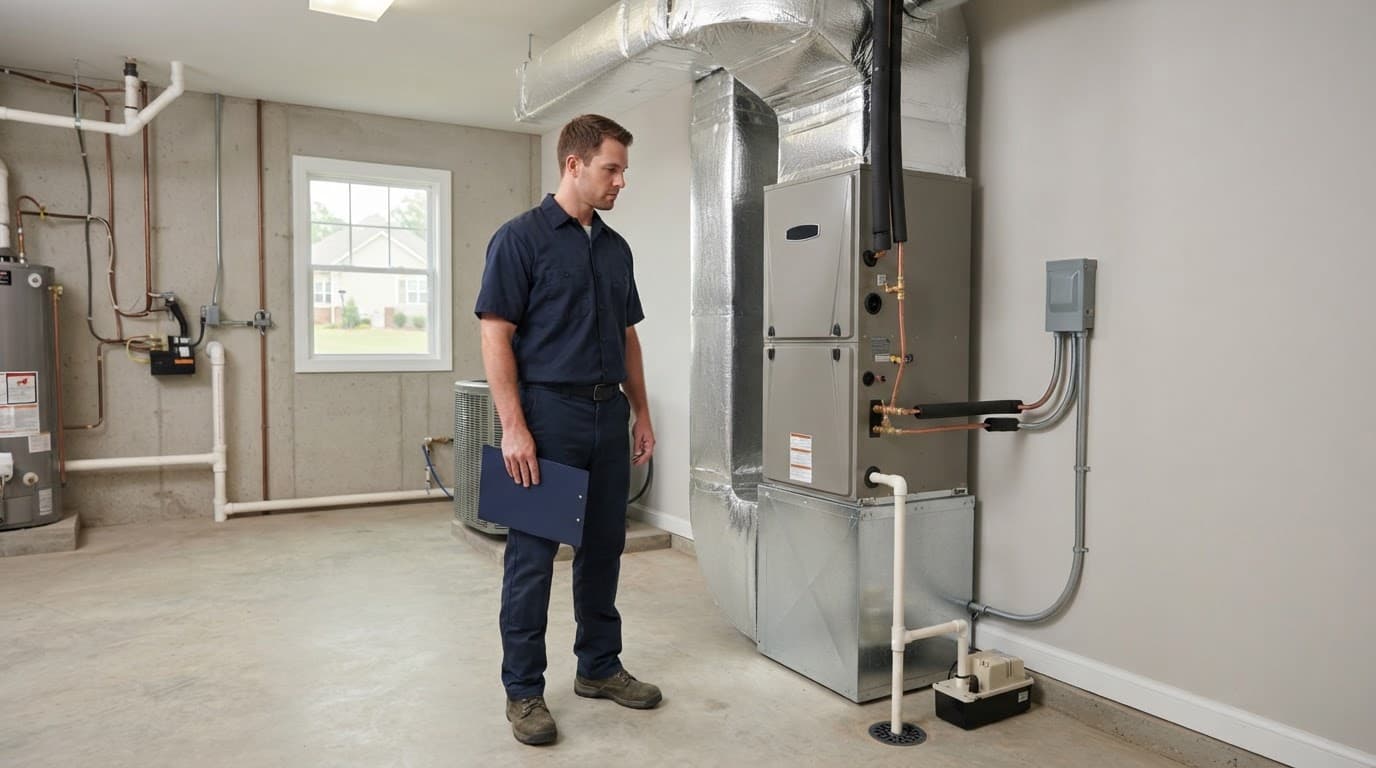
Ask the installer to inspect accessible supply ducts, return ducts, plenums, and connections. Loose collars, crushed flex duct, failed tape, missing insulation, and undersized returns can hold back a new system before it gets a fair chance.
Technicians can measure static pressure to find restrictions from a tight filter, dirty coil, blocked return, undersized duct, or closed registers. A duct leakage test may also help. It reports leakage as CFM25, which measures air escaping while the duct system is tested at 25 Pascals.
CFM25 is not the same as the airflow rate at a bedroom register. Register readings differ from static pressure and CFM25 testing, so they can help separate a leak from a weak blower, damaged duct run, or poor duct layout.
Use mastic or suitable UL 181-rated foil tape for approved duct connections. Standard gray cloth-backed duct tape often dries out in West Alabama heat and humidity.
Plan condensate management before cooling season
Your evaporator coil removes water from indoor air, and that water needs a reliable route out of the home. The evaporator coil, drain pan, and condensate outlet should function together as one path. The installer should inspect the primary drain and, where required, its drain trap, drain slope, secondary pan, and any float switch that can shut the system down before an overflow damages ceilings or flooring.
A high-efficiency furnace also creates condensate during heating. Its drain trap and drain need proper routing and testing, separate from the air conditioner’s drainage path.
Ask for a written condensate management plan identifying each drain route and safety control.
A clear drain line at installation is not enough. Water testing should verify the written condensate management plan by running water through each applicable drain trap and drain before humid weather arrives.
Installation Day Requires Measured Work
You don’t need to stand over the crew with a wrench. However, you should expect clean work, safe access, and answers when you ask what is being tested.
Verify electrical, gas, and equipment placement
The outdoor unit needs a stable, level pad with clearance around it for airflow and service access. Use ACCA Standard 5 as a quality-installation benchmark for placement, electrical work, gas work, and verification.
Refrigerant lines should be insulated where required and protected from damage. The crew should install a properly rated disconnect and verify the breaker, wiring, and electrical connections match the equipment requirements.
If you are installing a gas furnace, the work should include a review of gas piping, venting, combustion air, and safety controls. Ask the installer to document the gas piping’s sizing, pressure, and code compliance. Technicians should measure gas pressure and verify temperature rise during startup. Homeowners should never adjust a gas valve or bypass a safety switch.
Permits and inspections depend on the property address. Before work starts, confirm whether Northport, Tuscaloosa County, or another local authority requires a mechanical or electrical permit for your project.
Watch how refrigerant charge is verified
A professional crew pressure-tests the refrigerant circuit, evacuates it with the correct equipment, and then charges the system according to the manufacturer’s procedure. Refrigerant charge should not be guessed from a single gauge reading.
Depending on the equipment, technicians may verify charge through weighed-in refrigerant, subcooling, superheat, and operating pressures. They should also check for leaks before leaving.
Federal rules require EPA Section 608 certification for technicians who handle regulated refrigerants. Ask whether the crew is trained for the refrigerant in your new system, especially if it uses an A2L product such as R-454B or R-32.
Startup Tests Show Whether the System Is Ready
System startup is a measured process, not merely turning on the thermostat and listening for the fan. Final tests connect installation quality to the comfort you feel in each room.
Set controls for comfort and equipment protection
The technician should confirm thermostat settings, cooling stages, fan operation, and airflow direction. For heat pumps, the final customer walkthrough should demonstrate auxiliary heat, defrost operation, and heating and cooling changeover.
A furnace installation should include a heating-cycle test. The technician should verify ignition, burner operation, blower timing, safety controls, and temperature rise.
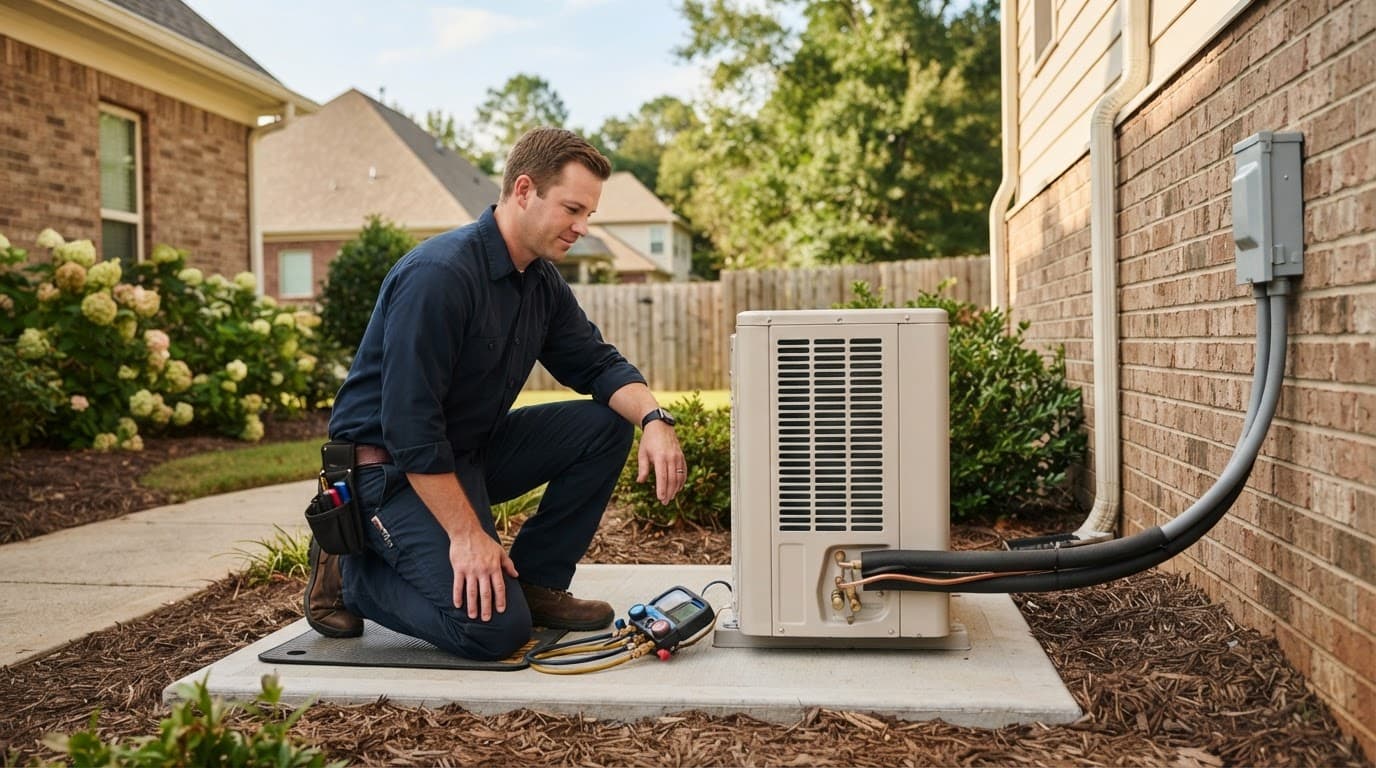
For cooling equipment, the technician should inspect the evaporator coil. The technician should record applicable subcooling and superheat readings according to the manufacturer’s procedure.
The PNNL overview of residential Manual J calculations is useful when you want to understand why those airflow and sizing decisions matter after the equipment is installed.
Review the paperwork before final payment
Digital forms and service software can make records easier to share, but a paper checklist works too. What matters is clear documentation of measurements, equipment details, and warranty information, consistent with ACCA Standard 5.
Your job file should include:
- The sizing report and the selected equipment capacity.
- The AHRI certificate for the matched indoor and outdoor components.
- Model and serial numbers, permit information, and inspection approval when required.
- A startup sheet with airflow, static pressure, temperature readings, refrigerant charge, and the actual method or readings used to verify the charge.
- Manufacturer manuals and completed warranty registration details.
- Written labor coverage, including our 1-year labor warranty on new installations and the applicable manufacturer parts warranty.
- Any maintenance agreements, or a clear note identifying them when they’re documented separately.
At Northport HVAC, we recommend comparing every line of maintenance agreements as well. Confirm the number of visits, covered tasks, labor terms, and whether drain cleaning, coil checks, and electrical inspections are included.
Protect the New System After the Crew Leaves
A careful installation gives the equipment a strong start, but basic care still matters. Change filters on a schedule that fits your household, pets, and filter type. Good filtration and steady airflow support indoor air quality. Our Alabama HVAC filter replacement guide explains why restrictive or neglected filters can freeze an evaporator coil or overheat a furnace.
Keep supply registers open and return grilles clear. Closing several vents or blocking a return grille with furniture raises duct pressure and reduces total airflow. Maintenance agreements can help schedule filter, drain, and coil checks, but review what each plan actually covers.
Northport and Tuscaloosa air conditioning systems work hard through long humid stretches. Call local HVAC technicians if you notice ice, standing water, weak airflow, breaker trips, grinding sounds, or rooms that stay warm despite a normal thermostat reading.
In our AC repair work in Northport, AL, we often find that a small drainage or airflow issue became a bigger failure because the system kept running. Call for emergency AC repair when there is an electrical smell, severe leak, loud mechanical noise, or no cooling during dangerous heat.
Frequently Asked Questions
Why is a Manual J calculation important for HVAC installation?
A Manual J calculation sizes the system for the home’s actual heating and cooling loads rather than the old unit’s tonnage. Proper sizing helps prevent excessive cycling, high indoor humidity, weak airflow, and comfort problems in distant rooms.
What should an HVAC contractor test during startup?
The contractor should verify airflow, static pressure, temperature readings, thermostat operation, electrical connections, and applicable safety controls. For cooling equipment, the refrigerant charge should be checked using the manufacturer’s required procedure, such as weighed-in charge, subcooling, or superheat.
How should condensate drainage be checked?
The installer should identify the primary drain, trap, secondary pan, float switch, and any additional drain routes in a written condensate management plan. Water should be run through each applicable drain and trap to confirm that it flows properly and that safety controls respond as intended.
What paperwork should I receive after HVAC installation?
Ask for the Manual J report, matched-equipment details or AHRI certificate, model and serial numbers, permit and inspection information, startup readings, manuals, and warranty documents. Any maintenance agreement should clearly state its visits, covered tasks, labor terms, and exclusions.
When should I call an HVAC technician after installation?
Call if you notice ice, standing water, weak airflow, repeated breaker trips, grinding sounds, or rooms that remain warm despite a normal thermostat reading. An electrical smell, severe leak, loud mechanical noise, or loss of cooling during dangerous heat requires prompt or emergency service.
A System You Can Verify Is a Better Investment
The best HVAC installation checklist centers on proof: a Manual J calculation, matched equipment, sound ductwork, safe drainage, measured testing, and complete paperwork. Those details protect comfort far longer than a shiny new outdoor unit.
A new heating and cooling system should fit your home, move air properly, and leave you with clear records of the work. That’s the standard worth expecting from any installation in Northport or West Alabama.