HVAC Blower Motor Failure Signs You Shouldn’t Ignore
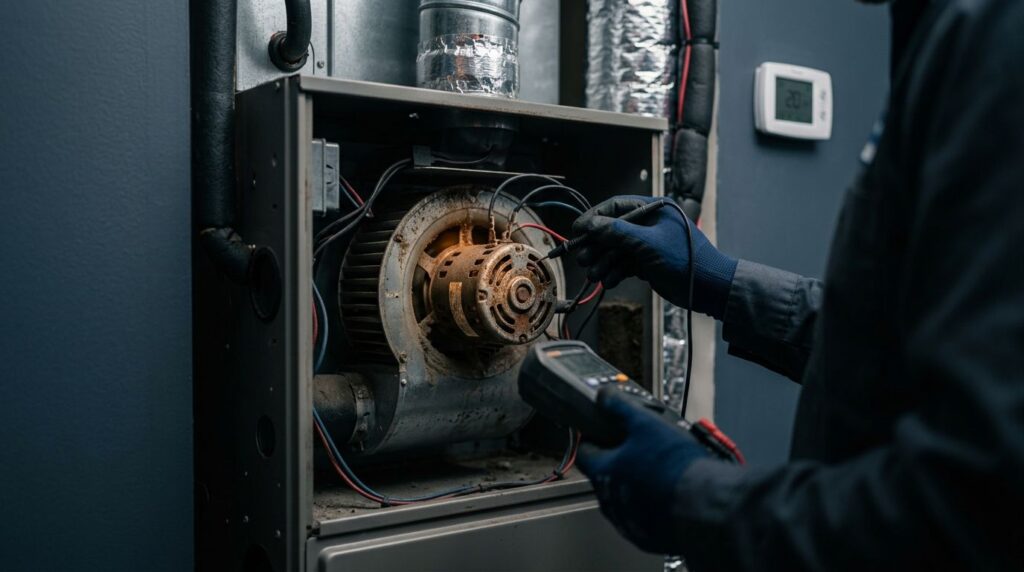
Your thermostat can be calling for cooling or heat while the furnace blower motor produces weak airflow through the house. That is often where HVAC blower motor failure first shows up, but a weak motor is not the only possible cause.
A clogged air filter, frozen coil, blocked return, damaged duct, or electrical fault can create the same frustrating symptoms. The pattern matters, and it can tell you whether you need a simple airflow fix or a service call.
Key Takeaways
- Weak airflow does not automatically mean the HVAC blower motor has failed; a clogged filter, blocked return, dirty coil, damaged duct, or electrical fault can create similar symptoms.
- Humming without airflow, grinding noises, burning odors, repeated starts and stops, and airflow changes without thermostat changes deserve prompt attention.
- PSC and ECM blower motors fail differently, so the correct diagnosis must check the capacitor, relay, control module, blower wheel, wiring, and motor itself.
- Replace a dirty filter and clear airflow restrictions first, but turn the system off and schedule service if you notice overheating, smoke, electrical odors, loud grinding, or total airflow loss.
- Do not approve blower motor replacement based on a guess. Voltage, motor size, airflow programming, connector layout, and equipment model all need to match the replacement part.
HVAC Blower Motor Failure: Read the Pattern
The furnace blower motor moves conditioned air across the indoor coil or heat exchanger, then pushes it through the ducts. When it begins to fail, comfort usually changes before the system stops altogether.
Listen for new sounds. Pay attention to how quickly air reaches the vents. A motor with worn motor bearings may complain for weeks before it locks up. A failing run capacitor may leave the motor humming without enough starting power.
These signs point in different directions:
| What you notice | What may be happening | What to do first |
|---|---|---|
| Weak airflow at most vents | Dirty filter, dirty coil, blocked return, weak motor, or slipping blower wheel | Replace a dirty filter and clear return grilles |
| Squealing, screeching, or grinding | Worn motor bearings or a blower wheel rubbing the housing | Turn the system off and schedule service |
| Humming with no airflow | Failed run capacitor, seized motor, relay issue, or control problem | Shut the unit down before the motor overheats |
| Burning smell or hot electrical odor | Overheated motor windings, wiring fault, or failing electrical component | Turn off power and call for repair |
| Blower starts and stops repeatedly | Restricted airflow, high-limit switch trips, failing relay, or motor overheating | Check the filter, then arrange diagnosis |
| Airflow changes without thermostat changes | Control module issue, blower motor relay, loose connection, or blower motor resistor on systems that use one | Have the system tested with proper equipment |
A blower that runs but moves little air is not automatically a bad motor. If airflow is strong at the air handler but weak in one distant bedroom, the problem may be a crushed flex duct, loose attic connection, undersized duct run, or a blower wheel issue.
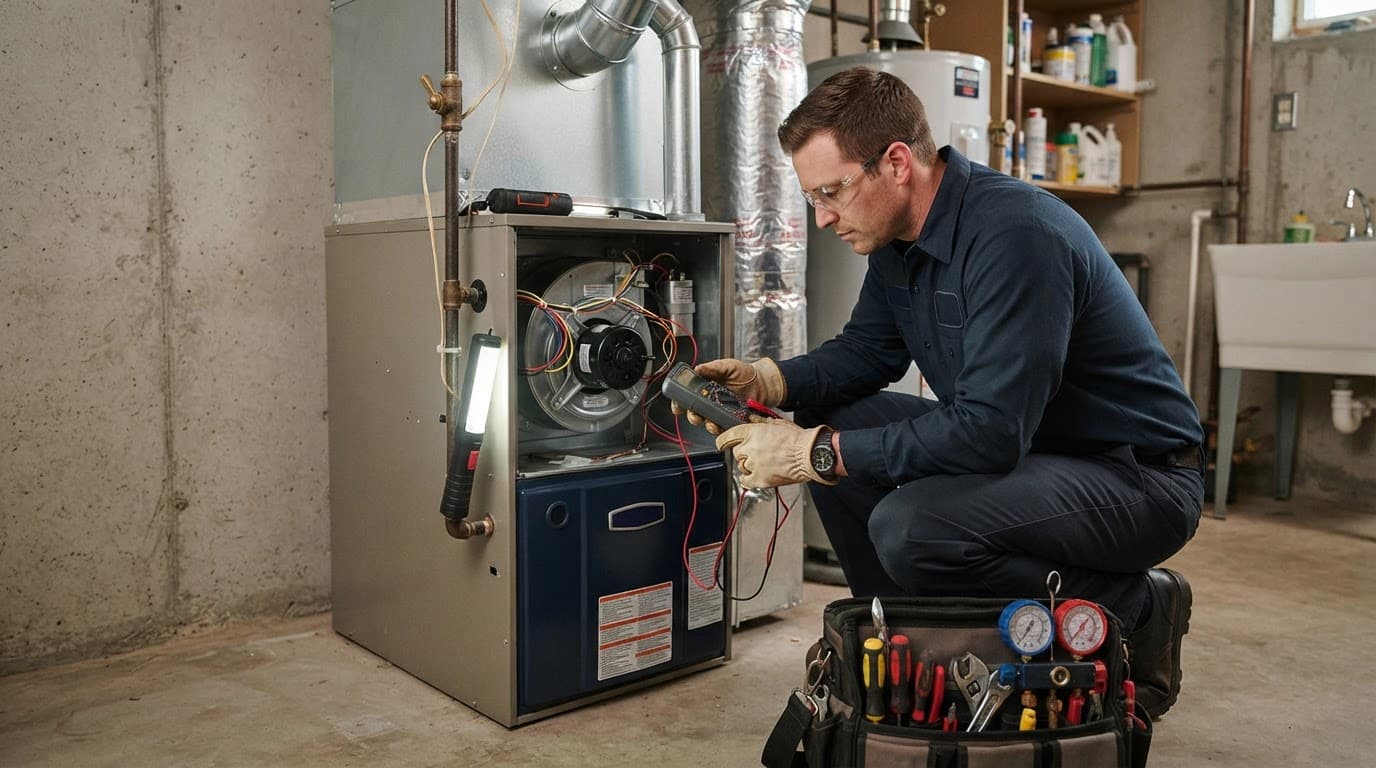
A motor that hums without starting can overheat fast. Letting it sit and hum can turn a capacitor repair into a motor replacement.
Check Airflow Restrictions Before Blaming the Motor
A dirty air filter can contribute to furnace blower motor overheating. When return air cannot move through the system, static pressure rises and the blower works against more resistance. Heat builds up in the motor and furnace cabinet.
That does not mean every clogged filter destroys a motor. It does mean a gray, matted, bowed, or overdue filter should be replaced before anyone calls the motor bad.
We start with these simple checks as preventative maintenance because they solve more problems than homeowners expect:
- Use the correct filter size and type for the equipment. An extra-dense filter left in place too long can restrict airflow more than a basic pleated filter changed on schedule.
- Keep supply registers open throughout the home. Closing several vents to force air into one room raises duct pressure and can reduce total airflow.
- Move furniture, curtains, storage bins, and pet beds away from return grilles. A large sectional against a return can starve the system of air all day.
- Look at accessible ductwork for loose collars, crushed flex duct, failed tape, or dust streaks around seams.
West Alabama attics punish weak duct connections. A loose supply run can dump cooled air into blistering attic heat before it reaches the room you are trying to cool. Standard gray duct tape is not a lasting repair. Proper duct repairs use secure connections, mastic, or UL 181-rated foil tape where the surface and application allow it.
A maintenance checkup can spot restrictions early when burners shut off but the fan keeps running. The blower may work normally while a high-limit or limit switch opens to protect the heat exchanger. Repeated trips can look like short cycling.
A Humming Blower and Run Capacitor Problems
A furnace blower motor needs a thermostat command, power, a working blower motor relay, and a healthy run capacitor.
When the blower hums but won’t turn, shut the system down at the controls and stop resetting it. The issue could be a weak capacitor, a seized motor, or damaged windings. It could also involve the control module or, on applicable equipment, a blower motor resistor. Component layouts vary.
Homeowners with electrical experience can test a blower motor capacitor with a digital multimeter, but only with power fully disconnected. Capacitors can hold an electrical charge after the breaker is off.
- Turn off the circuit breaker serving the furnace or air handler, then verify the equipment isn’t energized before touching internal parts.
- Take a clear photo of the wire locations and read the capacitor label. It lists the microfarad rating, shown as uF or MFD, and its allowed tolerance.
- Disconnect the capacitor leads and discharge it according to the manufacturer’s procedure, using the proper method. Never short terminals with a screwdriver.
- Set the multimeter to capacitance, connect the probes as directed by the meter, and compare the reading with the rating and tolerance printed on the part.
- If the reading falls outside the listed tolerance, replace the capacitor with one matching the required electrical rating.
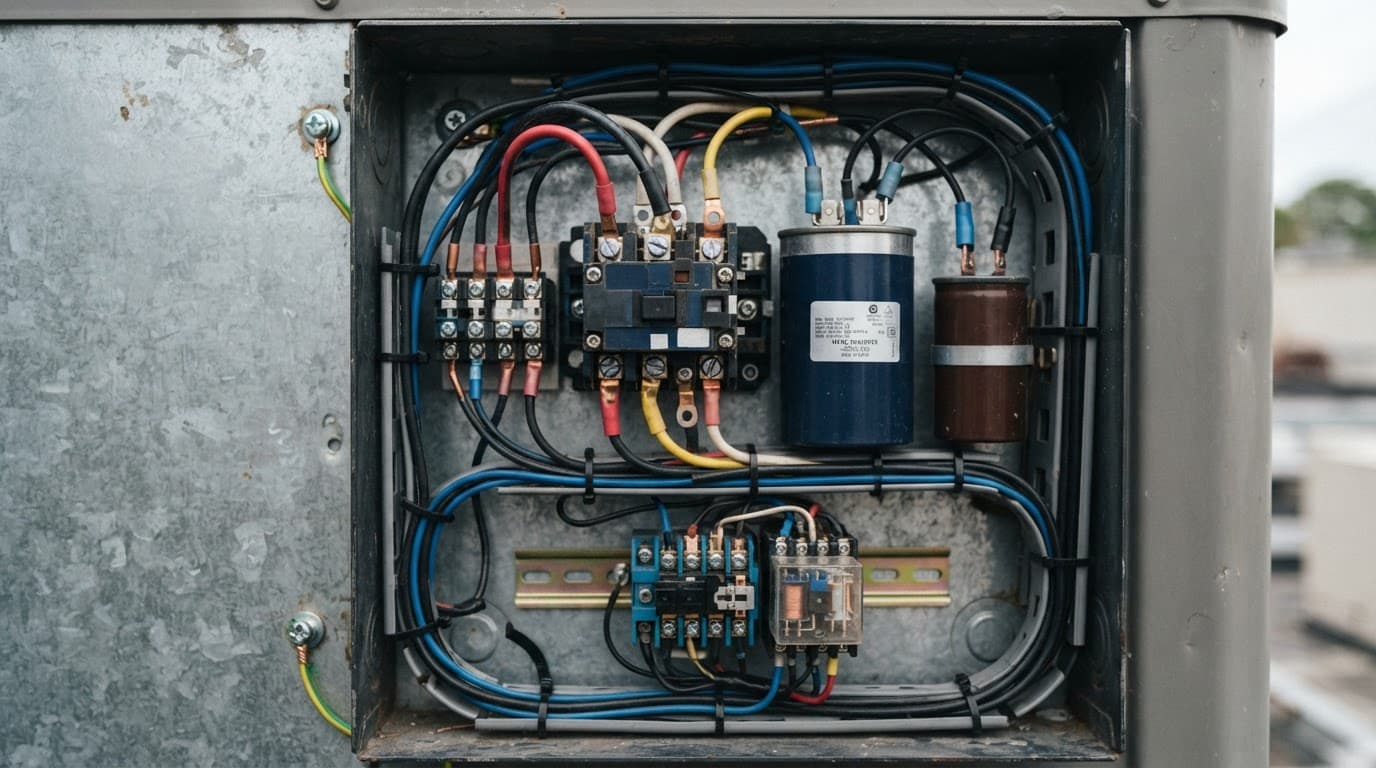
A capacitance reading alone doesn’t prove the motor is healthy. A technician may also need to check its amps draw and other electrical conditions.
Electrical safety warning: Capacitor testing isn’t a good place to learn electrical work by trial and error. Damaged electrical connections, damaged insulation, and high voltage inside the cabinet can make a small mistake expensive or dangerous. We recommend leaving internal electrical diagnosis to trained technicians if there’s any doubt.
PSC Motors and ECM Motors Fail Differently
Older systems often use a PSC motor, short for permanent split capacitor motor. They usually run at selected speed taps and depend on a separate run capacitor. A failed capacitor, worn motor bearings, damaged blower wheel, or failed relay can sometimes be repaired without replacing the whole motor. Basic power verification, including the circuit breaker, should come before condemning a furnace blower motor.
Modern variable-speed systems commonly use an ECM motor, a type of variable speed motor. Unlike equipment that uses a blower motor resistor, this design adjusts airflow through an attached control module.
The control module can fail even when the motor bearings remain sound. That is why HVAC blower motor failure is not one diagnosis with one repair.
Erratic airflow may indicate a control module that isn’t receiving the right command. With a variable speed motor, an ECM motor may not respond to changing demand, even without obvious mechanical noise. Grinding noises, a locked shaft, or overheating make motor damage more likely.
These motors are usually replaced as matched assemblies rather than rebuilt part by part. The replacement isn’t always plug and play, because blower motor replacement must match more than the brand on the cabinet. Voltage, motor size, programmed airflow profile, connector layout, control module design, and equipment model all matter. A remanufactured motor that is only a near-match can create new problems.
Repair Costs and When Replacement Makes Sense
A furnace blower motor can last 10 to 20 years, though heat, dust, restricted airflow, and neglected maintenance can shorten that life. A capacitor or relay repair often costs a few hundred dollars. A standard installed blower motor commonly falls around $500 to $1,200.
Variable-speed ECM blower motor replacement is usually more expensive and isn’t always plug and play when programmed airflow is required. Parts and labor can run roughly $900 to $2,000 or more, depending on the equipment, access, and after-hours service. Ask whether the quote uses a new or remanufactured motor, then confirm the remanufactured motor’s warranty, expected life, and compatibility.
We don’t recommend approving a blower motor replacement based on a guess. A good diagnosis checks the circuit breaker, blower motor relay, control module, and blower wheel. It also identifies capacitor, winding, and ECM module problems before ordering parts.
At Northport HVAC Services, we work on Trane, Carrier, Rheem, Lennox, Goodman, and other common heating and cooling systems. We give clear upfront pricing and explain whether a focused repair makes sense or whether repeated breakdowns make a larger replacement conversation reasonable.
When the Blower Problem Needs Immediate Service
Turn the system off at the thermostat and call for help if you notice smoke, a persistent burning smell, a tripped circuit breaker, loud grinding, or no airflow during extreme weather. These symptoms can damage more than the motor if the system keeps running.
For professional furnace repair, loss of heat, repeated high-limit trips, or strange blower noises deserve a prompt inspection. Furnace, air handler, and AC equipment may need different service approaches. If a carbon monoxide alarm sounds, leave the home and call 911 or the fire department.
Local HVAC technicians can sort out whether the issue involves airflow, ducts, controls, or related parts, such as a control module, blower motor relay, or blower motor resistor on systems that use one. After the equipment is safe, discuss repair options, including a remanufactured motor. For AC repair in Northport, AL, or Tuscaloosa air conditioning trouble, emergency AC repair is the right call when electrical odors, breaker trips, or total airflow loss are involved.
Frequently Asked Questions
What are the most common signs of HVAC blower motor failure?
Weak airflow, new squealing or grinding sounds, humming without the blower starting, burning odors, and repeated starts and stops are common warning signs. These symptoms can also come from airflow restrictions, a failed capacitor, a relay problem, or a control module issue.
Can a dirty air filter damage the blower motor?
A clogged filter restricts return airflow, increases static pressure, and makes the blower work harder. Over time, that added resistance can contribute to motor overheating, so replace an overdue filter with the correct size and type for the equipment.
Why is my blower motor humming but not turning?
A weak run capacitor is one possible cause, but the motor could also be seized or have damaged windings. A failed relay, control module, or wiring problem can create the same symptom, so turn the system off instead of repeatedly resetting it.
How much does blower motor replacement cost?
A standard installed blower motor commonly costs around $500 to $1,200, while variable-speed ECM replacement can run roughly $900 to $2,000 or more. The equipment type, access, programmed airflow requirements, part choice, and service timing all affect the final price.
When should I turn off the HVAC system and call for service?
Turn the system off if you notice smoke, a persistent burning smell, a tripped circuit breaker, loud grinding, or no airflow during extreme weather. If a carbon monoxide alarm sounds, leave the home and call 911 or the fire department.
Keep Small Blower Issues From Becoming Big Repairs
The clearest early warning signs are usually weak airflow, a new hum, and a filter left too long. Catching those clues early can protect the blower, the evaporator coil, and the rest of the system.
A clean, correctly sized filter and clear return path give the blower the air it needs to do its job. A maintenance checkup can catch airflow or sound changes early, making preventative maintenance more effective. When the sound or airflow changes anyway, a measured diagnosis beats replacing parts on a hunch.