Heat Pump Auxiliary Heat Settings for Alabama Homes
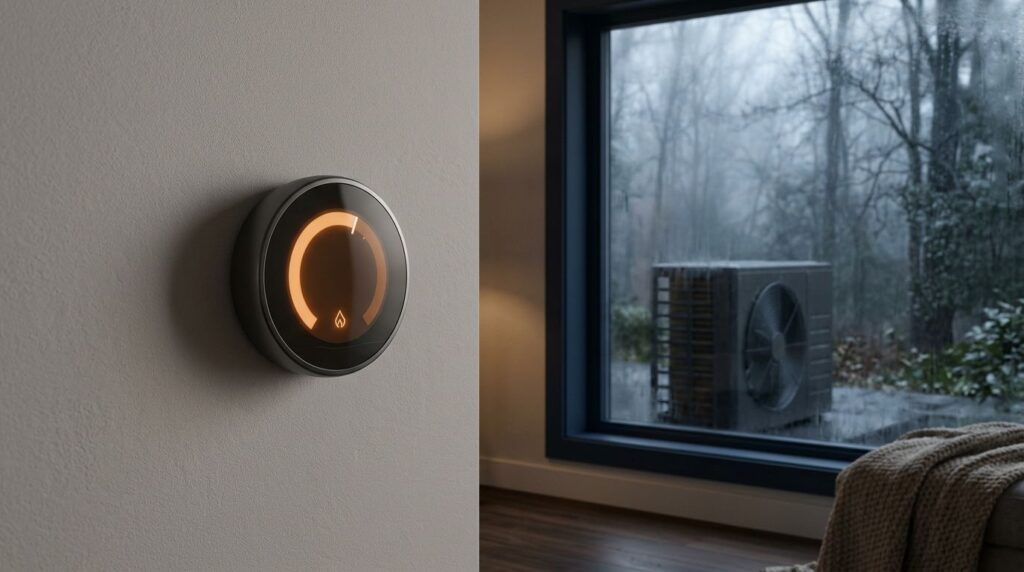
Seeing “AUX HEAT” on the thermostat during a cold Alabama morning doesn’t automatically mean your system is broken. In most homes, heat pump auxiliary heat is an automatic backup stage that helps maintain comfort when the heat pump needs support.
West Alabama weather can swing from mild to damp and near-freezing quickly. Although Tuscaloosa air conditioning gets more attention during long summers, a winter no-heat problem deserves a clear answer before utility costs rise.
Once you know when auxiliary heat should run, you can spot the difference between a normal heat pump winter cycle and an unusual system response.
Key Takeaways
- AUX HEAT is an automatic backup stage, not an automatic failure notice. It may run during cold weather, defrost cycles, or recovery after a large thermostat adjustment.
- Auxiliary Heat and Emergency Heat are different settings. AUX Heat can operate with the heat pump, while Emergency Heat manually bypasses the outdoor unit and should be used only after an outdoor equipment problem is confirmed.
- Brief AUX Heat operation is usually normal, but long operation during mild weather can point to airflow restrictions, thermostat or sensor problems, refrigerant issues, defrost faults, or other equipment concerns.
- Heat strips use more electricity than normal heat pump operation. Stable thermostat settings, clean filters, clear registers, and unobstructed outdoor equipment can help reduce backup runtime.
- Call for professional service when the home cannot maintain temperature, thick ice does not clear, the outdoor unit stays silent, breakers trip, airflow is weak, or the system makes unusual noises.
What Heat Pump Auxiliary Heat Means on Your Thermostat
A heat pump moves ambient heat indoors through a refrigerant cycle. The air handler then distributes that heat throughout the home.
As outdoor conditions get colder, the heat pump may not produce enough heat on its own. The system then calls for a secondary heating source, often shown as “AUX HEAT.”
Auxiliary heat is a backup stage, not an automatic failure notice.
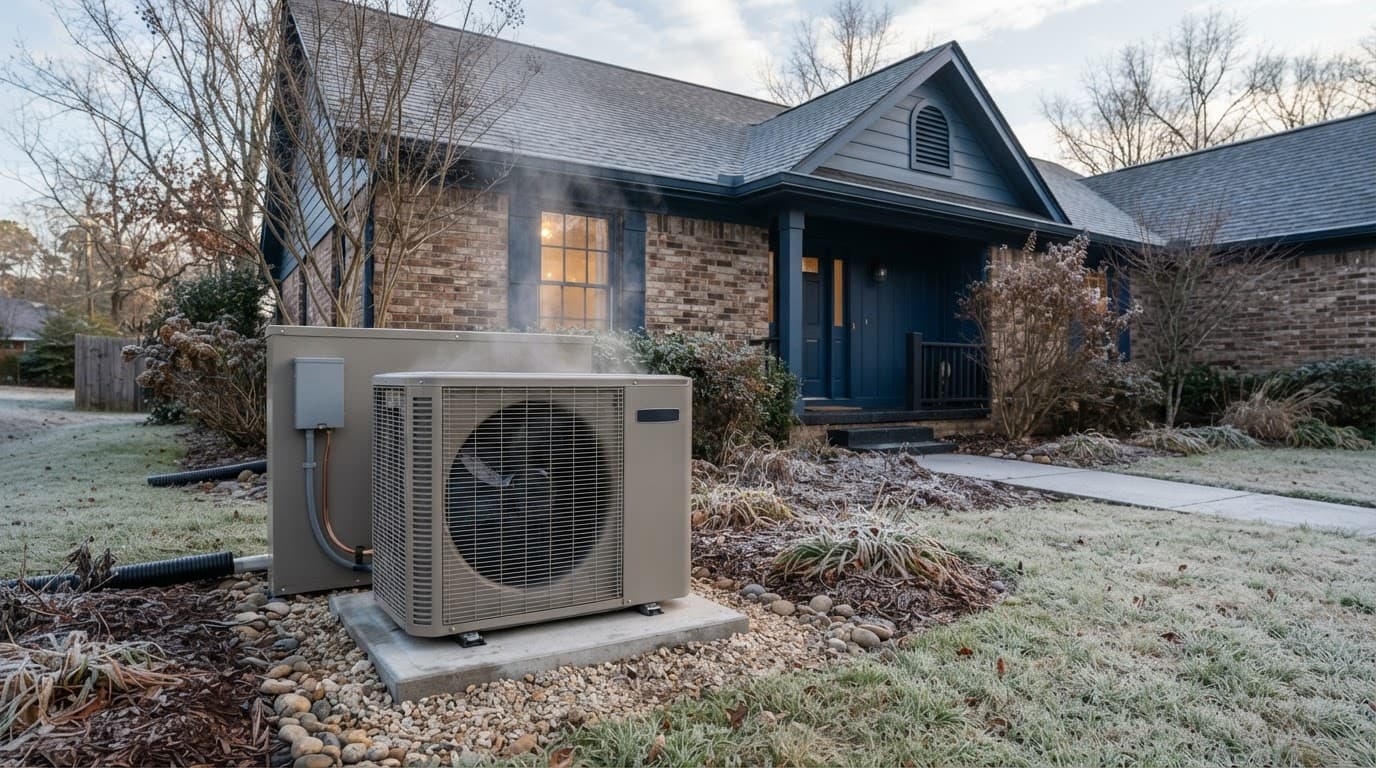
The two common backup heat sources
Most all-electric units have electric heat strips inside the indoor unit. They are a backup heating source that uses electric resistance elements, warming quickly like an oversized toaster.
A dual fuel system works differently. It pairs a heat pump with a gas furnace as the alternate source. Controls switch to the furnace when that option is more practical, leaving the primary equipment off during that cycle.
The thermostat decides when help is needed
Your thermostat monitors indoor temperature, outdoor conditions on some systems, and how quickly the home is recovering. It can bring on the second stage when the primary system can’t satisfy demand fast enough.
ENERGY STAR’s supplemental-heating criteria describe two common triggers: the primary system may not meet the requested indoor temperature, or it may enter defrost mode. The thermostat may respond to either condition, with activation temperature depending on equipment, controls, insulation, and ductwork rather than a fixed threshold.
Why Alabama Weather Can Trigger Auxiliary Heat
A generic rule that auxiliary heat starts at 35 or 40 degrees doesn’t fit every home because modern heat pump systems vary. Equipment capacity, insulation, ductwork, humidity, wind, and controls determine when backup is needed, not one outdoor temperature.
Rain and fast temperature drops can also make the system work harder, especially with high humidity or strong wind. In Northport, Coker, and Samantha, we often see AUX Heat during short cold snaps, then normal heat pump operation once outdoor conditions improve.
Defrost cycles need temporary indoor backup
When a heat pump runs in heating mode, its outdoor coil gets cold enough to collect frost. The system periodically starts a defrost cycle to melt that buildup and keep air moving across the coil.
During defrost, the heat pump briefly reverses its refrigerant cycle. Without backup heat, you could feel cool air at the vents. Auxiliary heat keeps the supply air comfortable while the outdoor coil clears itself.
The outdoor fan may pause, and you may see white vapor rising from the unit. Those signs can be normal. The Department of Energy includes heat-pump defrost controls in its equipment testing requirements because the cycle is part of normal cold-weather operation.
Large thermostat changes can bring on heat strips
Raising the thermostat three or four degrees at once often tells the system to recover quickly. On many thermostats, that recovery call brings on heat strips along with the system.
Some controls, including a smart thermostat, use outdoor readings or adaptive recovery, but not every setup does. We recommend smaller adjustments, usually one or two degrees at a time, unless your thermostat and system were set up for a larger programmed setback.
A steady temperature often helps the system recover to the set temperature with less backup heat.
Auxiliary Heat and Emergency Heat Are Different Settings
The labels sound similar, yet they control your equipment differently. Auxiliary heat runs automatically on your thermostat’s second-stage call. Emergency Heat is manual and bypasses the outdoor heat pump’s normal refrigerant cycle.
| Control setting | Outdoor equipment | Backup heat source | Normal use |
|---|---|---|---|
| AUX Heat | Usually continues running | Electric elements or furnace assist | Temporary support during cold weather, recovery, or defrost |
| Emergency Heat | Stays off | Electric elements or a gas furnace alone | Use only after an outdoor equipment problem is confirmed |
AUX works with the heat pump
During an AUX Heat call, your compressor can still run outside while heat strips add warmth indoors. That combined output helps the home catch up after a setback or hold temperature during a cold spell.
A dual-fuel setup may operate differently because the thermostat can lock out the heat pump and run the furnace instead. Your installer should configure that changeover point for your equipment and local utility costs.
Emergency Heat is for an outdoor-unit failure
Emergency operation can keep a home warm if the heat pump fails, has a damaged fan, or needs repair. However, it often costs more than normal operation, especially when electric elements provide the backup.
This setting is temporary, not a faster way to warm the house.
Don’t switch to Emergency Heat simply because the AUX indicator appears. If the outdoor unit has ice covering the coil, the compressor makes grinding sounds, the reversing valve sticks, breakers trip, or the system won’t run, turn it off and arrange service.
When Auxiliary Heat Is Normal and When It Is Not
The AUX indicator provides useful information, but it doesn’t identify a failed part by itself. Duration, weather conditions, and system behavior matter more than one display message.
Normal AUX Heat patterns
Brief auxiliary heat use is common in several situations:
- The control is recovering from a large temperature increase.
- The system is defrosting after frost forms on a cold, damp morning.
- Outdoor conditions stay unusually cold for several hours.
- The system runs steadily but needs extra capacity to reach the setpoint.
A short AUX Heat cycle during a cold spell doesn’t call for alarm. However, auxiliary heat that appears every cycle in mild weather deserves a closer look.
Warning signs that point to a repair need
Call for heat pump service when you notice any of these patterns:
- AUX Heat stays on for most of the day when outdoor weather is mild.
- The outdoor unit is silent during a normal heating call, or its fan never runs.
- Thick ice keeps building on the outdoor coil instead of clearing after defrost.
- The heat pump runs constantly, but indoor temperature falls.
- Breakers trip, airflow is weak, or the equipment makes buzzing, grinding, or banging sounds.
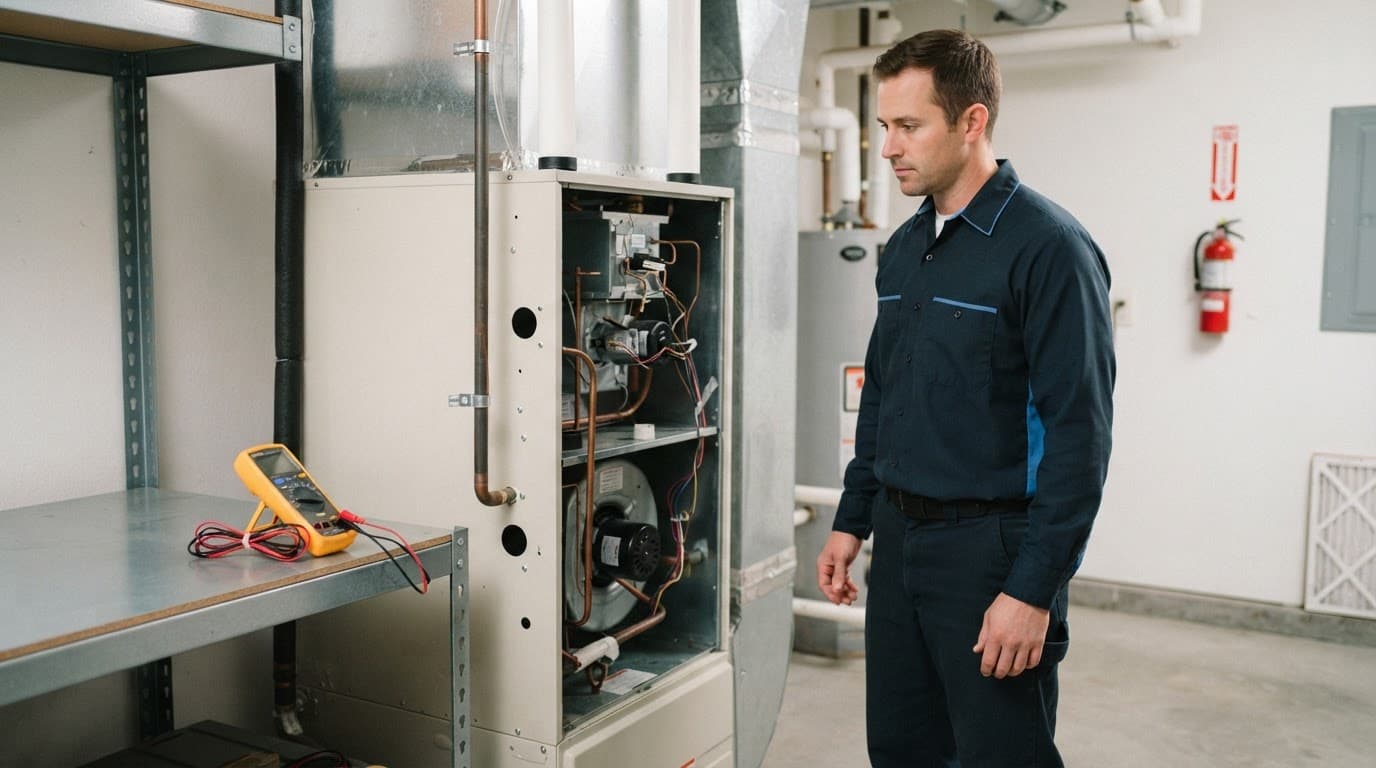
The cause might be a thermostat configured for the wrong system, a failed outdoor sensor, a defrost board issue, low refrigerant, a reversing valve problem, or an electrical fault. Restricted airflow from a clogged filter, dirty coil, weak blower, or damaged duct can also keep a heat pump from delivering enough heat.
How Auxiliary Heat Affects Winter Costs
Heat strips provide reliable warmth, but they use more electricity than a properly operating heat pump. A heat pump moves heat rather than producing all its warmth through electric resistance heat. Good system efficiency lets it provide more heat per unit of electricity when conditions allow.
The Department of Energy explains that electric-resistance heaters turn nearly all consumed electricity into heat. That sounds efficient, yet a heat pump can often move multiple units of heat for each unit of electricity it uses.
Prolonged backup operation can increase winter energy bills without improving comfort.
Alabama Power also warns that strip heating can drive winter energy costs higher. The actual cost depends on your electric rate, strip capacity, run time, home efficiency, and system condition.
Thermostat habits that reduce backup runtime
You don’t need to keep the house cold to control backup heat. Small changes and solid maintenance often make a larger difference.
- Keep the home at a stable comfort setting instead of making large morning and evening changes.
- Confirm the thermostat is set to “Heat” with the fan on “Auto,” not “Emergency Heat” or constant fan operation.
- Replace filters on schedule and keep returns, supply registers, and outside equipment clear of obstructions.
A clean filter protects airflow through the system. Our Alabama HVAC filter replacement guide can help you choose a practical replacement schedule for your household.
Dual-fuel systems need the right changeover setting
With a dual fuel system, the thermostat or control board selects when to stop using the heat pump and run the gas furnace. That changeover should reflect equipment performance, the balance point, gas prices, electric rates, and the home’s heating load.
We don’t recommend changing installer-level lockout settings without testing. A setting that looks good on the control screen can force expensive backup heat or leave the home slow to recover.
Safe Checks Before Calling for Heat Pump Repair
Homeowners and property managers can check a few visible items without opening panels or touching wiring. These steps can rule out a basic setting or airflow problem.
Checks you can make safely
First, confirm that the thermostat is set to “Heat” and above room temperature. Then check that the fan setting is “Auto.”
Next, inspect the air handler’s filter and replace it if it looks gray, bowed, or heavily coated. Keep furniture, curtains, and storage away from return grilles, because blocked returns can reduce airflow through the entire system.
You can also remove leaves, pine straw, and loose debris around the outdoor unit. Don’t chip ice from the coil, pour hot water on it, remove panels, or repeatedly reset a tripped breaker.
What a professional diagnosis should include
At Northport HVAC, a licensed, insured, NATE-certified local HVAC professional tests the heat pump before recommending repairs. That can include thermostat output, heat-strip operation, blower airflow, low refrigerant, electrical components, defrost controls, and the fan and compressor.
We service Trane, Carrier, Rheem, Lennox, Goodman, and Mitsubishi systems throughout West Alabama. For a heat pump that won’t maintain temperature, our Northport and Tuscaloosa heating services can identify whether the issue is a setting, airflow restriction, or equipment fault.
The same attention to diagnosis matters year-round, and preventive maintenance supports reliable service. We handle heating and cooling in West Alabama. That includes AC repair in Northport, AL, Tuscaloosa air conditioning problems, and emergency AC repair during summer heat, along with urgent winter heating calls.
Frequently Asked Questions
Is AUX HEAT on my thermostat a sign that the heat pump is broken?
Not necessarily. AUX HEAT is a normal backup stage that may run during a defrost cycle, a cold spell, or recovery after a large temperature change.
What is the difference between AUX Heat and Emergency Heat?
AUX Heat runs automatically and may operate along with the heat pump or another backup source. Emergency Heat is a manual setting that turns off the outdoor heat pump and uses the backup system alone.
Why does AUX HEAT run when Alabama weather is only mildly cold?
The activation point depends on the equipment, thermostat settings, insulation, ductwork, humidity, and outdoor conditions rather than one fixed temperature. Frequent AUX Heat in mild weather may indicate restricted airflow, a control problem, low refrigerant, or another issue that needs diagnosis.
How can I reduce auxiliary heat use?
Keep the thermostat at a steady comfort setting and make smaller adjustments, usually one or two degrees at a time. Replace clogged filters, keep supply and return grilles clear, and remove loose debris from around the outdoor unit.
When should I call for heat pump service?
Arrange service if AUX Heat stays on most of the day in mild weather, the home cannot maintain temperature, or the outdoor unit is silent during a heating call. Thick ice, weak airflow, tripped breakers, and buzzing, grinding, or banging sounds also warrant professional attention.
A Better Way to Read the AUX Heat Message
An auxiliary heat message often means your heat pump is protecting comfort during cold weather, defrost, or a fast thermostat recovery. Brief operation is usually normal, but long operation in mild weather warrants attention. Ice, noise, weak airflow, or rising utility costs also call for diagnosis.
Stable thermostat settings and clear airflow help the heat pump carry more of the heating load. When auxiliary heat becomes the default instead of the backup, the system needs a measured diagnosis.