Furnace Leaking Water? Find the Leak Before Damage Spreads
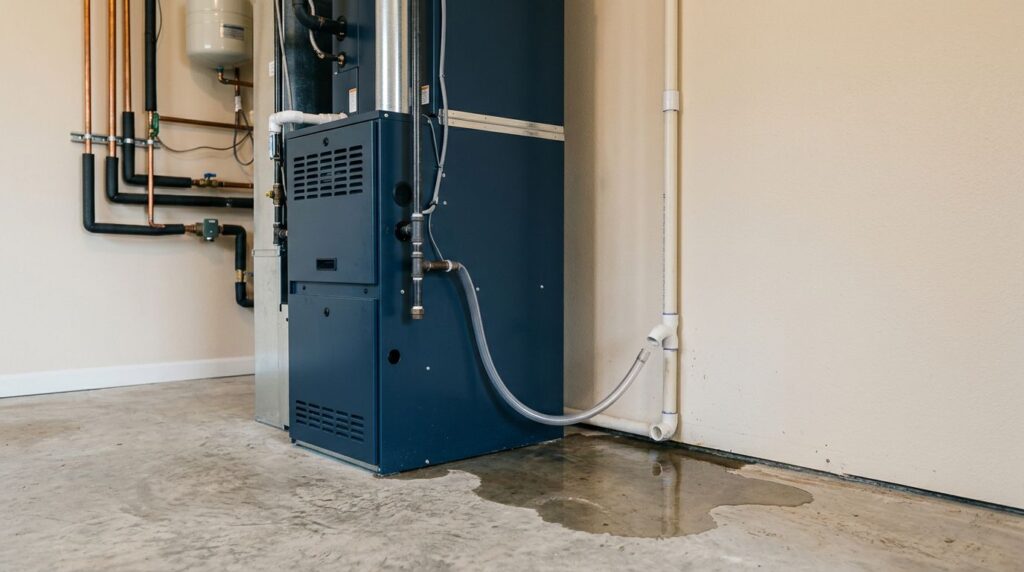
A puddle beside your heating system can make a normal morning feel expensive fast. A furnace leaking water is often a drainage problem, but it can also point to an AC, humidifier, pump, or electrical issue that needs quick attention.
Don’t assume the furnace itself created the water. In a shared heating and cooling system, the indoor AC coil, drainage components, humidifier, and furnace cabinet all sit close together.
A conventional furnace normally doesn’t create liquid during a standard heat cycle. A puddle alone doesn’t prove a failed heat exchanger.
Start by keeping the area safe, then narrow down where the water started.
Key Takeaways
- A furnace leaking water may have a blocked condensate drain, failed pump, humidifier issue, or AC drainage problem—not necessarily a failed furnace.
- A conventional furnace normally does not create liquid during a standard heat cycle, while a high-efficiency furnace produces condensate through its exhaust process.
- Turn the system off and keep water away from electrical components. Leave the house and call 911 or the gas utility for gas odors, smoke, flame rollout, or a carbon monoxide alarm.
- Check where the water starts, not just where it pools. If the leak returns, reaches the cabinet or control board, or comes with heating or safety problems, contact an HVAC professional.
- Regular filter changes, clear return grilles, and seasonal maintenance can help prevent recurring drainage problems and water damage.
Why Is a Furnace Leaking Water a Safety Problem?
Water on a concrete floor is one thing. Water reaching electrical components, a gas appliance, finished flooring, or belongings is more serious. A leak is not always an emergency, but act before a small overflow causes water damage or mold growth.
Take these steps first:
- Set the thermostat to Off. If water is near wiring, the furnace cabinet, or an electrical outlet, do not touch the equipment while standing in water.
- Use towels, a shallow pan, or a bucket to contain the leak. Move boxes, rugs, and furniture away from the area.
- Do not remove furnace panels or repeatedly restart the system. A wet drain, pressure switch tube, or control board can create another problem after each restart.
- Leave the house and call 911 or the gas utility if you smell gas or hear hissing. Do the same if you see smoke, notice flame rollout, or a carbon monoxide alarm sounds.
Water alone does not diagnose a cracked heat exchanger or signal a gas emergency. Water paired with combustion or electrical symptoms demands immediate action, especially when carbon monoxide may be involved.
A photo of the puddle before cleanup can help. Note whether water appears during heating, cooling, or while the system is off. That detail cuts down on guesswork.
Trace the Water Back to Its Starting Point
The wettest spot is not always the source. Water can follow a pipe, drip from a cabinet seam, or run along the floor, leaving water pooling somewhere else.
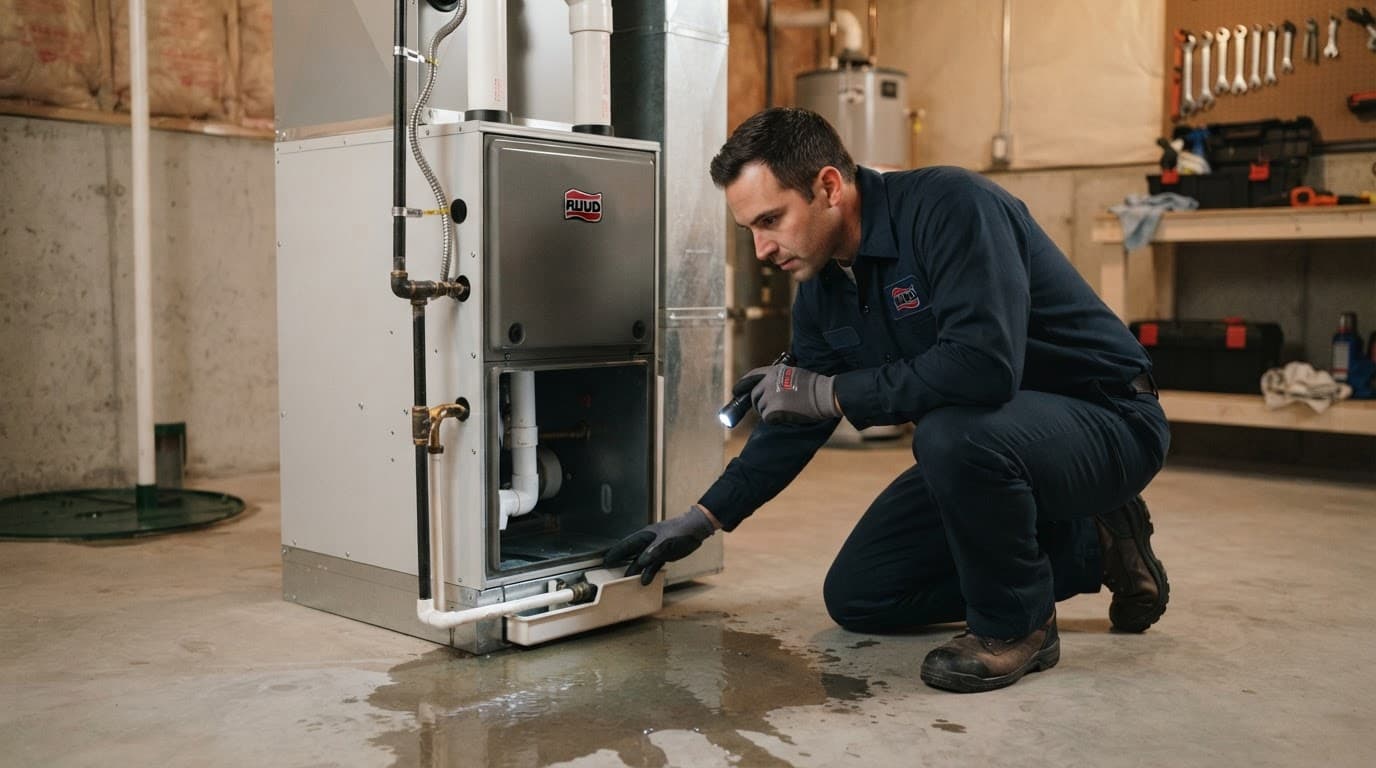
Use these visible clues to narrow the search:
| What you see | Most likely source | What it suggests |
|---|---|---|
| Water near a white PVC pipe during heat | Furnace condensate drain or trap | A clog, loose fitting, poor slope, or blocked outlet |
| Leak starts during summer cooling | Evaporator coil and drain pan | AC condensate backup, frozen coil, or clogged drain line |
| Water around a small reservoir and tubing | Condensate pump | Failed float switch, pump motor, discharge hose, or power issue |
| Drips under a whole-house humidifier | Furnace humidifier | Overflow, loose water line, clogged drain, or faulty valve |
| Water appears while HVAC is off | Plumbing, roof, foundation, or appliance leak | The furnace may only be where the water collected |
A high efficiency furnace often has PVC intake and exhaust pipe, along with tubing for condensate. That piping is a strong clue the unit produces water during heating.
A conventional furnace usually doesn’t create liquid condensate during a normal heat cycle. If that type of furnace is wet, look closely at the AC equipment, humidifier, plumbing lines, or a leak above the utility room.
The Most Common Reasons Water Shows Up Near a Furnace
A high efficiency furnace has a blocked condensate drain
A condensing furnace pulls extra heat from its exhaust gases before they leave through the exhaust pipe. As those gases cool, moisture forms inside the furnace and flows through a condensate trap and drain line.
That process is normal. Unlike a conventional furnace, a condensing model produces moisture during normal operation.
Condensation alone does not indicate a damaged heat exchanger. Problems begin when buildup from dust, rust particles, biofilm, or sludge blocks the trap or PVC section. The water backs up, then spills from the collector area or cabinet.

Look for a damp connection, sagging pipe, disconnected elbow, or water around the trap. A clogged drain can also interfere with a furnace pressure switch and stop the heating cycle.
Do not pull off rubber pressure tubing or blow into it. Those small tubes are part of the furnace’s combustion safety sequence, not the drainage system.
A condensate pump cannot move the water away
Some basements and interior closets do not have a nearby floor drain. In those homes, the pump collects water and pushes it through a small drain hose.
A stuck float, failed pump motor, clogged hose, or lost power can cause the reservoir to overflow. If water is pooled beside a small plastic pump, turn the system off and arrange service. The pump may be a simple repair, but the drain route still needs inspection.
A furnace humidifier or AC system is the real source
The humidifier connects to a water supply and usually has its own drain. A clogged drain pad, loose supply tube, stuck valve, or cracked housing can leave water on the floor.
During summer, the furnace may only be the neighbor of the problem. The evaporator coil above or beside it removes humidity from indoor air, and that water should drain through the AC condensate line.
How to Unclog a Condensate Drain Line Without Making It Worse
Only attempt basic furnace troubleshooting when the leak involves an accessible external pipe. Use this procedure on a conventional furnace only when the manual identifies that pipe. Stop if the pipe is hidden, the cabinet contains water, or you cannot identify it safely. Never open the cabinet or bypass safety controls.
- Turn the thermostat off, then shut off power to the HVAC equipment if the area is dry and safe to access.
- Check the visible PVC drain line for a loose fitting, obvious crack, sagging section, or disconnected joint. Do not force pipes back together if they are brittle or damaged.
- If the pipe exits outdoors, use a wet-dry vacuum at the outside termination to pull loose debris from the drain hose. This is safer than pushing objects or compressed air toward the furnace.
- If the equipment manual identifies an accessible cleanout, remove its cap and add a small amount of white vinegar. Use white vinegar only as directed, and never mix it with bleach or other cleaners.
- Reassemble the cleanout, restore power, and watch the drain area through one complete cycle. Stop the system if water returns.
A full drain pan, repeated backup, or a line that will not clear needs professional service. The clog may be in a hidden condensate trap, coil pan, or drain run. If the leak returns, contact an hvac professional.
Summer Water Leaks Usually Start at the AC Coil
Long, humid run times on Tuscaloosa air conditioning equipment create plenty of condensate. When airflow drops, the evaporator coil can freeze. Once the system shuts down, that ice melts and can overwhelm the drain pan. A conventional furnace may sit beneath the cooling equipment, making it look like the source of the leak.
A dirty air filter is often part of the story. A blocked return grille, matted coil, closed supply vents, or refrigerant issue can also make the coil too cold.
Replace a gray, bowed, or heavily matted air filter. Then leave the AC off if you see ice on refrigerant lines, frost around the indoor unit, or active water overflow. Running it again can create more water, not less.
For cooling leaks, weak airflow, and frozen coils, our guide to AC repair warning signs can help you separate a filter issue from a service call. Northport HVAC handles AC repair in Northport, AL, as well as nearby West Alabama communities.
When a Wet Furnace Needs Professional Repair
A cracked heat exchanger is serious, but a puddle cannot diagnose one. Unlike a high-efficiency model, a conventional furnace typically has a different moisture source. An HVAC professional must confirm the cause through combustion testing and inspection. Do not try to judge the condition by watching the flame through an open panel.
A wet floor can be a simple drain clog, but it is never proof that a heat exchanger is cracked.
When a furnace leaking water keeps returning, call for furnace repair. Also call if the condensate pump overflows, the furnace will not ignite, or a safety code repeats after one reset. Water inside the blower compartment, around electrical components, or near the control board also calls for a technician.
A local HVAC contractor can test drains, airflow, pump operation, pressure readings, venting, electrical connections, and safety controls without replacing parts based on a guess. For heating failures, water around a high-efficiency unit, or a suspected combustion issue, see our furnace repair services.
At Northport HVAC, our licensed, insured, NATE-certified team provides clear findings and upfront repair options. We also offer 24/7 emergency AC repair when an active cooling leak threatens flooring or electrical equipment.
Keep Drainage Trouble From Coming Back
Most recurring leaks start with missed furnace maintenance. Check your air filter monthly, replace it when dirty, and keep return grilles clear of furniture, curtains, and storage bins.
A seasonal furnace maintenance visit should include the drain assembly, trap, humidifier, blower airflow, electrical connections, and visible collection pan condition. Spring cooling maintenance should include the AC coil and drainage path before humid weather puts them to work every day.
For landlords and property managers, a quick check between tenants is preventive maintenance. It can stop a clogged drain from causing water damage, mold growth, or an after-hours complaint.
Frequently Asked Questions
Why is my furnace leaking water?
A furnace leaking water may have a clogged condensate drain, failed condensate pump, overflowing humidifier, or an AC drainage problem. The actual source may be above or beside the furnace rather than inside it.
Can a furnace leak water during normal operation?
A high-efficiency furnace normally creates condensate as it cools exhaust gases. A conventional furnace usually does not create liquid during a standard heat cycle, so look for an AC, humidifier, plumbing, or other nearby leak.
Should I run the furnace if water is leaking?
Turn the thermostat off, especially if water is near the cabinet, wiring, outlet, or control board. Do not repeatedly restart the system, and arrange professional service if the leak returns or the source is not clearly an accessible external drain.
Is a furnace water leak proof of a cracked heat exchanger?
No, a puddle alone cannot diagnose a cracked heat exchanger. An HVAC professional must inspect the furnace and perform appropriate combustion and safety testing to confirm the cause.
When is a leaking furnace an emergency?
Leave the house and call 911 or the gas utility if you smell gas, hear hissing, see smoke or flame rollout, or a carbon monoxide alarm sounds. Water near electrical equipment also requires immediate caution and should not be touched while standing in water.
A Dry Floor Starts With the Right Diagnosis
That first puddle may mean the furnace leaking water needs a closer look. Blocked drainage, a failed pump, a humidifier, or an AC coil above the unit can all be involved. The source matters more than where water lands. A conventional furnace usually has no heating-cycle water, and a puddle alone does not prove the heat exchanger has failed.
Shut the system down when water reaches electrical areas or comes with gas, smoke, or carbon monoxide symptoms. Otherwise, contain the water, check the visible drainage path, and schedule furnace repair if the leak returns.