Furnace Ignitor Failure Signs Northport Homes Should Know
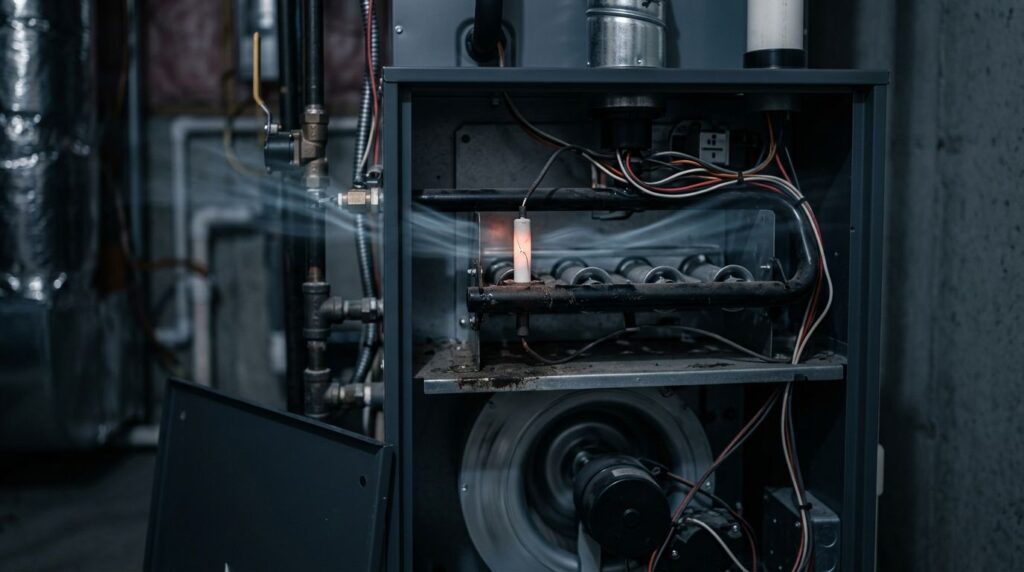
Cold air blowing from a running furnace can make it seem like the whole system has quit. Often, the blower is working, but the burners never receive the signal or heat needed to start.
A furnace ignitor may not get the signal needed to start heating when the furnace begins its normal routine, then stops before producing heat. Before assuming the ignitor is bad, pay attention to the order of sounds, lights, and shutdowns.
A few minutes of observation can show which part of the heating system fails to complete its sequence. This helps distinguish an ignition failure from an airflow issue or safety shutdown.
Key Takeaways
- A furnace that runs but blows cold air may have an ignition failure, but the blower operating does not prove that the furnace is producing heat.
- Common furnace ignitor failure signs include burners that never light, repeated clicking and lockouts, and a cracked, chipped, or discolored ceramic element.
- Follow the complete start-up sequence before blaming the ignitor. A flame sensor, pressure switch, condensate drain, wiring, circuit board, gas valve, or airflow problem can create similar symptoms.
- A multimeter can identify an open ignitor circuit when the furnace is powered off, but live electrical testing and gas-related diagnosis should be left to a qualified HVAC technician.
- Turn the furnace off and arrange service if it repeatedly fails to ignite. Leave the home and contact emergency services or the gas utility if you smell gas, see smoke, hear hissing, or a carbon monoxide alarm sounds.
Furnace Ignitor Failure Signs That Need Attention
Most modern gas furnaces use a hot surface ignitor, a small ceramic element that heats until it glows bright orange. Once the furnace ignitor reaches the right temperature, the burner assembly lights and the combustion process begins.
The element is fragile and can fail with little warning. The following symptoms deserve a closer look:
- The furnace starts, but the burners never light. You may hear the inducer motor run, followed by a brief hum, but no burner ignition.
- Cold air blowing continues through the vents. The blower can still run even when the burners never light.
- Repeated start-up attempts produce a clicking sound. A furnace may try to ignite several times, then enter a safety lockout. This protective response is one of the furnace’s safety features.
- Short cycling begins before the house warms up. If burners light and shut off within seconds, a dirty flame sensor is often more likely than the ignitor. If burners never light, the furnace ignitor or ignition circuit remains more likely.
- The ceramic element looks cracked, chipped, or heavily discolored. A visual inspection may reveal damage that requires replacement.
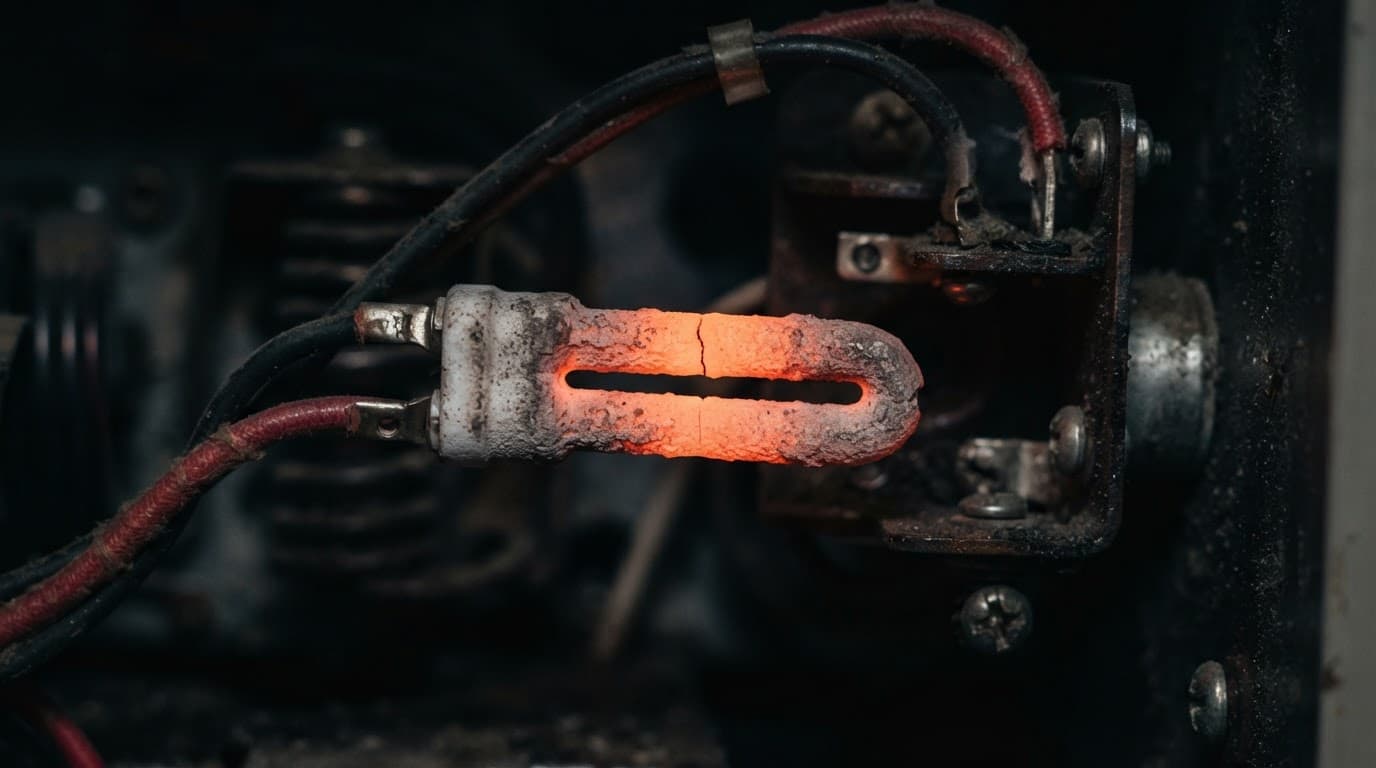
A cracked igniter can’t be repaired with glue, tape, or cleaning. It needs the correctly matched replacement part.
Older systems may use an intermittent pilot, with a pilot light established during startup, rather than the ceramic-element sequence found in many modern furnaces. Their symptoms can differ from the list above.
Some furnaces show a flashing diagnostic light when ignition fails. The code chart is often printed inside the cabinet door. A circuit board may be involved, but a diagnostic code is not automatically a part diagnosis. Check your exact model’s manual before interpreting it. Carrier, Trane, Rheem, Lennox, Goodman, and other brands use different code systems.
A running blower motor only proves that the fan has power. It does not prove that the furnace is making heat.
Follow the Start-Up Cycle Before Blaming the Ignitor
The normal furnace sequence is predictable. The thermostat calls for heat, the inducer motor starts, and the pressure switch confirms the venting path is clear. Then the hot surface ignitor heats, the gas valve opens, the burners in the burner assembly ignite, and the combustion process produces heat before the blower motor starts.
If the furnace ignitor never glows, it may be broken. Even a healthy furnace ignitor may receive no power because of a tripped circuit breaker, open safety circuit, loose wiring, or failed circuit board.
When the burners light and disappear two to five seconds later, the ignitor has already done its work. A dirty flame sensor may not confirm the flame, so the furnace shuts off the gas as a safety measure. This brief shutdown isn’t the same as short cycling, which involves repeated premature cycles. The blower motor may continue running, leaving room-temperature air blowing from the vents.
A high-efficiency heating system adds more safeguards to the sequence to support energy efficiency. These furnaces produce condensate during normal operation. A blocked condensate line, backed-up drain, failed pressure switch, clogged PVC intake, or inducer motor issue can keep the furnace from attempting ignition at all.
A spark ignitor and an intermittent pilot use a different diagnostic sequence than a hot-surface design. Older equipment may use a pilot light that remains lit between heating cycles.
Also check the thermostat fan setting. “On” makes the blower run between heating cycles. Set it to “Auto” before treating room-temperature air as an ignition failure.
How to Test a Furnace Ignitor With a Digital Multimeter
Multimeter testing can show whether a disconnected hot surface ignitor has an open circuit. It cannot confirm every cause of an ignition failure. Never test an energized ignitor unless you’re trained to work around live furnace voltage.
We recommend leaving live electrical testing, gas checks, and internal repairs to an HVAC technician. If you are comfortable with a basic resistance test, follow these safety steps:
- Turn the thermostat off, then shut off power at the furnace service switch and circuit breaker. Let the equipment cool completely.
- Remove the furnace access panel and locate the ignitor near the burner assembly. Take a photo of the wiring before disconnecting its plug.
- Perform a visual inspection before disconnecting anything. Look for a cracked igniter, loose wiring, heat damage, or a broken connector.
- Handle the ceramic base only. Do not touch the heating element with bare fingers or scrape it with a tool.
- Set the multimeter to resistance, shown as ohms, to measure electrical resistance. Touch the probes to the furnace ignitor terminals or connector pins.
- Compare the reading with the manufacturer’s range for that part. An “OL” or open-loop reading generally indicates an open circuit.
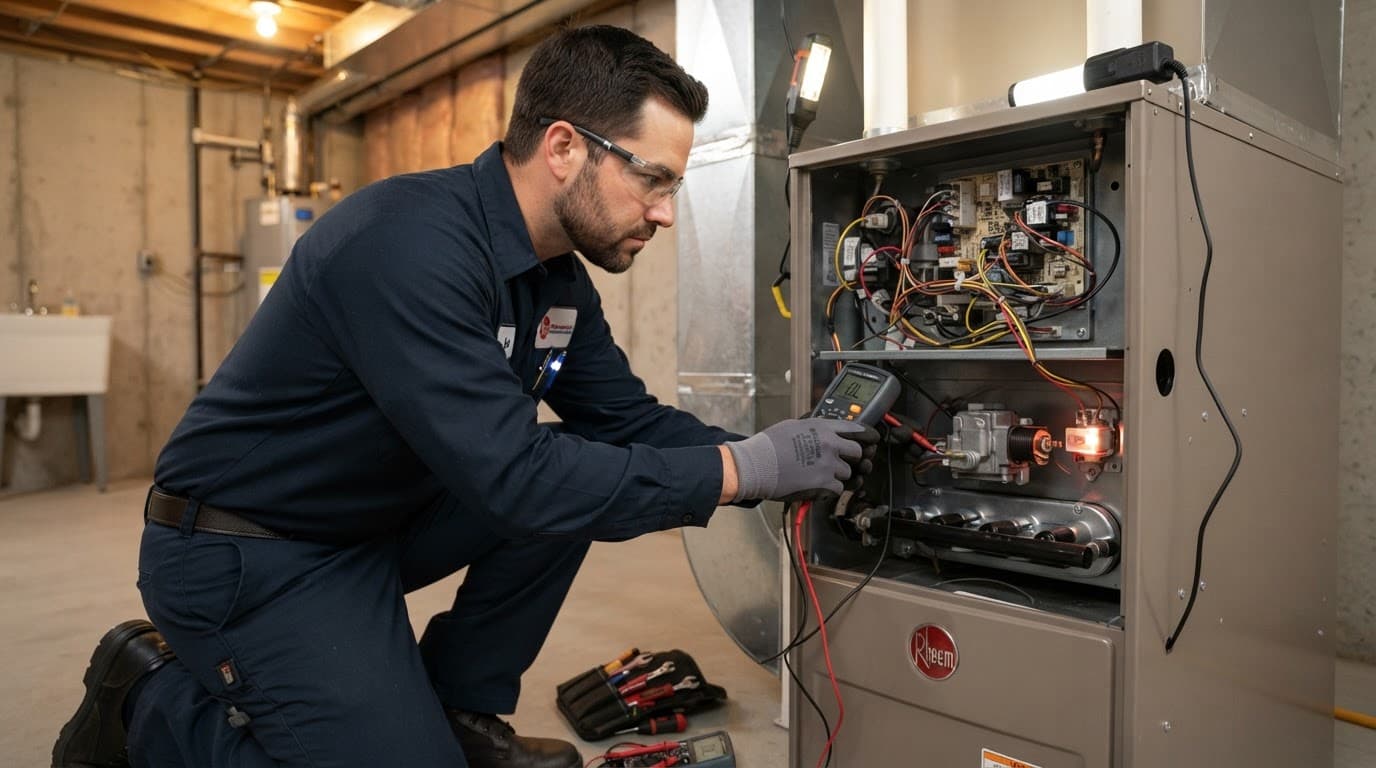
A continuity beep can show that a circuit is complete, but a resistance reading matched to the part’s specifications gives a better answer. Resistance varies by ignitor type, so no single reading fits every furnace.
A normal multimeter reading does not rule out an ignition failure. The ignitor may be intact, while the circuit board fails to send voltage. A technician can test the control circuit, safety switches, gas valve operation, grounding, and burner performance without guessing.
How Long Ignitors Last and Why They Break Early
A hot surface ignitor often lasts five to seven years. Some last longer. Others fail earlier because they heat and cool thousands of times each winter.
Normal wear is one cause of furnace ignitor failure. A power surge, loose electrical connections, incorrect voltage, or an incorrectly matched replacement part can shorten its life. Rough handling during a repair can do the same.
Don’t try to clean an ignitor as routine maintenance. The ceramic element is more like a ceramic light bulb than a metal burner. Wiping, sanding, spraying solvent, or brushing it can cause damage.
A flame sensor is different. It is a metal rod that can collect residue and may need careful service. The ceramic ignitor should not be treated the same way, since cleaning it can cause unnecessary damage.
Dust, dirty burners, and restricted combustion air can still create ignition trouble around the ignitor. During preventive maintenance, we perform a visual inspection of connections, burners, filters, safeties, drains, and airflow as part of a complete heating system tune-up. These checks support reliable operation and energy efficiency, but they don’t replace proper diagnosis.
When an Ignition Failure Needs a Service Call Now
Turn the furnace off and arrange furnace repair if it repeatedly fails to ignite or locks out after checking the thermostat and circuit breaker once. An HVAC technician should diagnose the furnace ignitor or circuit board if you notice cold air blowing without heat.
Do not keep resetting either control to force more ignition attempts. Repeated failed starts can mask the real problem and leave you without heat when temperatures drop.
Leave the home and call emergency services or the gas utility if you smell gas, hear gas hissing, see smoke, or a carbon monoxide alarm sounds. Older equipment may use an intermittent pilot or pilot light. Don’t relight or operate it if you smell gas, leave the home, and contact the gas utility or emergency services. Carbon monoxide has no smell or color, so working CO alarms are essential safety features for every fuel-burning heating system.
Northport HVAC Services offers 24/7 emergency heating repairs across Northport, Tuscaloosa, Coker, Samantha, and nearby West Alabama communities. We inspect the cause first, then explain the repair and price before work starts.
Furnace Ignator Replacement Cost and DIY Risks
A typical professional ignitor replacement often falls between $150 and $300, including the part and labor. The final price depends on the furnace model, ignitor type, access, diagnostic time, and another failed component, such as a gas valve.
Lower part-only pricing makes DIY replacement tempting, but the correct furnace ignitor must match the system’s design. A spark ignitor and ceramic element can differ in plug, mounting position, voltage requirements, and electrical resistance range, while a damaged element may fail when it heats.
A bad ignitor doesn’t usually damage a circuit board by itself. A power surge, shorted wiring, or damaged connector can damage both components. A failing circuit board may also stop sending power to a healthy ignitor.
At Northport HVAC Services, our licensed, insured, NATE-certified local HVAC technician team supports heating system models from Trane, Carrier, Rheem, Lennox, Goodman, and Mitsubishi. Our furnace repair service verifies compatibility before replacement, reducing the risk of incorrect parts and repeat service calls.
Frequently Asked Questions
What are the most common signs of a failing furnace ignitor?
The furnace may begin its start-up sequence, but the burners never light, leaving the blower to circulate cold or room-temperature air. Repeated clicking, safety lockouts, or a visibly cracked ceramic element are also common warning signs.
Why do the burners light and then shut off after a few seconds?
When the burners light briefly, the ignitor has usually completed its job. A dirty flame sensor may fail to confirm the flame, causing the furnace to shut off the gas as a safety measure.
Can I test a furnace ignitor with a multimeter?
A powered-off resistance test can show whether a disconnected hot surface ignitor has an open circuit. Compare the reading with the manufacturer’s specifications, and leave live voltage testing, gas checks, and internal repairs to an HVAC technician.
How long does a furnace ignitor usually last?
A hot surface ignitor often lasts about five to seven years, although repeated heating cycles, power surges, loose connections, incorrect voltage, and rough handling can shorten its life. The correct replacement must match the furnace model and ignitor specifications.
When should I call for furnace repair?
Arrange service if the furnace repeatedly fails to ignite, enters a safety lockout, or blows cold air after you have checked the thermostat and circuit breaker once. Leave the home and contact emergency services or the gas utility immediately if you smell gas, hear hissing, see smoke, or a carbon monoxide alarm sounds.
A Complete Start-Up Cycle Is the Real Test
The most useful clue is not one click or one cold vent. It is the full sequence, from the thermostat call through the combustion process, steady burner flame, and warm air at the registers.
Furnace ignitor failure signs deserve prompt attention, but they do not always mean the furnace ignitor is the cause. Careful diagnosis protects the furnace, avoids unnecessary part replacement, and restores dependable heat to your home.