Why Your Furnace Makes a Loud Boom at Startup
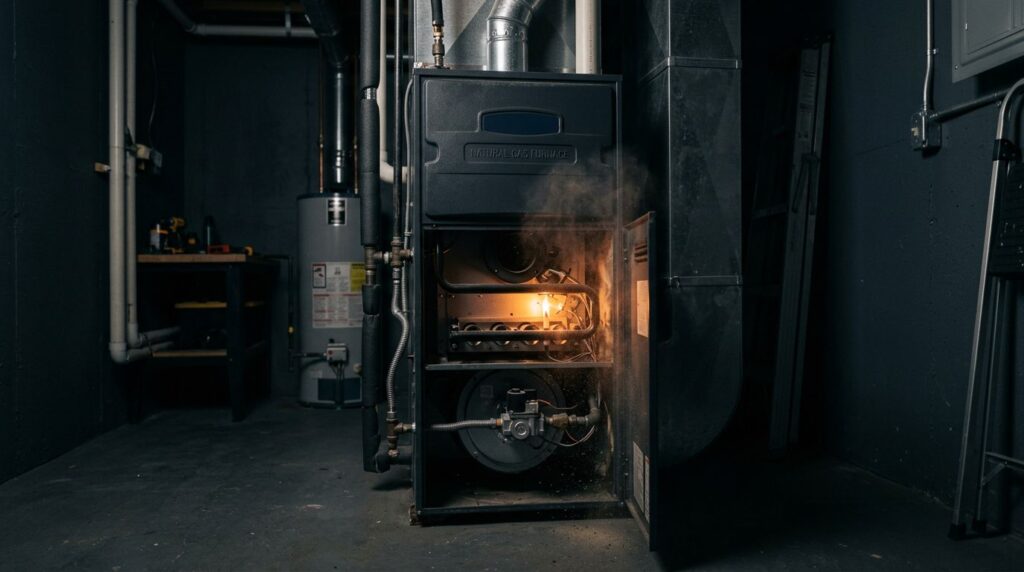
A gas furnace should light with a soft whoosh, not a bang that echoes through the utility room. A furnace boom at startup often signals delayed ignition, so we treat it as a combustion warning rather than ordinary seasonal sound.
The noise may come from burner timing or flexing sheet metal, and each points to a different cause. Its timing, location, and any related odors help distinguish a nuisance from a safety concern before the next heating cycle.
Key Takeaways
- A recurring furnace boom at startup often indicates delayed ignition, especially when the sound comes from the furnace cabinet as the burners light.
- Dirty burner ports, a weak igniter, incorrect gas pressure, or a fuel-air problem can allow unburned gas to collect before ignition.
- Ductwork pops caused by airflow restrictions usually occur when the blower starts or stops and may come from ceilings, walls, or floors instead of the furnace cabinet.
- Safely replace a dirty filter, open blocked vents, and check visible vent openings, but never adjust gas components or clean burners yourself.
- Turn the thermostat off and arrange prompt service for repeated bangs; leave the home and call 911 or the gas utility from outside if you smell gas, see flames or smoke, or hear a carbon monoxide alarm.
What a furnace boom at startup usually means
On a normal gas furnace cycle, the inducer starts, the igniter heats or sparks, the gas valve opens, and the burners light quickly. The blower starts only after the furnace warms.
A boom can occur when a small amount of unburned gas collects in the combustion chamber before ignition. The eventual ignition burns that buildup at once, creating the sharp bang.
Delayed ignition begins at the burners
Delayed ignition is a common problem with dirty burners. Rust, dust, spider webs, soot, or residue can partly block burner ports. The flame may then fail to travel smoothly from one burner to the next.
An aging igniter or broader ignition system fault, incorrect gas pressure, or an imbalanced fuel-air mixture can create the same delay. Repeated blasts can damage burners and nearby parts, so we recommend measured testing instead of replacing parts by guesswork.
Telling delayed ignition from ductwork noise
A bang caused by burner timing comes from the furnace cabinet when the burners light. By contrast, expanding ductwork can pop or thump as airflow changes. You may hear this noise above a ceiling, under a floor, or inside a wall.
Airflow problems can make ductwork bang
A clogged air filter, blocked return grille, closed registers, or undersized ducts can raise static pressure. That pressure can flex sheet metal and create a loud pop, especially in older systems.
A clogged filter usually doesn’t cause the bang at burner ignition. However, it can make the furnace overheat and worsen air-distribution noise.
If the bang occurs as the burners light, rather than when the blower motor starts or stops, treat it as a combustion problem even if the filter needs replacement.
A light pop away from the furnace cabinet may be minor. A strong, repeated bang from the cabinet warrants a service call.
Safe checks before scheduling furnace service
Keep your inspection outside the sealed combustion area. Do not remove burner assemblies, disconnect gas piping, touch internal wiring, or adjust the gas valve.
Check airflow and visible venting first
A few safe checks can rule out basic restrictions:
- Turn the thermostat off, then replace a dirty or bowed air filter with the correct size and airflow direction. Our Alabama furnace filter replacement guide can help you build a practical schedule.
- Open supply vents and keep furniture, curtains, and storage away from return grilles. Closing several vents increases pressure rather than redirecting heat effectively.
- Check the outdoor intake and exhaust openings for loose leaves or visible debris. Remove only debris within easy reach, and never insert tools into PVC venting.
Write down the sequence you hear. Note whether the inducer starts, whether ignition occurs promptly, and whether the blower starts afterward. Give that sequence to an HVAC technician, who can use it to verify gas pressure and guide further testing.
Leave burner cleaning to a trained technician
Don’t try to brush, scrape, spray, or vacuum burner ribbons yourself. Burner ports are small, and rough cleaning can alter them or leave the burner assembly out of alignment.
A technician shuts off fuel and electrical power, removes components according to the furnace manufacturer, cleans burner ports without enlarging them, then verifies flame quality and gas pressure. As gas-furnace safety guidance explains, gas leaks, flame rollout, and carbon monoxide are the main hazards to rule out.
When a startup boom requires an immediate shutdown
If the noise repeats, turn the thermostat off and arrange same-day furnace service for suspected delayed ignition. A loud bang alone doesn’t prove a cracked heat exchanger, but it does justify a professional inspection of the heat exchanger, burners, venting, and safety controls.
Leave the home for these warning signs
Leave the house when these safety hazard warning signs appear, and call 911 or the gas utility from outside:
- A gas smell, hissing sound, or visible gas-line damage.
- A carbon monoxide alarm, smoke, sparks, soot, or scorching near the furnace.
- Flames rolling out of the burner area or tall, uneven yellow flames.
- A fire, active smoke, or another fire risk, or anyone feeling dizzy, nauseated, or unusually weak.
Don’t use switches, light matches, relight the pilot light, or bypass a safety control. Carbon monoxide has no color or odor, so working alarms matter. The CPSC’s research on furnace CO sensors reinforces the need to take combustion warnings seriously.
Professional diagnosis prevents repeat failures
A proper diagnosis follows the complete ignition sequence. At Northport HVAC, a qualified HVAC technician checks the igniter, flame sensor signal, burners, fuel-air mixture, gas pressure, venting, drain system, airflow, limit switch, and heat exchanger before recommending a repair.
The repair cost depends on the confirmed fault. Burner cleaning, an igniter replacement, a gas valve issue, and venting repairs have very different scopes. Local technicians should explain what failed, how they tested it, and what the written price covers.
Airflow restrictions that cause ductwork pops are the same problems we see during AC repair in Northport, AL and Tuscaloosa air conditioning service calls. Routine maintenance for your heating system can identify restrictions before they cause a noisy or no-heat event, while supporting energy efficiency. For urgent no-heat concerns, our 24/7 response matches the availability homeowners expect for emergency AC repair. Schedule Northport furnace repair service when a startup bang returns.
Frequently Asked Questions
Is a furnace boom at startup dangerous?
A repeated boom can indicate delayed ignition, which allows unburned gas to collect before it lights. Turn the thermostat off and schedule same-day furnace service rather than continuing to run the system.
Can a dirty air filter cause a furnace to boom?
A dirty filter usually does not cause a bang when the burners ignite. It can restrict airflow, make the furnace overheat, and contribute to ductwork pops when the blower starts or stops.
What should I do if my furnace makes one loud bang?
Note when the sound occurs and whether it comes from the furnace cabinet or the ductwork. You can check the filter, vents, and visible vent openings, but repeated bangs require inspection by a qualified HVAC technician.
Can I clean the furnace burners myself?
No. Burner ports are small, and brushing, scraping, spraying, or vacuuming them can damage the assembly or affect flame travel. A trained technician should clean the burners and verify gas pressure, flame quality, and safety controls.
When should I leave the house because of a furnace noise?
Leave immediately if you smell gas, hear hissing, see smoke or flames, notice soot or scorching, or hear a carbon monoxide alarm. Call 911 or the gas utility from outside, and do not use switches, matches, or the furnace controls.
A Startup Bang Is a Service Signal
A recurring furnace boom at startup is not normal startup noise or warm-up behavior. Check the filter, clear air paths, and note when the sound occurs, but leave burner adjustments and fuel testing to a professional.
Prompt diagnosis protects your furnace, indoor air quality, and peace of mind.