Evaporator Coil Cleaning: Why Coils Get Dirty and What Works
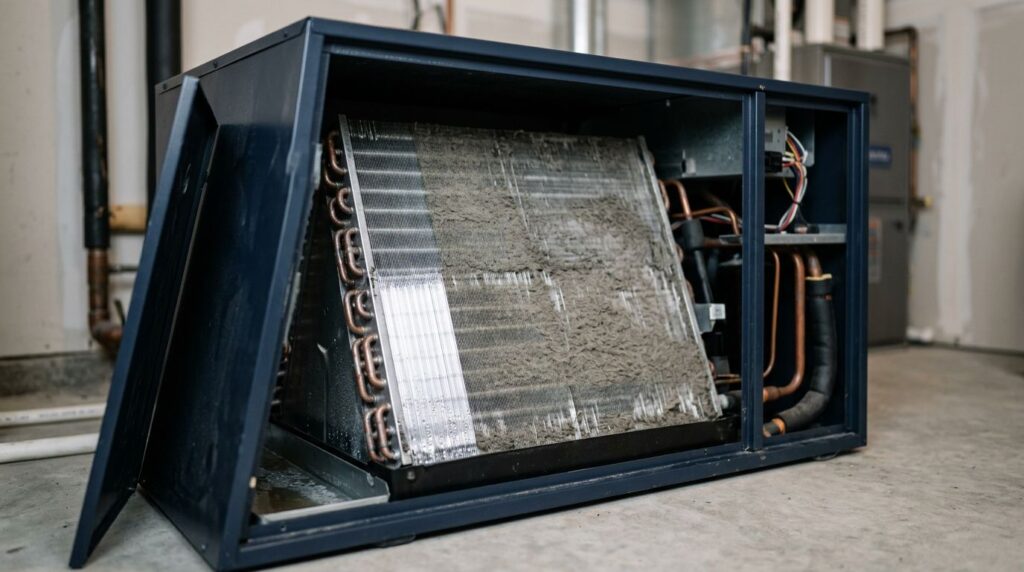
An evaporator coil can look like a gray felt pad long before your AC quits. When that happens, it can’t pull heat from household air as readily, so cooling efficiency drops and energy consumption rises. The system runs longer, and rooms can still feel sticky. Evaporator coil cleaning removes that barrier, but it doesn’t solve every reason an AC struggles.
West Alabama’s humid summers keep coils damp for long stretches. Dust, pet hair, cooking residue, and a neglected filter can stick to that moisture and build up layer by layer. Knowing when a light surface clean is reasonable, and when to call for help, protects both the coil and the compressor. Isolate power at the breaker panel before opening equipment.
Key Takeaways
- A dirty evaporator coil reduces heat transfer and airflow, causing longer run times, higher energy use, humidity, and uneven cooling.
- Common causes include overdue or poorly fitted filters, restricted airflow, pet dander, cooking residue, dust, and blocked drainage.
- Light, accessible surface dust may be safe to clean after disconnecting power, but avoid pressure washers, harsh chemicals, and contact with delicate fins or electrical parts.
- Frozen coils, heavy buildup, corrosion, standing water, oily residue, refrigerant concerns, and repeated problems require professional HVAC diagnosis.
- Regular filter changes, clear return grilles, open supply registers, proper drainage, and seasonal maintenance help prevent another dirty-coil problem.
Why an evaporator coil gets dirty
The evaporator coil sits inside the air handler or above the furnace. Refrigerant inside the coil absorbs heat from return air, while moisture condenses on its cold metal fins and drains away through the condensate system.
Because the coil stays damp during cooling season, airborne debris clings to it easily. That thin coating acts like insulation around the metal fins, slowing heat transfer and reducing airflow.
Filter gaps and restricted airflow
Your air filter is the coil’s first line of defense. A filter that is overdue, bent, too small, or poorly seated lets dust pass into the return side of the HVAC system.
Airflow trouble can make the buildup worse. Closed supply vents, furniture against a return grille, a crushed duct run, and an overly restrictive filter all reduce the air crossing the coil. We often find more than one issue during a service visit.
A basic pleated filter changed on schedule usually performs better than a dense filter left in place for months. Check our guide on changing HVAC filters in Alabama if you need help choosing a practical replacement routine.
Humidity, pets, and everyday household debris
Pet dander, renovation dust, smoke residue, and cooking oils can all settle on a wet coil, especially in homes with several pets or heavy summer AC use. More frequent filter checks can help limit recirculated dust and odor-producing residue, supporting indoor air quality without making coil cleaning a complete solution.
The drain pan and drain line matter, too. If the drainage system is blocked, moisture and debris can collect near the air handler, causing musty odors or water damage.
Signs your AC coil needs attention
A dirty coil rarely causes one obvious symptom. Instead, the system begins losing ground during the hottest part of the day, when it needs strong airflow to move heat.
A Tuscaloosa cooling system that used to cool comfortably may begin running long cycles without reaching the set temperature. Higher utility bills often follow.
Weak cooling, longer run times, and odors
Look for patterns rather than one hot afternoon. Common signs include:
- Airflow from supply vents feels weaker than usual, even with the thermostat set correctly.
- The AC runs almost constantly but leaves rooms humid or unevenly cooled.
- A musty smell appears when cooling starts, especially near the indoor air handler.
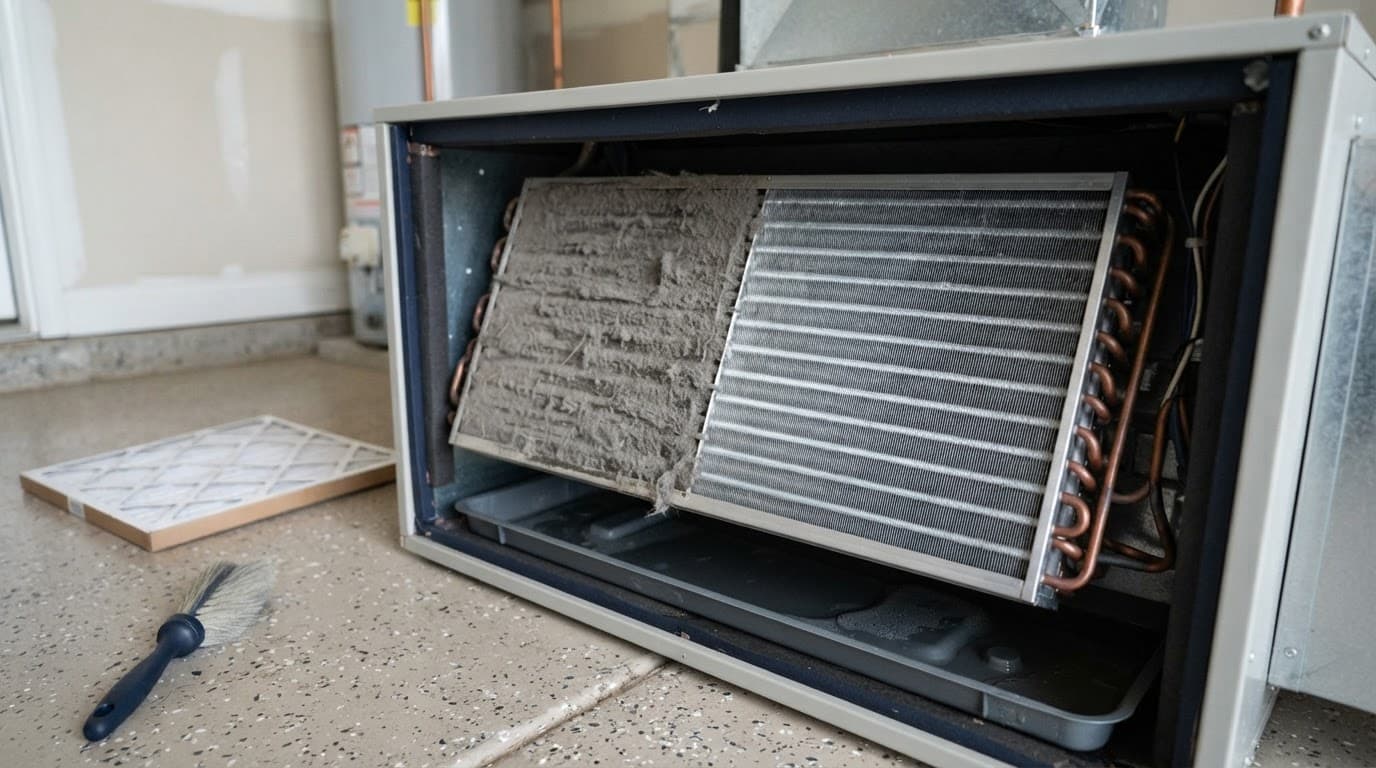
- You see dust packed across accessible coil fins or a dirty, bowed air filter.
- Water collects around the air handler because the drain system can’t keep up.
Don’t open or inspect the indoor equipment until power is disconnected at the breaker panel.
These symptoms can also point to a blower problem, duct restriction, drain blockage, or refrigerant issue. Cleaning a coil without checking airflow can miss the real cause.
Frozen evaporator coil is a stop-running signal
Low airflow allows the evaporator coil to get colder than it should. Moisture then freezes on the coil, and ice further blocks the airflow needed to thaw it.
A frozen coil needs time to thaw and a diagnosis of the airflow or refrigerant problem that caused it.
Turn cooling off at the thermostat if you see ice, then use fan-only mode if the blower operates normally. Don’t chip at ice, bend fins, or keep running the compressor. If freezing returns after you replace the filter and thaw the system, arrange air conditioner repair in Tuscaloosa or nearby West Alabama service.
When evaporator coil cleaning is safe to do yourself
A homeowner can usually remove light, accessible dust from an indoor coil. However, the work stops being a DIY job when panels are difficult to remove, electrical parts are exposed, fins are badly matted, or refrigerant lines need attention.
An outdoor condenser coil and an indoor evaporator coil require different care. After shutting off power, gently rinse the outdoor unit with a low-pressure garden hose. Keep the garden hose away from the indoor air handler, and never use a pressure washer on either coil, because high-pressure water can flatten thin aluminum fins and restrict airflow.
Tools that protect the coil
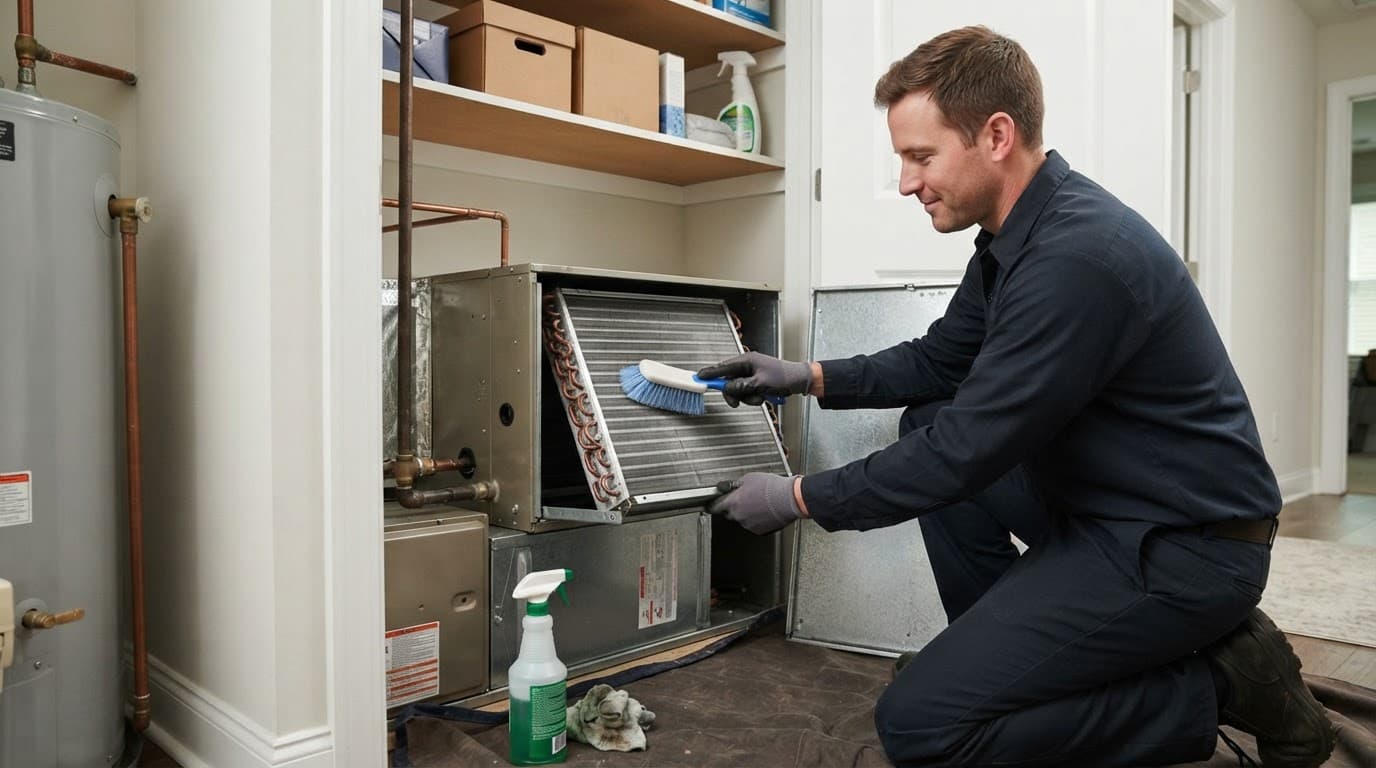
Gather a flashlight, gloves, eye protection, a soft bristle brush, a shop vacuum with a brush attachment, towels, and a coil cleaner approved for indoor evaporator coils. Keep the product label nearby.
We don’t recommend household degreasers, bleach, wire brushes, or improvised chemical mixtures. They can damage fins, harm nearby materials, or leave residue in the drain system.
A careful cleaning sequence
Trane’s evaporator coil cleaning guidance also starts with shutting the system off at the breaker panel. Follow this order:
- Turn off power at the thermostat and breaker panel. Confirm the system can’t start while the access panel is open.
- Remove the access panel carefully, then take a photo before moving anything. Check the coil, drain pan, and nearby wiring for obvious damage.
- Lift loose debris with a soft bristle brush or vacuum brush attachment. Move gently with the direction of the fins, without pressing into them.
- Apply an approved coil cleaner exactly as its label directs. Protect electrical components from overspray, and don’t soak insulation or controls.
- After securing the panel, restore power at the breaker panel, then watch the next cooling cycle for steady airflow, drainage, and normal operation.
Stop and call a technician if you find damaged fins, heavy sludge, corrosion, standing water, ice, oily residue, or a suspected refrigerant leak.
Choosing foaming and no-rinse coil cleaners
Coil cleaner is not one-size-fits-all. Product instructions explain whether it is intended for an indoor or outdoor coil, how much to apply, and whether rinsing is required.
Foaming versus non-foaming products
Foaming cleaner expands after application, helping lift soil from between fins. It also makes coverage easier to see on a vertical indoor coil.
Non-foaming formulas can work well on light soil and in tight spaces where foam may be difficult to control. Neither type can fix a coil buried under years of matted debris, a failed blower, or a refrigerant problem.
Carrier’s AC coil cleaner tips recommend removing loose debris first, then using a cleaner made for the job. That order matters because chemicals work better after heavy lint is removed.
Rinsing depends on the label
No-rinse claims are product-specific. Some evaporator formulas use normal condensate to flush away the cleaner and loosened soil. Other products require a clean-water rinse to remove residue.
Never assume “no-rinse” applies to every coil cleaner. Follow the instructions for the exact product in hand. Keep indoor electrical components dry. Don’t add water to an indoor coil unless the label calls for it.
Preventing another dirty-coil problem
Cleaning helps, but prevention keeps the coil from becoming a repeat repair. Small airflow habits often make the largest difference through a long Alabama cooling season.
Keep air moving through the system
Check the air filter monthly during heavy use, then replace it according to the equipment maker’s instructions or sooner when it looks loaded. ENERGY STAR’s heating and cooling guidance recommends changing filters at least every three months.
Keep return grilles clear of sectionals, curtains, storage bins, and pet beds. Leave supply registers open throughout the home, since closing several vents raises duct pressure and can reduce total airflow.
Schedule service before summer strain arrives
An annual inspection paired with preventive maintenance gives an HVAC technician time to assess system performance and check coil condition, blower performance, drainage, electrical connections, and refrigerant-related operation before a hot spell exposes a weak point. Breaker panel checks should be handled safely by a professional.
At Northport HVAC, our licensed, insured, NATE-certified team handles routine maintenance and repairs for Trane, Carrier, Rheem, Lennox, Goodman, and Mitsubishi systems. For landlords and property managers, a documented pre-season visit can also reduce surprise calls from tenants during peak heat.
If the system has ice, warm air, a strong electrical smell, active leaking, or repeated breaker trips, skip the cleaning experiment and request emergency AC repair. If you need AC repair in Northport, AL, a measured diagnosis is safer than replacing parts or adding chemicals based on a guess.
Frequently Asked Questions
How often should an evaporator coil be cleaned?
There is no single schedule because buildup depends on filter condition, pets, dust, humidity, and system use. Check the coil during regular filter changes and have it assessed during annual HVAC maintenance.
Can I clean my evaporator coil myself?
A homeowner can usually remove light, accessible dust with power disconnected, a soft brush, and an approved indoor coil cleaner. Stop and call a technician if the coil is difficult to access, heavily matted, frozen, corroded, leaking, or near exposed electrical components.
Should I rinse an indoor evaporator coil after using cleaner?
Rinsing depends on the exact product, because some cleaners are designed to be no-rinse while others require clean water. Follow the label and keep indoor electrical components dry; never assume every no-rinse claim applies to every coil cleaner.
Does a dirty evaporator coil cause a frozen AC coil?
It can contribute by restricting airflow and allowing the coil to become too cold, although blower, duct, filter, or refrigerant problems may also be involved. Turn off cooling if ice appears, let the coil thaw, and arrange service if freezing returns.
How can I prevent my evaporator coil from getting dirty again?
Check the filter monthly during heavy use and replace it as recommended, keep return grilles clear, and leave supply registers open. Annual preventive maintenance can also identify airflow, drainage, blower, and refrigerant-related problems before they cause a larger failure.
A clean coil starts with good airflow
A dirty evaporator coil makes cooling harder because heat and air cannot move across the fins as designed. Regular filter changes, open returns, clear drainage, and seasonal service help prevent the problem from building.
Cleaning is most effective when it is part of an airflow check, not a stand-alone fix. A light surface clean may restore performance, but persistent ice, weak airflow, or water around the unit calls for a full HVAC inspection.