How to Clear a Clogged AC Drain Line Safely
A puddle near your indoor HVAC system can turn into a ceiling stain or a complete system shutdown faster than most homeowners expect. In West Alabama, air conditioners pull a heavy amount of moisture from the air, especially during long, humid summers.
A clogged AC drain line is often the primary reason water backs up around an air handler, closet unit, or attic system. We can usually clear a minor clog safely with a few basic tools, but we should know when to stop before a small drain issue becomes a bigger repair.
Key Takeaways
- Recognize the Warning Signs: Look for pooling water near the air handler, musty odors, or an AC system that frequently shuts off, as these are common indicators of a blocked condensate line.
- Prioritize Safety First: Always disconnect the power to the HVAC system at the breaker or service switch before attempting any maintenance to avoid electrical hazards.
- Use Proper Clearing Techniques: Utilize a wet/dry vacuum from the outside to pull out clogs, and treat the system with distilled white vinegar to break down organic buildup rather than using harsh chemicals like bleach.
- Know When to Call a Pro: If water continues to back up, the drain pan is cracked, or you suspect a deeper issue like a frozen evaporator coil, contact a professional to avoid further damage to your home and equipment.
Know the Signs of a Blocked AC Condensate Drain
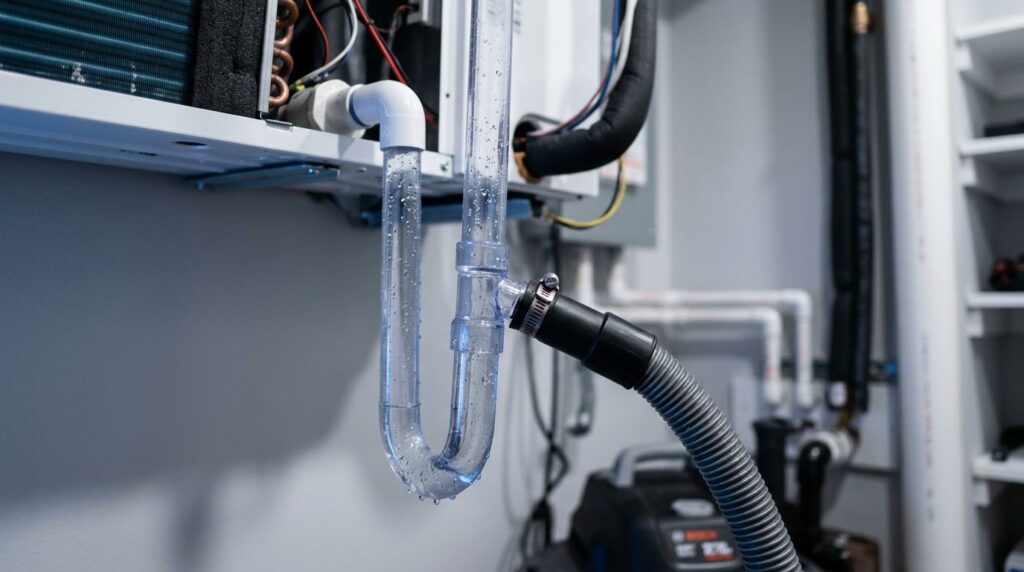
Your air conditioner does more than just cool your home. It also functions as a dehumidifier. As warm air passes over the evaporator coil, moisture condenses out of the air, drips into a drain pan, and travels through a PVC condensate drain line to reach the outside or a dedicated household plumbing connection.
Over time, dust, organic growth, pet hair, rust flakes, and stubborn sludge can build up inside that narrow pipe. Eventually, the water has nowhere to go.
Here are the warning signs we see most often:
- Water pooling around the indoor unit, furnace, or air handler
- Noticeable musty odors near vents or the equipment closet
- An AC system that runs momentarily but suddenly shuts off
- Water dripping from a ceiling below an attic air handler
- Water standing in the auxiliary drain pan
- Little or no water coming from the outdoor drain termination while the AC is running
Many newer systems are equipped with a safety float switch. When water rises too high due to a blockage, this switch cuts power to the cooling system to prevent overflow. It can feel like an unexpected AC failure, but it is often just a safety feature doing its job.
Never keep resetting an AC that shuts down with water in the drain pan. The safety float switch may be preventing significant water damage to your home.
A clogged condensate drain line can often mimic a refrigerant leak or a faulty thermostat. That is why we always check for moisture and blockages before assuming the system needs a major AC repair.
Start With Safety and Find the Right Drain Line
Before touching any components, turn off the HVAC system at the thermostat. Then, switch off the power at the breaker or the service disconnect located near the indoor unit. The drain line may be simple PVC pipe, but the equipment surrounding it contains electrical parts, moving components, and sharp sheet metal.
We do not recommend opening sealed equipment panels unless you are confident in identifying the internal parts. The goal is to perform maintenance at accessible drain connections rather than taking apart the air handler.
Gather these items before we begin:
- A wet/dry vacuum with a hose attachment
- Distilled white vinegar
- A small funnel or measuring cup
- Clean water
- Rags or towels
- Gloves and safety glasses
Locate the condensate drain pipe near the indoor air handler. Most systems utilize a white PVC pipe. Look for a capped vertical fitting, often called a cleanout, near the unit. Outside, find where the pipe exits the home. It may be near the outdoor condenser, along an exterior wall, or beside a bathroom or utility area.
Be careful not to confuse the condensate line with a plumbing vent or another drain. If the piping does not clearly connect to the air conditioning equipment, leave it alone and contact a professional HVAC technician.
Clear the AC Drain Line Step by Step
A wet/dry vacuum is usually the safest first move because it pulls the clog outward. Blasting air into the line can force grime back into the drain pan or separate a glued fitting.
1. Check the Drain Pan First
Look around the indoor unit for an overflow pan. Some attic systems have a secondary condensate pan beneath the air handler. If it is full, place towels around the area and remove standing water carefully with a wet/dry vacuum.
Do not let water spill into insulation, framing, or electrical connections. If water has already reached drywall or a ceiling below, you may be facing significant water damage, so stop here and schedule service.
2. Find the Outdoor Drain Outlet
Walk outside and locate the end of the PVC pipe. It may be a short pipe several inches above the ground. Clear away mulch, leaves, insects, or dirt around the opening.
If you see mud packed tightly into the opening, remove only what is accessible. Don’t jab wire, screwdrivers, or coat hangers far into the pipe. PVC pipe cracks more easily than people think.
3. Seal a Shop Vac Around the Pipe
Place the shop vac hose over the outdoor drain outlet. Use your hand or a rag to make a snug seal around the connection. Run the vacuum for one to two minutes.
The vacuum may pull out dark water, slime, or small debris. That is normal. Let the tool do the work instead of repeatedly turning it on and off.
If the line is connected to a drain indoors rather than outside, we should not use a vacuum until we have confirmed the proper access point. A professional can identify the correct connection without risking a plumbing backup.
4. Open the Indoor Cleanout Cap
Return inside and remove the cap from the vertical cleanout fitting. Keep a towel underneath it. If water immediately rises to the top, the blockage may be close to the unit.
Pour about one cup of distilled white vinegar into the cleanout. Vinegar helps break down organic buildup without the harsh fumes of bleach. Avoid pouring bleach, drain cleaner, or strong acids into the condensate line. Those products can damage equipment parts and create unsafe fumes.
Wait about 30 minutes before moving to the next step.
5. Flush With Clean Water
Slowly pour a small amount of clean water into the cleanout. Watch for water at the outdoor outlet. A steady flow means the line is open.
If the water backs up at the cleanout, stop pouring. The clog may be too solid for a simple flush, or the drain trap may need to be cleaned correctly.
Water should move through the pipe freely, not sit in the cleanout fitting.
6. Replace the Cap and Restore Power
Secure the cleanout cap, wipe up any moisture, and restore power at the breaker. Turn the thermostat back to cooling and let the system run.
Check the drain outlet after 15 to 30 minutes. During humid Tuscaloosa air conditioning season, you should usually see water draining while the system is operating.
7. Watch the System for the Rest of the Day
A cleared line should stay dry around the indoor unit. Check the drain pan, the floor around the equipment, and the ceiling below an attic system later that day.
If the float switch trips again or water returns, the problem needs a closer inspection. A cracked drain pan, disconnected pipe, frozen evaporator coil, or improperly sloped drain can cause the same symptoms.
Mistakes That Can Make a Drain Problem Worse
The biggest mistake is treating every blocked drain line like a typical plumbing clog. Your AC drain system is significantly smaller and more delicate than a standard sink drain.
We advise against using compressed air from inside the home. Too much pressure can blow a fitting apart behind a wall or force sludge deep into the unit. Instead, a professional HVAC technician will typically use nitrogen to safely clear stubborn blockages without the risk of damaging delicate pipes or connections. We also recommend avoiding shop-vac hoses pushed deep into PVC piping, as the hose can jam in a bend or damage a weak connection.
Another common mistake is ignoring the underlying reason the line clogged. If your air filters are packed with dust, debris can easily bypass the filter and accumulate on the evaporator coil and drain pan. A dirty coil often creates more sludge and buildup inside the condensate system, leading to recurring issues.
Pay attention to these signs that point beyond a basic clog:
- Ice on the refrigerant line or indoor coil
- A drain pan that is cracked, rusted, or overflowing repeatedly
- A drain line that stays full after vacuuming
- Water leaking from inside the cabinet
- Weak airflow, warm air, or unusual system noises
- Moldy odors that return soon after cleaning
For AC repair Northport AL homeowners can trust, Northport HVAC can check the entire drainage path, the float switch, the evaporator coil, and overall system operation. We also handle emergency AC repair when a leak threatens ceilings, floors, or electrical equipment.
Keep the Condensate Line Clear Through Alabama Summers
A little preventative work is less stressful than discovering water under the air handler at 10 p.m. We recommend performing regular maintenance by checking the drain outlet once a month during heavy cooling weather. If it is dry while the AC has been running for hours, take a look at your indoor unit before water backs up and causes damage.
Changing your air filters on schedule also matters for system health. Use the filter size and type recommended for your system. An overly restrictive filter can limit airflow, while a neglected filter lets more dirt collect in places where it does not belong.
Routine heating and cooling maintenance gives us a chance to clear the condensate system before it leads to a total system shutdown. During a service visit, we can inspect drain connections, clean accessible components, test safety switches, and look for early signs of trouble.
Northport HVAC serves Northport, Tuscaloosa, Coker, Samantha, and surrounding West Alabama communities. Our licensed, insured, NATE-certified team can work on systems from Trane, Carrier, Rheem, Lennox, Goodman, and Mitsubishi mini-splits.
Frequently Asked Questions
Can I use bleach to clean my AC drain line?
We strongly advise against using bleach or harsh drain cleaners. These chemicals can damage internal HVAC components, cause pipe corrosion, and create unsafe fumes that may circulate through your home.
How often should I clean my condensate drain line?
For most homes in humid climates like West Alabama, checking your drain line once a month during the cooling season is a good practice. Regular maintenance helps prevent organic growth from accumulating and causing a sudden system shutdown.
Why does my AC keep shutting off even though I see some water draining?
Your system is likely equipped with a safety float switch that cuts power when the water level in the drain pan gets too high. If the system continues to shut off, the drain is likely still partially obstructed, or there may be a deeper issue like a cracked pan or a refrigerant leak.
Can a clogged drain line cause water damage to my ceiling?
Yes, if the drain line is blocked, water will overflow from the primary drain pan into the auxiliary pan or directly onto your ceiling and drywall. It is critical to address pooling water immediately to prevent structural damage and mold growth.
A Clear Drain Line Protects More Than Your AC
A blocked condensate drain line often starts with a small puddle, but it can quickly escalate into serious issues. The buildup of algae and mold is a common culprit that restricts water flow, eventually leading to costly water damage to your drywall, flooring, and home structure. Beyond the property damage, these blockages can trigger moldy odors and cause your cooling system to shut down entirely. Safely vacuuming the outdoor outlet and flushing the line with vinegar can often resolve simple buildup.
If water keeps returning, do not keep restarting the unit and hoping for the best. A dry drain pan and a steady drain flow are the signs we want to see to ensure your system is running efficiently.