Central AC vs Mini-Splits for a Home Addition
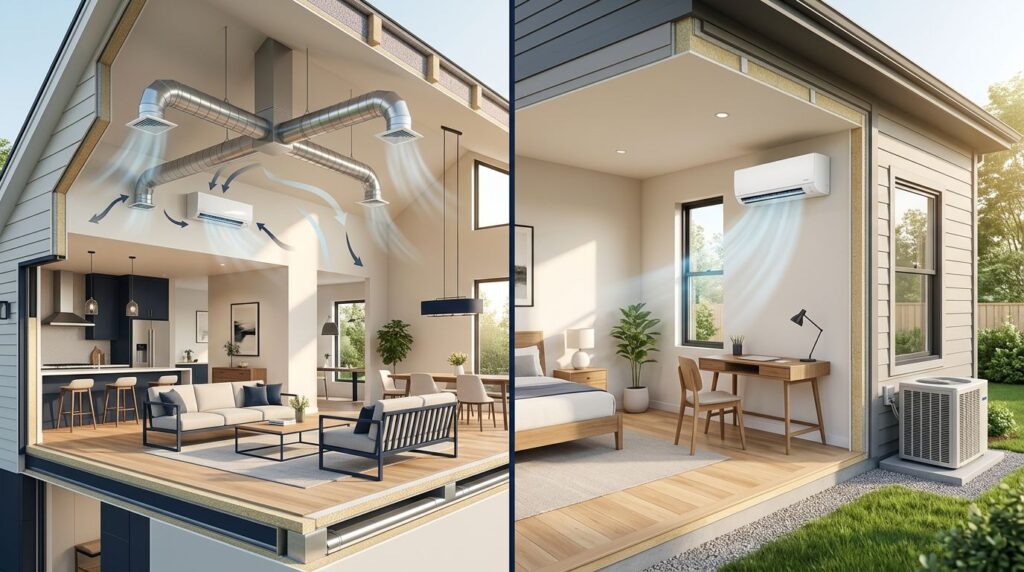
A home addition can expose every weak point in your current cooling system. Room additions, including a new bedroom, sunroom, garage conversion, or office, may stay warm long after the rest of the house feels comfortable.
For West Alabama homeowners, the decision often comes down to whether the current system can provide whole-home cooling for the new space. Start by checking the existing ductwork, the addition’s cooling capacity, and how you plan to use the room.
A good choice should cool the addition reliably through a Northport or Tuscaloosa summer while protecting whole-house comfort.
Key Takeaways
- Central AC can provide clean, whole-home cooling when the existing ductwork, blower, returns, and equipment can support the addition.
- Mini-splits often fit additions better when new ductwork would require major remodeling or the room needs independent temperature control.
- Proper sizing requires a room-by-room load calculation that considers insulation, windows, sun exposure, room use, and airflow limits.
- Compare the complete installation scope, expected operating costs, rebates, maintenance needs, and long-term comfort before choosing a system.
Central AC vs Mini-Splits: How Each System Cools an Addition
Central air conditioning is a forced air system with one outdoor condenser, an indoor coil, a blower, and ductwork. It moves cooled air throughout the house. A ductless mini split uses an outdoor unit connected to one or more indoor units or air handlers through refrigerant lines and wiring.
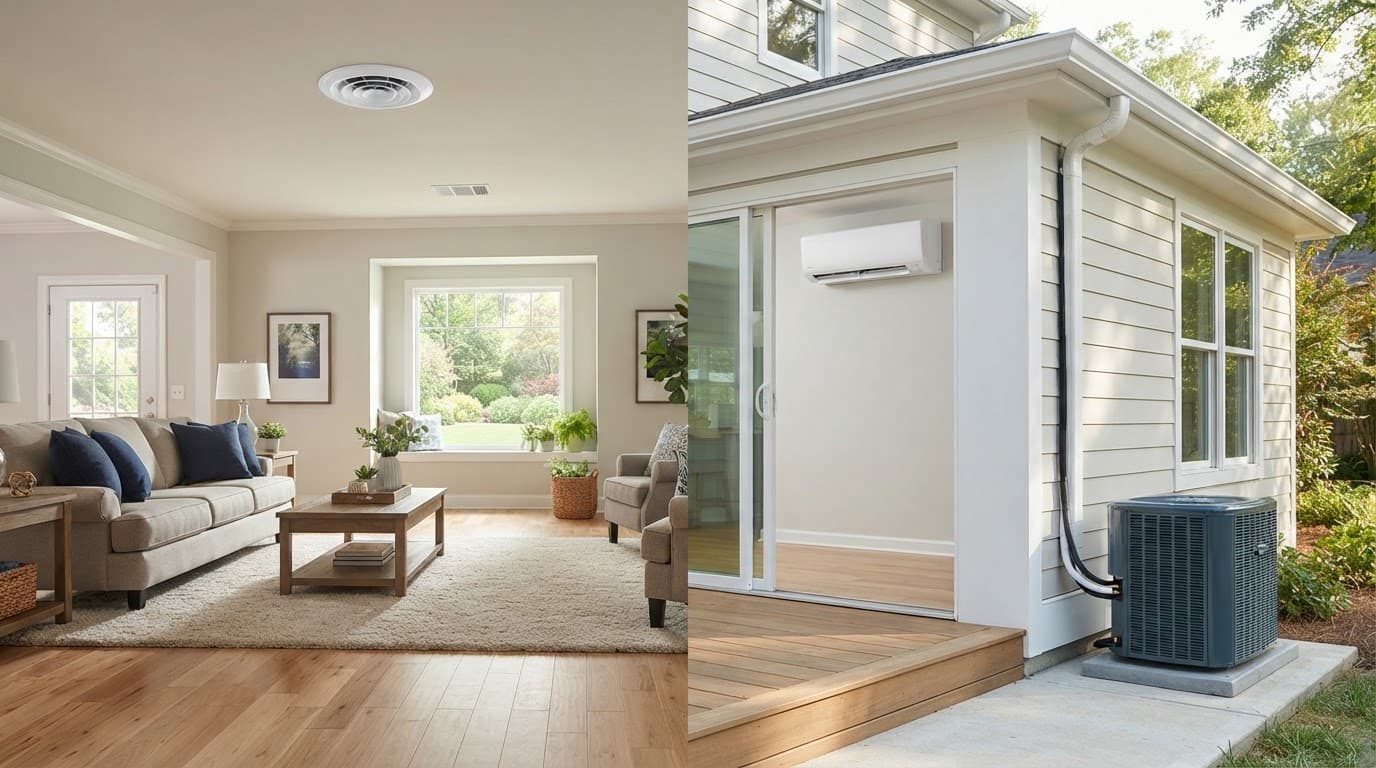
Central AC can blend into a ducted home
A central system keeps most equipment out of sight. The addition receives cooling through ceiling, floor, or wall registers, while a return path carries indoor air back to the equipment.
This approach supports whole-home cooling when the home’s duct system can handle the added square footage. It also keeps the room visually consistent with the rest of the home.
However, adding one supply vent is rarely enough. The new room needs properly sized supply ductwork, return-air planning, insulation, and airflow balancing. Closing vents in other rooms to force more air into the addition raises static pressure and can reduce total airflow.
Mini-splits cool the room where comfort is needed
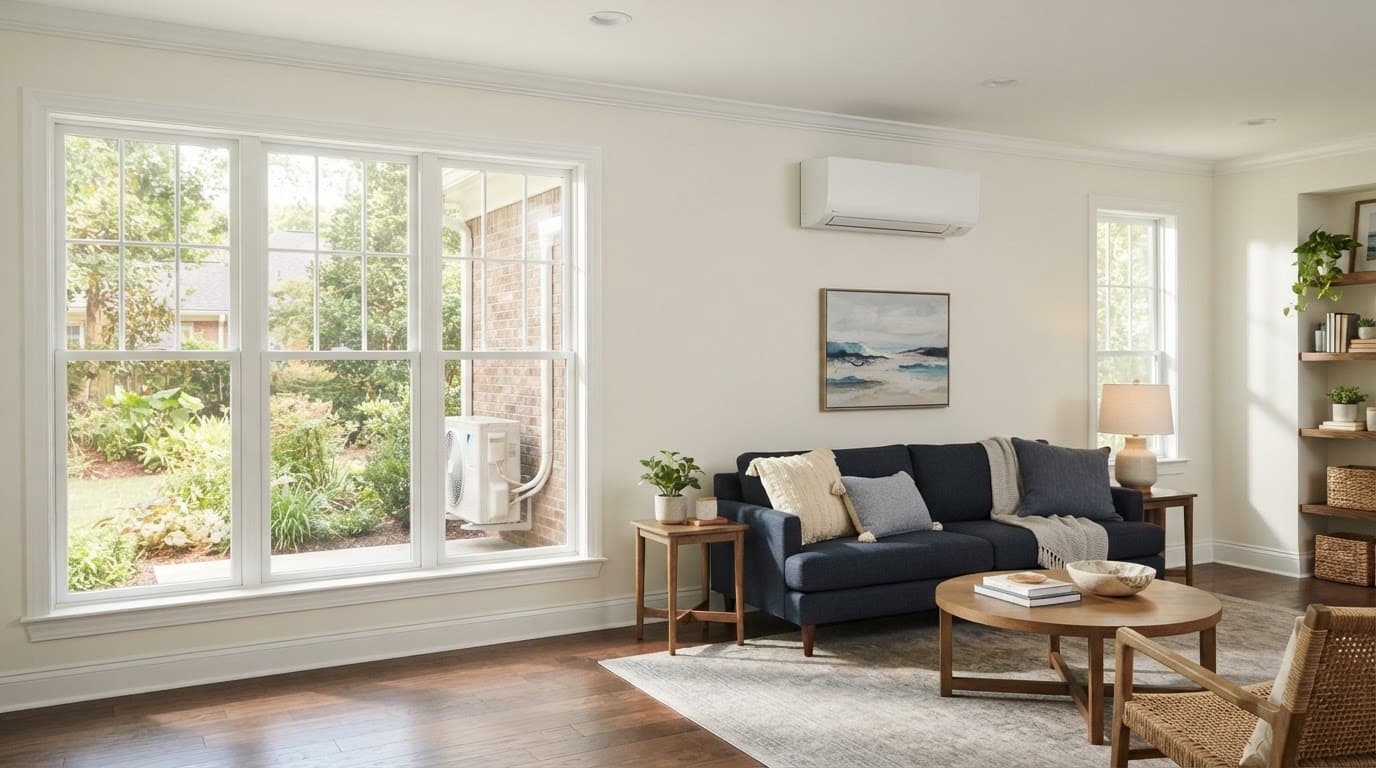
A ductless system places an indoor head on a wall, in the ceiling, or inside a concealed ducted unit. Installers don’t need to run large ducts through an attic or finished walls.
A single-zone system often fits one addition well and provides direct temperature control. A multi-zone mini split can serve several separate rooms, although each indoor head remains visible unless you choose a concealed style.
The visual trade-off is simple: central air hides its equipment, while ductless technology avoids major ductwork and offers direct room-level adjustment.
Existing Ductwork Often Decides the Better Option
The presence of ducts doesn’t automatically make central air the better choice. We inspect whether those ducts can carry the required airflow before recommending an extension.
Good ducts can make central cooling practical
Tight, insulated existing ductwork with adequate trunk lines and return capacity may deliver the addition’s required cooling capacity at a reasonable cost. In that case, expanding the central system can provide a clean, unified solution for consistent cooling throughout the house.
Still, long attic runs, undersized returns, crushed flex duct, and loose connections can leave a new room warm, even in a forced air system. The U.S. Department of Energy’s home cooling guide notes that duct losses can account for about 30% of a cooling system’s energy use. That can reduce energy efficiency.
We use measured airflow, static-pressure readings, and duct inspection to separate duct losses from inadequate equipment output. A duct leakage test may report loss in CFM25, or cubic feet per minute at 25 Pascals, but that number does not replace room-by-room airflow testing.
A high-efficiency cooling system cannot correct a duct network that lacks the capacity to deliver the airflow it needs.
Ductless systems avoid structural disruption
Ductless technology can avoid new soffits, attic duct runs, drywall removal, and ceiling access. That matters in finished additions, slab homes, garages, and older houses where running a return duct would be difficult.
A ductless mini split often wins when the central system already struggles with hot bedrooms or weak airflow. Adding more demand to an undersized HVAC system can create comfort issues throughout the house.
Efficiency, Zoning, and Humidity Control
Energy efficiency depends on sizing, runtime, humidity control, and installation quality. West Alabama’s long humid season makes each factor important for thermal comfort.
Variable-speed mini-splits adjust to the room
Most ductless mini split systems use a variable speed compressor. Instead of repeatedly cycling fully on and off, it adjusts output to match the room’s demand.
This ductless technology supports room-level modulation instead of relying on forced air distribution. Its indoor units function as room-level air handlers, with individual controls that support zone control.
Steadier operation can reduce temperature swings and improve moisture removal during milder but humid weather. You can cool an occupied office or guest suite without conditioning an unused part of the home.
SEER2 ratings help compare matched systems under a modern federal test method. A higher number won’t overcome poor installation, duct losses, or other distribution problems. The DOE’s HVAC guide for homeowners also points out that efficiency gains depend heavily on the condition of the existing equipment and distribution system.
Many mini-splits provide heating, too
A ductless mini-split is usually a heat pump, so it can provide both heating and cooling. That can appeal to an addition needing year-round comfort. It may also make sense when extending heating ducts costs more than installing a properly sized system.
However, the installer still needs to calculate the room’s heating and cooling load. Oversized equipment may short-cycle, leaving humidity behind during summer. Undersized equipment may run continuously and still fall behind on the hottest afternoons.
Upfront Cost and Payback Need a Full Comparison
The equipment price alone rarely shows which option costs less. Energy efficiency and long-term operating costs also affect the value. Central air may look affordable until new ductwork, return modifications, electrical work, and attic access enter the estimate.
Compare complete installation scopes
A published Alabama mini-split cost overview provides installation cost estimates for room additions, with single-zone systems around $3,000 to $5,500 and multi-zone projects around $6,000 to $13,000. These are planning figures, not a substitute for an on-site estimate. Available rebates and incentives may also affect final pricing.
For either system, a written proposal should identify:
- Equipment model numbers, capacity, and efficiency ratings.
- Electrical upgrades, drainage work, thermostat controls, and outdoor mounting.
- Changes to existing ductwork, return-air modifications, permits, and old-equipment removal where needed.
- Labor coverage and the applicable manufacturer parts warranty.
At Northport HVAC, we give clear scopes and upfront pricing. An addition project can uncover duct or electrical work that a quick equipment quote misses.
Use your electric bill to estimate savings
Start with your summer electricity use, then compare the expected cooling demand for the addition. Multiply estimated annual kilowatt-hour savings by the energy charge on your own electric bill.
Next, divide the installed price difference by expected annual savings. This gives a more useful payback estimate than a broad online percentage and accounts for expected operating costs.
Don’t build a budget around assumed rebates and incentives. Federal HVAC credit rules changed after 2025, while utility and local programs can change at any time. Check the ENERGY STAR rebate finder using your ZIP code to verify current eligibility before finalizing the project.
Proper Sizing and Installation Protect Comfort
A new addition needs more than a guess based on square footage. Windows, insulation, sun exposure, ceiling height, room use, air leakage, and the HVAC system affect required cooling capacity.
Load calculations come before equipment selection
We use a room-by-room load calculation to identify the capacity the addition actually needs. A bright west-facing sunroom may need a different solution than a shaded bedroom of the same size.
For central air, we also inspect the existing ductwork, blower, supply trunks, returns, and duct resistance. For a ductless mini split, we plan the indoor-head location, condensate drainage, and electrical requirements. We also confirm clearances around the outdoor unit and the path for refrigerant lines.
The best system is the one sized for the room and installed around the home’s actual airflow limits.
Permits and commissioning should not be skipped
Electrical circuits, refrigerant work, drains, and mechanical alterations may require permits or inspections, depending on the jurisdiction. DIY mini-split installation can create costly warranty, drainage, and performance problems when the refrigerant circuit isn’t properly tested and commissioned.
Our local HVAC technicians install and service Trane, Carrier, Rheem, Lennox, Goodman, and Mitsubishi systems across Northport and nearby communities. New installations include a one-year labor warranty, alongside the manufacturer’s applicable parts coverage.
Maintenance Keeps Either Option Performing
Both options need regular attention, but their maintenance requirements differ. Central systems rely on clean filters, clear returns, sound duct connections, and a working condensate drain. Mini-splits need washable filters, clean coils and blower wheels, and clear drain paths.
Small airflow issues can become expensive repairs
Keep furniture, curtains, pet beds, and storage away from return grilles. Avoid closing multiple supply registers, because that can increase duct pressure and worsen uneven cooling.
Mini-split heads need cleaning according to the manufacturer’s schedule. A neglected indoor head can lose airflow, drip water, or develop odors, even when the outdoor unit appears normal.
If you see ice, standing water, electrical smells, loud mechanical noise, or repeated shutdowns, turn the system off and arrange service. Review these air conditioner repair warning signs before a small issue turns into an emergency AC repair call.
For a rental property or an addition that suddenly stops cooling, prompt AC repair in Northport, AL can prevent damage and long tenant complaints. Tuscaloosa air conditioning problems deserve the same measured diagnosis, especially when weak airflow points to ducts rather than a failed condenser.
Frequently Asked Questions
Is central AC or a mini-split better for a home addition?
Central AC is a practical choice when the existing system and ductwork can deliver the addition’s required airflow. A mini-split may be better when the room needs independent control or connecting it to the central system would require extensive ductwork and remodeling.
Can I add one vent to the existing central AC system?
Adding one supply vent is rarely enough to cool a new room properly. The project may also need a correctly sized supply duct, return-air planning, insulation improvements, and airflow balancing.
Are mini-splits more energy efficient than central AC?
A variable-speed mini-split can reduce energy use by conditioning only the occupied room and adjusting output to match demand. Actual efficiency still depends on proper sizing, installation quality, humidity control, and the condition of any existing ductwork.
Do mini-splits provide heating as well as cooling?
Many ductless mini-splits are heat pumps that provide both heating and cooling. The system still needs to be sized for the addition’s heating and cooling loads so it can maintain comfort without excessive cycling or running continuously.
How much does it cost to install a mini-split in an addition?
Planning estimates for a single-zone mini-split are often around $3,000 to $5,500, while multi-zone projects may cost about $6,000 to $13,000. The final price depends on equipment, electrical work, drainage, mounting, permits, labor, and the site’s installation requirements.
Choose the System That Fits the Addition
Central air conditioning makes sense when the current system can support the addition and a forced air connection is practical. It can preserve whole-home cooling, while a ductless setup often fits better when the room needs independent control or connecting it requires extensive remodeling.
The central AC vs mini-splits decision should rest on load calculations, airflow testing, and how you use the room.
Review total project pricing, including rebates and incentives, before finalizing the project. Proper design, not familiar equipment, is what delivers whole-house comfort.