How to Tell If Your Air Ducts Are Leaking
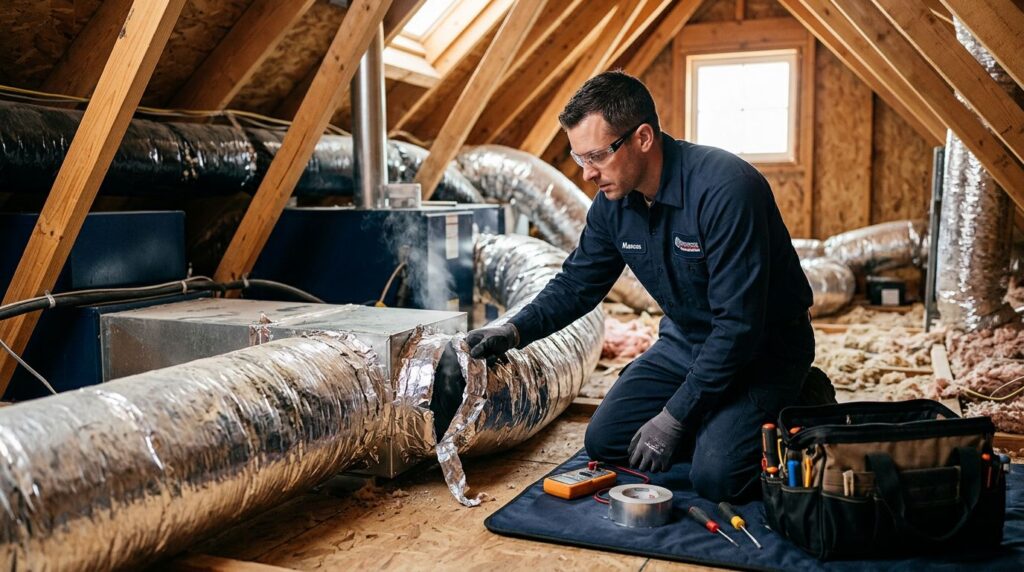
A loose duct connection can send cool air into a blazing Alabama attic instead of the room you paid to cool. If some rooms stay hot, dust returns right after cleaning, or utility bills keep climbing, air duct leaks could be part of the problem.
A typical home can lose 20% to 30% of its conditioned air through gaps, holes, and disconnected duct runs. That loss forces the HVAC system to run longer, reducing energy efficiency without making the house feel better.
The good news is that many duct problems leave clues before they turn into a bigger comfort issue.
Key Takeaways
- Uneven room temperatures, weak airflow, excess dust, musty odors, and rising energy bills can point to air duct leaks, but clogged filters and equipment problems can cause similar symptoms.
- Inspect accessible ductwork for loose connections, disconnected collars, crushed flex ducts, damaged insulation, dust streaks, and failed tape.
- Professional duct blaster testing and airflow measurements can find hidden leaks and separate duct problems from issues with the blower, coil, vents, or duct layout.
- Proper repairs may require mechanical fastening, mastic, mesh tape, or UL 181-rated foil tape; standard gray duct tape and duct cleaning are not lasting leak repairs.
- Aerosol sealing can help with small, inaccessible leaks, but collapsed, disconnected, or severely damaged ducts may need repair or replacement.
How to Tell If Air Duct Leaks Are Causing the Problem
Leaky ducts rarely create one dramatic symptom. One of the clearest patterns is uneven heating and cooling, especially during extreme Alabama weather.
Watch for these common signs:
- One bedroom, bonus room, or upstairs area stays warmer or colder than the rest of the house, even when the thermostat is set correctly.
- Your energy bills rise without a clear change in weather, household size, or thermostat habits.
- Airflow feels strong near the indoor unit but weak at vents farthest away.
- Dust accumulation builds up quickly around supply openings, furniture, and return air vents.
- Allergy symptoms get worse when the system runs, prompting questions about indoor air quality.
- You notice musty odors or humid air coming from certain vents.
A supply-side leak lets cooled or heated air escape before it reaches the room. A return-side leak can pull dusty air, humidity, insulation fibers, or odors from an attic, basement, or crawl space into the ductwork.
These signs don’t automatically prove the ducts are leaking. A clogged filter, blocked returns, dirty evaporator coil, weak blower, or closed vents can create similar complaints. Before assuming the ducts are at fault, review how often to replace air filters and check that returns and supply vents are clear.
A large sofa pressed against the return air vents can restrict airflow through the entire system, even when the ducts are in good shape.
Inspect Accessible Ductwork Without Creating a Bigger Problem
Start with areas you can reach safely, such as an unfinished basement, crawl space, garage, or attic access point. Don’t walk across ceiling drywall or climb through a hot attic without safe footing and good lighting.
We recommend checking the duct system in this order:
- Start near the air handler and look at the main supply plenum, return connections, and any visible seams. Look for loose joints, missing fasteners, lifted mesh tape, and peeling tape, and note whether existing repairs are marked UL 181.
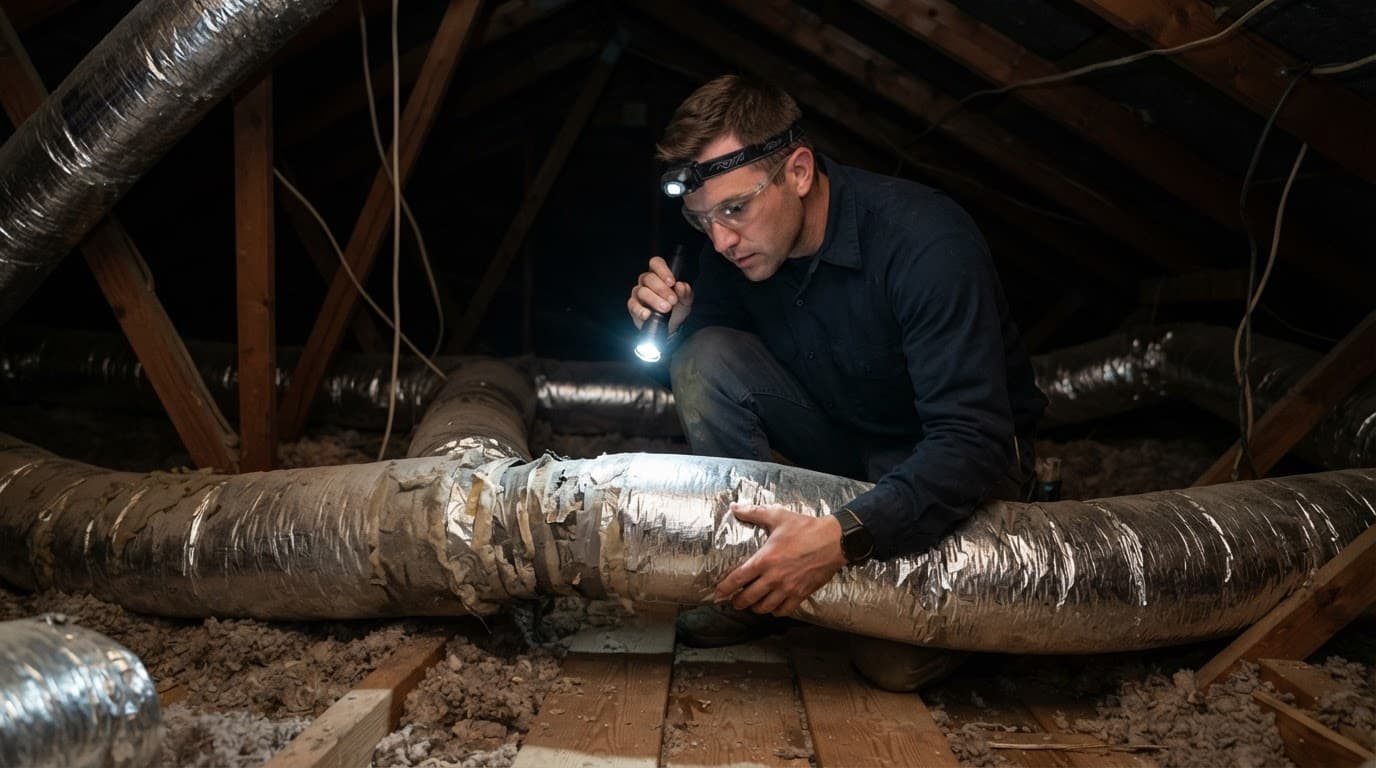
- Follow each accessible ductwork run. Look for disconnected collars, crushed flexible ducts, sharp bends, sagging sections, split insulation, and damaged outer jackets.
- Check for dust streaks around seams and joints. A return leak may leave dark dust marks where the system has been pulling unfiltered air inward.
- Run the blower, then check only accessible seams with a small strip of tissue or a smoke pencil. Supply leaks may push tissue or smoke away, while return leaks can draw it toward the joint. Never use a candle or open flame for this test.
- Take clear photos of anything questionable. A photo makes it easier to compare changes later or show a technician what you found.
Pay close attention to long runs feeding distant bedrooms, bonus rooms, and additions. Those ducts often cross hot overhead spaces, and even a small gap can dump conditioned air where nobody benefits from it.
Don’t mistake a duct leak for a vent problem. Keep supply outlets or vents open, move furniture away from return grilles, and replace a gray or bowed filter before making a repair decision. Closing several vents to force air into one room can increase duct pressure and make uneven cooling worse.
Professional Testing Finds What an Inspection Misses
Visible ductwork is only part of the system. Many runs sit behind finished walls, above ceilings, or below floors, where visual checks aren’t possible.
Local HVAC technicians can test hidden runs throughout the HVAC system, not just one vent. They use a duct blaster and digital manometer.
The equipment connects to the ducts, and supply openings are sealed. During pressure testing, a calibrated fan brings the ducts to 25 Pascals.
The manometer measures the airflow needed to hold that pressure. The result is reported in cubic feet per minute at 25 Pascals, abbreviated CFM25.
A higher CFM25 reading means more air is escaping from the system. Testing before and after duct sealing verifies reduced leakage, but it doesn’t promise a universal percentage improvement.
Duct leakage CFM is different from airflow at a vent
A duct leakage test measures air escaping from the ducts under test pressure. It doesn’t show the whole story of how much air reaches each room.
For room-by-room problems, we may also measure airflow at a register using a flow hood or anemometer. Those readings help separate a leaking duct from a crushed run, a weak furnace blower, a separate equipment problem, a dirty coil, or poor duct layout.
There isn’t one pass-fail CFM25 number for every house. Duct size, home size, system layout, and whether the ductwork is inside or outside conditioned space all matter. A good diagnosis explains the measurements in plain language and connects them to the comfort problem you’re having.
The Right Way to Seal Leaky Ductwork
A sealant cannot hold together a duct that has come apart. Before sealing, a slipped flex duct or metal connection needs proper reattachment with the correct draw band or mechanical fastener. For wider gaps, mesh tape can reinforce the seal after the joint is secure.
Mastic sealant vs. foil tape
Both materials have a place, but they are not interchangeable.
| Material | Best use | What to know |
|---|---|---|
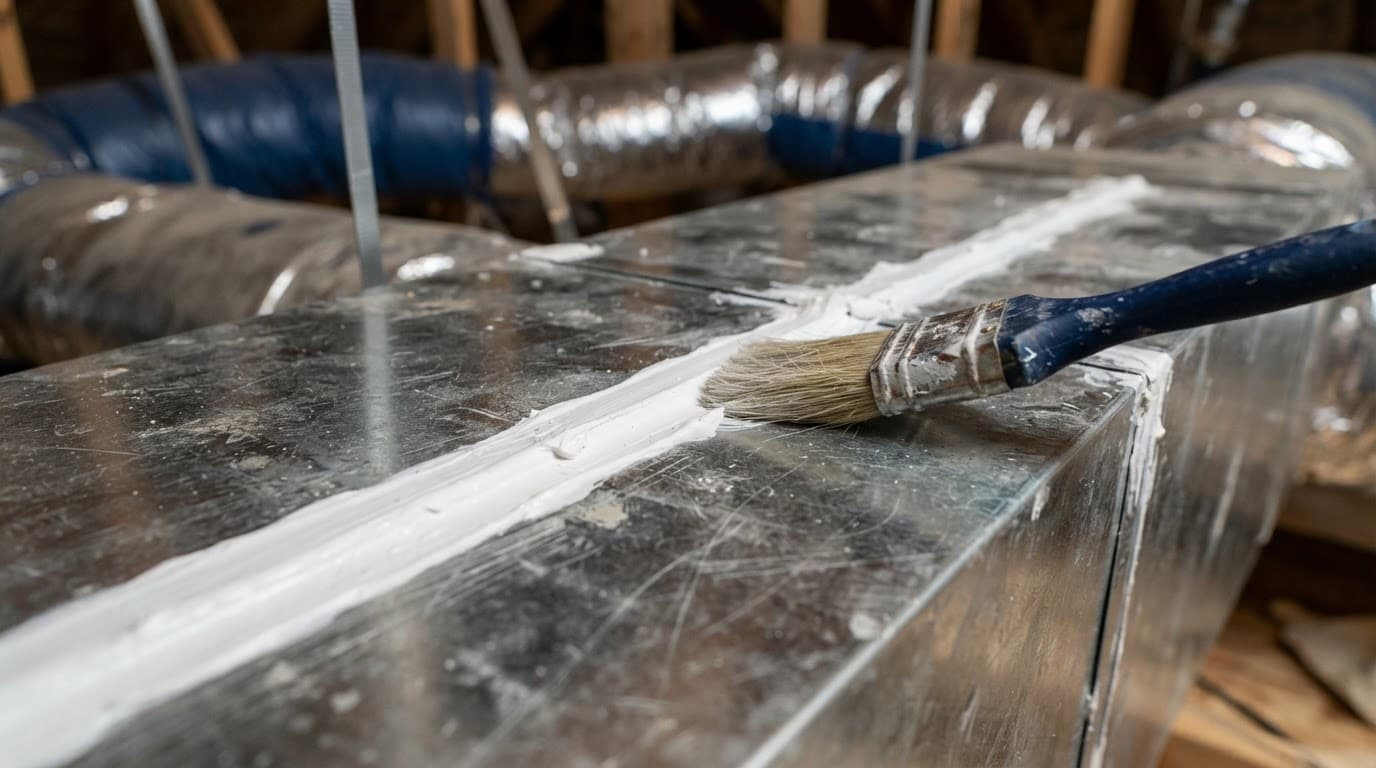
| Mastic sealant | Irregular seams, joints, and small gaps | It stays flexible and durable; mesh tape reinforces wider gaps. |
| UL 181-rated foil tape | Clean, smooth metal seams and approved duct connections | Apply it to a dry, clean surface with firm pressure. |
| Standard gray duct tape | None | Its adhesive dries out and fails under heat and age. |
For a small seam, apply a continuous layer of mastic over the full joint and extend it beyond both edges. For gaps wider than about 1/4 inch, embed mesh tape in the mastic, then fully cover the mesh tape with a second coat.
Choose tape rated UL 181 for HVAC use, not household tape with a shiny surface. For UL 181 tape to work, the surface must be dry and clean. Press it firmly, and avoid dusty insulation, wet metal, or loose connections.
Gray cloth-backed duct tape is not a lasting HVAC repair. It may look fine for a short time, then peel away when heat, humidity, and age break down the adhesive.
Mesh tape cannot reconnect a separated joint, and neither tape nor sealant can repair a disconnected or collapsed duct. Check the label to confirm that the product identifies its UL 181 rating.
Duct cleaning also won’t fix a gap, loose collar, or crushed flex duct. Cleaning may help with heavy debris or renovation dust, but proper ductwork repair requires sealing and mechanical work to restore airflow.
Hidden Duct Leaks Need a Different Solution
Ducts buried in walls, under floors, or above finished ceilings can’t always be reached without opening part of the home. In those cases, aerosol-based duct sealing, such as Aeroseal, may be an option.
During this process, the system is prepared for testing, and a sealing compound moves through pressurized ducts. Fine particles collect at small leaks and gradually build a seal, even where a technician cannot apply mesh tape by hand. Testing before and after provides a measurable result.
Aerosol sealing is useful for small, inaccessible gaps. It is not a fix for a collapsed duct, major disconnection, damaged return box, or a duct run that needs replacement.
We also look beyond the ducts, since moisture in a crawl space can affect ductwork insulation and pull humidity into return leaks. A frozen coil, standing water, breaker trips, burning smell, or loud mechanical noise points to an equipment problem that needs diagnosis first.
For air conditioning problems in Northport or Tuscaloosa, air duct leaks are only one part of the inspection. At Northport HVAC, our heating and air conditioning repair team checks the HVAC system before recommending a repair. The inspection includes filters, blower performance, coils, accessible ducts, thermostat operation, and airflow.
Hidden duct problems rarely call for emergency AC repair by themselves. Turn the system off and seek urgent help if you smell burning, see smoke, hear severe buzzing, or have a breaker that keeps tripping.
Frequently Asked Questions
What are the most common signs of air duct leaks?
Uneven temperatures, weak airflow at distant vents, rising energy bills, excess dust, and musty odors can all point to leaking ducts. These symptoms can also come from a dirty filter, blocked return, weak blower, or other HVAC problem.
Can I inspect my air ducts myself?
You can safely inspect accessible ductwork in areas such as an unfinished basement, crawl space, garage, or attic access point. Look for loose joints, disconnected runs, crushed flex ducts, damaged insulation, and dust streaks, but avoid unsafe attic or ceiling access.
How are hidden duct leaks tested?
An HVAC technician can use a duct blaster and digital manometer to measure leakage under controlled pressure. Airflow readings at individual registers can also help determine whether the problem is a leak, crushed duct, weak blower, dirty coil, or poor duct layout.
Is gray duct tape a proper way to seal ductwork?
No. Standard gray cloth-backed duct tape often dries out and fails under heat, humidity, and age; use mastic or UL 181-rated foil tape for suitable connections and seams.
Will duct cleaning fix a leak?
Duct cleaning can remove heavy debris or renovation dust, but it will not repair a gap, loose collar, or crushed duct. Leaky ductwork requires proper fastening, sealing, or replacement depending on the damage.
A Small Duct Leak Can Waste a Lot of Comfort
Hot rooms, weak airflow, excess dust, and rising utility costs often share the same starting point: air isn’t reaching the rooms where you need it. A basic visual inspection can uncover loose connections, crushed flex ducts, and failed tape in accessible ductwork. The repair may require proper fastening, sealant, or mesh tape.
When the problem is hidden or symptoms overlap, measured testing gives you a better answer than guesswork. Finding the source of the airflow problem comes before choosing the repair.