AC Condensate Pump Failure: Signs and Safe Next Steps
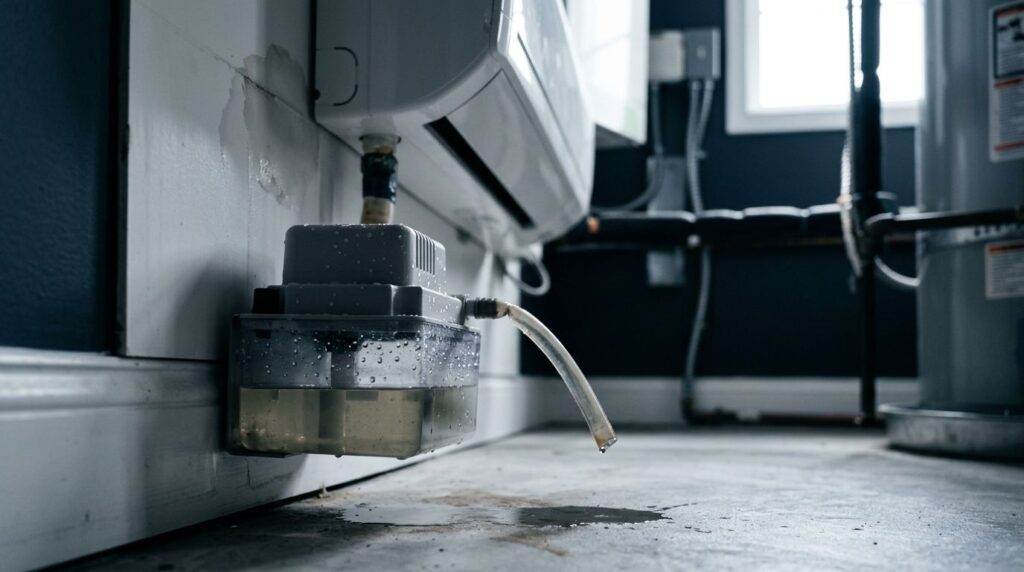
Water near your indoor AC equipment can cause water damage, stained ceilings, or damaged flooring. A full reservoir, unusual humming, or an air conditioner that stops without warning can point to AC condensate pump failure.
The condensate pump collects moisture removed from indoor air and sends it to a safe drain location when gravity can’t move water through the drainage system. In West Alabama’s humid summer weather, that small pump may move a surprising amount of water. The signs below can help protect your home and show when to call for service.
Key Takeaways
- A full reservoir, nonstop humming, standing water, unusual heat, or an unexpected AC shutdown can indicate a condensate pump or drainage problem.
- Check the thermostat, plug, GFCI outlet, accessible tubing, and visible buildup safely, but never bypass a float switch or safety shutoff.
- A clogged discharge line, stuck check valve, or algae-covered inlet screen can mimic a failed pump and may require a simpler repair.
- Turn the system off and call for professional service when water reaches electrical equipment, the line is concealed, the pump overheats, or the reservoir will not empty.
Signs of a Failing Condensate Pump
A condensate pump usually operates quietly and only when its reservoir reaches a set level. When that pattern changes, water may already be backing up.
A full tank, silence, or nonstop humming
A pump that doesn’t run when the tank is nearly full may have lost power, developed a stuck float switch, or suffered a motor failure. Check for a loose plug or tripped GFCI outlet before assuming it’s a broken pump.
On the other hand, a condensate pump that hums or runs constantly without lowering the water level often has a blocked discharge line or failed check valve. A clogged line can mimic a broken pump, even when the motor still runs.
Water, odors, and unexpected system shutdowns
Look for water on the floor, damp insulation, rust around the equipment base, or a musty odor near the air handler. These signs may indicate an overflow and water damage.
Algae buildup can block the pump’s inlet screen, the reservoir outlet, or the connected drain tubing.
Many systems also have a safety float switch. When water rises too high in the reservoir, it triggers a system shutdown to protect the HVAC system.
A sudden air conditioner shutdown with water in the pump tank may be the safety control doing its job.
A safety shutdown is a warning, not a problem to bypass. Restarting the system without correcting the backup can send water into the air handler or ceiling.
Why the Condensate Pump Reservoir Holds Water
Standing water inside the tank doesn’t always mean the pump has failed. A small amount may remain after a pumping cycle, especially with a low outlet opening or longer discharge tube.
The concern is a water level that keeps rising, reaches the lid, spills into a pan, or remains high while the pump runs. That pattern can lead to overflow and water damage.
Normal water versus a growing backup
During cooling, the air conditioner’s evaporator coil pulls moisture from indoor air, and that water flows into the reservoir. When the float switch rises, the condensate pump should turn on and move most of the water through the discharge line.
A little water at the bottom is normal, but a nearly full tank is not. A restricted inlet screen can mimic a broken pump, so a high water level doesn’t confirm mechanical failure. Continued cooling can keep adding condensate while the pump can’t discharge it, causing the backup to grow.
Why the water may feel warm or hot
Warm water can come from the equipment area, especially when the pump sits beside a working air handler. However, hot water and a hot pump housing can indicate a pump motor running against a restriction.
A blocked discharge path makes the motor work longer without moving water. Turn the thermostat off if the pump feels excessively hot, smells electrical, or trips a breaker. Let the equipment cool before anyone inspects it.
Telling a Clogged Line From a Broken Pump
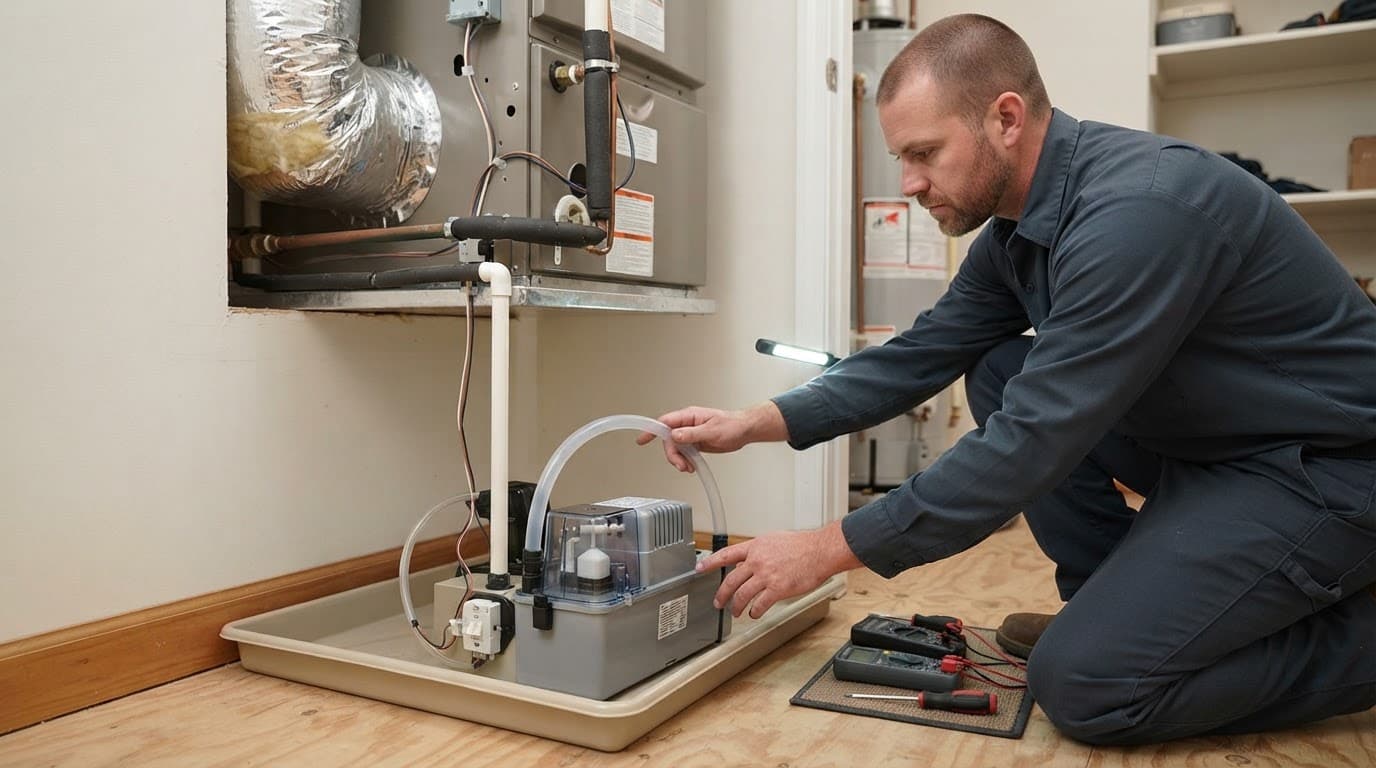
A condensate pump can imitate a failed motor when its discharge line or valve is restricted. These diagnostic steps support troubleshooting before replacement. Follow the water path and compare how the equipment responds.
| What you notice | Likely source | Safe response |
|---|---|---|
| Reservoir is full and the pump stays silent | Lost power, stuck float switch, failed motor | Check the plug and GFCI once, then schedule service to prevent water damage if it will not run. |
| Pump runs but the water level does not fall | Clogged discharge line or check valve | Shut the system down and inspect accessible tubing for kinks or blockage. |
| Water flows out, then returns to the tank | Valve is stuck or installed incorrectly | Inspect the valve direction and arrange replacement if it will not hold. |
| Pump empties the tank, yet water collects near the air handler | Separate primary drain or pan issue | Have the indoor drain and evaporator section checked. |
A motor can fail, but a clogged vinyl tube is often the simpler repair. If it runs without moving water, a technician may test the impeller, but the pattern matters more than the sound alone.
Checking the discharge line and check valve
With the thermostat off and the pump unplugged, inspect only the accessible tubing. Look for sharp bends, crushed sections, loose joints, or an exposed section that could freeze during winter operation.
If the valve is accessible, place a towel and shallow container beneath it before removal. Most valves have a directional arrow. Clean water should pass toward the drain outlet, while the check valve should resist flow back toward the pump. Replace the valve if it stays stuck, leaks backward, or remains clogged after gentle rinsing.
Don’t force compressed air into a discharge line that disappears into a wall, attic, or ceiling. A technician can trace the route and clear it without blowing a loose connection apart.
Safe Checks Before Calling for AC Service
Start by protecting the home, not by repeatedly resetting the air conditioner. Water and electricity do not mix well. A system shutdown helps limit additional water near the equipment.
Check power and the accessible float switch
First, set the thermostat to off. Place towels around the pump if water has escaped or the reservoir is full. Unplug the condensate pump only if the cord, outlet, and floor are dry.
Check whether the plug has worked loose. If it connects to a GFCI outlet, reset that outlet once. A GFCI that trips again may indicate a pump or electrical problem and needs professional attention.
After unplugging the pump, remove the cover only if it lifts off easily and doesn’t require removing HVAC panels. If visible, clear sludge around the float and inlet screen with a soft cloth. Never pull on the float switch wiring, jumper it, or bypass the safety shutoff to keep the system running.
Look for a clear path to the outlet
Trace the discharge line from the pump as far as you can safely see. Outdoor outlet ends can clog with mud, mulch, insects, or leaves. Check exposed vinyl tube for kinks, crushed sections, or ice. If the tube is frozen, leave the AC off and warm the section gradually with a warm, damp towel.
Do not use an open flame, boiling water, a pressure washer, or sharp tools. Those methods can split plastic tubing or cause a hidden leak. We recommend calling for diagnosis when the route is concealed or there is a recurring overflow from the pump. Call promptly if the indoor unit has leaked into a ceiling and caused water damage.
For severe leaks, no cooling during dangerous heat, or water near electrical equipment, use same-day AC service in Tuscaloosa rather than letting the system run.
Cleaning the Pump and Preventing Slime Buildup
A clean tank gives the float switch room to move and slows algae buildup. During peak cooling season, humidity keeps the pump active, so a quick inspection can prevent a surprise overflow.
Cleaning the reservoir and inlet screen
Turn off the thermostat and unplug the condensate pump before cleaning. Remove the reservoir only if it detaches without disturbing fixed wiring or drain connections. Empty it into a sink or suitable drain, then rinse away loose debris.
Warm water can help loosen slime from a removable tank. We prefer a manufacturer-approved condensate cleaner over pouring bleach into a connected pump assembly. A bleach solution can create irritating fumes and should be used only if the manufacturer permits it. Never mix it with other cleaners, and rinse the tank thoroughly. Manufacturer-approved treatment tablets may also be suitable, but use them only if the pump instructions allow them.
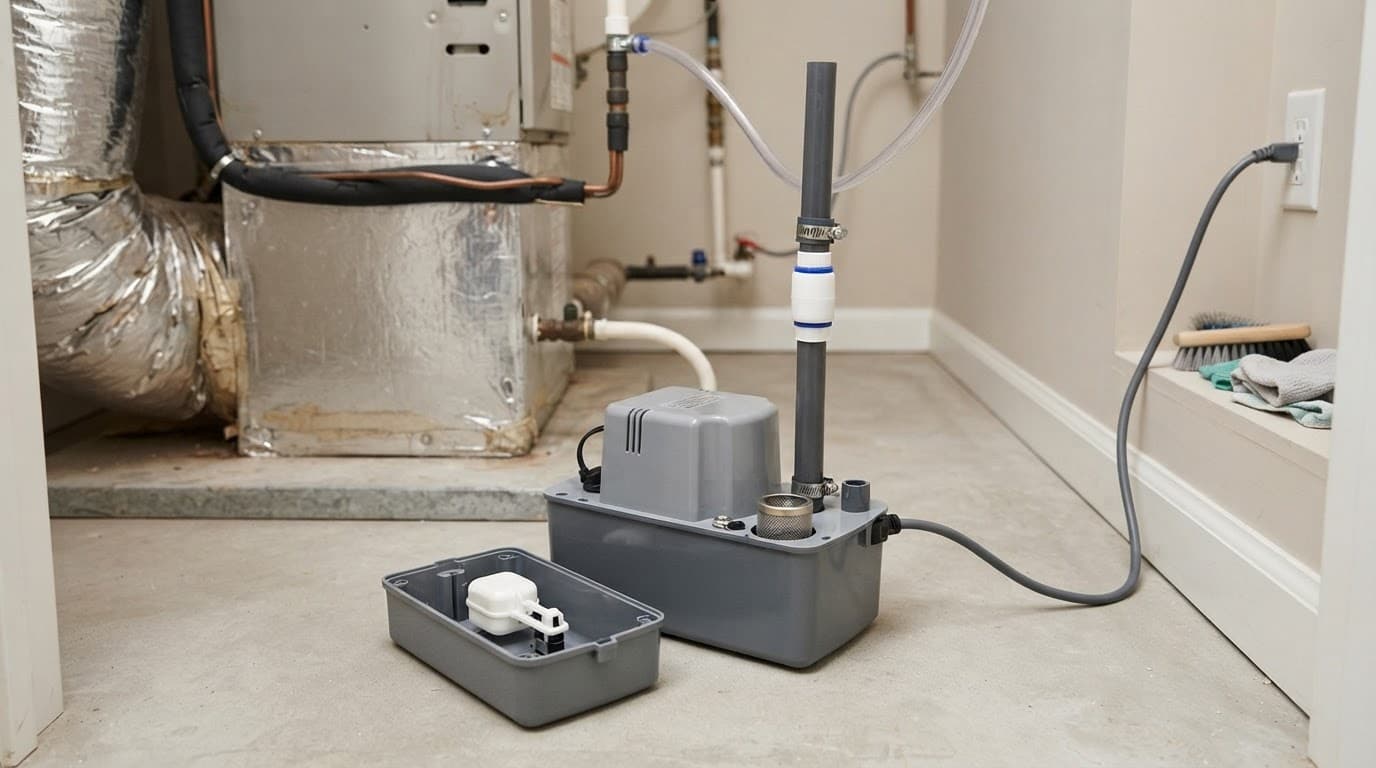
Clean the inlet screen gently with water and a soft brush. Then reassemble the unit, restore power, and watch one full condensate pump cycle. If cleaning doesn’t restore a complete cycle or the water level doesn’t drop, stop testing. Have a technician evaluate the impeller instead of opening the motor assembly.
Build drainage checks into routine maintenance
We suggest checking the pump tank and visible drain tubing monthly during heavy AC use. Add annual cleaning to your maintenance routine, even when the unit appears to operate normally.
A professional maintenance visit should also include the primary condensate drain, discharge line, evaporator coil, airflow, and safety controls.
A dirty filter can contribute to frozen coils and extra water once the ice melts. Follow a realistic replacement schedule with this guide on how often to change HVAC filters, especially if you have pets, allergies, or renovation dust.
When Replacement and Professional Repair Make Sense
A new condensate pump may be sensible after basic power checks fail. Replacement may also make sense when the float mechanism is damaged or the unit overheats despite a clear drain tube. Repeated backups can justify replacement before water damage reaches drywall or flooring.
Repair decisions should follow a confirmed diagnosis
A clogged tube or stuck check valve may only need targeted service. A cracked tank or burned pump motor can indicate a broken pump. An unreliable safety switch may also make replacement safer than repair.
The price depends on access, line routing, pump capacity, and lift height. It also depends on whether a technician needs to add a safety shutoff. Ask for a written explanation of the failed part. Compare the confirmed failure, access, lift height, and replacement cost before deciding whether to repair or replace.
At Northport HVAC, our licensed and insured, NATE-certified local HVAC technicians diagnose drainage problems in your HVAC system. They service Trane, Carrier, Rheem, Lennox, Goodman, and Mitsubishi systems. Homeowners seeking AC repair in Northport, AL deserve clear findings and upfront pricing, especially when water has reached the floor.
Safety switches protect more than the pump
An auxiliary float switch can shut down cooling when water rises in a secondary drain pan or equipment drain line. This safety shutoff helps prevent water damage, especially around attic air handlers where water can damage ceilings below.
A technician should install and test the float switch with the low-voltage controls. This confirms the HVAC system stops cooling safely when water rises. Don’t bypass it to restore cooling.
Tuscaloosa air conditioning systems work hard through long humid stretches. A reliable drainage system helps keep heating and cooling equipment running safely.
If the system will not cool, water is spreading, or a pump has an electrical smell, call for AC repair warning signs in Northport. Request emergency AC repair when needed.
Frequently Asked Questions
How do I know if my AC condensate pump has failed?
A full reservoir with no pumping, nonstop humming without a falling water level, standing water, or an unexpected system shutdown can point to a pump or drainage failure. Check accessible power and tubing once, then schedule service if the problem continues.
Can I keep running the air conditioner when the pump is full?
No, continued cooling can add more condensate and cause an overflow near the air handler, ceiling, or flooring. Turn the thermostat off and do not bypass the safety float switch while arranging a diagnosis.
Is a small amount of water in the condensate pump normal?
A small amount may remain after a pumping cycle, especially with a low outlet opening or a long discharge tube. A level that keeps rising, reaches the lid, spills into a pan, or stays high while the pump runs indicates a backup.
Should I repair or replace a failed condensate pump?
Repair may be appropriate for a clogged tube, stuck check valve, or dirty inlet screen. A cracked tank, damaged float, burned motor, overheating, or repeated backups may make replacement the safer choice after a confirmed diagnosis.
A Small Pump Can Prevent a Large Water Problem
An AC condensate pump failure often gives early clues, including nonstop humming, a warm housing, or standing water where it shouldn’t be. Acting at the first sign can protect your system and home.
Check accessible power, tubing, and buildup without opening electrical panels or defeating safety controls. If it won’t empty, the line disappears into the home, or water reaches the air handler, professional testing is the safer next step.