What Causes AC Compressor Failure in Home AC Units?
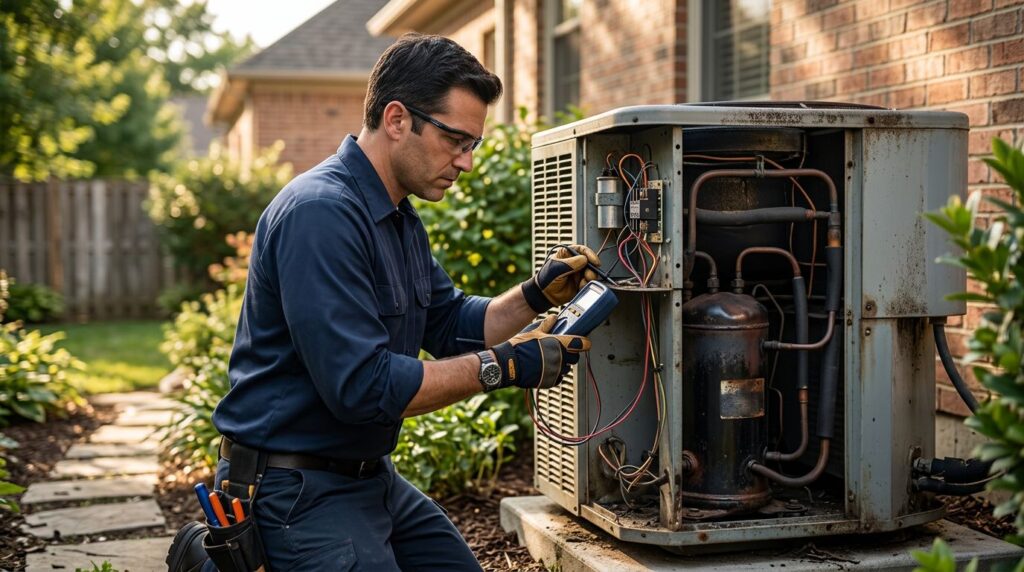
An air conditioning system can keep the blower running while the house gets hotter by the hour. When the compressor quits, it may still move air, but it can’t move heat out of your home.
AC compressor failure can involve burned electrical windings, damaged internal parts, or a compressor protecting itself from harmful conditions. It doesn’t always mean you need a whole new system, but the cause still needs a proper diagnosis.
Most compressor failures begin with a smaller issue that was left unresolved.
Key Takeaways
- AC compressor failure can result from low refrigerant, poor oil return, liquid refrigerant, overheating, electrical problems, or internal mechanical damage.
- Warm air, loud noises, repeated breaker trips, ice, short cycling, and rising energy bills are warning signs, but none proves the compressor has failed by itself.
- Dirty condenser coils, restricted airflow, weak capacitors, damaged wiring, and refrigerant leaks can overload the compressor and shorten its life.
- Compressor replacement should address the root cause, including refrigerant contamination, acid, airflow problems, or electrical faults, before a new part is installed.
- Regular filter changes, clear vents and outdoor coils, proper maintenance, and timely repairs can help prevent another compressor failure.
What Causes AC compressor failure?
The compressor is the pump inside your outdoor unit. It pulls in low-pressure refrigerant vapor from the indoor coil, compresses it, and sends it through the condenser coil so heat can leave your home.
After releasing heat outdoors, the refrigerant returns indoors at lower pressure and absorbs more heat. This repeating circuit depends on the compressor maintaining the right pressure difference.
That process depends on correct refrigerant charge, steady oil return, good airflow, and reliable electrical power. When one of those pieces falls apart, the compressor can overheat, seize, or burn out.
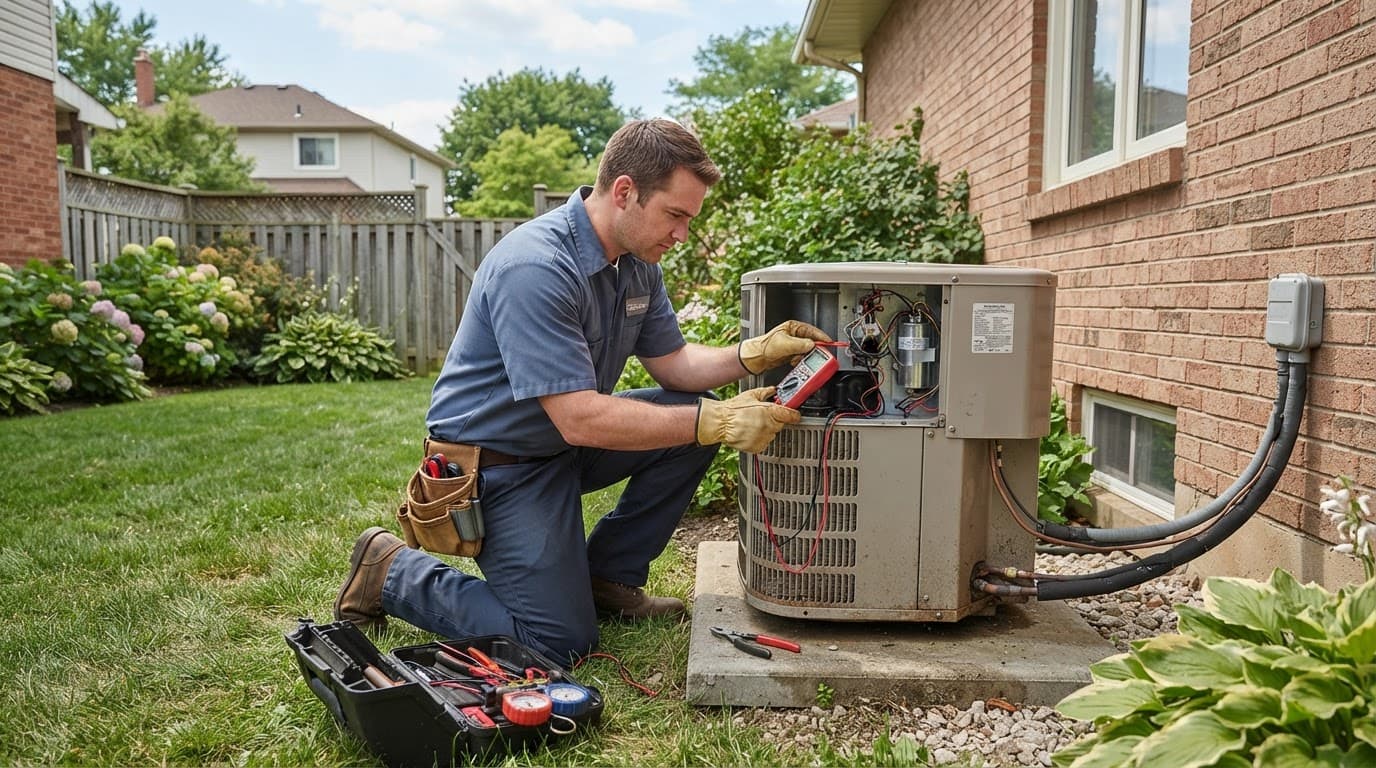
Low refrigerant and lack of lubrication
Low refrigerant levels usually point to a refrigerant leak, because refrigerant isn’t something an AC system “uses up.” The leak may be at a coil, fitting, valve, or line connection.
Running low on refrigerant makes the compressor work harder while reducing refrigerant flow that supports oil return. Low refrigerant levels can also interfere with oil circulation, leaving bearings and moving parts with less lubrication. This combination causes compressor overheating and eventual metal wear.
Adding refrigerant without finding the refrigerant leak is a short-lived fix. The system may cool again for a while, but the compressor still operates under the same harmful conditions.
Flood back and flooded starts
A compressor is built to compress vapor, not liquid refrigerant. Liquid refrigerant can return through the suction line while the system runs, a condition called flood back. It can wash oil off internal parts and damage valves, rods, or bearings.
A flooded start is different. Unlike refrigerant returning through the suction line during operation, refrigerant can migrate into the compressor crankcase during shutdown. When the unit starts, that liquid can boil into oil foam. A failed crankcase heater, incorrect refrigerant charge, airflow problem, or metering issue can contribute.
The crankcase heater should be tested before blaming the compressor for a flooded start. Checking charge, airflow, and controls can help identify the source of the stress.
Similar mechanical rules apply in a vehicle’s climate-control system, though a car also uses a compressor clutch and different controls. A failed compressor clutch is a vehicle-specific issue, not a normal feature of a residential unit. In both cases, low oil, overheating, contamination, and electrical trouble can lead to mechanical failure.
Warning Signs Before the Compressor Stops
A compressor rarely fails with no warning at all. During a long stretch of Alabama heat, extended run times can make subtle changes easy to miss.
Watch for these problems:
- The system blows warm air even though the thermostat is set correctly.
- The outdoor unit makes grinding, banging, screeching, or loud buzzing sounds.
- The breaker trips repeatedly when the AC tries to start.
- Cooling cycles become short and frequent, but the house never reaches the set temperature.
- Your energy bill rises while comfort and airflow get worse.
- Ice forms on the suction line or indoor evaporator coil.
Ice can indicate a refrigeration or airflow problem. That sign alone does not prove compressor damage.
Weak airflow does not prove the compressor is bad. A dirty filter, blocked return grille, duct restriction, or blower problem can also create weak airflow. A frozen coil or failed outdoor fan may cause similar symptoms.
Still, persistent weak airflow deserves quick attention after basic checks. Review these warning signs that call for AC repair if warm air, unusual noise, electrical smells, or repeated breaker trips continue.
A loud AC unit rarely repairs itself. Shut it down if it is grinding, smoking, producing an unusual electrical odor, or tripping the breaker.
Heat, Airflow, and Electrical Problems Add Up
A compressor works under high pressure on the hottest days. It relies on the outdoor unit’s coil and fan compartment to release heat. Indoors, restricted airflow across the evaporator coil also increases the load.
Dirty condenser coils raise operating pressure
The coil surface sits outside, where cottonwood, grass clippings, dust, and yard debris collect. When debris blocks heat transfer, condensing pressure rises and system efficiency falls.
That extra load increases compressor amperage and contributes to compressor overheating over time. Repeated overheating can damage insulation around the compressor windings, while a thermal overload may shut the compressor down temporarily.
Homeowners can keep leaves and loose debris away from the cabinet following our guide to cleaning an outdoor AC unit. Don’t use a pressure washer or remove the fan assembly. High-pressure water can flatten delicate coil fins, while opening the unit exposes wiring and stored electrical energy.
Electrical failure from capacitors, contactors, and wiring
The compressor needs a strong electrical start. The outdoor unit also contains the capacitor, contactor, terminals, and wiring needed to deliver it. Weak capacitors, pitted contactors, loose terminals, voltage problems, and damaged wiring can all cause hard starts or erratic operation.
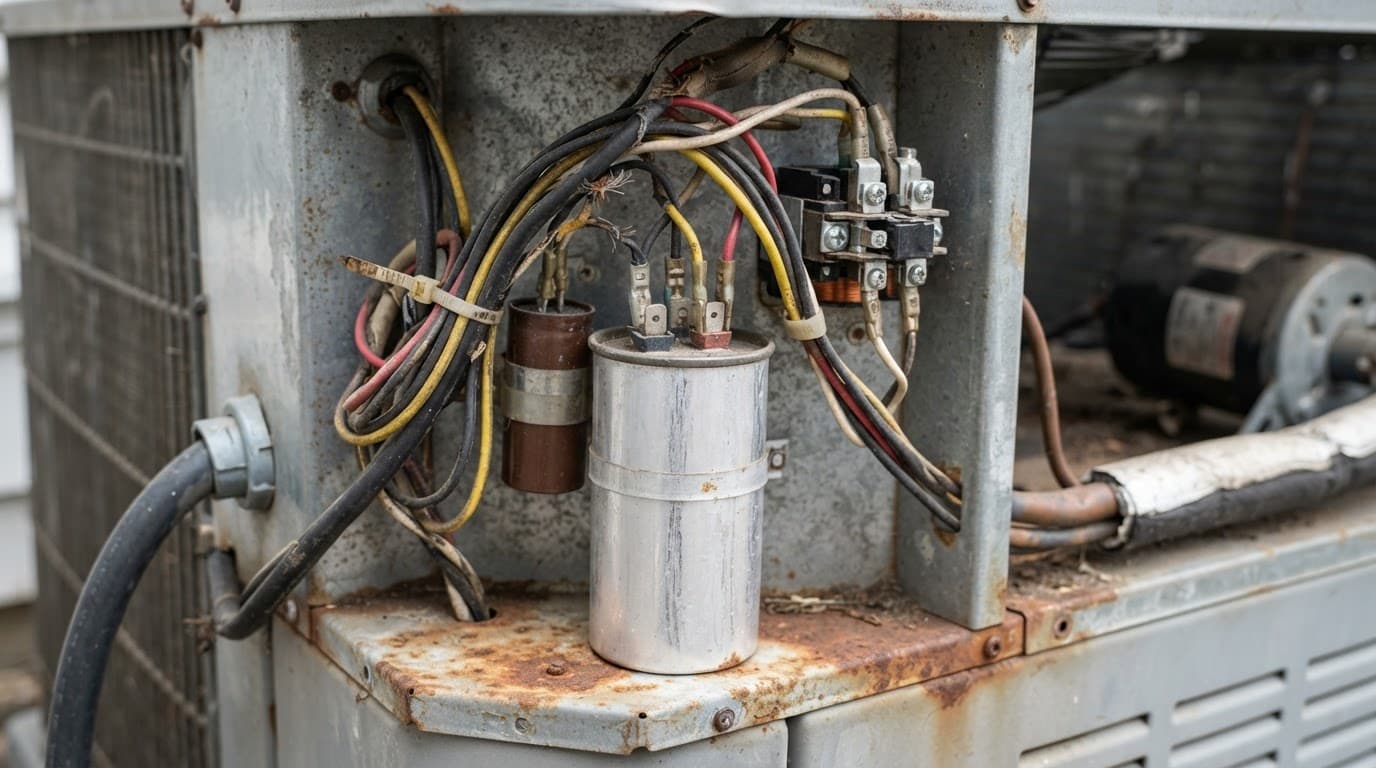
None of these symptoms alone proves compressor damage, but each one warrants electrical testing. A hard start kit may help in some approved situations. The hard start kit must be correctly matched to the compressor and tested after installation.
A hard start kit cannot repair a failing compressor or a larger electrical problem. An incorrectly selected kit can hide the cause until damage gets worse.
If you smell hot plastic, hear buzzing, or see frequent breaker trips, stop resetting the system. Those are reasons to call for emergency AC repair, not keep trying to force another cooling cycle.
A Compressor Replacement Must Fix the Root Cause
Local HVAC technicians shouldn’t condemn a compressor after one quick pressure reading. A proper visit checks airflow, the filter, thermostat operation, coils, drains, electrical connections, capacitor readings, compressor amperage, outdoor fan operation, and temperature split. It also reviews operating conditions, confirms whether a hard start kit is installed, and verifies the crankcase heater where applicable, while investigating flood back.
When a refrigerant leak or burnout is suspected, the refrigerant charge may need to be recovered and weighed against the factory specification. The technician should verify low refrigerant levels and operating conditions, since pressure readings alone don’t always tell the full story.
What acid cleanup looks like after a burnout
An electrical failure can contaminate refrigerant oil with acid and carbon residue, making acid cleanup necessary. Inspecting the oil and compressor debris may reveal copper shavings. Installing a new compressor without addressing that contamination can damage the replacement part.
A technician may test for acid, recover the refrigerant, replace the failed compressor, and install the correct filter dryer components on the suction line and liquid line. After acid cleanup, the system needs evacuation through the suction line, an accurate charge, and follow-up testing under normal operation. The installed filter dryer should be checked, and final charging should be confirmed using superheat and subcooling.
Chemical “quick fixes” aren’t a substitute for proper cleanup. The final acid cleanup procedure must follow the equipment and compressor manufacturer’s requirements.
When replacing the outdoor unit makes more sense
Compressor-only repair can make sense on a newer system with a confirmed, repairable cause, compatible refrigerant, and a sound evaporator coil. It may also make sense when the part is under a manufacturer warranty. A hard start kit can help with a diagnosed startup problem, but it shouldn’t conceal a damaged compressor.
Choosing between compressor replacement and a complete outdoor unit replacement depends on the system’s condition. Broader replacement may be the better call when the system has repeat failures, major contamination, an aging coil, or expensive refrigerant problems. Older R-22 equipment often makes a larger replacement discussion more practical because R-22 is no longer produced for new use.
Indoor and outdoor components must be compatible. Swapping only one piece without checking the full system can create efficiency, refrigerant, and warranty problems.
At Northport HVAC, we service Trane, Carrier, Rheem, Lennox, Goodman, and Mitsubishi mini-split equipment. Our local HVAC services begin by diagnosing the failed part and why it failed, then explain repair and broader replacement options with upfront pricing.
Preventing Another Compressor Failure
No system lasts forever, but routine care prevents many conditions that shorten compressor life. The goal is simple: keep air moving, keep coils clean, and catch electrical or refrigerant issues before summer demand exposes them.
Check your filter monthly until you know how quickly it gets dirty. A basic pleated filter changed on schedule often works better than a dense filter left in place too long.
Keep supply vents open and return grilles clear. Clear returns and open vents support airflow across the evaporator coil. A sectional pushed against a return can starve the system of air all day. Closing several registers to cool one room usually creates pressure problems instead of solving the real issue.
Long, humid summers put a local air conditioning system under serious strain. Routine maintenance gives us time to inspect coil condition, drain lines, airflow, and electrical components. We also check refrigerant performance and operating conditions, since the correct charge supports oil return. We inspect the crankcase heater where the equipment uses one. This preventive maintenance helps find problems before peak summer demand leads to a no-cooling call.
Frequently Asked Questions
What is the most common cause of AC compressor failure?
Compressor failure often begins with a smaller unresolved problem, such as low refrigerant, restricted airflow, dirty coils, or a weak capacitor. These conditions can cause overheating, poor lubrication, hard starts, and eventual internal or electrical damage.
Does warm air mean the AC compressor is bad?
Not necessarily. Warm air can also result from low refrigerant, a frozen coil, a failed outdoor fan, electrical trouble, or an airflow restriction, so the system needs a proper diagnosis before the compressor is condemned.
Can a hard start kit fix a failing compressor?
A correctly matched hard start kit may help with a diagnosed startup problem in an otherwise suitable system. It cannot repair a mechanically damaged compressor or correct a larger electrical or refrigerant issue.
Is it better to replace the compressor or the entire outdoor unit?
Compressor replacement may make sense when the system is newer, compatible, and has a confirmed repairable cause. A broader replacement can be more practical for aging equipment, repeat failures, major contamination, damaged coils, or expensive refrigerant problems.
How can I prevent another compressor failure?
Change the filter on schedule, keep supply vents and return grilles clear, and keep debris away from the outdoor unit. Routine maintenance can also identify airflow, coil, electrical, drain, and refrigerant problems before they place the compressor under excessive strain.
Protect the Compressor Before It Becomes a Replacement
A failed compressor is often the final result of a problem that began elsewhere. Dirty coils, restricted airflow, or a bad capacitor can damage this expensive part.
Warm air, ice, loud noises, and breaker trips may signal a mechanical failure. The compressor may be the final casualty, so a clear diagnosis and timely service give you the best chance to protect your system, budget, and comfort.