HVAC Static Pressure and the Airflow Problems It Causes
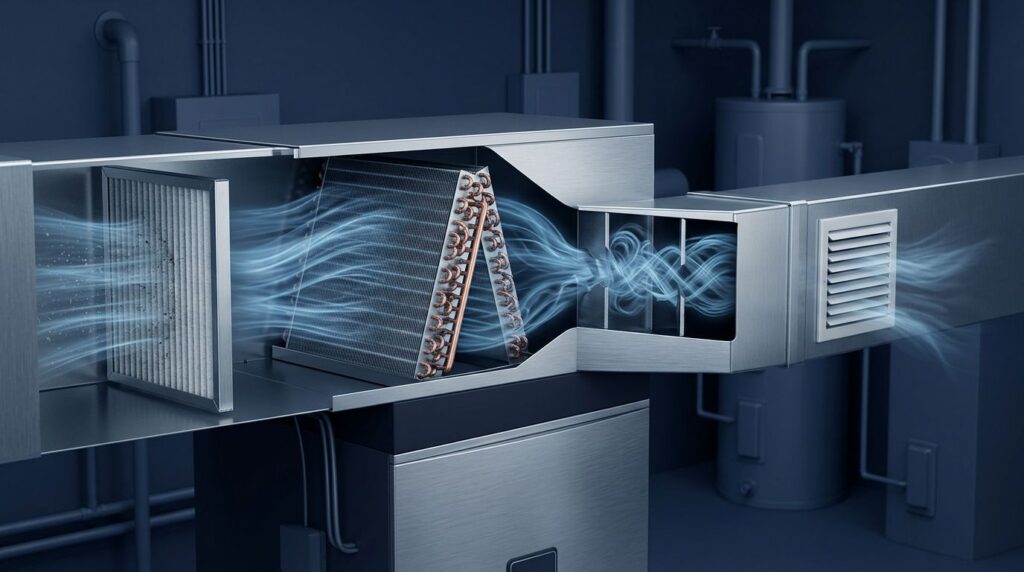
Your air conditioner can run for hours while a bedroom stays warm because airflow is fighting too much resistance. HVAC static pressure tells us how hard the blower must push air through the filter, coil, ducts, and vents.
At Northport HVAC, we often find that weak airflow, high utility bills, and uneven temperatures point to problems with energy efficiency and temperature control. Proper pressure supports dependable heating and cooling, while restrictions can strain equipment every time it starts.
The first step is separating a simple filter issue from a duct static pressure concern or equipment airflow problem. A technician can verify the cause with a static pressure tip before recommending repairs.
Key Takeaways
- HVAC static pressure measures resistance to airflow through the filter, evaporator coil, ducts, and vents—not the amount of air moving through the system.
- High total external static pressure can cause weak airflow, uneven temperatures, loud operation, frozen evaporator coils, furnace limit-switch trips, and added equipment strain.
- Technicians use a dual-port digital manometer and static pressure tips to compare return and supply readings with the equipment manufacturer’s limits.
- Homeowners can start by replacing the correct air filter, keeping registers open, clearing return grilles, and checking accessible ductwork for damage or restrictions.
- A measured diagnosis is important because high or low static pressure can result from different problems, including undersized ducts, leakage, blocked components, or poor system balance.
Static Pressure Measures Resistance, Not Air Volume
Duct static pressure measures the airflow resistance air meets inside a forced-air system, not the amount of air moving through it. Filters, the evaporator coil, return grilles, duct turns, crushed flex duct, and closed registers can all add resistance. Dirt buildup on the evaporator coil can add resistance as well.
As duct static pressure rises, the blower motor has to work harder, and its fan curve may deliver less air. Variable speed motors can adjust output, but they can’t overcome a restricted air path. Rooms may heat or cool unevenly, reducing system performance.
In cooling mode, low airflow can freeze the evaporator coil. During heating, it can overheat the heat exchanger and cause repeated limit-switch trips.
Where total external static pressure comes from
Technicians call the combined supply and return measurement total external static pressure, or TESP. A static pressure tip senses pressure at a test point. The return side reading is usually negative because the blower pulls air inward. The supply side reading is positive because the blower pushes air outward.
Both the return side and supply side readings contribute to the total, so technicians add their magnitudes. Many residential systems use 0.5 inches of water column, written as in. w.c., as a common benchmark. However, the equipment manufacturer’s external static pressure limit matters more than that generic benchmark.
Static pressure vs. dynamic pressure
Dynamic pressure relates to air velocity while air is moving. Duct static pressure describes the resistance within the duct system and equipment path.
A system can have air coming from the vents and still have excessive duct static pressure. That is why airflow complaints need measurements, not assumptions.
Warning Signs of High Static Pressure at Home
High static pressure rarely announces itself with one clear symptom. Instead, several comfort problems tend to show up together as duct static pressure rises.

Photo by RDNE Stock project
Patterns that point to an airflow restriction
Watch for these signs, especially when more than one occurs:
- Several rooms have weak airflow, even with the thermostat set correctly.
- The system is loud at the return grille, or ducts pop when the blower starts.
- Filters turn gray or become bowed sooner than expected.
- Cooling runs for long periods, yet a dirty or frozen evaporator coil leaves humidity and room temperatures uncomfortable.
- The furnace cycles off before the home reaches the thermostat setting.
- Ice forms on refrigerant lines or near the evaporator coil.
When several signs appear together, ask a technician to check duct static pressure. A clogged air filter is a common starting point because it chokes the return-air path. A restrictive filter can also cause trouble if its design does not match the system’s available pressure capacity.
Closing several supply vents raises resistance and often reduces total airflow. It does not reliably force more comfort into another room.
If you have ice, warm supply air, repeated shutdowns, or a breaker that trips, turn the system off and arrange emergency AC repair. Continued operation can turn an airflow problem into equipment damage.
How Technicians Measure System Static Pressure
A duct static pressure reading gives us a starting point, not a repair recommendation. We compare it with the manufacturer’s blower data and fan curve, then locate the source of the resistance.
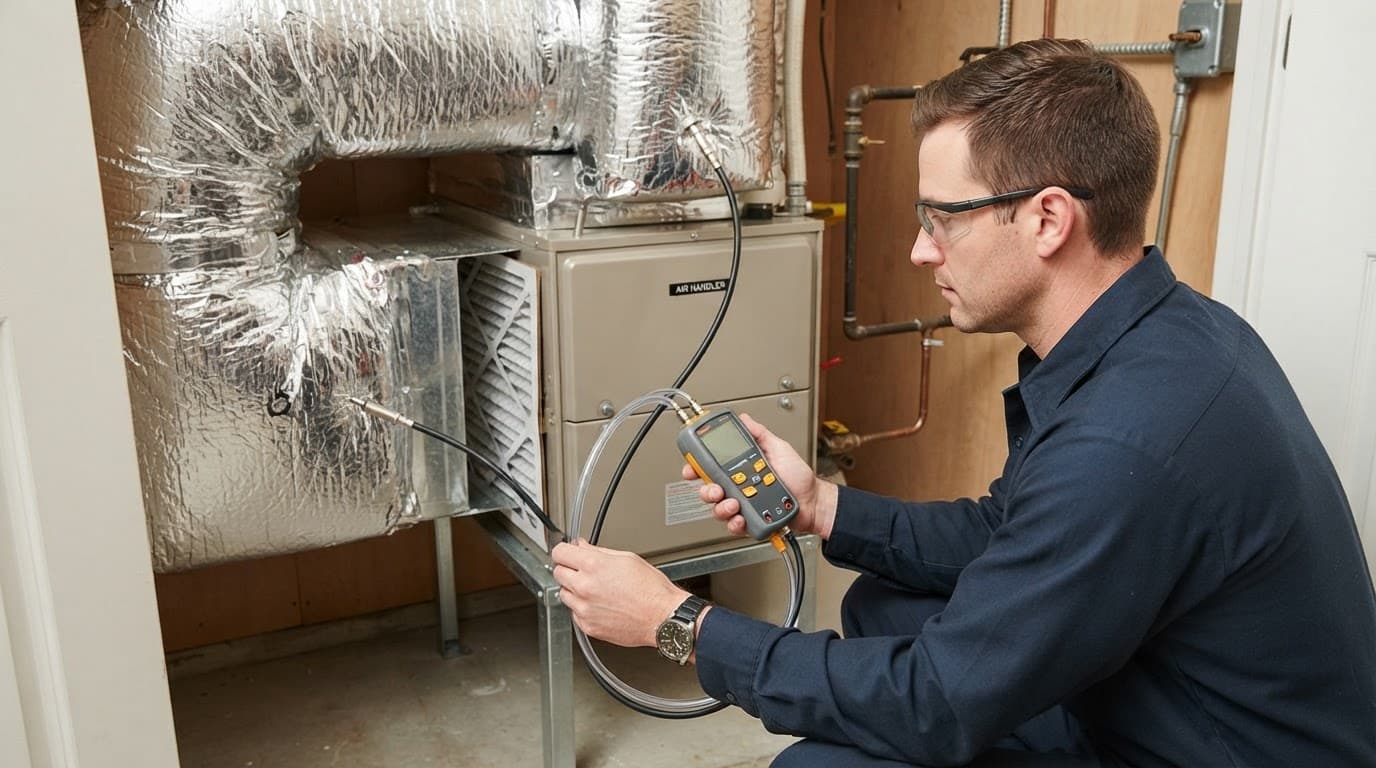
The tools and test process
A technician uses a dual-port digital manometer, manometer hoses, and a static pressure tip. With the blower operating, we place one static pressure tip at the return side test point and another static pressure tip at the supply side test point. The digital manometer records both readings, which we compare with equipment limits for external static pressure before calculating total external static pressure from the recorded duct static pressure.
Some systems use a static pressure sensor for ongoing equipment monitoring, but it doesn’t replace technician readings at approved test points.
Next, we may measure the pressure drop across individual components, including the air filter and evaporator coil. This comparison helps isolate a restriction at the evaporator coil from a filter problem.
A dirty evaporator coil can act like a dense screen, limiting air before it enters the supply ducts. We also inspect the evaporator coil surface for dirt, bent fins, or blocked passages.
Homeowners should not drill test holes into equipment cabinets or adjust blower settings. Incorrect locations can produce misleading readings, and exposed electrical parts create a safety risk.
Why one number never tells the whole story
A high reading can come from an undersized return, a blocked grille, a matted coil, a tight filter, or ductwork that is too small for the equipment. We trace the restriction instead of replacing parts by guesswork.
Low static pressure also needs context. A low duct static pressure reading can point to major duct leakage, an open bypass, a missing filter, or a poorly balanced duct layout. The goal is correct airflow, not simply the lowest possible number.
Fixing Airflow Restrictions Without Creating New Ones
Start with the safe, visible items. These checks may reduce duct static pressure by removing basic restrictions. They don’t require homeowners to open the HVAC cabinet or take internal measurements.
Safe steps homeowners can take
- Replace a dirty air filter with the correct size, installed in the direction shown on its frame. Our guide on how often to change HVAC filters can help you choose a practical schedule.
- Keep supply registers open and move furniture, curtains, and storage away from return grilles.
- Inspect accessible duct connections for loose collars, crushed flex duct, missing insulation, or peeling tape.
- Remove leaves and debris around the outdoor condenser, but don’t pressure-wash delicate coil fins.
Standard gray cloth-backed duct tape is not a lasting duct repair. West Alabama heat and humidity can dry out its adhesive. Proper repairs use secure mechanical connections, mastic, or approved UL 181-rated foil tape.
When the duct system needs professional work
A dirty evaporator coil may need professional cleaning, while a damaged duct run may need replacement or better support. Before cleaning, a technician inspects the evaporator coil for buildup and damage. After cleaning, the technician verifies the evaporator coil is clean and unobstructed. Undersized ductwork can require a larger return path, resized trunk line, or a ductwork design update based on measured airflow.
Duct cleaning can remove heavy debris, but it cannot repair a loose joint, a split seam, or a collapsed duct. Likewise, a duct-blaster test measures leakage in cubic feet per minute at 25 Pascals, reported as CFM25, while duct static pressure testing identifies resistance. Both tests can be useful, but they answer different questions.
After the restriction is corrected, a technician can verify the repair with a static pressure tip. Our NATE-certified local HVAC technicians use those results to explain the problem in plain language before recommending repairs.
Frequently Asked Questions
What is HVAC static pressure?
HVAC static pressure measures the resistance air encounters as it moves through the filter, coil, ducts, and vents. It does not measure the total volume of air moving through the system.
What causes high static pressure in an HVAC system?
Common causes include a dirty or overly restrictive filter, a blocked return grille, a dirty evaporator coil, undersized ductwork, crushed flex duct, and closed supply registers. Several restrictions can occur at the same time and increase the blower’s workload.
How do technicians measure static pressure?
Technicians use a dual-port digital manometer, hoses, and static pressure tips at approved return and supply test points. They compare the readings with the equipment manufacturer’s external static pressure limits and may test individual components to locate the restriction.
Can homeowners reduce HVAC static pressure safely?
Homeowners can replace a dirty filter with the correct size, keep supply registers open, clear furniture from return grilles, and inspect accessible duct connections. Internal cabinet work, blower adjustments, and test-hole installation should be left to a qualified technician.
Is low static pressure also a problem?
It can be, depending on the system and the cause. Low readings may point to duct leakage, an open bypass, a missing filter, or an improperly balanced duct layout, so the goal is correct airflow rather than simply the lowest possible pressure.
Final Thoughts on Static Pressure
Lasting comfort starts with air that can move freely through the entire system. A clean filter and open vents may solve a minor restriction, but recurring noise, ice, hot rooms, or weak airflow need a measured diagnosis.
For Northport, Tuscaloosa, Coker, and nearby West Alabama homes, our Tuscaloosa air conditioning service can identify whether the cause is HVAC static pressure, duct static pressure, a dirty evaporator coil, or poor system performance. The right repair protects the evaporator coil while restoring airflow, supporting energy efficiency, and delivering dependable comfort.