Why Does My Furnace Smell Like Burning Dust?
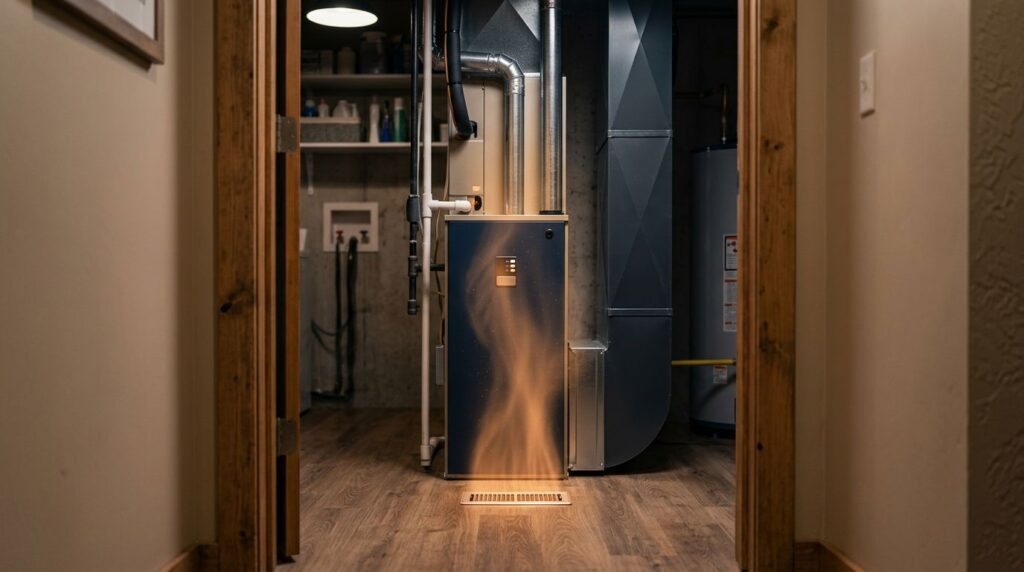
That dry odor when your thermostat calls for heat can make your whole home feel unsafe. In many cases, a furnace burning dust smell is normal at startup, as the heating system warms dust that settled during West Alabama’s long cooling season.
The odor should fade after the first few heating cycles. A sharper burnt smell that lingers, grows stronger, or resembles plastic, wiring, or gas needs a different response.
Key Takeaways
- A brief furnace burning dust smell at the start of heating season is usually normal and should fade within a few heating cycles or several hours.
- Replace a dirty or restrictive air filter, keep supply registers open, and make sure furniture or curtains are not blocking return grilles.
- A smell that persists, returns daily, or comes with short-cycling can indicate airflow restrictions, duct leaks, overheating, or a failing furnace component.
- Turn the furnace off for burning plastic or electrical odors, smoke, sparks, gas smells, soot, flame rollout, or a carbon monoxide alarm, and seek emergency help when needed.
- Have a qualified HVAC technician test recurring odors, airflow, electrical connections, blower performance, burners, venting, and safety controls.
When a Furnace Burning Dust Smell Is Normal
A furnace sits unused for months while off-season dust gathers on the heat exchanger, burner components, cabinet surfaces, and nearby ductwork. When the system warms up, that fine layer heats and creates a temporary odor.
This is common when a gas furnace starts for the first time in the heating season, especially in fall. It can also happen with other furnace types after renovations, a long vacation, or an extended period without operation.
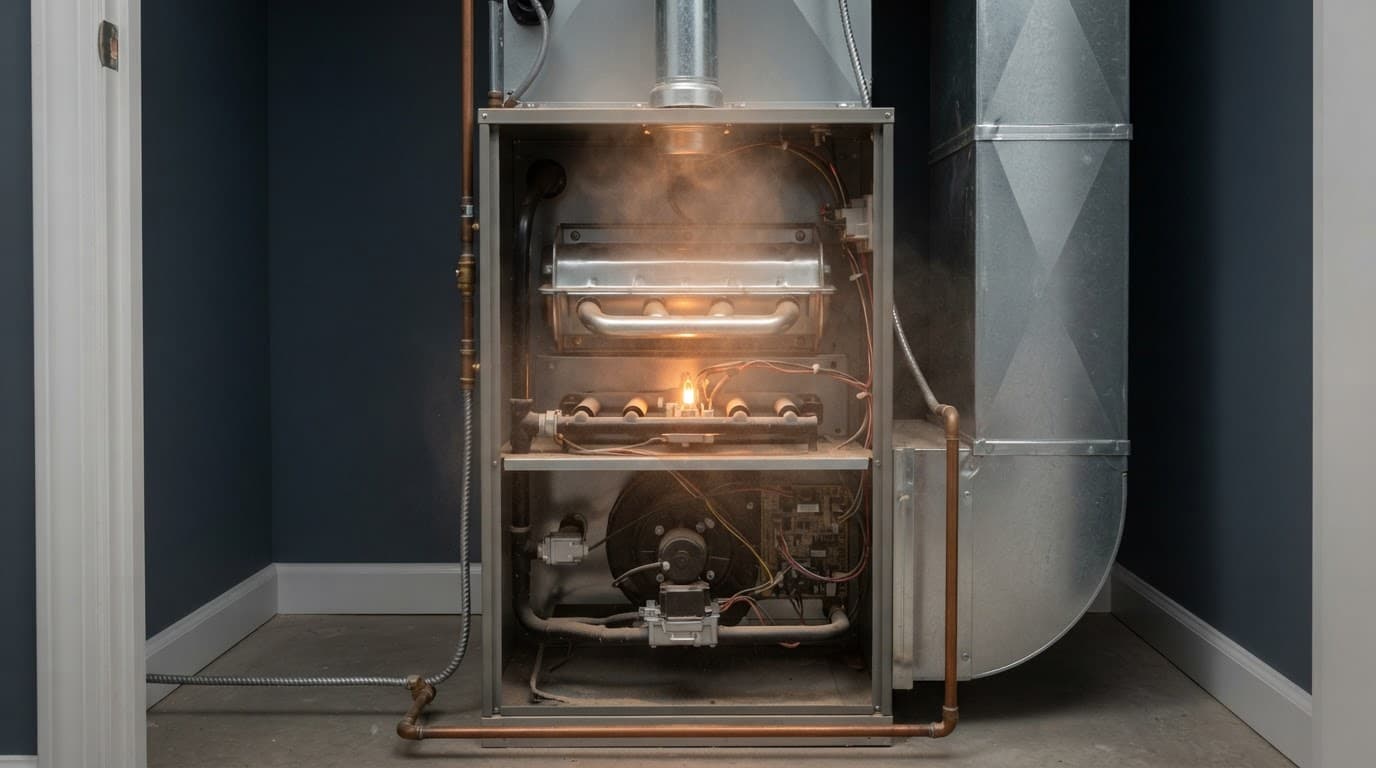
How long the odor should last
A normal dust odor often fades within the first few cycles or several hours of operation. If the odor weakens steadily, there is no smoke, and the furnace runs normally, you can usually let it continue.
A slightly open window can clear the remaining odor faster. Start with a clean air filter, as Trane’s furnace odor guidance also recommends.
A harmless dust odor fades as the furnace runs. An odor that returns every day is not a normal seasonal burn-off.
Avoid spraying air freshener into registers or the furnace cabinet. It masks the clue without correcting the source.
Start With the Air Filter and Airflow
A dirty filter usually doesn’t create a dust smell on its own. Still, it restricts airflow and can make the heating system run hotter than it should. In some cases, the high-limit switch shuts the burners off while the blower keeps moving air.
That pattern can look like short-cycling, and it deserves attention before it strains the blower motor or heat exchanger.
Replace the filter before guessing
Check the air filter size and airflow direction printed on the frame. Replace a clogged filter, or one that looks gray, matted, bowed, or packed with pet hair. Most homes need a filter replacement every one to three months, although pets, allergies, construction dust, and filter type can shorten that schedule.
Our guide on how often to change HVAC filters can help you choose a schedule that fits your home. During AC repair in Northport, AL, we often find the same basic issue: restricted airflow affects both heating and cooling.
Also, keep supply registers open and move furniture, curtains, and storage away from return grilles. Closing several vents raises duct pressure and can lead to poor airflow.
Dirty ducts are not always the cause
Heavy debris, post-remodel dust, pest contamination, or moisture damage can send odors through the house and affect indoor air quality. A return duct leak can also pull dusty attic or crawl-space air into the air ducts, creating a recurring burning dust smell.
However, duct cleaning cannot repair a loose connection, crushed flex duct, or failed seam. For a recurring dust odor, basic filter and airflow checks are a reasonable starting point, but deep duct work and internal furnace cleaning should stay with a trained technician.
Odors That Mean Turn the Furnace Off
A sharp burnt smell is not the same as ordinary dust burn-off. When you notice any of these warning signs, shut the furnace down at the thermostat. Use the breaker only if it is safe to do so:
- A smell of burning plastic, rubber, or electrical insulation can indicate overheated wiring, damaged insulation, a failing blower motor, or a control board problem. Treat it as an electrical issue and shut the furnace down.
- Smoke, sparks, or a breaker that trips require immediate shutdown and prompt service. If you see active smoke or fire, leave the home and call 911.
- The smell of rotten eggs or sulfur may signal a gas leak. Leave immediately, avoid switches and appliances, and call 911 or the gas utility from outside.
- A carbon monoxide alarm, flame rollout, or soot requires evacuation and emergency help. CO has no odor, so a working alarm matters.
The same safety rule applies to Tuscaloosa air conditioning equipment. A hot electrical odor can require emergency repair, not another reset.
Why a Persistent Smell Needs Testing
If you changed the filter and the furnace burning dust smell keeps returning, the heating system needs testing, not just surface cleaning. Dust may be collecting around the blower, entering through a return leak, or moving through heavily contaminated ducts. Routine furnace maintenance may reduce buildup, but it won’t correct a failed component or airflow problem.
Repeated overheating can stress the heat exchanger and produce a hot, dry odor. Poor airflow from restricted returns, a dirty indoor coil, a weak blower motor, an overly restrictive filter, or closed registers can raise static pressure.
Look beyond the smell itself
At Northport HVAC, our local technicians provide a professional HVAC evaluation. We check airflow, temperature rise, electrical connections, blower performance, burner operation, venting, and safety controls. For suspected duct problems, we may measure static pressure and inspect accessible air ducts for loose collars, failed tape, or crushed sections.
A duct leakage test measures air escaping from the system at 25 Pascals and reports it as CFM25. That reading does not show airflow at each register. We may also measure individual vents to separate a duct leak from a weak blower or poor duct layout.
Frequent short-cycling can also warrant a review of furnace sizing, thermostat placement, and airflow.
An oversized unit is not proven by odor alone, but it should not be ignored when heating cycles stay unusually short.
For continuing odors, burner trouble, or no-heat conditions, contact a qualified HVAC company. Schedule professional heating and furnace service with a heating technician before the system locks out on a cold night.
Frequently Asked Questions
Is a burning dust smell from my furnace normal?
A brief dusty odor during the first heating cycles is usually normal after dust has settled on warm furnace components during the cooling season. The smell should weaken steadily and disappear within a few hours or cycles.
How long should a furnace burning dust smell last?
Most normal dust odors fade within the first few heating cycles or several hours of operation. If the smell grows stronger, returns every day, or continues after replacing the filter, schedule a professional inspection.
Can a dirty air filter cause a burning smell?
A dirty filter does not usually create a dust smell by itself, but it restricts airflow and can make the furnace run hotter than it should. Replace a clogged filter and keep registers and return grilles clear before assuming the problem is in the ductwork.
When should I turn off my furnace because of an odor?
Turn it off for sharp smells like burning plastic, rubber, or electrical insulation, as well as smoke, sparks, repeated breaker trips, or a gas odor. Leave the home and call 911 or the gas utility from outside for suspected gas leaks, active smoke or fire, or a carbon monoxide alarm.
Why does the burning dust smell keep coming back?
A recurring odor can result from restricted airflow, a return duct leak, dust around the blower, contaminated ductwork, or an overheating or failing component. A qualified HVAC technician can test airflow, temperature rise, electrical connections, blower performance, burners, venting, and safety controls.
A Safer Start to Heating Season
A brief dusty smell at first startup is usually part of waking a furnace after months of inactivity. Regular maintenance, including timely filter replacement, helps prevent avoidable startup and airflow problems. Planned furnace maintenance and an annual inspection provide broader scheduled care.
Persistent burning odors are a diagnostic clue, not a maintenance task to put off. Turn the furnace off for electrical, gas, smoke, or carbon-monoxide warnings, then contact a professional HVAC provider before running it again.