Signs Your HVAC System Is Too Large for Your Home
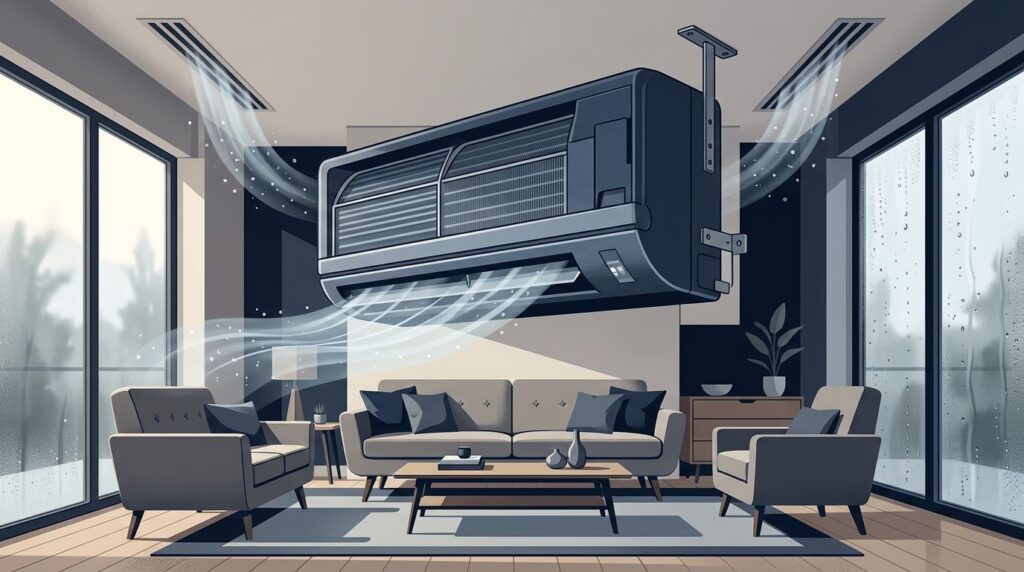
Quick cooling can be a warning, not proof that your air conditioner is doing a better job. An oversized HVAC system can lower the thermostat reading fast, yet stop before it removes enough moisture or circulates air through the house.
Signs your HVAC system is too large often resemble ordinary repair problems, including sticky indoor air, uneven rooms, loud starts, and rising bills. We recommend looking for a consistent pattern before blaming one part.
The details below can help you separate a capacity issue from an airflow restriction, duct problem, or equipment failure.
Signs Your HVAC System Is Too Large
A unit with too much capacity can technically cool the house. However, it often does so in short bursts that leave comfort problems behind. One symptom alone doesn’t confirm the diagnosis, but several together deserve a closer look.
The system turns on and off too often
Short cycling is one of the clearest clues. The compressor starts, sends a strong wave of cold air, and then shuts down quickly because the thermostat reaches its setting before the rest of the home balances out.
The cycle repeats while bedrooms, hallways, and rooms with afternoon sun remain uncomfortable. Mild weather can naturally produce shorter cycles, so watch for repeated rapid starts during ordinary summer conditions.
Frequent starts also put added strain on electrical components and motors. An oversized unit may satisfy the thermostat without delivering steady whole-home comfort.
Rooms feel cool but still clammy
Air conditioning has two jobs. It lowers the air temperature and removes moisture as humidity condenses on the indoor evaporator coil.
A system needs enough run time to handle that moisture. When an oversized HVAC system shuts down too early, the temperature may look fine while the air still feels damp, heavy, or stale.
If your home reaches the set temperature but still feels clammy, temperature control happened before humidity control.
This complaint is common in West Alabama, where humid summer air can make a 74-degree room feel far less comfortable than the thermostat suggests.
Airflow feels forceful, yet comfort swings
Large equipment can create a noticeable blast of air at nearby registers. Still, that doesn’t mean every room receives the right amount of conditioned air.
You may notice cool air near the thermostat, warm bedrooms, and abrupt temperature changes when the system starts or stops. Higher utility bills can follow because starting an air conditioner draws more power than allowing it to run at a steady pace.
How an Oversized HVAC System Affects Comfort
Capacity isn’t the only factor behind comfort. Duct design, insulation, thermostat location, and outdoor conditions matter too. Still, a system that is too large can amplify every weak spot in the home.

Humidity removal falls behind
Your evaporator coil becomes cold first. Moisture removal builds as the cooling cycle continues, which is why stable run times matter during humid weather.
When a unit repeatedly shuts off soon after starting, indoor humidity can stay high. That can lead to musty odors, condensation around vents, and a home that feels warmer than the displayed temperature.
This isn’t a reason to turn the thermostat much lower. Lowering the setpoint can make the system run more, but it also raises energy use without correcting a poor sizing decision.
Wear increases with repeated starts
Each cooling cycle involves the compressor, contactor, blower, and outdoor fan. Frequent on-and-off operation creates more starts across a season than a properly matched unit may need.
That wear doesn’t mean every short-cycling air conditioner needs replacement. A thermostat issue, dirty coil, low airflow, or electrical fault can create a similar pattern. However, capacity should be part of the conversation when the symptoms began after a new installation.
Problems That Can Look Like Oversizing
It pays to avoid a guess based on one uncomfortable room. We see many cases where the equipment size is reasonable, but airflow or maintenance problems prevent it from performing as designed.

Photo by José Andrés Pacheco Cortes
Restricted airflow and leaky ducts cause similar symptoms
A packed filter, dirty indoor coil, blocked return grille, or weak blower can limit airflow. The system may overheat or freeze, shut down early, and leave rooms unevenly cooled.
Start with a clean filter and open supply registers. Closing several vents to force cooling into one room increases duct pressure and can reduce total airflow. Our guide on when to replace your HVAC filter can help you set a practical schedule.
Duct problems also deserve attention. A loose connection or crushed flex duct can dump cooled air into a hot attic before it reaches the room. Local HVAC technicians can measure airflow at registers and test duct leakage instead of relying on visual clues alone.
Equipment faults may need fast service
A malfunctioning thermostat, failing capacitor, refrigerant issue, clogged drain, or damaged blower can all make an AC system cycle irregularly. During AC repair in Northport, AL, we inspect these issues before treating the unit’s capacity as the cause.
Turn the cooling system off and request emergency AC repair if you notice smoke, a persistent burning smell, loud grinding, repeated breaker trips, or heavy water around electrical equipment. Those signs point to a fault that should not wait for a routine visit.
If your Tuscaloosa air conditioning system freezes, leaks heavily, or stops cooling during high heat, review these AC repair warning signs and arrange a professional inspection promptly.
Proper HVAC Sizing Starts With a Load Calculation
Square footage alone cannot tell you what size air conditioner belongs in a home. Two houses with the same floor plan can need different equipment because their insulation, windows, ductwork, shade, occupancy, and air leakage differ.
Manual J measures the home’s actual load
ACCA Manual J is the standard calculation used to estimate how much heating and cooling a house needs. A thorough Manual J load calculation considers the home’s construction, window exposure, insulation levels, and local design temperatures.
A contractor should measure and verify information rather than use a quick rule based only on square footage. Improvements such as new windows, attic insulation, sealed ducts, or added shade can reduce the cooling load enough to change the recommended size.
The calculation also accounts for latent load, which is moisture removal. Energy Vanguard’s explanation of sensible and latent cooling loads shows why a system must manage both temperature and humidity.
Equipment selection and ductwork follow the calculation
Manual J identifies the load, but the process should not stop there. Equipment selection, often guided by Manual S, matches a real unit’s performance to that load. Duct design then needs enough return and supply capacity to move the air.
The Building Performance Association’s guidance on HVAC load calculations also points to the value of measured sizing before a retrofit. A larger unit cannot compensate for undersized returns, disconnected ducts, or poor room-by-room airflow.
For heating and cooling equipment, the right fit is usually the unit that runs steadily on demanding days while keeping humidity and room temperatures under control.
What to Do Before Replacing Equipment
Before approving a replacement, collect useful observations. A few days of notes can make the diagnosis clearer and keep the conversation focused on what the system is actually doing.
Record the pattern at home
Note the outdoor temperature, how long the system runs, which rooms feel uncomfortable, and whether the air feels damp. Also record any water leaks, ice, unusual noises, or thermostat changes.
Keep interior doors and registers open during your observations. Move furniture, rugs, and storage away from return grilles so restricted airflow doesn’t distort the result.
Avoid changing refrigerant settings, opening electrical cabinets, or repeatedly resetting breakers. Those steps can create new problems and make the original fault harder to trace.
Ask for measured answers, not a quick tonnage guess
At Northport HVAC, we check equipment condition, thermostat operation, filters, coils, drains, airflow, and accessible ductwork before recommending repair or replacement. Our licensed, insured, NATE-certified team services Trane, Carrier, Rheem, Lennox, Goodman, Mitsubishi mini-splits, and other common systems.
Ask whether the recommendation includes a Manual J calculation, duct evaluation, permit needs, warranty details, and all labor costs. New installations through our Northport HVAC team include a one-year labor warranty alongside applicable manufacturer parts coverage.
A properly sized replacement should solve a documented comfort problem. It should not be selected because the old unit seemed loud, ran often, or had a larger capacity label.
A Better Fit Creates Steadier Comfort
Fast cooling can feel impressive for a few minutes, but steady operation delivers better comfort across the day. The right-sized system has time to cool, dehumidify, and circulate air without constant hard starts.
When you suspect your HVAC system is too large, start with measured testing of the equipment, airflow, ductwork, and home load. A clear diagnosis helps you spend money on the repair or replacement that actually fixes the problem.