Furnace Inducer Motor Failure Signs and Repair Options
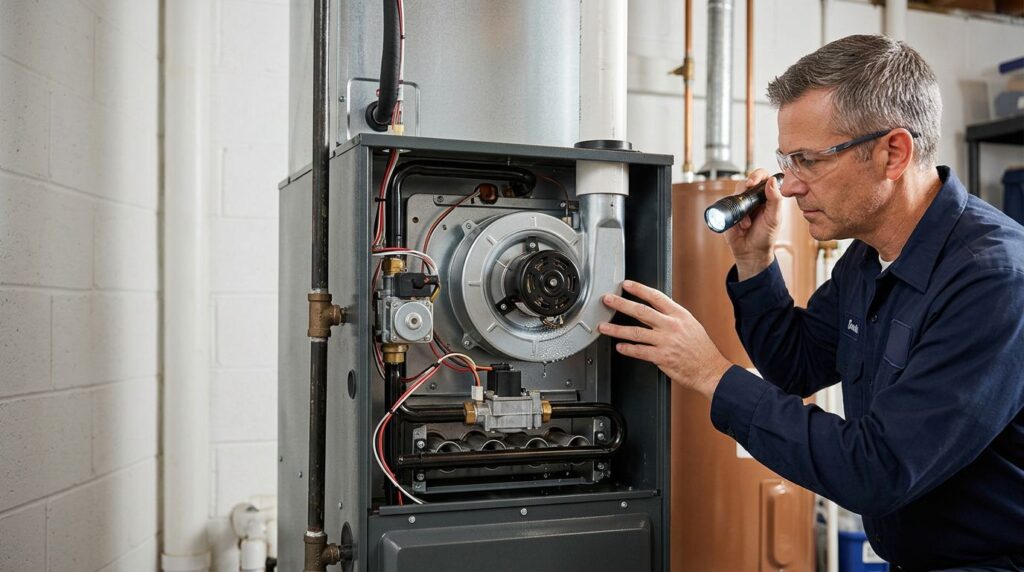
A furnace can sound as if it is starting normally, yet still leave you with cold air. When the furnace inducer motor cannot establish proper draft, the furnace often stops before the burners can light.
That shutdown is a safety response, not a nuisance to override. At Northport HVAC, we find that early attention to unusual sounds, repeat lockouts, and water near the unit prevents many no-heat calls from becoming larger repairs.
Knowing the normal heating sequence makes the warning signs much easier to spot.
How an Inducer Motor Fits Into Furnace Operation
The inducer is a small motor and fan assembly near the furnace’s exhaust connection. It starts before ignition, pulling combustion gases toward the vent pipe and creating the draft the furnace needs before it opens the gas valve.
The heating sequence depends on draft
During a normal call for heat, the thermostat signals the furnace, the inducer starts, and the pressure switch confirms that draft has reached the required level. Then the igniter heats or sparks, the burners light, and the main blower starts after the heat exchanger warms.
The gas furnace safety features work together to stop ignition when venting conditions are not right. A pressure-switch code may point toward the inducer, but it can also come from a blocked vent, a drain problem, damaged tubing, or wiring trouble.
Never jumper a pressure-switch terminal to get heat. It defeats the check that confirms combustion gases have a clear path outside.
A running blower does not prove the furnace is heating
The indoor blower can run even when the burners never ignite. If the thermostat fan setting is “on,” it may also move room-temperature air between cycles and make the problem seem worse.
Listen for the order of events instead. This inducer and pressure-switch demonstration can help you recognize the basic sequence, although it cannot diagnose your specific furnace.
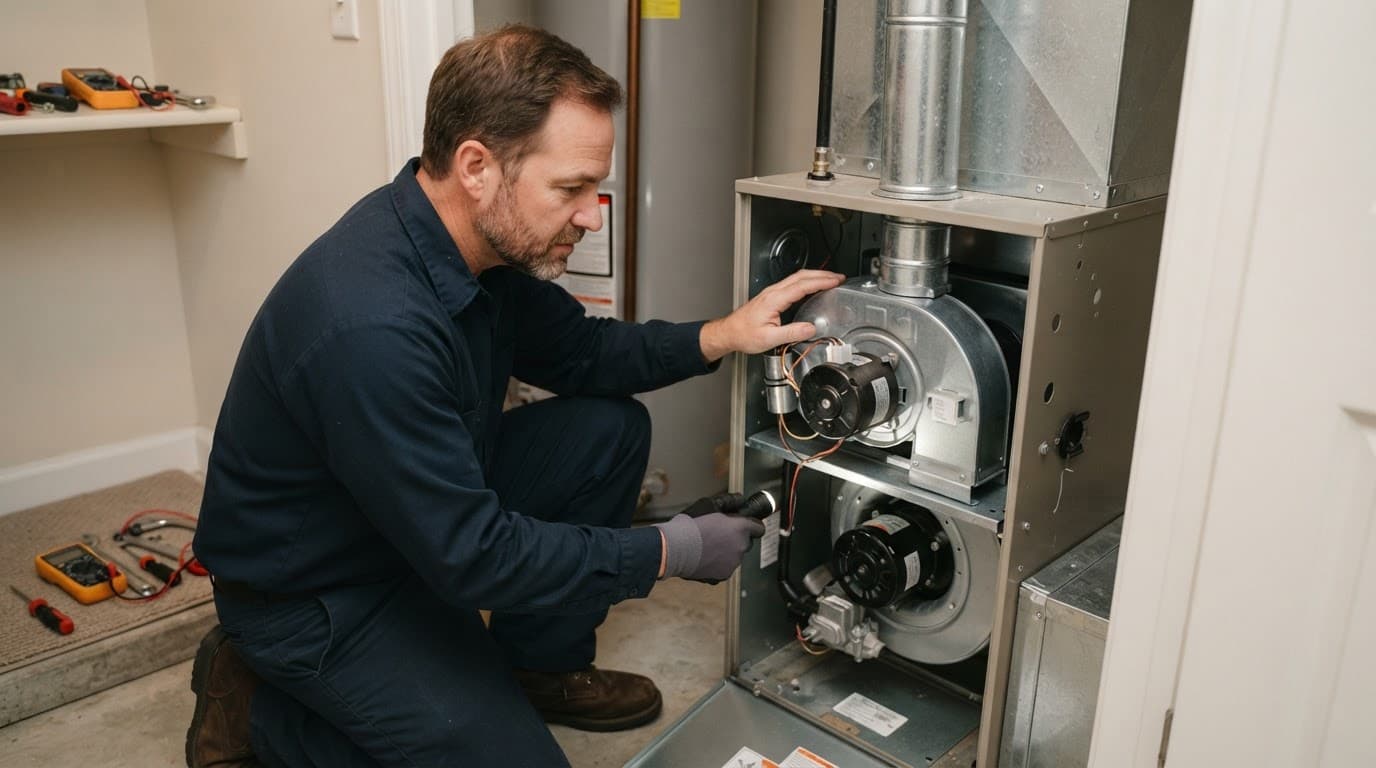
Furnace Inducer Motor Failure Signs to Watch For
A failing inducer motor rarely improves with continued use. Some symptoms show up every heating cycle, while others appear only during cold, damp weather when condensate and venting issues become more obvious.
No start, unusual noise, or failed ignition
Pay attention when the furnace changes its normal startup behavior. These signs deserve a professional inspection:
- The furnace clicks or hums, but the inducer fan never starts before ignition.
- A high-pitched squeal, grinding, scraping, or loud rattling comes from the upper furnace cabinet.
- The inducer starts slowly, runs briefly, then shuts off before the burners light.
- The furnace enters lockout after several failed ignition attempts.
- You hear the inducer run, but the furnace never progresses to an igniter glow or burner flame.
Grinding or screeching often points to worn bearings, a damaged wheel, or a motor under heavy strain. Shut the furnace off rather than letting a failing motor run until it damages other parts.
Water, vent trouble, and recurring error codes
High-efficiency furnaces produce water during normal operation. That moisture drains through a trap and condensate line. If the line or trap clogs, water can interfere with the pressure switch and stop ignition.
Check for water around the furnace, a sagging PVC drain section, or obvious debris around an exterior intake or exhaust termination. Do not remove pressure tubing, poke into vent pipes, or blow into the furnace’s pressure ports.
A recurring error code is useful information for the technician. Still, it is not a parts list. The code only tells you where the furnace stopped in its safety sequence.
Safe Checks Before Scheduling Service
A few simple checks can rule out a basic setting or airflow problem. Keep your inspection outside the sealed combustion area and avoid touching internal wiring or gas components.
What homeowners can check safely
First, confirm the thermostat is set to “heat” and the temperature setting is above the room temperature. Set the fan to “auto” so it does not circulate cool air continuously.
Next, check these visible items:
- Replace a heavily loaded or bowed air filter with the correct size and type.
- Check the furnace breaker once, then leave it alone if it trips again.
- Make sure supply registers are open and return grilles are not blocked by furniture or storage.
- Look at accessible outdoor vent openings for leaves, lint, insect nests, or other visible blockage.
A dirty filter usually does not cause an inducer failure. However, poor airflow can overheat a furnace and trigger a different safety shutdown. Our Alabama HVAC filter replacement guide can help you set a schedule that matches your home and filter type.
When a no-heat issue becomes urgent
Leave the home and call 911, the fire department, or your gas utility from outside if you smell gas, hear hissing, see smoke, notice flame rollout, or a carbon monoxide alarm sounds. Do not restart the furnace.
The federal residential furnace safety standard recognizes that combustion-system malfunctions can create a carbon monoxide hazard. Although emergency AC repair is common during West Alabama summers, a heating safety alarm needs the same immediate response.
Professional Diagnosis for an Inducer Problem
A proper diagnosis separates a failed motor from a draft, drain, venting, or control problem. Replacing the wrong part can leave you with the same lockout and a larger bill.
Tests that identify the actual fault
Our technicians begin with the complete ignition sequence. We inspect the inducer wheel and housing, venting, intake, condensate trap, pressure tubing, wiring connections, and furnace control board.
Then we test voltage and motor operation, along with pressure at the switch using proper diagnostic equipment. A technician may find that the furnace inducer motor works normally, while a blocked drain or restricted vent prevents the pressure switch from closing.
Error codes help direct the test, but measurements decide the repair. This process also catches cracked or soft pressure tubing, loose electrical connectors, and water where it should not be.
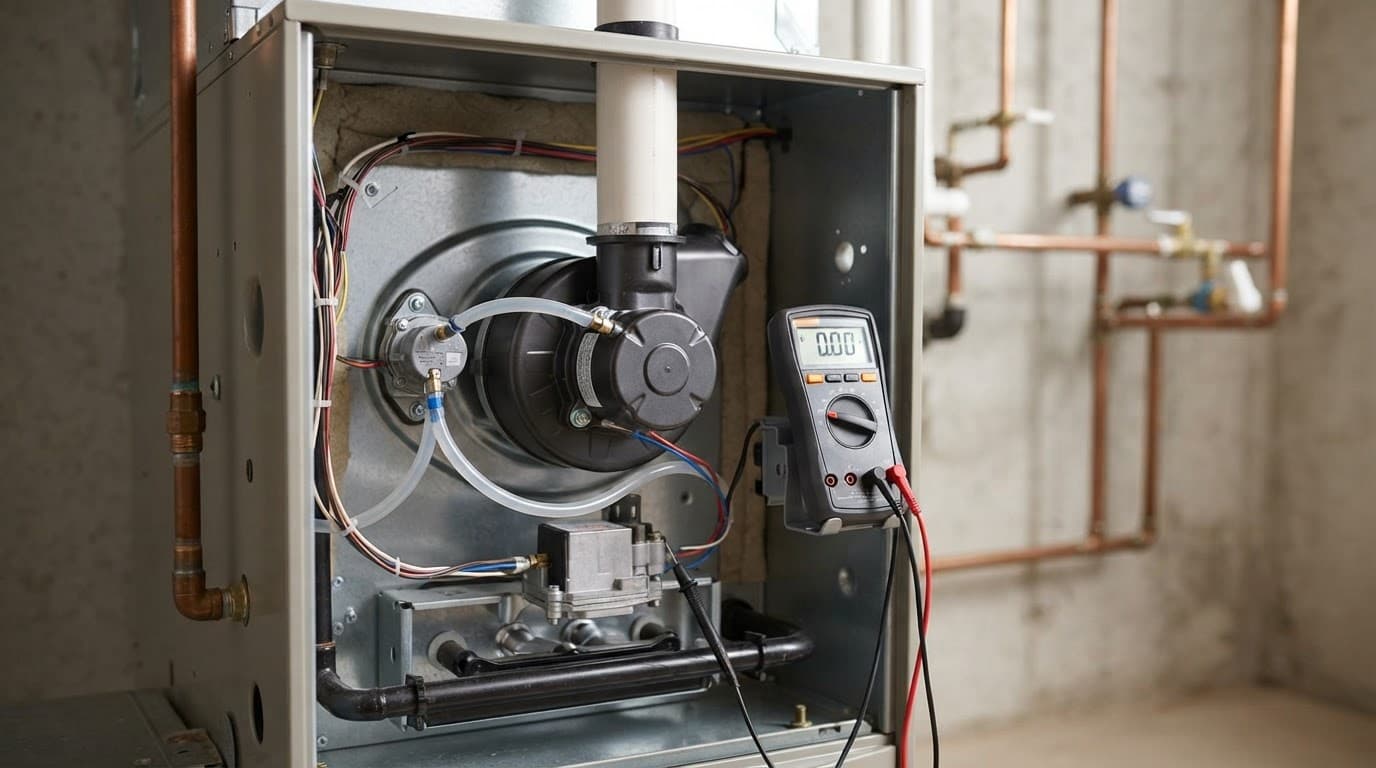
Common furnace inducer motor repair options
A vent obstruction, blocked condensate line, damaged hose, or failed pressure switch may need a targeted repair. Those issues can imitate motor failure, so the inducer should not be replaced based on noise alone.
When the motor bearings fail, the wheel is damaged, or the unit cannot produce enough draft, replacement of the complete inducer assembly is often the practical option. The assembly may include the motor, fan wheel, housing, and a new gasket.
For repeated no-heat cycles, schedule furnace repair in Northport and Tuscaloosa before the system locks out during the next cold night. We service Trane, Carrier, Rheem, Lennox, Goodman, and other common residential systems.
Choosing Repair or Broader Furnace Service
A failed inducer does not automatically mean you need a new furnace. The better decision depends on the condition of the entire heating system and the cause found during testing.
When a focused repair makes sense
A single failed motor or pressure-switch issue is usually a repair conversation when the heat exchanger, controls, blower, venting, and overall furnace performance are in good condition. Ask for a written explanation of the failed part, the test results, and what the quoted work includes.
Local HVAC technicians should also explain whether the repair corrects the cause or only restores operation temporarily. For example, a new inducer will not solve a poorly drained condensing furnace.
When a wider evaluation is reasonable
Consider a broader evaluation when the furnace has repeat lockouts, multiple failing electrical parts, unsafe venting, or major corrosion around the combustion section. Age alone does not settle the question, but a pattern of repairs can.
At Northport HVAC, we recommend comparing the repair scope with the furnace’s condition, expected parts availability, and your comfort needs. Clear pricing before work starts gives homeowners, landlords, and property managers room to make a sound decision.
Maintenance That Helps Protect the Inducer
Seasonal heating and cooling service gives technicians time to inspect combustion components before the first hard cold snap. That matters even when Tuscaloosa air conditioning problems dominate the summer service calendar.
A fall tune-up looks beyond the filter
During a heating visit, we inspect electrical connections, the inducer assembly, venting, burners, safety controls, drainage, and airflow. We also check for loose vent connections and signs that a condensate line is beginning to clog.
Calls for AC repair in Northport, AL often remind homeowners how quickly a small equipment problem can disrupt comfort. The same is true for a furnace. A measured diagnosis and routine maintenance protect heat, indoor air quality, and the equipment budget.
A Reliable Path Back to Heat
A furnace inducer motor is small, but it has a direct role in safe ignition and venting. Strange startup noises, repeated lockouts, water near a condensing furnace, and burners that never light all justify a careful inspection.
Basic thermostat, filter, and visible vent checks are useful. Internal gas, wiring, pressure-switch, and inducer repairs belong with qualified technicians who can test the entire sequence instead of guessing at one part.