Furnace Flame Sensor Problems: Safe Checks That Help
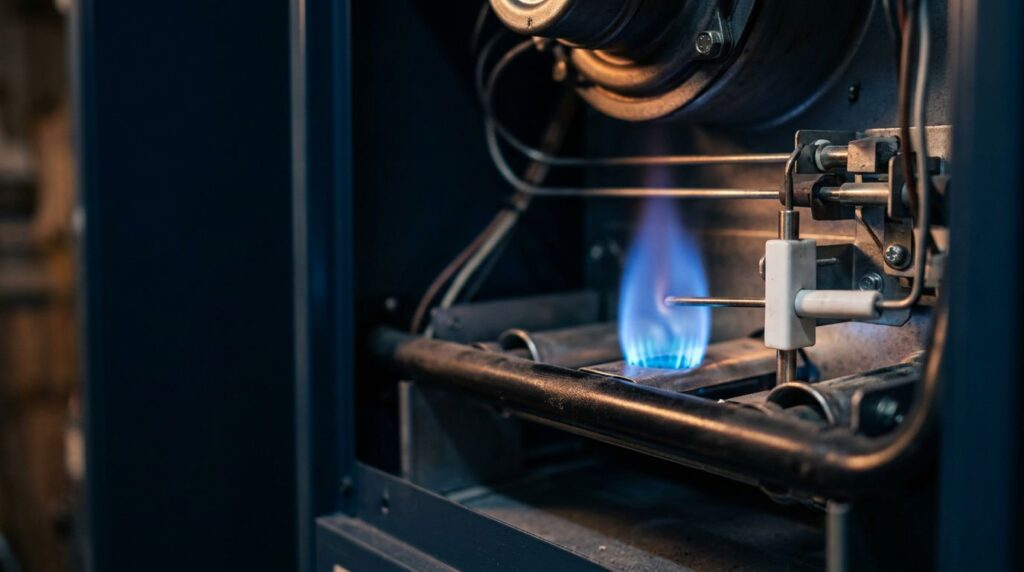
A gas furnace that lights and loses its flame a few seconds later may have a dirty furnace flame sensor. The shutdown is frustrating, but the gas valve acts as a safety device, stopping fuel when the furnace can’t confirm a flame.
Residue on a small metal rod can leave you with cold air at the vents. However, several other furnace faults can create the same pattern, so replacing parts too early can waste money and leave the real problem untouched.
Start with safe troubleshooting of the heating system’s startup sequence, since the symptom may be an ignition failure. Use only checks that are safe for a homeowner.
What a Furnace Flame Sensor Does
A furnace flame sensor is a thin metal rod, usually a few inches long, mounted near the burner assembly. Its porcelain insulator and single wire separate it from the furnace cabinet.
After the gas burners ignite, the control board looks for a tiny electrical signal through the flame. This process is called flame rectification. The board recognizes a small DC current, measured in microamps, and keeps the gas valve open only when it sees that signal. HVAC School’s flame sensing basics explains why a clean electrical path and proper furnace grounding both matter to flame rectification.
Why burners shut off after a few seconds
The control board gives the sensor only a short window to prove the flame. If soot buildup, oxidation, or a nearly invisible residue blocks the signal, the board closes the gas valve.
The furnace may try the cycle again several times. Then it can enter lockout mode, which often requires a reset or a service visit. A brief burner flame followed by a quick shutdown is a strong clue, but it is not a final diagnosis.
Flame sensor vs. thermocouple
Modern furnaces with electronic ignition typically use a flame sensor. Older furnaces with a standing pilot use a heat-activated pilot component instead.
A thermocouple creates a small electrical current from heat at the pilot flame. The thermocouple’s signal depends on pilot heat, unlike the electrical signal used by electronic ignition. A flame sensor verifies a burner flame through the furnace’s electrical circuit.
The parts look different, work differently, and a thermocouple isn’t interchangeable with an electronic sensor.
Do not confuse either part with a hot-surface igniter. An igniter is fragile, and its porcelain insulator can crack easily, so never sand or clean it like a sensor rod.
Symptoms That Point to the Sensor, and Those That Do Not
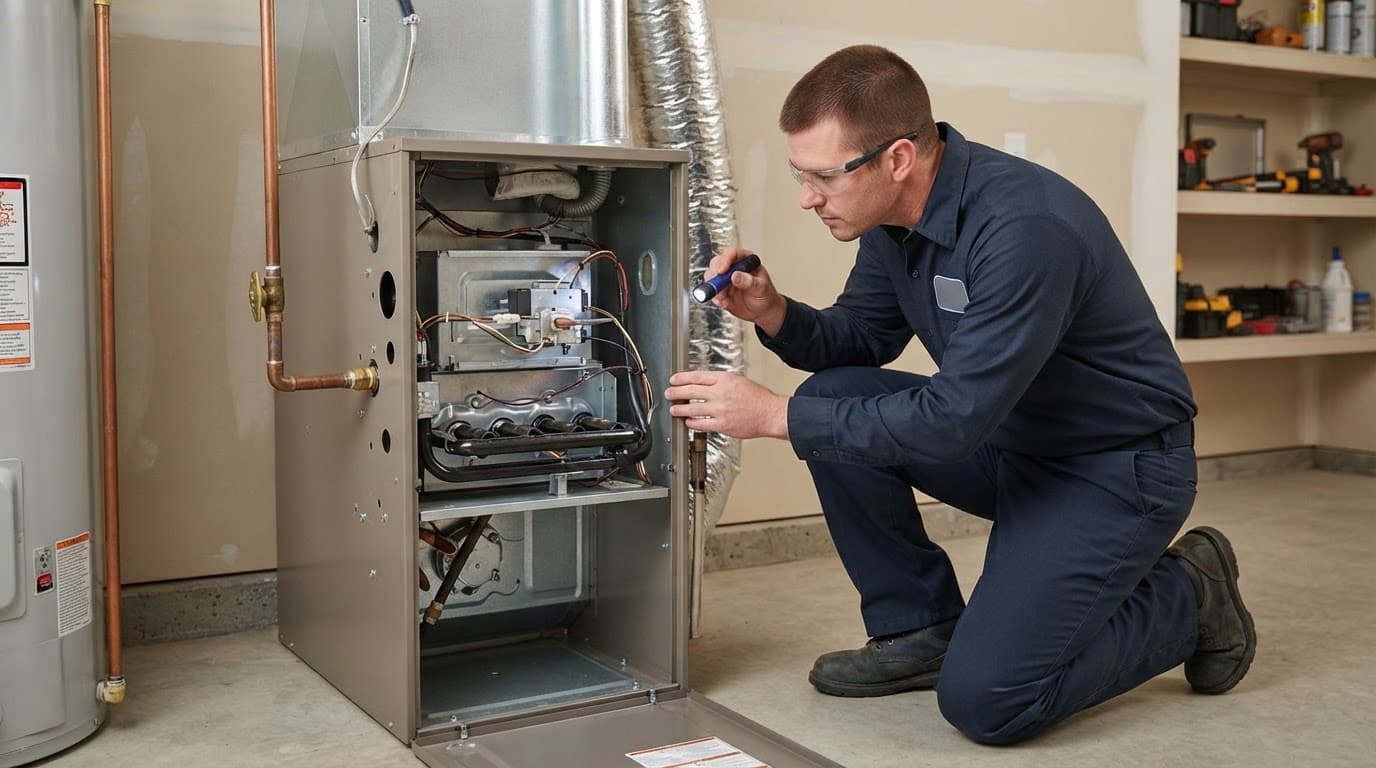
For a gas furnace, timing is the first troubleshooting step and often tells you more than a blinking code. Before removing a panel, listen through one normal heating call and note whether the furnace flame sensor follows a light-then-shutoff pattern.
The common flame-sensor pattern
A dirty sensor often follows this sequence, but the timing isn’t conclusive:
- The thermostat calls for heat, and the inducer motor starts.
- The igniter glows or sparks, then the burners light.
- The burners go out within a few seconds.
- The furnace retries, then may enter lockout mode while the blower continues moving cool air.
This pattern can indicate a weak flame rectification signal, but it doesn’t prove the sensor is at fault.
Record any error codes, the furnace model number, and what the control board displays. Error codes vary by brand and model, so the control board message is a starting point, not a parts-shopping list.
Loose wiring connections or residue-related oxidation can also mimic a sensor issue.
Other furnace faults can look similar
If the burners never light, an ignition failure may involve the igniter, gas valve, pressure switch, inducer, venting, or controls. A sensor can’t prove a flame that never starts. On an older pilot furnace, the thermocouple may instead be involved.
If the burners run for several minutes before shutting down, repeated stops may be short cycling, so look beyond the flame-proving circuit. A packed filter, blocked return, dirty evaporator coil, or too many closed registers can overheat the furnace and open the limit switch; that limit switch event points away from the flame-proving circuit. Our Alabama HVAC filter replacement guide can help you keep the simplest airflow restriction from turning into a heating call.
Water near a high-efficiency furnace also changes the diagnosis. A blocked condensate trap or drain can interfere with the pressure switch and prevent normal ignition. Do not remove pressure tubing or blow into small ports to clear them.
A clean sensor can’t correct a weak ground, damaged wire, dirty burner, failed controls, or venting problem.
Safe Furnace Flame Sensor Cleaning Steps
Cleaning a furnace flame sensor is a limited maintenance task that may restore the flame rectification signal. It isn’t a repair for every heating problem. Stop for difficult access, damaged wiring, a gas odor, soot buildup, water intrusion, or a yellow rolling flame.
Clean only the metal sensing rod
Follow your furnace manual first. If the procedure is clear and the sensor is reachable, use this careful process:
- Turn the thermostat off, then cut power at the furnace service switch or circuit breaker. Do not rely on the thermostat alone.
- Remove the access panel and locate the sensor beside the burner assembly. It usually has one wire and one mounting screw.
- Disconnect the wire at its connector, not by pulling the wire itself. Remove the screw and lift the sensor out without twisting the porcelain insulator.
- Gently polish only the metal rod with fine emery cloth or very fine steel wool. Avoid the porcelain, wire terminal, and mounting bracket.
- Wipe away loose residue with a clean, dry cloth. Reinstall the sensor, reconnect the wire, and replace every panel before restoring power.
- Run one heating cycle and watch through the furnace’s normal viewing area, if it has one.
Do not use coarse emery cloth, coarse steel wool, a wire brush, chemical cleaner, or metal polish. These materials can scratch the rod or leave residue that interferes with flame sensing. Never adjust the gas valve or bypass the limit switch. Cleaning can’t correct every fault involving a safety device.
If the furnace fails again after one careful cleaning, stop resetting it repeatedly. Repeated lockouts point to a problem that needs testing. Regular filter and airflow care are useful preventive maintenance, but they don’t replace diagnosis.
Testing the Flame Signal With a Multimeter
A multimeter can confirm whether the furnace flame sensor produces enough signal current. This test involves energized equipment and an active gas flame. We recommend it only for trained technicians or experienced homeowners who understand their meter and furnace wiring.
Microamp testing requires the correct setup
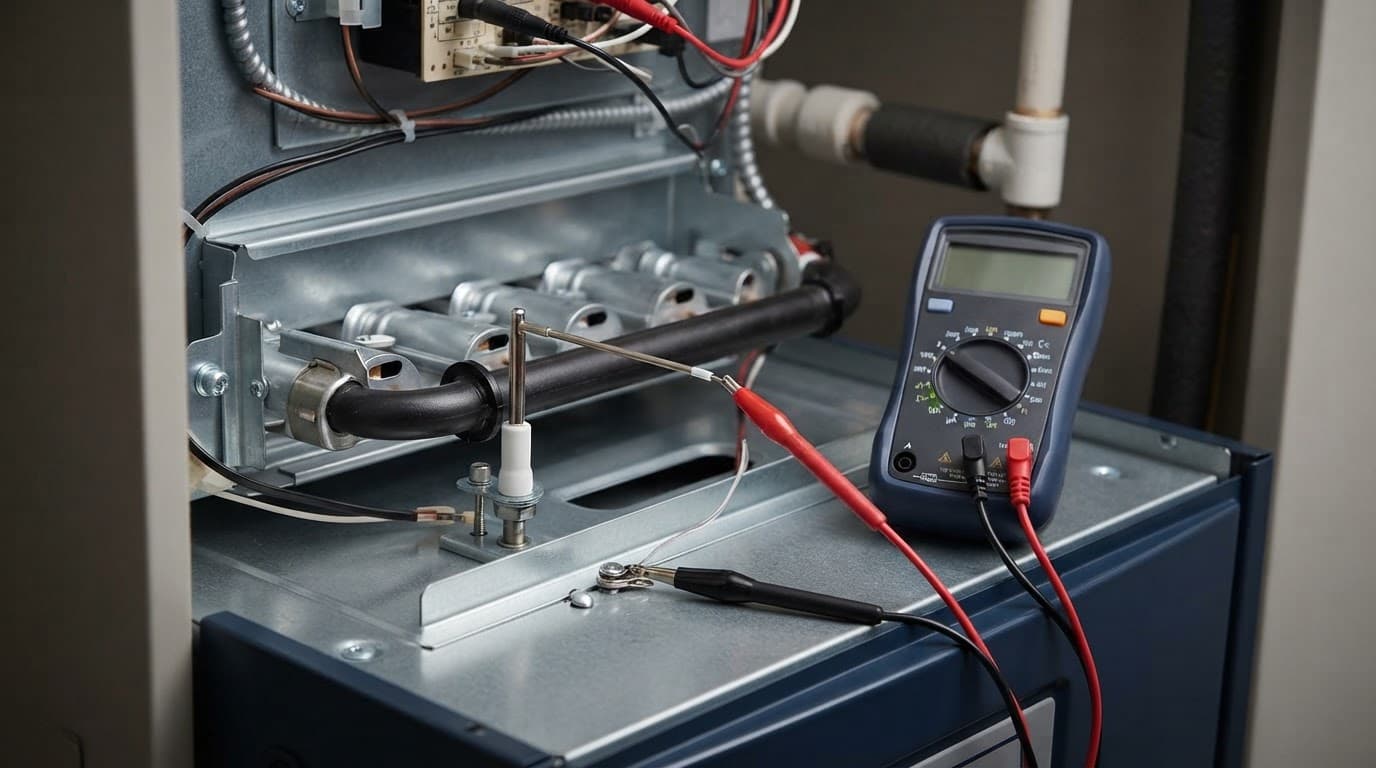
The meter must be set to DC microamps. A trained person must connect it in series between the furnace flame sensor terminal and its wire. It doesn’t test like a simple voltage reading across two terminals.
A technician compares the live reading with the control board’s required minimum. Many systems operate around 2.0 to 6.0 DC microamps, but no universal number fits every furnace. The control board specification, meter range, lead placement, burner assembly condition, and grounding can all affect the result.
For a closer look at the setup, review this flame rectification microamp testing guide. Using the wrong meter port can blow the meter fuse or create a short.
Low readings do not always mean a bad sensor
A low reading after cleaning doesn’t always mean the sensor is bad. Causes include oxidation, weak burner grounding, or loose wiring connections. A gas valve problem can weaken the flame, while a failing control board can make the result misleading.
A proper ground check remains part of the diagnosis, as outlined in this flame rod testing procedure. An overheating limit switch can mimic the symptom. Check the limit switch separately before blaming the sensor.
Older pilot equipment uses a thermocouple and follows a different test path. Don’t keep polishing the rod with steel wool or emery cloth instead of troubleshooting the flame rectification signal.
Replace the sensor if the rod is deeply corroded, bent, cracked, broken, or separated from its insulating base. Use the exact approved replacement part for the furnace model.
If the live reading remains low or uncertain, arrange a professional inspection with an HVAC technician.
When a Furnace Lockout Needs Professional Service
A malfunctioning furnace flame sensor is a safety device, not a component to bypass. Its job is to shut off the gas when the furnace cannot verify flame. Stop repeated resets after an ignition failure or when the furnace enters lockout mode. Never tape wires together, jumper terminals, bypass the limit switch, or defeat the furnace door switch to force the gas valve open.
Shut the furnace down for danger signs
Turn the thermostat off and leave the equipment alone if you smell gas, hear hissing, see smoke, notice flame rollout, or hear a carbon monoxide alarm. Leave the home and call 911, the fire department, or your gas utility from outside.
Yellow, tall, lazy, or uneven flames also need prompt service. Flame color alone cannot diagnose a cracked heat exchanger, but soot buildup, shifting flames when the blower starts, or burner flames leaving their normal area require a combustion and safety inspection.
Get a measured diagnosis, not a guess
At Northport HVAC, our NATE-certified local HVAC technician checks a gas furnace’s full electronic ignition sequence, flame signal, grounding, airflow, venting, drains, wiring connections, limit switch, and control board before recommending a repair. Error codes support that sequence testing, but they aren’t an automatic parts list, and the control board still needs direct testing.
Older standing-pilot equipment may use a thermocouple, while electronic sensing uses a different circuit. A technician must distinguish that thermocouple from the circuit before choosing a repair. After a professional inspection, we explain whether the heating system needs repair, seasonal maintenance, or an approved replacement part.
We provide heating and furnace services in Northport and Tuscaloosa for homes that need a clear answer quickly.
Our heating and cooling work also includes AC repair in Northport, AL, Tuscaloosa air conditioning service, and emergency AC repair. The same careful testing matters in every season because a symptom is only useful when it leads to the right repair.
Frequently Asked Questions
How do I know if my furnace flame sensor is dirty?
A common pattern is for the burners to light and then shut off within a few seconds, followed by repeated retries or lockout. This timing can suggest a weak flame signal, but ignition, grounding, wiring, airflow, and control problems can create the same symptom.
Can I clean a furnace flame sensor myself?
You may be able to clean an accessible sensor if your furnace manual supports the procedure and there are no danger signs. Turn off power, polish only the metal rod with a fine abrasive, and never use chemicals, adjust the gas valve, or bypass a safety switch.
Why does my furnace still shut off after cleaning the sensor?
Cleaning cannot correct a weak ground, damaged wire, dirty burner, failing control board, gas valve problem, or venting fault. Stop repeated resets and arrange a measured diagnosis if the furnace continues to lose its flame or enter lockout mode.
Is a flame sensor the same as a thermocouple?
No. Electronic-ignition furnaces typically use a flame sensor to verify burner flame through flame rectification, while older standing-pilot systems use a heat-activated thermocouple. The parts work differently and are not interchangeable.
When should I call an HVAC technician?
Call for professional service if you smell gas, see soot or abnormal flames, hear hissing, notice water near the furnace, or the system repeatedly locks out. A technician can test the flame signal, grounding, ignition sequence, airflow, venting, limit switch, and controls before recommending a repair.
A Safer Path Back to Heat
A furnace flame sensor protects your home by stopping the gas valve when the control board cannot verify a stable burner flame. A light cleaning may restore that signal, but it cannot repair a limit switch fault or a thermocouple problem.
Keep the repair limited to the sensor rod, never bypass the safety circuit, and call for service when the furnace keeps locking out. A measured diagnosis restores heat without gambling on combustion safety, while maintenance supports reliable operation.