Auxiliary vs Emergency Heat: What Your Heat Pump Is Doing
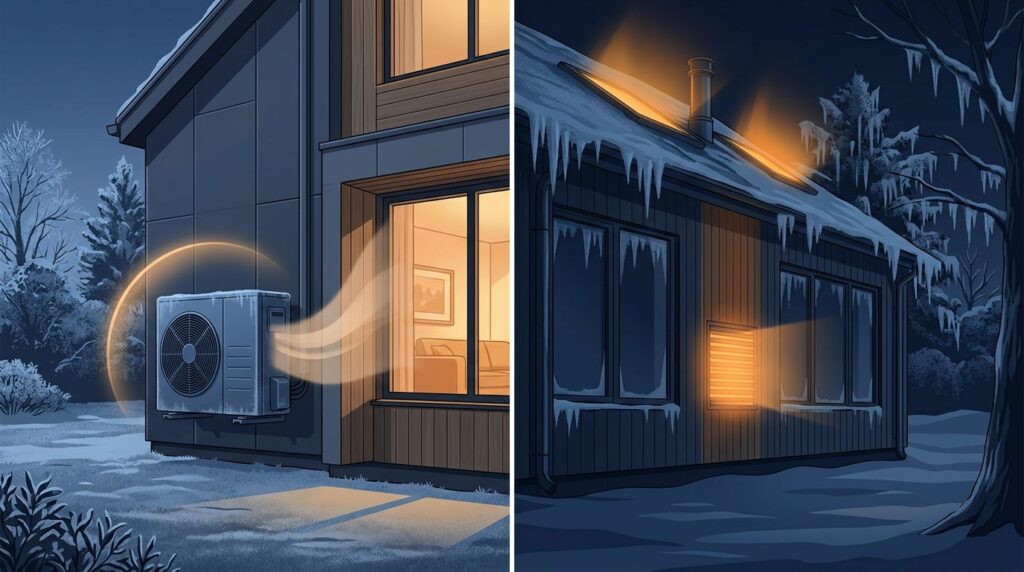
A thermostat that suddenly shows “Aux Heat” can make a normal cold morning feel like an expensive problem. In most cases, the difference between these two modes comes down to whether the system is still helping or backup heat is operating alone.
Auxiliary heat supports a working heat pump, while emergency heat runs the backup source without normal outdoor operation. A backup heating system can operate normally during cold weather, frost-clearing events, and large temperature changes.
Knowing the difference helps protect comfort and may keep energy bills lower, while making service needs easier to recognize.
Auxiliary vs Emergency Heat: How Each Mode Works
A heat pump normally supplies the home’s primary heat by pulling warmth from outdoor air and transferring it indoors. Even cold air contains usable heat, although the equipment has less capacity as conditions fall.
The backup heating system fills the gap when the heat pump cannot meet demand alone. In an all-electric setup, electric heat strips are located inside the air handler, the system’s indoor unit. In a dual-fuel system, the backup may be a gas furnace.
Auxiliary heat adds support automatically
Auxiliary heat, often displayed as “Aux,” starts automatically when the thermostat needs extra heating capacity. The compressor normally keeps running while the backup source helps raise the indoor temperature.
| Mode | What starts it | Is the heat pump compressor running? | What provides backup heat? |
|---|---|---|---|
| Auxiliary mode | Automatic thermostat or system control | Usually yes | Heat strips or furnace |
| Emergency mode | Manual setting | No | Heat strips or furnace only |
The auxiliary stage is a normal second stage, not automatic proof of a system problem.
Emergency heat bypasses the outside equipment
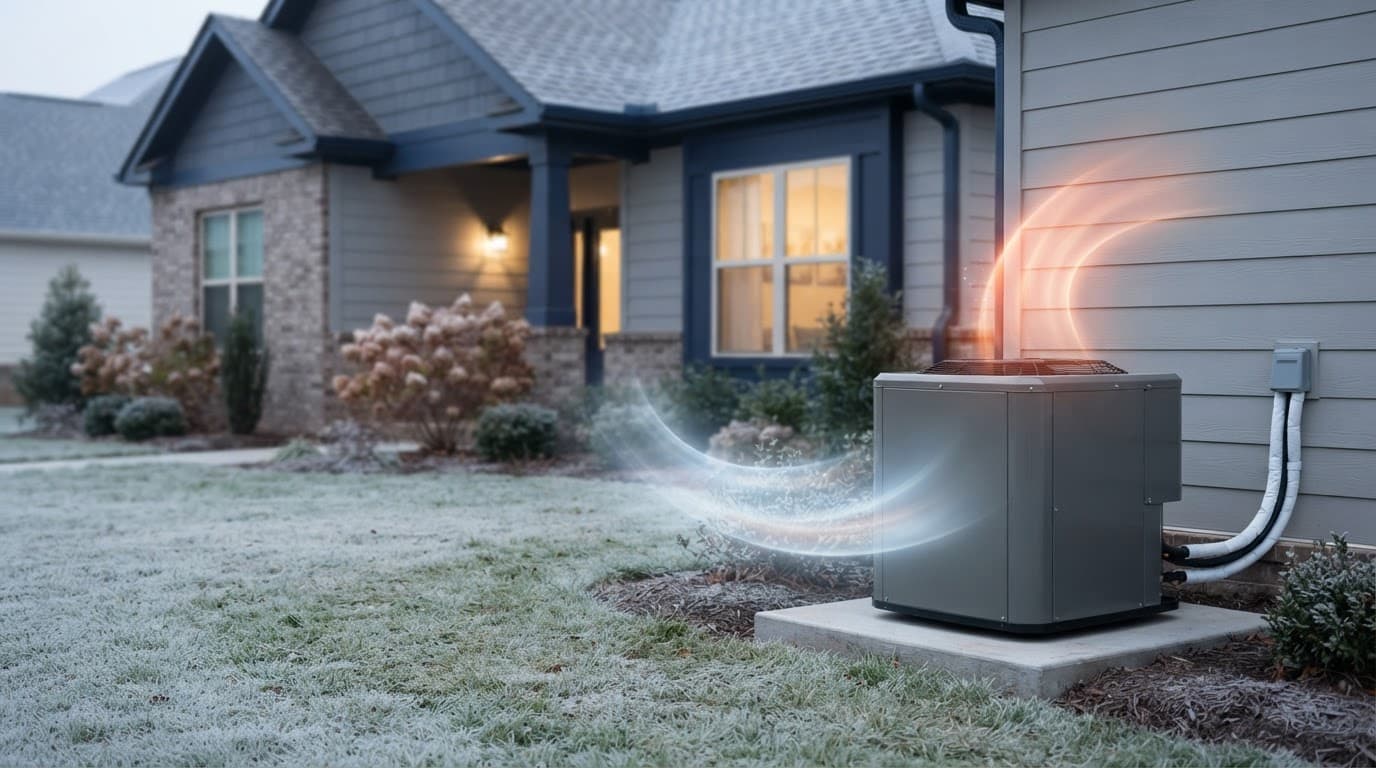
Emergency heat is a manual mode that stops the compressor. It relies only on backup heat, which is often more expensive to operate.
That distinction matches ENERGY STAR’s heat-pump terminology, which describes electric resistance heat as operating without the compressor. Many systems use the same heating elements for both modes. The difference is whether the system calls for them automatically or you manually stop the primary system.
When Auxiliary Heat Turns On by Itself
For homes in Northport and Tuscaloosa, a heat pump may use auxiliary heat when it can’t immediately meet demand. This automatic supplemental heat can be normal when demand rises. The outdoor temperature isn’t the only factor, since wind, insulation, equipment capacity, and other ambient conditions affect staging.
Cold weather and a defrost cycle can trigger it
Many systems begin staging supplemental heat somewhere in the 30 to 40 degree range, although controls vary by model. The thermostat may bring it on when the system runs for a set time without reaching the set temperature.
Frost can form on the outdoor coil, especially during cold, damp weather. During a defrost cycle, the heat pump briefly reverses its refrigerant flow to warm the outdoor coil. Electric heat strips help keep the air from the indoor unit comfortable during that process.
Brief steam from the outdoor unit and a temporary Aux Heat display are often normal during defrost. Heavy ice that stays in place is not.
Large temperature changes ask for more heat
Raising the thermostat several degrees at once can prompt supplemental heat while the heat pump works toward the new temperature setpoint. A two-to-four-degree change may trigger it, but controls and equipment vary by model.
A smart thermostat may also use supplemental heat during scheduled recovery. For example, it may begin warming the house before your morning schedule. Holding a steadier overnight temperature can reduce these recovery calls.
When Emergency Heat Is the Right Choice
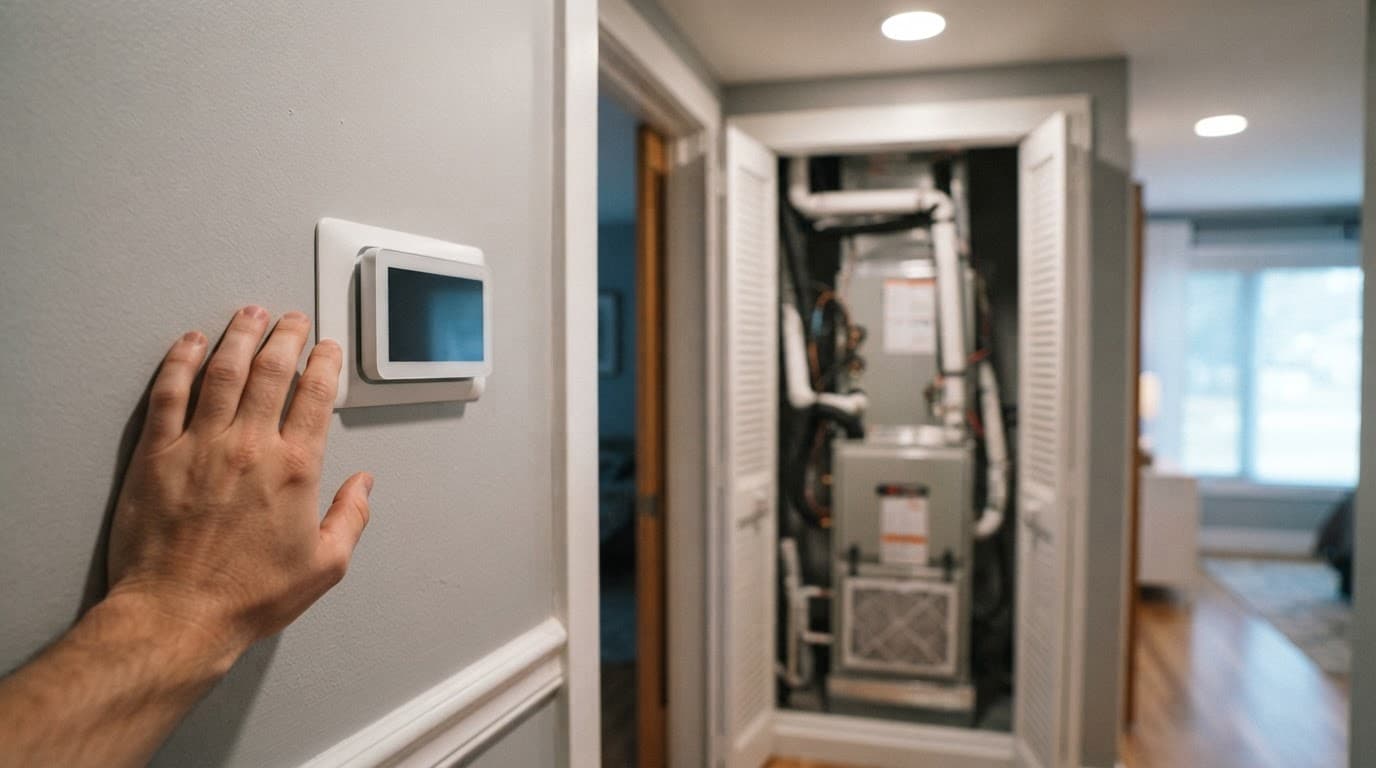
Emergency mode has a narrow purpose. It can keep the home heated while a failed heat pump awaits repair, but it isn’t a routine winter setting.
Switch to emergency heat only after a heat-pump failure
Use this setting if the unit won’t run and the home needs heat, or if an HVAC technician tells you to use it. A failed compressor, damaged fan, or other system failure in the outdoor unit may leave the heat pump needing repair.
Google’s Emergency Heat guidance for Nest thermostats notes that you must select this setting in manual mode on a thermostat. Your thermostat may label it “Em Heat,” “Emergency,” or show a flame icon, depending on the model.
Don’t use it to make the house warm faster
Unlike auxiliary heat, this mode isn’t a faster warm-up setting. The secondary heat source operates alone in this mode. In a dual-fuel arrangement, that source may be a gas furnace, and electric resistance heat usually costs more because it draws substantial power.
Leave the system in regular Heat mode when it works. A working system moves heat rather than creating it through resistance, so this mode usually costs more to operate.
If the house remains cold, don’t use this setting to mask the real problem or increase your bill. Use emergency heat only while the heat pump is unavailable.
This setting is a temporary backup plan. It should not replace a working system for everyday heating.
Signs Auxiliary Heat Needs a Service Call
A short auxiliary heat cycle during cold weather is usually fine. However, prolonged operation at a mild outdoor temperature deserves attention. It may mean the heat pump isn’t delivering enough capacity.
Persistent auxiliary heat in mild weather points to a problem
Electric heat strips may run too often when the heat pump cannot produce enough heat. Dirty filters and poor airflow through the air handler can reduce available heat. A failed outdoor fan, refrigerant issues, thermostat setup errors, or a defrost control problem can also contribute.
Start with safe, visible checks:
- Confirm the thermostat is in Heat mode, not Emergency Heat, and set the fan to Auto.
- Replace a dirty filter with the correct size and type, then clear furniture and storage away from return grilles serving the indoor unit.
- Check that the outdoor unit has power, has no piled leaves around it, and is not covered in persistent ice.
Avoid opening electrical panels, changing thermostat wiring, or attempting refrigerant work. Resideo’s T6 Pro heat-pump installation guide shows that these modes can use separate thermostat terminals. Incorrect wiring or setup can cause repeated backup-heat operation.
Stop the system when warning signs appear
Turn the system off and arrange service if you notice:
- A burning electrical smell, smoke, or repeated breaker trips.
- Loud grinding, banging, or buzzing from the outside equipment.
- Thick ice that does not clear during normal operation.
- Cool indoor air while the system calls for heat.
- Backup heat running for long periods when conditions are mild.
Our local HVAC technician can test heat pump staging, electrical controls, airflow, refrigerant-related operation, and defrost controls instead of guessing at one part.
The Cost of Auxiliary Heat and Better Thermostat Settings
Higher energy bills during a hard cold spell can be normal. A heat pump moves heat instead of creating it, so its heating efficiency is usually higher than electric resistance heat. When auxiliary heat runs, it uses electricity directly, while a heat pump often delivers more heat per unit of electricity.
Estimate the operating cost with the equipment rating
The math is straightforward. A 10-kW strip bank running for one hour uses 10 kilowatt-hours of electricity. At an example rate of $0.14 per kWh, that hour of auxiliary heat costs about $1.40.
If it ran three hours daily for 10 days, the strip heat alone would add about $42 at that example rate. Actual energy bills depend on the installed strip size, how many stages run, runtime, and your utility rate.
An occasional bill increase is expected. Long backup-heat runtime in mild conditions is not.
Lockouts and staging need professional setup
A technician can configure a supplemental-heat lockout in the thermostat, limiting strip-bank operation above a chosen outdoor temperature setpoint. A dual-fuel system may also use a compressor lockout, switching the system to furnace heat below that threshold.
Those settings must match the equipment, thermostat, home heat loss, and local utility costs. The compressor lockout must also reflect equipment capacity, home heat loss, utility rates, and backup needs.
Have a professional configure the thermostat, and don’t disable supplemental operation or force manual mode as a cost-cutting shortcut. Without a full diagnosis, the system may not maintain the set temperature when backup heating is needed.
Maintenance Prevents Unnecessary Backup Heat
Airflow affects every stage of heating operation. A clogged filter, blocked return, dirty indoor unit, or weak blower can limit heat delivery and keep the thermostat calling for backup heat longer than needed.
The same airflow problems that lead to AC repair in Northport, AL or weak Tuscaloosa air conditioning can also create winter heating trouble. Regular maintenance keeps the heat pump operating properly, helping prevent an emergency AC repair in July and a no-heat call in January.
At Northport HVAC, we service Trane, Carrier, Rheem, Lennox, Goodman, and Mitsubishi systems throughout Northport, Tuscaloosa, Coker, Samantha, and nearby communities. If auxiliary heat stays on or emergency heat is your only option, schedule Northport heat pump service before a small control or airflow issue becomes a full system shutdown. An HVAC technician can test staging, airflow, electrical operation, refrigerant-related performance, and defrost controls.
Frequently Asked Questions
Is auxiliary heat the same as emergency heat?
No. Auxiliary heat supports a working heat pump and usually runs automatically, while emergency heat stops the compressor and uses the backup source alone.
Why does my thermostat show Aux Heat?
The thermostat may call for auxiliary heat during cold weather, defrost cycles, or a large temperature change. A brief display is often normal, but persistent auxiliary heat in mild conditions may indicate an airflow, control, or equipment problem.
Does emergency heat cost more to operate?
It often does, especially when the backup source is electric resistance heat. Use emergency heat only when the heat pump is unavailable or an HVAC technician tells you to use it.
When should I call an HVAC technician?
Arrange service if auxiliary heat runs for long periods in mild weather, the outdoor unit stays heavily iced, or the home remains cold. Turn the system off and seek prompt help for burning smells, smoke, repeated breaker trips, or loud equipment noises.
A Clearer Way to Read Your Thermostat
The practical difference in auxiliary vs emergency heat is simple. Auxiliary heat supports a working heat pump when demand rises. Emergency heat bypasses the outside heat pump and runs the backup source alone.
Short auxiliary cycles in cold conditions can be part of normal heating and cooling operation. Persistent backup operation, ice, strange sounds, or a non-running outside system call for a measured diagnosis.