Can You Reuse Existing Ductwork With a New AC?
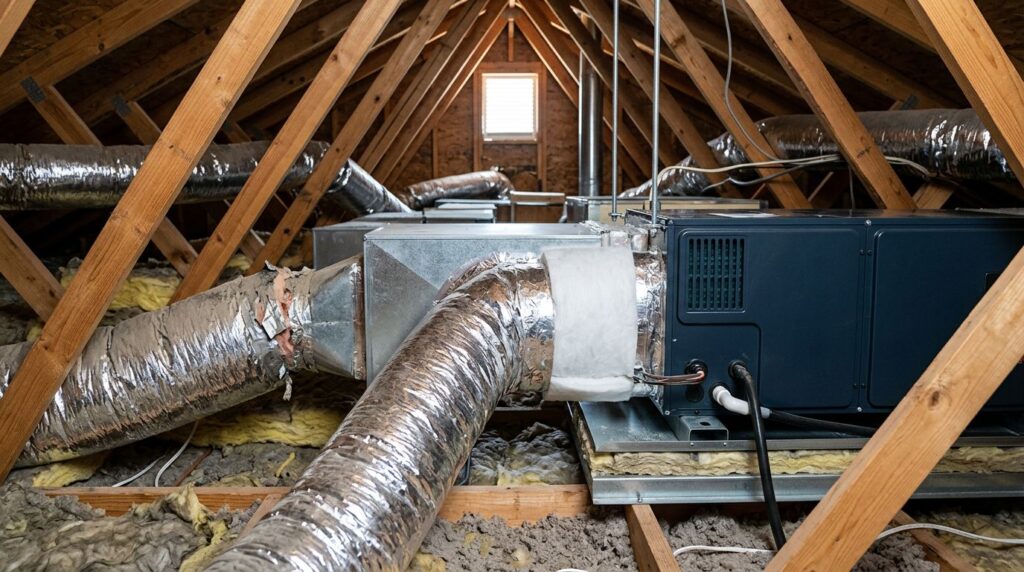
A new air conditioner can only perform as well as the pathways that carry its cooled air. You can often reuse existing ductwork during an AC replacement, but only after a measured condition and airflow evaluation that checks sizing, leakage, insulation, return capacity, and equipment compatibility.
Keeping usable ducts can reduce installation costs and limit attic or ceiling work. However, connecting a high-efficiency system to leaky, undersized, or damaged ducts can leave you with the same hot rooms and high bills, even with brand-new equipment.
The right decision comes from measured duct condition and performance, not the age of the ductwork alone.
When Existing Ductwork Can Support a New AC
Ductwork often lasts longer than an air conditioner, especially when installed correctly and protected from moisture and pests. A sound duct system may work well with a replacement central AC or heat pump.
We look for solid connections, intact duct insulation, enough return air capacity, and duct sizes that match the new equipment’s airflow needs. A duct system does not need to look brand-new to remain usable.
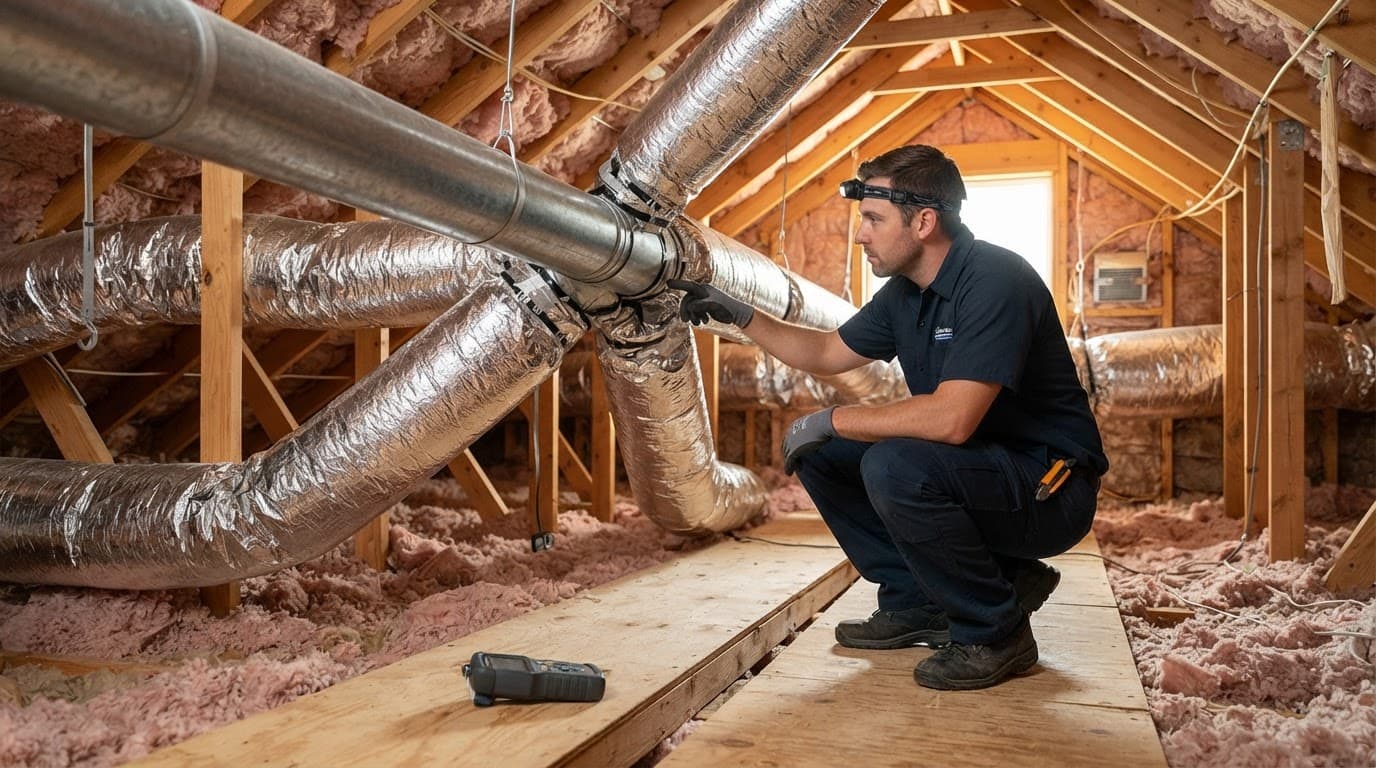
In many Northport and Tuscaloosa homes, the practical answer is a mix of reuse and repair. The main trunk line may be in good shape, while a few long attic runs need sealing, insulation, or replacement.
| Ductwork condition | Usually makes sense | Reason |
|---|---|---|
| Tight sheet metal ducts with intact insulation | Reuse with testing | The structure may support the new system well. |
| Minor loose joints or small accessible leaks | Seal and reuse | Proper repairs can restore lost airflow. |
| A few damaged flex duct runs | Replace only damaged runs | Partial replacement can solve a local restriction. |
| Crushed, mold-damaged, or badly undersized ducts | Replace or redesign | Damaged ducts can threaten indoor air quality, and repairs may not restore proper distribution. |
A new AC system should never be selected on equipment size alone. The duct network, returns, thermostat settings, and room layout all affect whether the system can keep your home comfortable.
For example, a home that once had two occupants may now include a home office, finished bonus room, or frequently used guest space. Those changes can add cooling demand in areas the original duct layout served poorly, so a zoning review may help.
Red Flags That Call for Duct Replacement
Old ductwork deserves closer scrutiny when comfort has been uneven for years. A new outdoor unit won’t fix a separated attic connection or a return grille blocked by a large sectional.
Pay attention to these warning signs before approving an air conditioning replacement:
- Several rooms stay warm while others feel cold, even with open supply registers.
- Flex duct has sharp bends, crushed sections, severe sagging, or a torn outer jacket.
- You find dust streaks around seams, loose collars, failed tape, or disconnected runs.
- The attic has damp insulation, rodent damage, persistent musty odors, or visible contamination.
- Closing vents has become the only way to manage room temperatures.
- The system has restricted return capacity, causing bedroom doors to whistle or stick when closed.
Standard gray cloth duct tape is not a long-term duct repair. Attic heat and humidity can dry out its adhesive until the connection fails again. Proper repairs use mechanical fastening and mastic or appropriate UL 181-rated foil tape.
Duct cleaning can remove accumulated construction dust or debris. It cannot repair a loose collar, a split seam, a collapsed flex run, or missing insulation. When moisture or suspected mold is present, correct the source first to protect indoor air quality and limit contamination. The ducts should not be treated as a cleaning-only problem.
Closing several supply vents raises duct pressure and often reduces the amount of air delivered. It can make a weak duct system perform worse.
If the current system freezes, runs constantly, or provides weak cooling, don’t assume the ducts are the only cause. Dirty filters, restricted evaporator coils, failing blower components, and refrigerant problems can produce similar symptoms. For warm air, ice, water, or persistent low cooling output, AC repair in Tuscaloosa should begin with a full diagnosis.
How Professionals Test Existing Ductwork
A visual attic inspection is useful, but it only reveals accessible problems. We test performance because hidden leaks and restrictive runs can affect the entire system.
First, a qualified HVAC contractor should confirm the home’s cooling load and the airflow target for the proposed equipment. Next, a Manual D duct design review evaluates the system design. It checks whether ducts, plenums, and returns can move the required air without excessive resistance. The Manual D duct design and leakage testing overview explains why duct size is tied to air volume, pressure, and room-by-room comfort.
Static pressure reveals restrictions
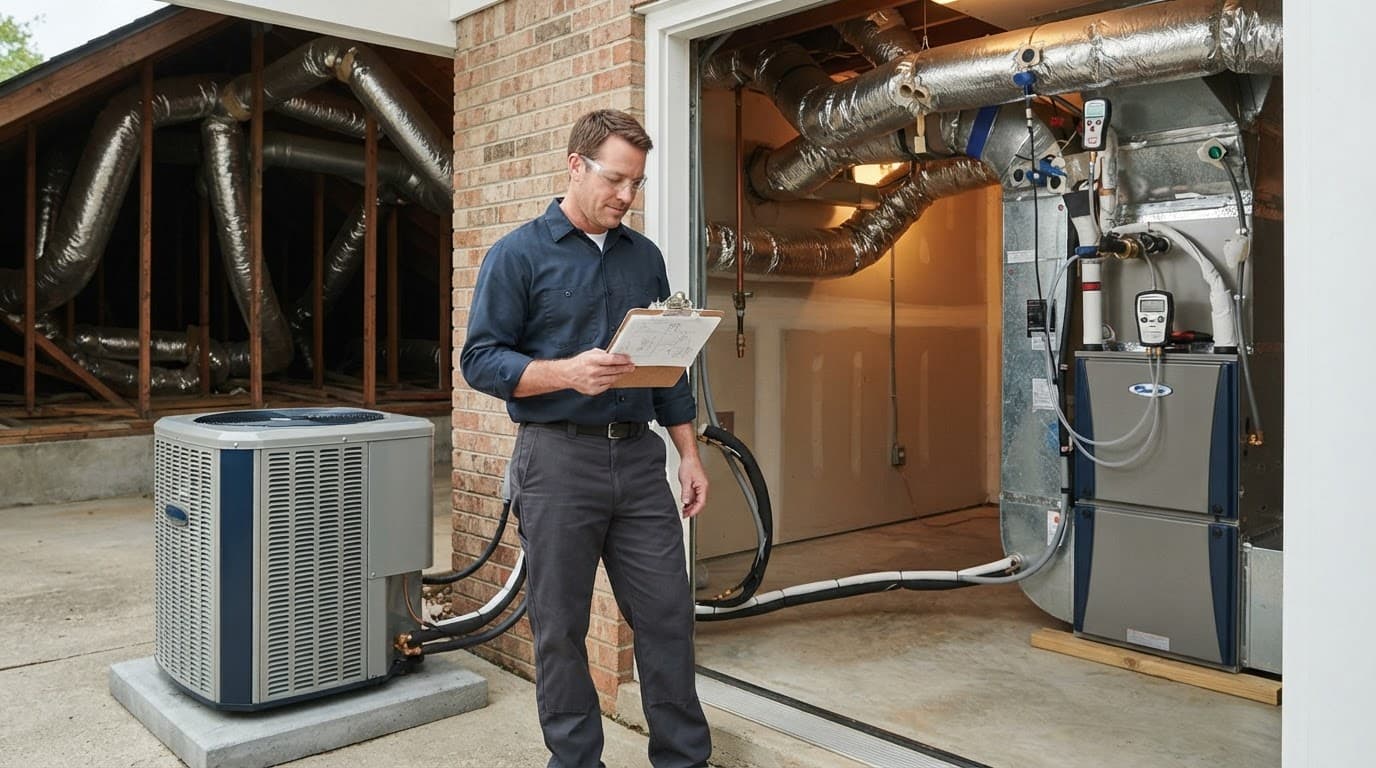
Static pressure is the resistance the blower faces as it pushes air through the filter, coil, supply ducts, and return ducts. A technician uses a digital manometer to measure pressure on the supply air and return sides at key points in the system.
High static pressure can come from undersized ducts, a restrictive filter, a dirty coil, a blocked return, or too many closed registers. It can also strain the blower and reduce the air volume crossing the evaporator coil.
A reading alone does not identify the failed part. We compare total pressure and component readings with the equipment manufacturer’s allowable range, then trace the restriction.
Duct leakage testing finds air lost outside the rooms
A duct blaster connects a calibrated fan to the duct system and pressurizes it for testing. The manometer measures the air volume needed to hold the test pressure, commonly expressed as CFM25, or cubic feet per minute at 25 Pascals.
Higher CFM25 results mean more air escapes through duct leaks. Register readings can then help separate a general leakage issue from one crushed run, a weak blower, or poor room layout.
The duct sealing and testing fact sheet also notes that Manual D addresses duct sizing, plenums, static pressure, and air mixing. Test for duct leakage before sealing or replacing ducts to keep the repair focused on the actual problem.
Why New SEER2 Systems Still Depend on Old Ducts
Modern SEER2 heat pump equipment can improve energy efficiency, but published efficiency still depends on proper installation and adequate duct performance. In a blazing West Alabama attic, leakage can send conditioned air into the heat before it reaches a bedroom.
A variable-speed heat pump can adjust output more gradually than older single-stage equipment. Room-by-room zoning can improve control and temperature balance, but it cannot compensate for undersized ducts, poor returns, or severe leakage.
High duct resistance may make a variable-speed blower run harder for longer. The result can include noise, reduced humidity control, uneven temperatures, higher operating cost, and strain that shortens equipment lifespan.
A ducted heat pump needs a compatible duct network. Compare a ducted mini-split with a conventional central heat pump based on the required airflow and available pressure capability of the ducted system. Choose a heat pump only after confirming those requirements.
We also check the return path in rooms with closed doors. A bedroom with a supply vent but no route for return air can become pressurized and stuffy, affecting indoor air quality. A zoning strategy has limits when returns or ducts are inadequate. Adding a transfer grille, jump duct, dedicated return, or a redesigned zoning plan may solve the issue better than installing larger equipment.
Repairs, Partial Replacement, and Full Redesign
Full duct replacement is not always the best value. If the trunk line and most branches test well, targeted repairs can preserve a usable system and correct weak points.
Partial replacement often makes sense when one long flex run serves a hot upstairs room, a former storage room became an office, or a disconnected attic branch has damaged insulation. It can also improve a system where the main issue is limited return air capacity.
A complete redesign is usually justified when the original layout cannot support the home’s current use or a new zoning strategy. This includes major additions, converted garages, widespread damage to flex duct, major leakage, or returns that are too small for the new equipment.
When reviewing estimates for Tuscaloosa air conditioning replacement, ask the HVAC contractor what the written proposal includes. It should list duct repairs, electrical work, permit costs, thermostat changes, refrigerant work, old-equipment removal, and zoning dampers or controls.
Local building code requirements can differ between jurisdictions and project types. Mechanical-system alterations may require permits and inspections, so verify requirements with the local authority before work begins. Alabama’s mechanical code administration provisions describe permit review and approvals for mechanical installations and alterations.
Northport HVAC provides heating and cooling support across Northport, Tuscaloosa, Coker, Samantha, and nearby West Alabama communities. Our local HVAC technicians inspect the entire air-delivery system before recommending whether to seal, modify, or replace ducts. New installations include a one-year labor warranty alongside applicable manufacturer parts coverage.
Frequently Asked Questions
Can existing ductwork be reused with a new AC?
Existing ductwork can often be reused when it is properly sized, insulated, connected, and free from severe damage or leakage. A duct inspection and airflow testing should confirm that it can support the new system before installation.
How do I know if my ducts need to be replaced?
Crushed flex duct, mold damage, disconnected runs, major leakage, and undersized returns are signs that replacement or redesign may be necessary. Uneven temperatures and weak airflow also justify a closer inspection, but they can result from equipment problems as well.
Should ducts be cleaned before installing a new air conditioner?
Duct cleaning can remove dust and debris, but it cannot repair leaks, damaged insulation, or collapsed duct runs. Correct moisture or contamination problems first, then seal or replace the affected sections as needed.
Will a high-efficiency AC work with old ductwork?
A high-efficiency AC or heat pump still depends on adequate duct sizing, return capacity, low leakage, and acceptable static pressure. Old ducts can work well when they meet those requirements, but newer equipment will not correct a restrictive or poorly designed duct system.
Final Thoughts
You can reuse existing ductwork with a new AC when the duct network is structurally sound, properly sized, insulated, and tested for leakage and pressure performance. Saving the ducts makes sense only when they can support the new system’s capacity requirements.
The best replacement decision protects comfort in every room, not only the price of the outdoor unit. If your system quits during summer heat, emergency AC repair can stabilize the immediate problem. The same duct evaluation should guide a replacement heat pump.