Heat Pump vs Gas Furnace for Alabama Homes
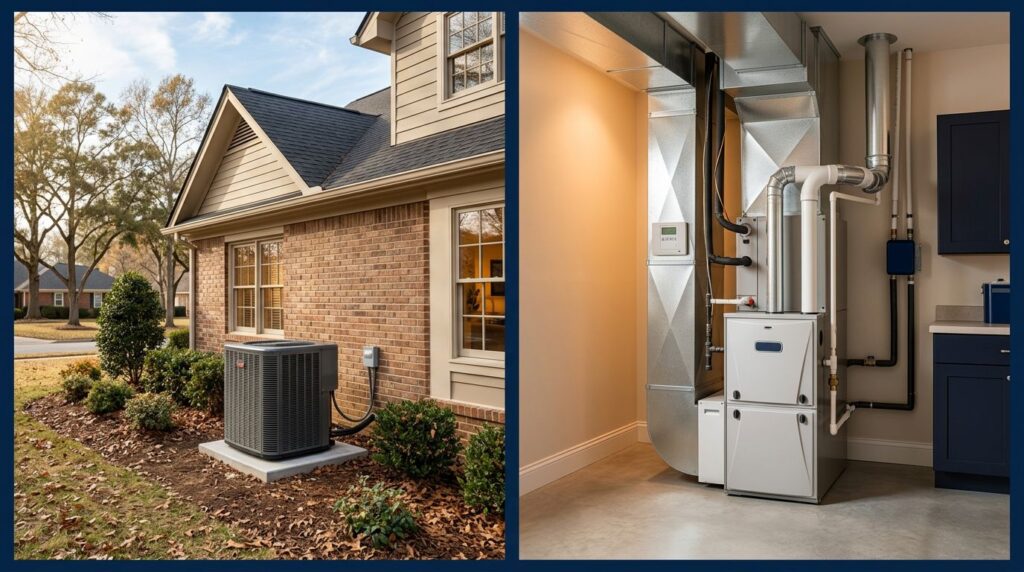
A home can stay warm and still cost too much to heat. The choice between a heat pump and a gas furnace affects utility bills, summer comfort, repair needs, and the equipment in your utility room for years.
For most Northport and Tuscaloosa homes, an electric heat pump is a strong fit because winters are usually mild and summers are long. A gas furnace still makes sense in certain homes, especially with dependable natural gas service and a preference for hotter supply air during cold snaps.
The right answer starts with how each system works, then moves to your utility rates, ductwork, and comfort expectations.
Key Takeaways
- For many Northport, Tuscaloosa, and West Alabama homes, a properly sized electric heat pump provides efficient heating and dependable summer cooling in one system.
- A gas furnace can be a better fit for homes with natural gas service, a preference for hotter supply air, or a need for high-output heat during colder weather.
- Compare a heat pump with the combined cost of a gas furnace and air conditioner, using local utility rates, equipment efficiency, and realistic operating conditions.
- Auxiliary heat strips can be expensive when used often, while a dual-fuel system can provide heat-pump efficiency with a gas furnace for backup.
- Ductwork, insulation, sizing, controls, maintenance, and installation quality can affect comfort and energy costs as much as the equipment choice.
How Heat Pumps and Gas Furnaces Work
A natural gas furnace burns natural gas to create heat. The furnace transfers that heat through a heat exchanger, then the blower sends warm air through the ducts. It needs a separate air conditioning unit for summer cooling.
A heat pump system doesn’t burn fuel to make heat. It uses electricity and refrigerant to pull available heat from outdoor air and move it indoors through a refrigeration cycle. In summer, it reverses direction and works like central air conditioning.
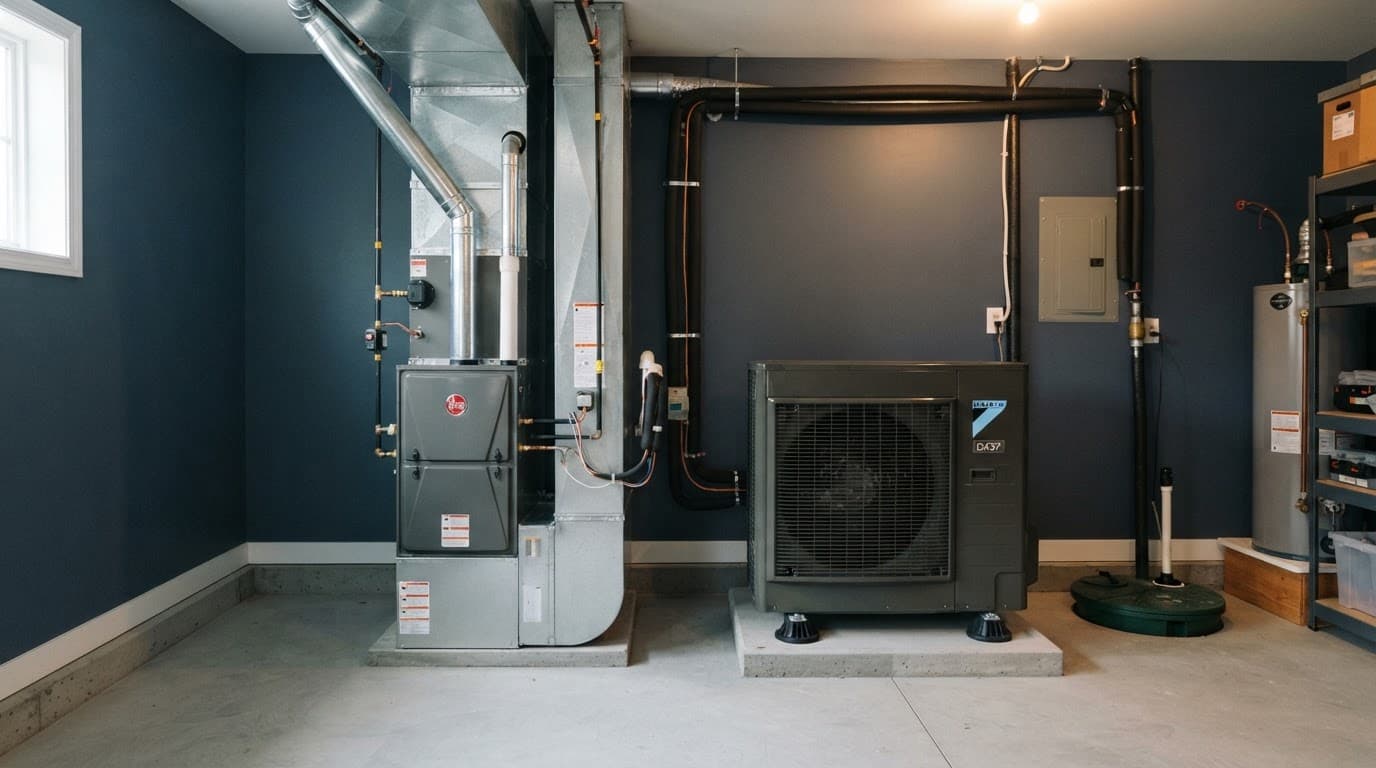
That difference changes the whole equation.
| System | What it provides | Main heating rating | What to know |
|---|---|---|---|
| Heat pump | Heating and cooling | HSPF2 and COP | Uses electricity and moves heat |
| Gas furnace | Heating only | AFUE | Burns natural gas and needs separate AC |
HSPF2 means heating seasonal performance factor, a measure of seasonal heating performance.
AFUE, or annual fuel utilization efficiency, shows how much fuel becomes usable household heat. A furnace with 95% AFUE turns about 95% of its fuel into usable household heat. Modern high-efficiency furnaces can reach the upper 90% range.
A heat pump can deliver more heat than the electricity it consumes. It moves heat rather than creating it through combustion, which can improve energy efficiency under mild conditions. Its coefficient of performance, or COP, changes with outdoor temperature. A COP of 3 means the system moves about three units of heat for every unit of electrical energy it uses.
A heat pump is usually the better all-in-one heating and cooling choice for West Alabama, but the installed system has to match the home.
Compare Operating Costs With Your Own Utility Rates
Equipment energy efficiency matters, but actual operating costs depend on more than utility rates. Natural gas prices, electric rates, fixed service charges, insulation, thermostat settings, and winter weather all affect the result.
We recommend comparing the price of delivering 100,000 Btu of heat. That sounds technical, but the math is simple enough to use on a written estimate.
For a gas furnace:
Cost per 100,000 Btu = gas price per therm ÷ furnace AFUE
For a heat pump:
Cost per 100,000 Btu = electricity price per kWh × 29.3 ÷ heat pump COP
A therm contains 100,000 Btu. One hundred thousand Btu equals about 29.3 kWh of heat.
Here is a sample comparison, not a prediction of local utility bills:
| Assumption | Gas furnace | Heat pump |
|---|---|---|
| Utility price | $1.50 per therm | $0.14 per kWh |
| Equipment efficiency | 95% AFUE | COP of 3 |
| Cost for 100,000 Btu delivered | About $1.58 | About $1.37 |
The heat pump wins in that example, but the margin can shrink when outdoor temperatures fall and COP drops. Gas may cost less during a hard cold spell, while the heat pump can cost less for much of a normal Alabama winter.
A heat pump should be compared with a furnace plus air conditioner, not with a furnace alone. One heat pump system handles both seasons.
A furnace-only replacement may look cheaper because the outdoor AC equipment isn’t included. That comparison breaks down when the existing AC is old, undersized, leaking, or due for replacement soon.
Alabama Climate Zones Favor Heat Pumps, With a Few Exceptions
Northport, Tuscaloosa, Coker, and the surrounding area spend far more time fighting heat and humidity than deep winter cold. That makes an electric heat pump system practical for many Alabama homes.
An inverter heat pump adjusts its output instead of running at full blast every cycle. It can hold steadier indoor temperatures, use less energy during mild weather, and avoid hot-and-cold swings from oversized equipment.
A gas furnace still has advantages. It produces hotter air at the supply vents, and it doesn’t lose heating capacity the same way a heat pump does as outdoor temperatures drop. Cold climate heat pumps can preserve more output in lower temperatures, but that extra capability may exceed what many West Alabama homes require. Homeowners who dislike the gentler feel of heat-pump air often prefer furnace heat.
The heat pump vs gas furnace decision also depends on what your house already has. A home with no natural gas line may face a larger gas installation cost. A property with a newer gas furnace and a failing AC may be better suited for a straightforward AC replacement or a dual-fuel setup.
We also look at the building before recommending equipment. Leaky ducts in a hot attic, weak return-air paths, thin insulation, crawl space moisture, and oversized equipment can make any system feel disappointing.
Auxiliary Heat and Dual Fuel System
An all-electric heat pump system uses auxiliary heat strips inside the air handler. These electric resistance strips provide backup heat when the heat pump can’t keep up, during defrost cycles, or after a large thermostat setback.
Heat strips work, but they are expensive to run. They create heat the same way a large toaster does, with electricity passing through resistance elements.
If auxiliary heat runs often during ordinary cool weather, something needs attention. The system could be undersized, the thermostat may be set up poorly, the outdoor unit may have a problem, or the home may be losing too much heat through ducts and air leaks.
Don’t crank a heat pump thermostat up several degrees on a cold morning. That can call for resistance backup sooner. A steady setting often costs less.
A dual fuel system pairs an electric heat pump with a gas furnace. The heat pump handles mild weather. An inverter heat pump can handle mild weather more continuously before the furnace takes over.
A hybrid heating system can fit homes that already have gas service and want heat-pump efficiency without relying heavily on electric strips. The switchover point should be based on equipment performance and operating costs, not a generic thermostat setting.
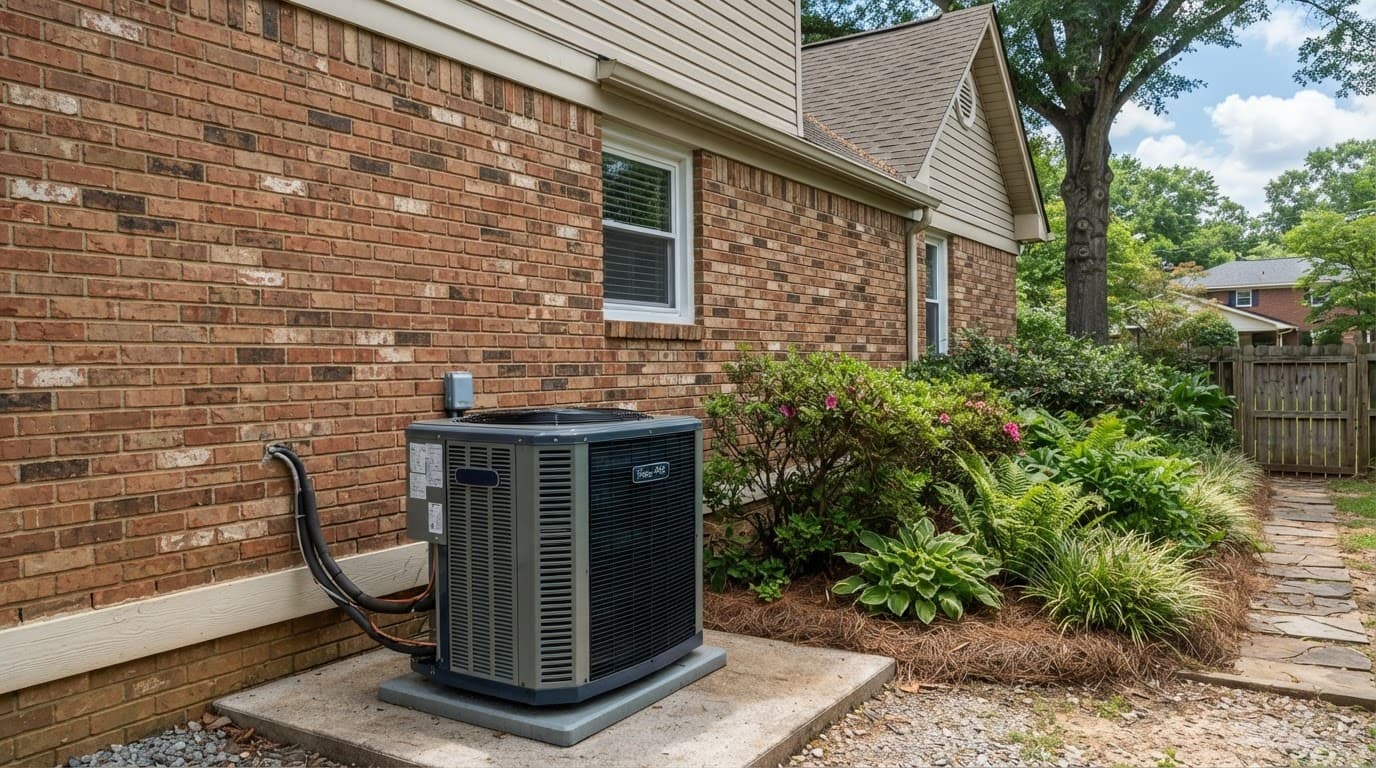
For homeowners considering a hybrid system or full replacement, our heat pump repair and installation services include furnace, heat-pump, and system replacement options.
Installation Cost Is More Than the Outdoor Unit
A fair quote should compare the upfront cost of a complete heat pump system, including outdoor equipment, an indoor coil or air handler, and any gas furnace connection where needed. It should also identify controls, line-set work, condensate drainage, electrical upgrades, permits, startup testing, old-equipment removal, and the capacity range and commissioning requirements for an inverter heat pump.
Ductwork deserves the same attention because leakage or poor layout can undermine energy efficiency and delivered comfort. A loose collar or crushed flex duct can send conditioned air into an Alabama attic before it reaches the bedroom. Standard gray cloth-backed duct tape often dries out and fails. Mastic or UL 181-rated foil tape is the proper choice for suitable seams and connections.
When rooms stay uneven, we don’t assume the equipment is too small. A technician may check duct leakage with a duct blaster and digital manometer, then measure airflow at registers. Those tests can separate a leaking duct from a dirty coil, weak blower, blocked return, or poor layout.
New equipment also brings a refrigerant transition. New residential heat pumps and air conditioners now use newer lower-GWP options, often R-454B or R-32, rather than the older R-410A found in many existing systems. Your current R-410A equipment does not need replacement only because of that transition, but verify the refrigerant and model number on every replacement proposal.
As of 2026, don’t include federal tax credits in your budget without verifying their current status. Former federal tax credits ended after 2025, while utility rebates and manufacturer offers may still be available, so confirm the terms before signing a contract.
At Northport HVAC, we service and install Trane, Carrier, Rheem, Lennox, Goodman, and Mitsubishi systems. We provide written pricing, manufacturer warranty details, and a one-year labor warranty on new system installations.
Maintenance and Safety Still Matter
A gas furnace needs annual safety checks. Burner condition, gas pressure, venting, the heat exchanger, ignition parts, drains, and safety controls all matter. Never adjust a gas valve yourself.
If you smell gas, hear hissing, see flame rollout, notice smoke, or a carbon monoxide alarm sounds, leave the home and contact emergency services or the gas utility.
Heat pumps need clean coils, clear outdoor airflow, proper refrigerant performance, working drains, and sound electrical connections. Both systems need clean filters and open return grilles. A sectional sofa pressed against a return can restrict airflow all day.
For ongoing heating and cooling problems, our local HVAC technicians can diagnose the cause before recommending a repair or replacement. If a July breakdown leaves you without cooling, emergency AC repair is a different priority than a long-term equipment decision. We also provide AC repair in Northport, AL, and Tuscaloosa air conditioning service when the system quits at the worst possible time.
Frequently Asked Questions
Is a heat pump or gas furnace better for Alabama homes?
For many Alabama homes, a properly sized heat pump is a practical choice because winters are mild and summers are long. A gas furnace may be better for homes with natural gas service or homeowners who prefer hotter supply air during cold weather.
Does a heat pump cost less to operate than a gas furnace?
It can, especially during mild weather when the heat pump maintains a higher coefficient of performance. Actual costs depend on local electricity and gas rates, equipment efficiency, outdoor temperature, and how much backup heat the system uses.
What is auxiliary heat on a heat pump?
Auxiliary heat usually comes from electric resistance heat strips inside the air handler. It provides backup during very cold conditions, defrost cycles, or when the system cannot keep up, but frequent use can increase utility bills.
What is a dual-fuel heating system?
A dual-fuel system combines an electric heat pump with a gas furnace. The heat pump handles milder weather, while the furnace takes over when outdoor conditions or operating costs make gas heat the better option.
Should ductwork be inspected before replacing a heating system?
Yes. Leaky, damaged, or poorly designed ducts can waste conditioned air and create uneven temperatures, even with efficient new equipment. A duct and airflow evaluation can help determine whether the problem is the equipment, the duct system, or the building envelope.
Choose the System That Fits the House
For many Alabama homes, a properly sized heat pump system offers efficient winter heating and dependable summer cooling in one system. An inverter heat pump can provide steadier comfort during mild weather.
A gas furnace remains a solid choice for homeowners with gas service, strong furnace preferences, or a need for dependable high-output heat during cold weather. A hybrid heating system may also suit homes that want gas backup and heat-pump cooling.
The best heat pump vs gas furnace choice depends on utility rates, operating costs, upfront cost, existing equipment, and duct condition. Comfort expectations and thermostat preferences matter too. To consider carbon footprint, look at the local electricity mix and equipment life rather than assuming one option is always cleaner. A good system starts with an honest evaluation of the whole house, not a guess based on the equipment outside.