Furnace Pressure Switch Problems: Safe Checks Before Service
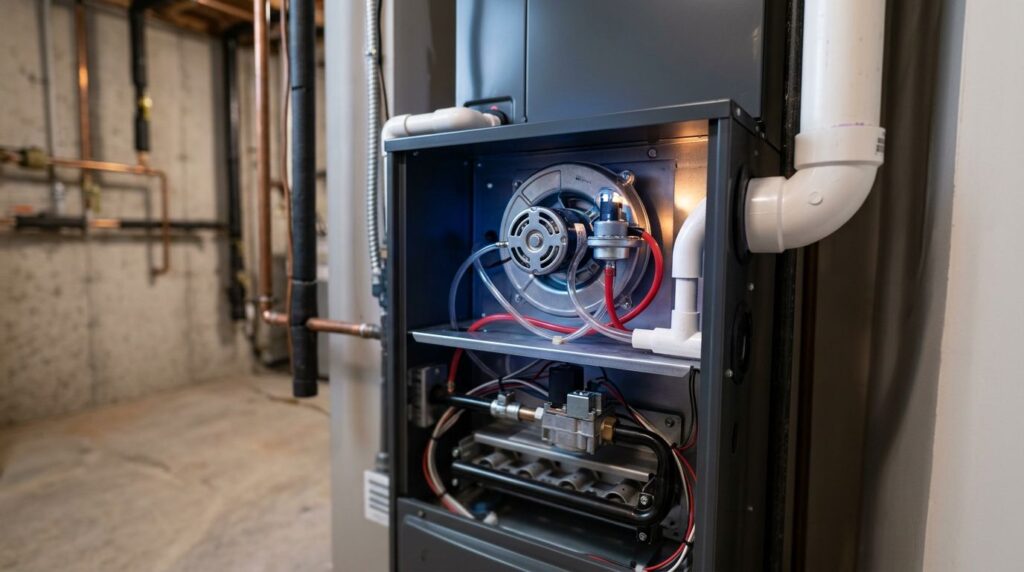
A furnace can sound as if it is starting normally, then quit before the burners ever light. That stop is frustrating, but the furnace pressure switch may be reacting to a draft or venting problem.
Most of these failures aren’t caused by the switch itself. They usually point to a draft, drain, vent, or inducer issue that needs a calm, safe check. A pressure switch stuck open is a symptom, not proof that the switch has failed. Don’t bypass this safety device or keep resetting the furnace. The shutdown pattern tells us far more than another restart.
Key Takeaways
- A furnace pressure switch stuck open is usually a symptom of a draft, venting, condensate, inducer, tubing, wiring, or control-board issue—not proof that the switch itself has failed.
- Safe homeowner checks include observing one heating cycle, confirming the thermostat and furnace doors, inspecting reachable vent terminations, checking for condensate backup, and noting visible tubing damage.
- Never bypass or jumper the pressure switch, repeatedly reset the furnace, or push tools into vent pipes or pressure tubing.
- A technician uses continuity testing and a manometer to determine whether the furnace has adequate draft pressure and whether the switch is electrically operating correctly.
- Call for service when the fault returns, the inducer will not start, water is present, ignition repeatedly fails, or you notice gas, smoke, flame rollout, or a carbon monoxide alarm.
How the Furnace Pressure Switch Protects Each Heating Cycle
When the thermostat calls for heat, the control board starts the inducer motor. This fan pulls combustion gases toward the flue pipe and creates negative pressure inside the furnace.
The pressure switch stays open until the draft reaches the required draft pressure. Once it closes, the board allows the igniter to operate and opens the gas valve. The blower waits until the heat exchanger warms, then moves heated household air.
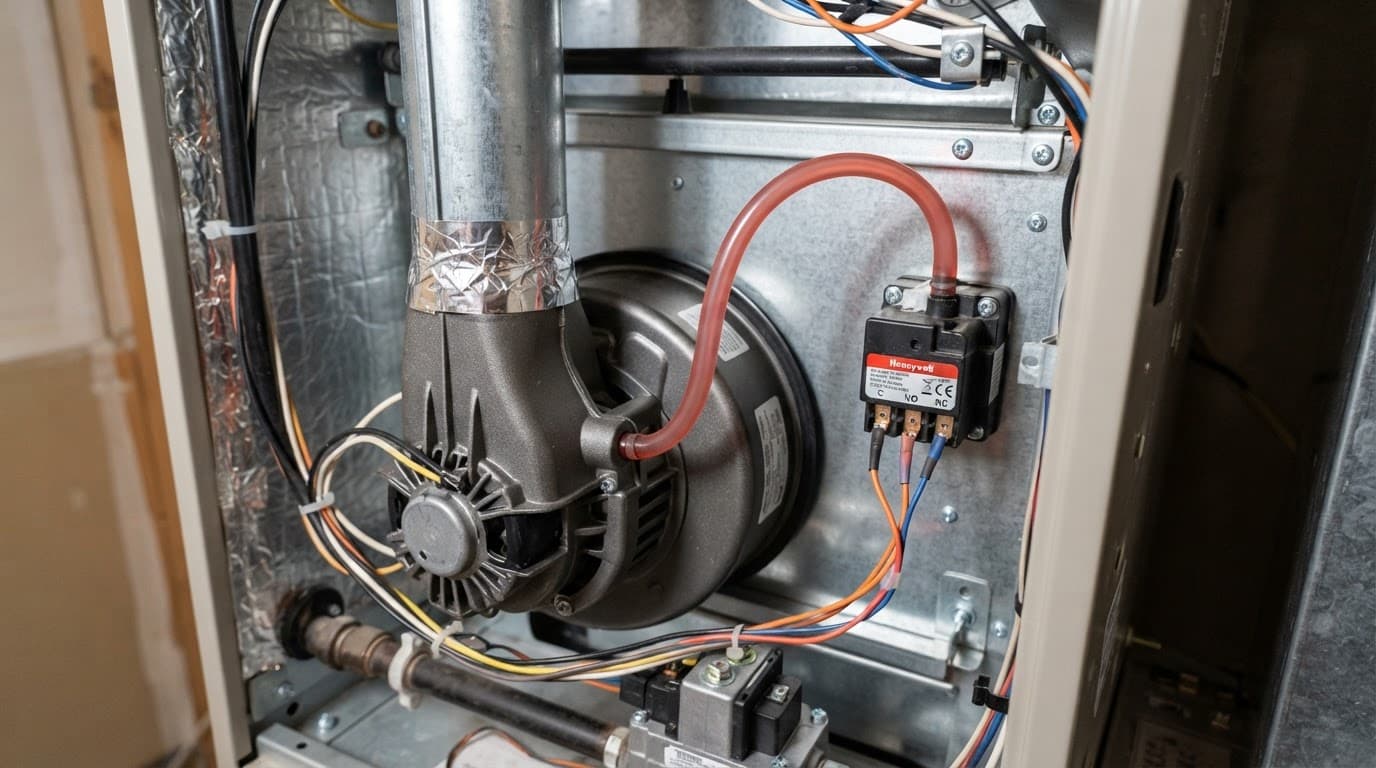
That order matters. If the board does not see the switch close, it stops ignition, even when the thermostat, blower, and main power are fine. A pressure switch stuck open can indicate a failed switch, but insufficient draft is more common.
At the start of a new heating cycle, the switch must reopen before the next call. If it fails to reset and remains open after startup, a pressure switch stuck open can stop ignition. Trapped water, a kinked tube, or contacts that no longer release can disrupt that reset.
The inducer motor provides the force behind this safety check. A weak motor, damaged wheel, blocked vent, or incorrect vent setup can leave a good switch open. The switch is protecting the furnace, not causing the original problem.
Signs of a Furnace Pressure Switch or Draft Problem
Pressure-related faults often have a familiar sound. The inducer motor starts, but ignition stops when the furnace doesn’t receive the expected safety signal. A pressure switch stuck open is one possible clue, not proof of a failed part. Blocked intake or exhaust pathways, including vent pipes, can cause the same symptom.
In other cases, the furnace tries several times, enters a lockout, and leaves the blower moving cold air.
Watch for these common signs:
- The furnace starts but burners never ignite.
- The furnace repeatedly shuts down before or shortly after ignition, causing short cycling rather than completing a normal run.
- You hear the inducer humming, rattling, or struggling to start.
- A blinking LED or display shows a pressure-related fault.
- Water is present around high-efficiency furnaces, particularly near the condensate drain.
- The rubber tubing at the switch is loose, split, brittle, or holding water.
Read a furnace error code by make and model
LED patterns come from the control board. The diagnostic chart inside the furnace cabinet is the final word. A fault code can mean something different on another model, series, or year.
Use each table entry as a diagnostic direction, not a replacement recommendation.
| Brand family | Common code pattern | What it points toward |
|---|---|---|
| Carrier and Bryant | Code 31 | Pressure switch, inducer, venting, drain, or wiring circuit issue |
| Carrier and Bryant | Code 23 | Switch did not open before the inducer cycle |
| Lennox | E223 or E227 | Low-pressure switch failed open or failed closed |
| Goodman and Amana | Two or three LED flashes | Pressure-switch state fault on many control boards |
| Trane and American Standard | Three flashes or a pressure message | Pressure-switch or inducer circuit fault |
A Carrier code 31 is a useful clue, not a diagnosis. It may suggest a pressure switch stuck open, but further testing is needed. Check the venting system and inducer before replacing any part.
A pressure-switch code means the furnace safety sequence did not happen as expected. It does not prove which part caused the failure.
Safe Checks for a Furnace Pressure Switch
Before opening anything, use this limited troubleshooting guide for visible, homeowner-safe observations, not to open the furnace or test combustion controls. Set the thermostat to heat and listen through one full call. If the furnace locks out after repeated attempts, turn it off and stop there.
A few checks can narrow the problem without putting you near gas, live wiring, or hot furnace parts.
- Confirm the thermostat is set to heat and the fan is set to Auto. Raise the temperature a few degrees above room temperature and observe one normal start attempt.
- Check the breaker and furnace cabinet doors. Make sure the doors are fully seated. A loose access panel can keep the door safety switch from closing, stopping the furnace before it begins.
- Inspect intake and exhaust vent terminations from the ground. High-efficiency furnaces often use PVC vent pipes for intake and exhaust. Remove leaves, mulch, insect material, or dirt you can reach easily. Do not climb onto a roof or push wire, screwdrivers, or hoses into a flue pipe.
- Look for signs of a condensate drain backup. Puddles, overflow, or water inside clear tubing call for service. A blockage can leave the pressure switch stuck open. It may occur at the drain trap, collector box, or pressure tubing, interrupting the safety sequence.
- Notice obvious damage to the rubber tubing with the furnace powered off. A detached, cracked, soft, or water-filled tube is useful information for the technician. Report it rather than poking the pressure port or blowing into the tubing.
Replacing an obviously dirty filter is still smart. Our guide on how often to change HVAC filters can help you choose a reasonable schedule. A dirty filter can reduce air flow and cause overheating. It usually causes a limit-switch trip, not a pressure-switch code.
Never jumper the pressure-switch terminals together. That defeats a combustion safety control and can allow the furnace to run when it should not.
How Technicians Test a Furnace Pressure Switch
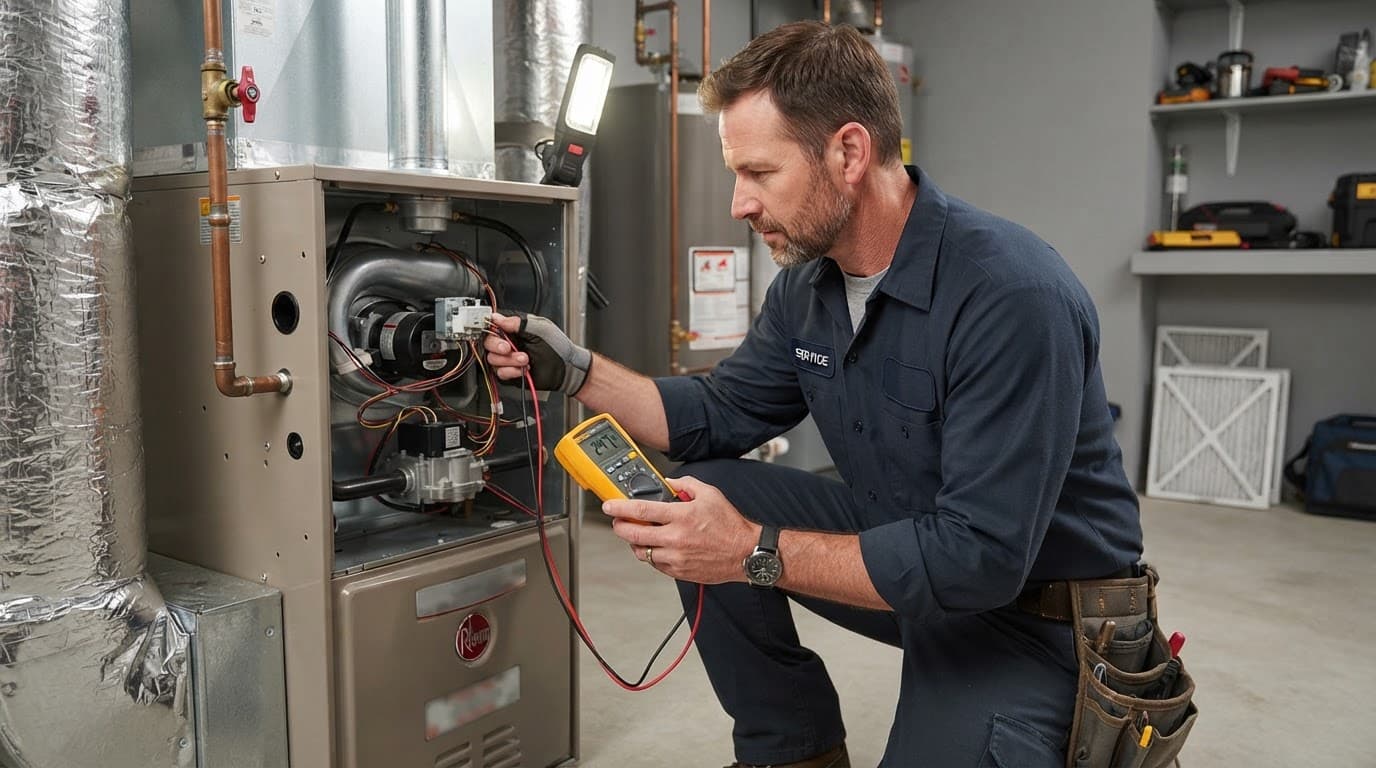
A proper diagnosis separates an electrical switch failure from a draft or venting failure. An hvac technician does not treat a fault code as a parts-shopping list. Testing the switch first keeps the gas valve and ignition circuit from being blamed prematurely.
What a multimeter can confirm
With power disconnected and wires isolated, a technician checks the switch’s normal electrical state. Because it is normally open, a pressure switch stuck open cannot be identified from its resting state alone.
When the inducer creates enough negative pressure, the contacts should close. A continuity test confirms the change from an open circuit to a closed circuit. The meter alone cannot establish the furnace’s actual draft pressure, so the electrical test is not enough.
Why a manometer settles the question
A manometer measures draft pressure in inches of water column. A technician connects the instrument at the proper test point, runs the furnace through its start sequence, and records the reading. The manometer reading is compared with the rating printed on the switch.
A label may show a setting such as -0.70 inches of water column. That number is not a target for every furnace. The required pressure depends on the equipment and vent design.
If the measurement is too low, we trace the cause through the inducer motor, venting, intake, condensate drain, and pressure ports. If it meets the required rating but the contacts stay electrically open, the furnace may have a pressure switch stuck open. Wiring and the control board also need inspection before a replacement switch is approved.
When Service Is the Right Call
Call for service when a furnace pressure switch fault returns after one reset or the same error code returns. A pressure switch stuck open that keeps blocking ignition, a nonstarting inducer, clear venting without ignition, or water around the unit all warrant service. Repeated lockouts can leave your home without heat and strain the inducer.
Turn the furnace off, leave the home, and contact emergency services or the gas utility if you smell gas, hear hissing, see smoke, notice flame rollout, or a carbon monoxide alarm sounds. Do not touch electrical switches, manipulate the gas valve, or try to relight the furnace.
When this furnace fault keeps returning, furnace repair in Northport and Tuscaloosa should begin with measured diagnosis, not a guess. At Northport HVAC, we service Carrier, Trane, Rheem, Lennox, Goodman, and other major furnace brands with upfront repair options.
A replacement switch often costs about $20 to $75 for the part itself. A two-stage furnace may use multiple switches or a specialized assembly, and a universal pressure switch is not automatically an approved match for every furnace. Installed cost also depends on diagnosis time, access, wiring condition, and whether the actual issue involves the inducer motor, drain, or vent system.
Small maintenance habits prevent larger repairs
An annual heating visit gives local HVAC technicians time to inspect drains, tubing, venting, burners, electrical connections, and safety controls before the first sustained heating cycle. Landlords and property managers should schedule that work with an HVAC technician before occupied properties need steady heat.
The same care supports the rest of your heating and cooling equipment. We see overdue filters and drain trouble on AC repair calls in Northport, AL and Tuscaloosa air conditioning service visits too. A small maintenance miss can turn into an emergency AC repair call when Alabama weather is at its worst.
Frequently Asked Questions
What does a furnace pressure switch do?
The pressure switch confirms that the inducer is creating enough draft for combustion gases to vent safely. If the required pressure is not reached, the control board stops the ignition sequence.
Does a pressure switch stuck open mean the switch needs replacement?
Not necessarily. Blocked venting, a weak inducer, condensate problems, damaged tubing, wiring, or low draft can all leave a good switch open, so the cause should be measured before replacing the part.
What can I safely check when the pressure switch fault appears?
You can observe one startup attempt, confirm the thermostat and furnace doors, inspect reachable intake and exhaust terminations, look for condensate backup, and note visible tubing damage. Do not open the furnace, test combustion controls, blow into the tubing, or push objects into a vent pipe.
Can I bypass the furnace pressure switch to make the furnace run?
No. Jumpering the pressure-switch terminals defeats a combustion safety device and can allow the furnace to operate under unsafe conditions. Turn the furnace off and arrange service instead.
When should I call for furnace service?
Call when the fault returns after one reset, the furnace repeatedly locks out, the inducer does not start, ignition fails despite clear visible venting, or water is present around the unit. Leave the home and contact emergency services or the gas utility if you smell gas, hear hissing, see smoke or flame rollout, or a carbon monoxide alarm sounds.
A Safety Switch Worth Listening To
A pressure switch is not an inconvenience when your furnace quits. It is a safety device and guardrail that prevents unsafe ignition when combustion gases may not vent safely.
Check the simple, visible items once, then let measured testing identify the real cause. A clear diagnosis protects your furnace, your budget, and the air inside your home.