Crawl Space Moisture and Higher Cooling Costs
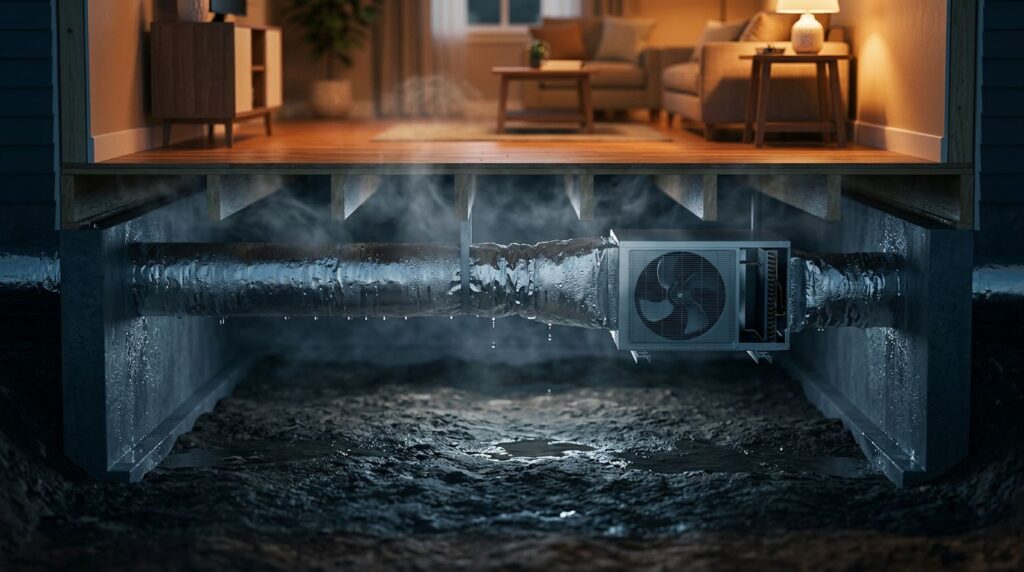
Your air conditioner can be in good shape and still run far too long every summer. Crawl space moisture is often the hidden problem below the floor, adding humidity, warming ductwork, and making every cooling cycle work harder. When relative humidity stays high, that extra moisture can keep the system running even longer.
In Northport and Tuscaloosa, long humid stretches put enough pressure on an AC system already. When a damp crawl space and wet materials under the home join the mix, your system has to remove heat and moisture at the same time.
The result can be a house that feels sticky, uneven temperatures, and energy bills that keep climbing because of ongoing crawl space moisture.
Key Takeaways
- Crawl space moisture can raise indoor humidity, make the home feel warmer, and force the air conditioner to run longer.
- Damp conditions below the home can cause duct sweating, wet insulation, mold growth, wood rot, weak airflow, and uneven temperatures.
- Look for musty odors, standing water, wet insulation, duct condensation, rising energy bills, and rooms that stay warmer than the rest of the house.
- The right repair starts by finding the moisture source, which may involve gutters, grading, plumbing leaks, groundwater, vapor barriers, drainage systems, or crawl space encapsulation.
- Once moisture is controlled, proper AC maintenance, clean filters, good airflow, and working drainage help reduce unnecessary strain on the cooling system.
How Crawl Space Moisture Raises AC Run Time
An air conditioner does more than lower the temperature. It also pulls moisture from indoor air as that air passes across the cold evaporator coil.
That moisture removal takes energy. When crawl space moisture builds in a damp crawl space, humid air can move upward through plumbing gaps, wiring openings, loose floorboards, and unsealed duct connections. An unsealed dirt floor may also release water vapor that migrates into the living area, affecting indoor air quality. Your AC then spends longer cycles dealing with moisture that should never have entered the home.
A thermostat may show 72 degrees, but the house can still feel uncomfortable if relative humidity stays high. Most homes feel better when relative humidity stays roughly between 30% and 50%.
A damp crawl space can make a properly sized air conditioner look weak.
Crawl space moisture can also make the home feel warmer than the thermostat indicates. At higher humidity levels, sweat doesn’t evaporate as easily. You may lower the thermostat to feel comfortable, adding even more runtime and electrical use. The effects of a damp crawl space are especially noticeable when indoor humidity remains elevated.
A system that runs longer isn’t always failing. Still, extended operation adds wear to motors, capacitors, electrical connections, and the compressor. It also gives small airflow or drainage problems more chances to become a no-cooling call.
Crawl Space Moisture Can Affect Ducts and Insulation
Many West Alabama homes have ductwork below the floor. That puts an important part of the cooling system directly inside a space that may be humid, poorly insulated, or wet after heavy rain. When crawl space moisture builds up around the subfloor, it can affect ducts, insulation, and the floor joists supporting the rooms above.
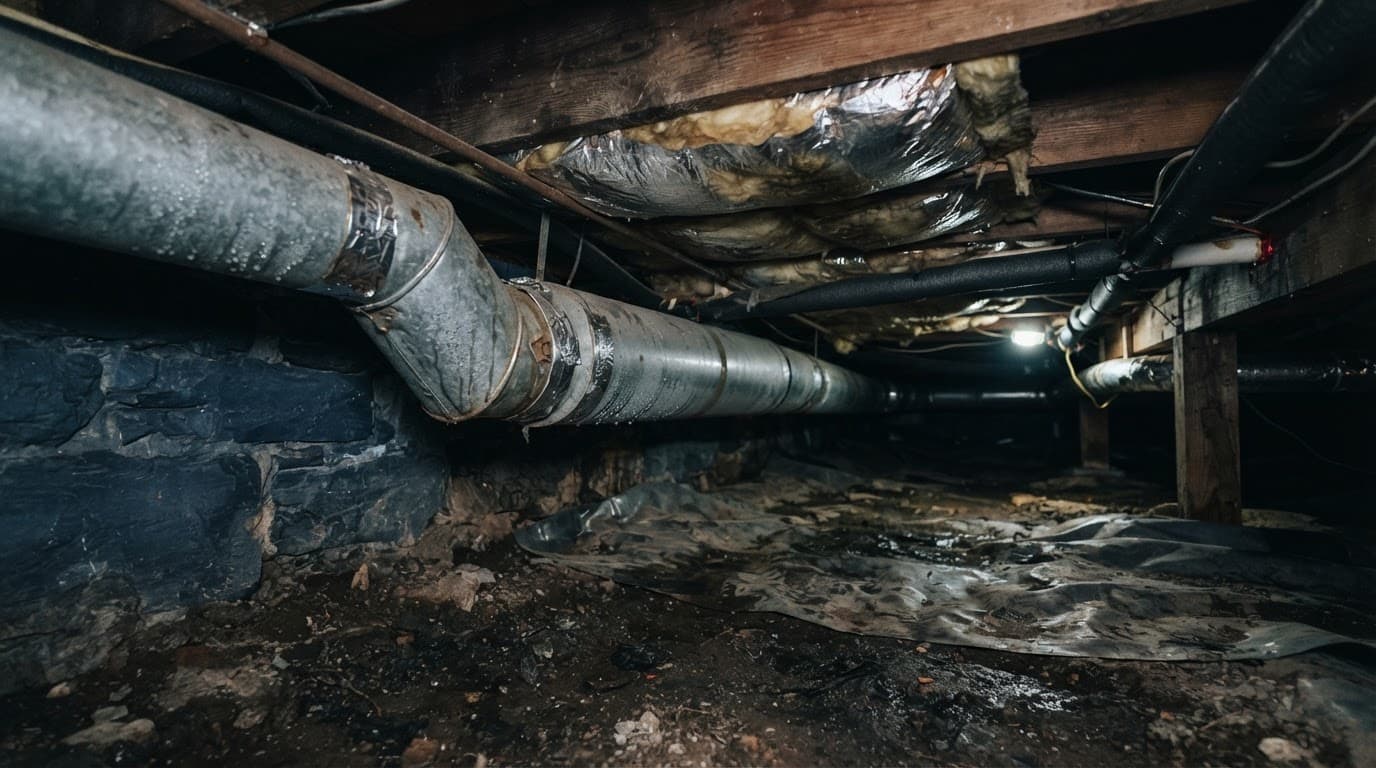
Cold supply ducts can sweat when warm, damp crawl space air touches their exterior. This crawl space moisture can lead to condensation that soaks nearby insulation or drips onto framing and the ground below. Over time, repeated wetting may contribute to mold growth and wood rot around the ductwork and subfloor.
Wet or compressed duct insulation loses much of its ability to protect cooled air. Instead of arriving at a bedroom cool and steady, air warms up along the way. Leaky duct joints add another problem. They can pull damp crawl space air into the return side or spill conditioned air where nobody benefits from it.
A duct leak below the house can waste cooled air and pull humid air into the system during the same cycle.
That combination can look like an equipment issue. You may notice weak airflow at distant vents, a warm back bedroom, or a system that runs without bringing down the humidity. When crawl space moisture keeps the ducts damp, it can also create conditions for additional mold growth inside insulation and around connections.
Crawl space moisture can also damage fiberglass insulation between floor joists. Once it sags or stays damp, the floor above may feel warmer, and water damage can spread to the wood framing. Persistent dampness may cause wood rot in the joists and other subfloor components, weakening the structural integrity of the area below the home.
The resulting water damage can make repairs more involved, especially when insulation remains pressed against damp wood framing. We don’t recommend covering a duct leak with household duct tape. Alabama heat and humidity break that adhesive down fast. Proper mastic, mechanical connections, and insulation repairs last longer when the duct system is accessible.
Signs the Space Below the House Is Raising Cooling Costs
A high power bill doesn’t prove a crawl space issue. Weather, thermostat settings, attic insulation, equipment age, and daily household habits all matter. Still, several signs point toward a moisture problem below the home.
Watch for patterns that show up together:
- The house feels clammy even when the thermostat is set low, and indoor air quality seems worse than usual.
- A musty odor is strongest near floors, closets, or first-floor rooms.
- Insulation under the home is hanging, stained, or visibly wet, with signs of mold growth.
- Ductwork has water droplets, damaged wrap, loose connections, or crushed flex ducts.
- Floors feel soft, cool, or unusually warm in certain areas.
- The AC runs for long periods, energy bills keep climbing, and distant rooms stay warmer than the rest of the house.
- You see standing water, dark soil, puddles, or drainage paths in the crawl space.
- Persistent dampness has contributed to pest infestations, damaged wood, or additional mold growth.
A musty odor shouldn’t be dismissed as normal summer humidity. It can come from damp wood, wet insulation, mold growth, or a condensate issue. Persistent moisture can also attract pest infestations, including insects and rodents. Duct cleaning may help with confirmed debris or moisture-related buildup, but it won’t fix a water source, a refrigerant issue, or a broken drain.
You should also pay attention to the air handler and indoor drain line. Plumbing leaks and a clogged condensate drain can cause water near the equipment, ceiling stains, shutdowns from a float switch, or odors. That is separate from crawl space moisture, but both problems can leave the home feeling damp.
If you see standing water, ice on refrigerant lines, water around the indoor unit, repeated short cycling, or weak airflow, don’t assume humidity is the only cause. A dirty filter, frozen evaporator coil, blower problem, drainage issue, or refrigerant-related fault may be involved. A crawl space inspection can help determine whether moisture below the home is contributing to the problem.
Fixing the Moisture Source Before Blaming the AC
The right fix starts with identifying where the water is coming from. It may be rainwater moving toward the foundation, plumbing leakage, groundwater seepage through foundation walls, humid outdoor air, or condensation from poorly insulated ducts. Recurring groundwater seepage may also require drainage systems or a sump pump to keep water from collecting below the home.
Start with the simple exterior checks. Downspouts and gutters should carry water away from the home, and they should not direct water beside the foundation. Improper grading can send runoff toward the house instead of away from it. A damaged splash block, clogged gutter, or second area of improper grading can create a crawl space problem after every hard rain. In some homes, drainage systems and a sump pump are needed to manage standing water.
Inside the crawl space, a properly installed vapor barrier can limit moisture rising through a dirt floor. The material needs sealed overlaps and edges to do its job. Loose plastic thrown across a dirt floor is not the same thing as a sealed vapor barrier.
Crawl space encapsulation may make sense for some homes, especially when there is recurring humidity or wet insulation. That work usually includes a sealed ground cover, a continuous vapor barrier, closed vents or openings where appropriate, air sealing, and a crawl-space dehumidifier. A complete crawl space encapsulation system may also use a dedicated dehumidifier to maintain stable humidity levels.
Don’t close crawl space vents without a plan. A vented space, sealed space, and conditioned space each need different moisture control details. Closing crawl space vents while leaving wet soil, leaking ducts, or poor drainage underneath can trap the problem. Crawl space encapsulation should be designed around the foundation, drainage, and ventilation conditions, with a dehumidifier added when natural drying is not enough.
A practical inspection should look at:
- Drainage around the foundation, groundwater seepage, and signs of standing water.
- Plumbing lines, condensate drains, and duct sweating.
- Duct connections, insulation condition, and accessible return leaks.
- Floor insulation, wood framing, foundation walls, and visible microbial growth.
- Humidity levels in the crawl space and inside the home.
- The condition of the foundation walls, vapor barrier, and any installed drainage equipment.
The lowest-cost repair is often the one that stops water before it reaches the crawl space.
Keeping the Cooling System From Carrying the Whole Load
Once the moisture source is controlled, your air conditioner can focus on its actual job instead of compensating for crawl space moisture. That means better comfort, shorter unnecessary run times, and lower energy bills during July and August heat.
Keep the filter clean and use the correct size and type for your equipment. Good filtration supports indoor air quality, while an overly restrictive filter left in place too long can reduce airflow and cause the evaporator coil to get too cold. A gray, matted, or bowed filter needs replacement.
Leave supply registers open and keep furniture, curtains, and pet beds away from return grilles. A large sectional against a return can choke airflow throughout the home. Closing several vents to push air elsewhere often creates pressure problems instead of fixing a hot room.
Routine maintenance should include the condensate drain, evaporator coil condition, electrical connections, blower performance, thermostat operation, and visible duct concerns. This is where a small moisture or airflow issue can be found before it affects air quality or turns into a major repair.
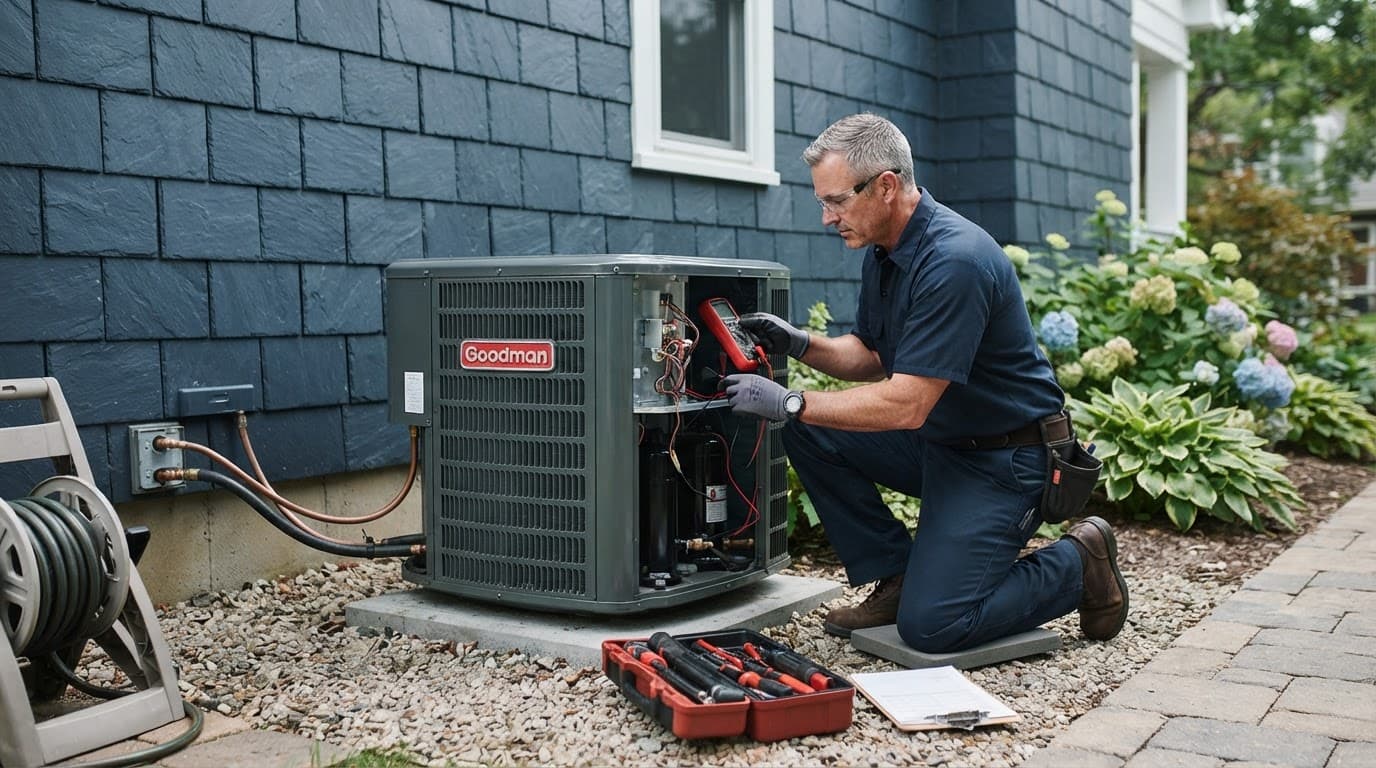
For homeowners dealing with warm air, ice, water, new noises, or constant cycling, AC repair Northport AL should begin with a diagnosis, not a guess. Our Northport HVAC team checks the equipment and the conditions around it, including airflow and drainage concerns that can make cooling problems worse. Don’t ignore indoor leaks, since a small issue can eventually lead to water damage.
That matters for Tuscaloosa air conditioning systems that run through long humid afternoons. We work on Trane, Carrier, Rheem, Lennox, Goodman, and Mitsubishi mini-split equipment, but the brand doesn’t change the need for good airflow, dry ducts, and proper drainage. Controlling crawl space moisture helps keep the cooling system from carrying the whole load.
When a system has a burning smell, breaker trips, smoke, loud buzzing, grinding, or no cooling at all, shut it down and call for emergency AC repair. These aren’t crawl space problems to wait out. Addressing crawl space moisture can reduce added strain, but serious equipment hazards still require prompt attention.
When a Professional Inspection Makes Sense
A homeowner can safely check filters, move stored items away from vents, watch for obvious puddles, and confirm that gutters drain away from the house. Beyond that, a professional crawl space inspection can assess conditions that are easy to miss, including the foundation walls, floor joists, and overall structural integrity.
A thorough crawl space inspection should also check for mold growth, water damage, and plumbing leaks. Local HVAC technicians can inspect the cooling system, while a crawl space or moisture-control specialist can evaluate drainage, foundation walls, floor joists, insulation, and structural integrity. They can also look for mold growth and recommend remediation when needed.
We recommend asking direct questions before approving work. What caused the issue? How was it tested? Does the repair stop the source of the problem or only treat a symptom? What does the written price include? A final crawl space inspection can help confirm that recommended moisture corrections address the underlying concern.
Clear answers matter for homeowners, landlords, and property managers. A fair estimate should identify the failed part or needed correction, labor, materials, and warranty details. No vague language and no surprise add-ons after the work begins.
Frequently Asked Questions
Can crawl space moisture make my AC run longer?
Yes. Moisture that enters through the floor, duct leaks, or other openings increases indoor humidity, so the AC must remove more water while it cools the home. This can lead to longer cycles, higher energy use, and a clammy indoor feel.
How can I tell if moisture below the house is affecting my cooling system?
Look for musty odors, standing water, wet or sagging insulation, sweating ducts, weak airflow, uneven temperatures, and rising energy bills. These signs do not prove the crawl space is the only problem, so the AC system and drainage should be inspected as well.
Will crawl space encapsulation lower my cooling costs?
It can help when high humidity, wet soil, or air leakage from the crawl space is adding to the cooling load. Encapsulation should be part of a complete moisture-control plan that may include drainage, a sealed vapor barrier, air sealing, and a dehumidifier.
Should I close the crawl space vents?
Not without addressing the moisture conditions underneath the home. Closing vents while leaving wet soil, leaking ducts, or poor drainage in place can trap moisture and make the problem worse.
When should I call a professional?
Call for an inspection when you find standing water, persistent odors, wet insulation, damaged wood, mold growth, duct condensation, or cooling problems that continue after basic maintenance. A crawl space specialist and HVAC technician may need to evaluate different parts of the problem.
A Drier Crawl Space Helps Every Room Feel Better
Crawl space moisture doesn’t stay below the house. It can affect duct performance, indoor humidity, insulation, odors, and the amount of time your AC has to run. A damp crawl space can also make it harder to maintain comfortable temperatures throughout the home.
Addressing water entry and damp ductwork gives your heating and cooling system a fair chance to do its job. Reducing crawl space moisture can support better indoor air quality, lower energy bills, and a cooler-feeling home without forcing the thermostat lower.
When comfort slips and bills rise together, look below the floor before assuming the air conditioner is the whole problem. A drier crawl space helps keep crawl space moisture from adding to the cooling load.