Buzzing Indoor AC Unit: Causes That Need Attention
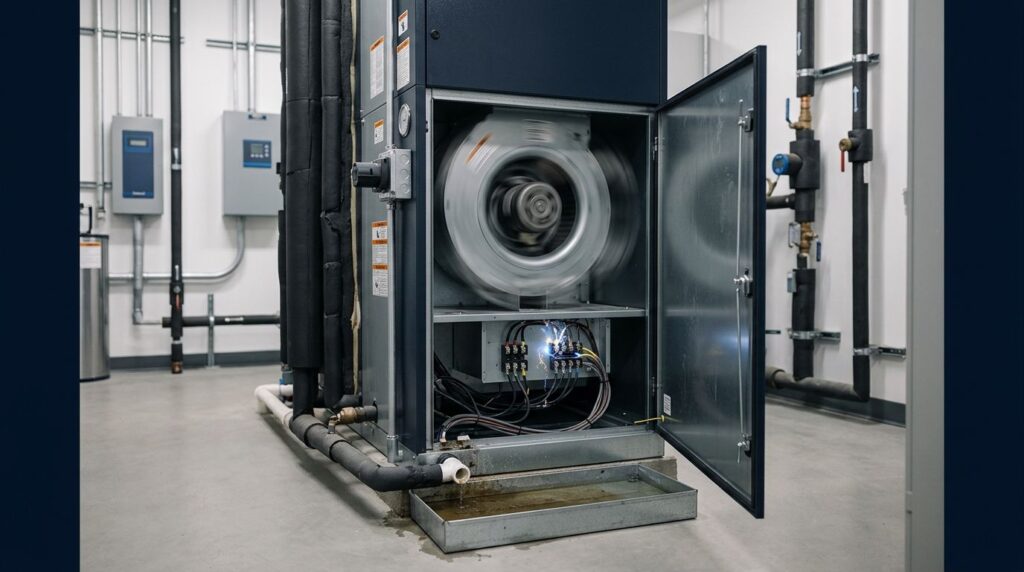
A buzzing sound can be harmless for a moment, but it shouldn’t become your AC’s new background noise. An air conditioner buzzing noise from your central air conditioner often points to vibration, a struggling electrical part, or a blower issue that needs attention before it becomes a no-cooling call.
The location and timing of the sound matter. A buzz that starts inside your indoor air handler only when the cooling cycle begins tells us something different than one that continues after the thermostat shuts the system down.
Start by noticing what the unit is doing while it buzzes, then decide whether it is safe to keep running.
Key Takeaways
- A buzzing indoor AC unit can be caused by simple issues like loose panels or dirty air filters, but it often indicates mechanical or electrical problems.
- Electrical components such as struggling blower motors, failing capacitors, and loose wiring are frequent culprits behind a loud AC hum.
- Water backup from clogged condensate drains and frozen evaporator coils can also trigger buzzing and safety shutdowns.
- Never ignore a buzzing noise accompanied by burning smells, smoke, ice, or tripped circuit breakers, as these require immediate professional attention.
What a buzzing indoor AC unit usually means
Your indoor unit contains the air handler or furnace cabinet, blower motor, evaporator coil, drain components, wiring, and controls. Any of those parts can make noise, though a new or loud electrical hum deserves more caution than an occasional cabinet rattle.
Some systems make a low, steady hum while operating. That sound should stay fairly quiet and should not come with burning smells, weak airflow, repeated shutdowns, or a tripped breaker. Maintaining a quiet operation often preserves overall system efficiency.
A sudden air conditioner buzzing noise is different. It may mean a part is loose, a motor is struggling, or an electrical control is failing. Sometimes this sound is confused with normal sounds from an outdoor unit, but indoor buzzing requires closer inspection. The sound is your cue to pay attention, not to turn up the television and hope it goes away.
| What you hear or notice | Possible cause | Best next step |
|---|---|---|
| Light vibration from the cabinet | Loose panel, screw, or duct connection | Check for visible loose exterior panels and arrange professional repair services if it continues |
| Loud hum with weak or no airflow | Blower motor, capacitor, or blower fan problem | Turn the system off and schedule a repair |
| Buzzing with a burning odor | Wiring, relay, transformer, or electrical issue | Shut off power and call for service |
| Buzzing with breaker trips | Electrical short or failing component | Leave the system off and request prompt repair |
| Buzzing plus ice or water | Airflow, drainage, or refrigerant-related problem | Stop cooling and have the system inspected |
A new air conditioner buzzing noise paired with heat, smoke, a burning smell, or a breaker trip is not a wait-and-see problem.
Loose panels and blower problems inside the indoor air handler
A metal cabinet can buzz when a panel, screw, duct connection, or refrigerant line vibrates against another surface. This is often more noticeable when the blower starts at full speed. Adding mounting isolation feet can help quiet these vibrations. A loose panel may sound minor, but constant vibration can loosen more hardware over time.
The blower assembly is another common source. Inside the cabinet, a motor spins the blower wheel that pushes air through your ducts. Dust buildup, a bent wheel, worn fan motor bearings, or a loose mounting bracket can create a hum, vibration, or rough buzzing sound. Regular seasonal maintenance helps catch these mechanical wear items early.
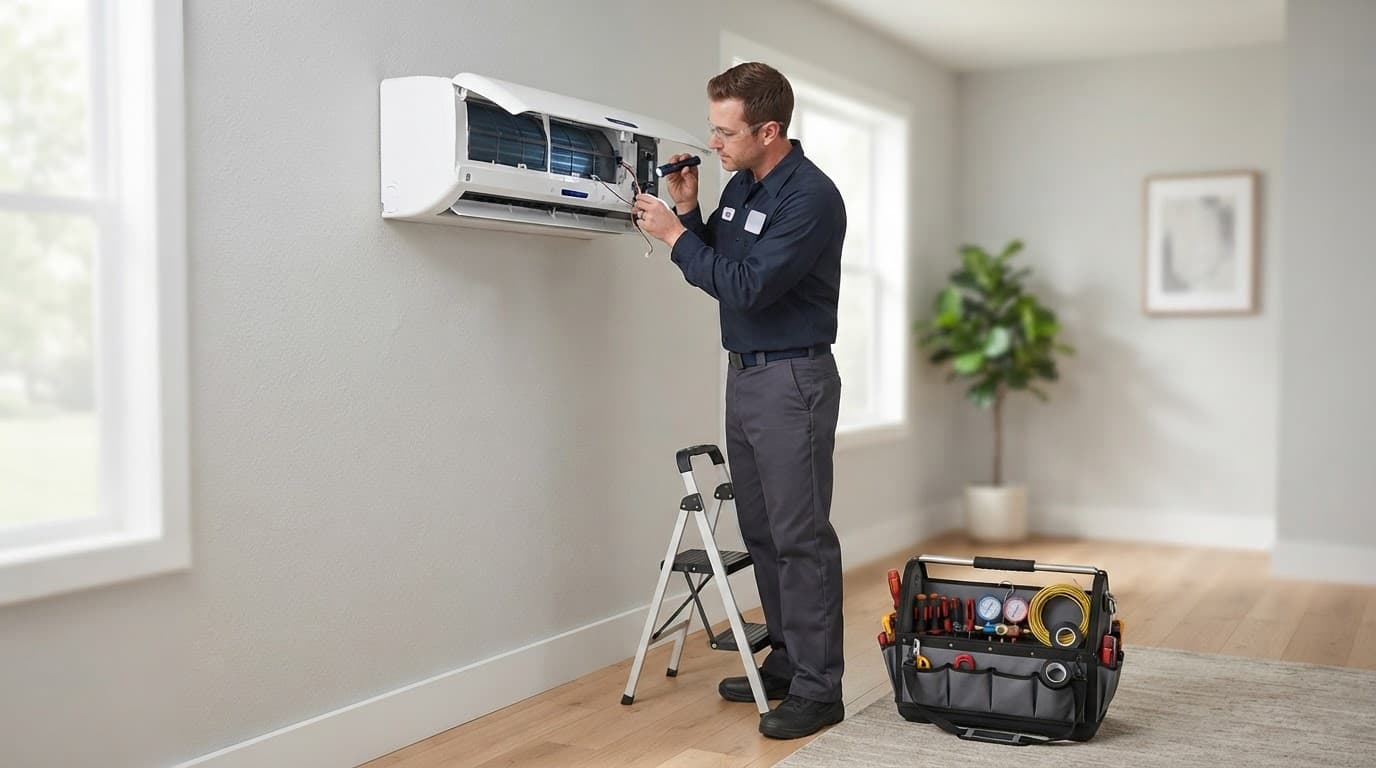
A dirty air filter can add to the trouble. Restricted airflow makes the blower fan work harder and can contribute to frozen evaporator coils. It won’t always cause the buzz itself, but it can turn a small mechanical issue into a bigger service call.
You can safely replace a visibly dirty air filter with the correct size and type. Keep return grilles clear of furniture, curtains, pet beds, and storage bins. Avoid closing multiple supply vents to force more air into one room, because that can raise pressure in the duct system.
If the sound starts whenever the fan runs, even when cooling is off, the blower or its electrical components move higher on the suspect list. We see this pattern often during hot West Alabama summers, when systems run long hours without much rest.
A blower can keep moving air even when another part of the system has failed. Air coming from the vents does not prove the AC is operating normally.
Electrical issues that cause a buzzing indoor AC unit
Electrical parts can make a faint hum during normal operation. A loud buzz, intermittent buzz, or hum that comes with flickering lights, a hot smell, or cycling problems points to an underlying electrical issue that needs a qualified HVAC technician.
The indoor cabinet may contain a transformer that lowers voltage for controls and the thermostat. A worn transformer can buzz louder than usual. Relays, control boards, and safety switches can also make noise when they fail to open or close properly. If you notice a stuck contactor relay switch, it can hum continuously while struggling to send power to the system.
A failing capacitor is another possibility, especially when the blower hesitates, starts slowly, or makes a strained sound. Capacitors help motors start and run. A failing capacitor can also cause voltage fluctuations that strain the system and generate excess noise. They can hold a dangerous charge after the system is turned off, so they are never a DIY part.
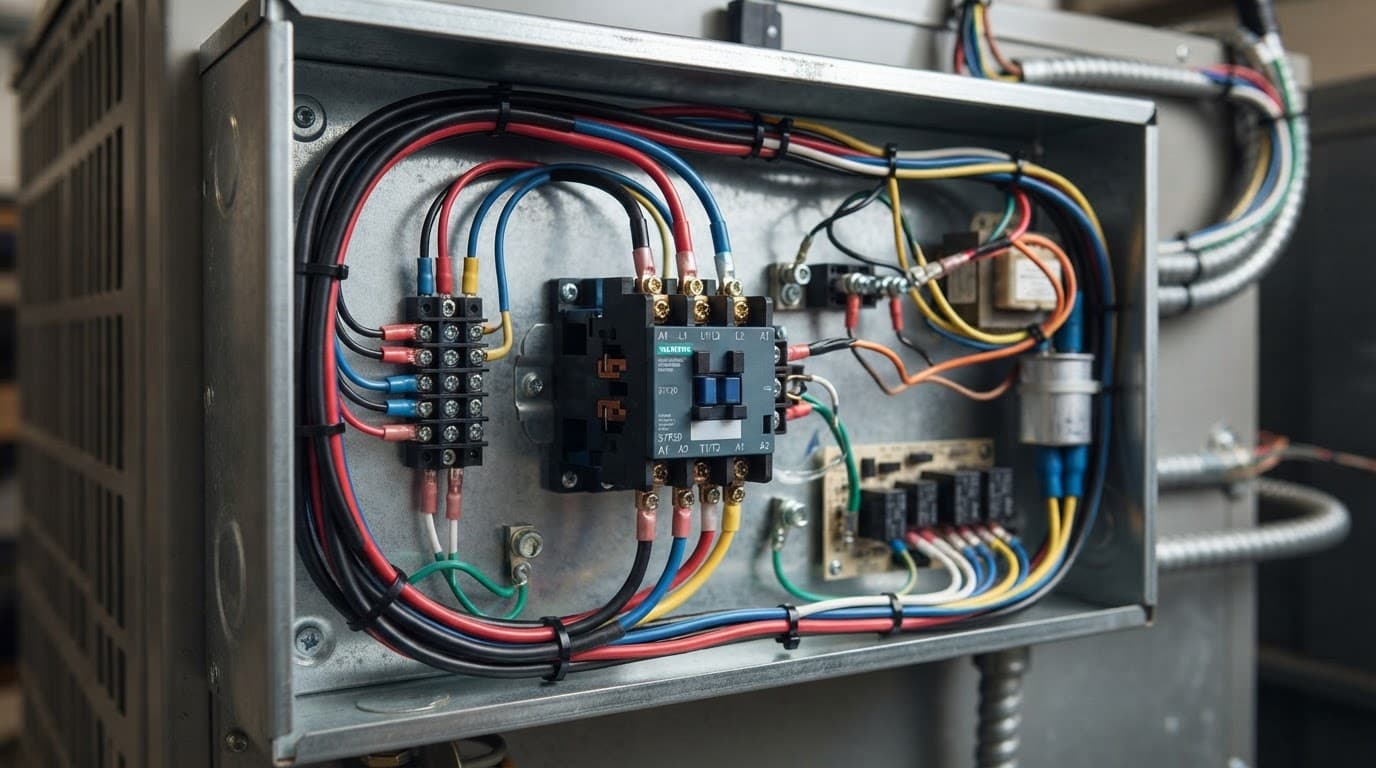
Loose wiring connections may buzz as electrical current passes through them. Heat can build at any point of loose wiring, and electrical arcing can even occur if connections degrade further, which is why a hot plastic odor is a serious warning sign. Shut the system down at the thermostat, then switch off the appropriate breaker if you can do so safely.
Don’t remove the air handler panel, touch wires, or try to reset a breaker repeatedly to fix an electrical issue. A breaker that trips again is protecting the circuit from a problem that still exists.
For homeowners needing AC repair warning signs, buzzing belongs on the list with grinding, screeching, water leaks, warm air, and frequent cycling. None of those symptoms should be brushed off as normal aging.
Moisture, frozen coils, and drain safety switches
Not every indoor buzz begins with a motor or wire. Water and airflow problems can trigger safety controls, strain the blower, and make the system behave in confusing ways.
A clogged condensate drain line can cause water to back up in the drain pan. Many systems have a float switch that shuts cooling down when the water level rises. Depending on the equipment, you may hear a hum or buzz while the unit attempts to start or the blower continues to run.
Water around the air handler is a reason to act quickly. A blocked drain can damage ceilings, drywall, flooring, and insulation if it overflows. It can also create musty odors and indoor air quality concerns.
Frozen evaporator coils can create a similar chain reaction. A dirty filter, restricted airflow, or even a refrigerant leak that starves the system can allow the coil to ice over. When a faulty expansion valve restricts cooling flow, you might notice frost creeping back along the copper lines connecting to the outdoor unit and the outdoor condenser unit. The system may buzz, run longer than usual, and stop cooling properly.
Turn cooling off if you see ice on refrigerant lines or the indoor coil area, especially if you suspect a refrigerant leak. Set the thermostat fan to “auto” unless a technician tells you otherwise, and don’t chip ice away with tools. The right repair for frozen evaporator coils depends on why the system iced up in the first place, ensuring your outdoor unit and indoor components run safely again.
When to turn the AC off and call for help
A mild cabinet vibration may allow time for a routine appointment. Other symptoms call for a faster response, especially during a Northport or Tuscaloosa heat wave.
Turn the system off and contact a professional if you notice any of the following:
- The indoor unit buzzes loudly and no air comes from the vents.
- You smell burning plastic, rubber, or overheated wiring.
- The breaker trips when the AC starts.
- Buzzing comes with smoke, sparks, water, or visible ice.
- The thermostat calls for cooling, but the unit repeatedly starts and stops.
- The noise grows worse each time the blower runs, or you hear strange mechanical sounds from the outdoor condenser unit.
Sometimes an issue with the outdoor condenser unit points to a faulty condenser fan or emerging compressor problems. Addressing these noises early stops a minor malfunction from turning into a major system breakdown.
We recommend describing the exact pattern when you call. Mention whether the buzzing begins at startup, continues after shutdown, happens only in cooling mode, or comes with weak airflow. Those details help narrow the diagnosis before an HVAC technician arrives.
For prompt AC repair Northport AL property owners can understand, we start with testing instead of guessing. Our qualified HVAC technician checks airflow, controls, electrical connections, drains, coil condition, and blower operation before recommending a repair.
For a rental, document the sound and the thermostat setting, then notify the owner or property manager promptly. Delaying an electrical or drainage issue can turn a manageable repair into equipment damage or a water claim.
If the AC has stopped cooling during extreme heat, emergency AC repair may be the right call. Whether you are dealing with a faulty condenser fan, compressor problems, or indoor electrical faults, our local repair services cover Northport, Tuscaloosa, Coker, Samantha, and nearby West Alabama communities.
Keeping AC noises from coming back
Routine seasonal maintenance catches many buzzing causes early. During a tune-up, we inspect accessible wiring, test electrical components, check blower performance, clean where needed, verify drainage, and look for cabinet vibration or worn isolation feet before peak summer use. We also check the outdoor unit for a faulty condenser fan, inspect the outdoor unit compressor problems that might affect overall system efficiency, and evaluate your central air conditioner for hidden strain.
A clean air filter remains one of the simplest habits that protect airflow. Check your filter monthly until you know how quickly your household loads it with dust, pet hair, or renovation debris. A dense filter that stays in too long can restrict airflow more than homeowners expect.
We service Trane, Carrier, Rheem, Lennox, Goodman, and Mitsubishi mini-split equipment. Brand matters less than a clear diagnosis, proper testing, and a repair that addresses the root cause.
If the noise is already affecting comfort, AC repair in Tuscaloosa can identify whether the issue is electrical, mechanical, drainage-related, or tied to poor airflow. A diagnosis should come before a sales pitch, every time.
Frequently Asked Questions
Why is my indoor AC unit making a buzzing noise?
A buzzing noise can be caused by loose metal panels vibrating, a struggling blower motor, electrical issues like a failing capacitor, or moisture problems related to frozen coils and clogged drains.
Is it safe to keep running my AC if it is buzzing?
If the buzzing is mild and accompanied by normal cooling, it might wait for a routine check. However, if the sound is loud or paired with burning odors, weak airflow, or tripped breakers, you should turn the system off immediately.
What should I do if my buzzing AC smells like burning?
Immediately turn off your AC system at the thermostat and the electrical breaker to prevent fire or further damage. Contact a qualified HVAC technician right away to inspect the wiring and electrical components.
Can a dirty air filter cause my AC to buzz?
A dirty air filter restricts airflow, which forces the blower motor to work harder and can eventually lead to frozen coils or mechanical strain that creates unusual noises.
A Buzz Is the AC Asking for Attention
A buzzing indoor AC unit may be a loose panel, but it can also point to a failing capacitor, electrical issue, blocked drain, or frozen evaporator coils. The sound becomes more urgent when it arrives with heat, water, ice, weak airflow, or a tripped breaker, often signaling that an air conditioner buzzing noise precedes a total system breakdown.
Don’t keep running an AC that sounds strained or smells hot. Turning it off early can prevent added damage and gives a qualified technician a safer starting point.