Whole-House Dehumidifier or Portable Unit in Alabama?
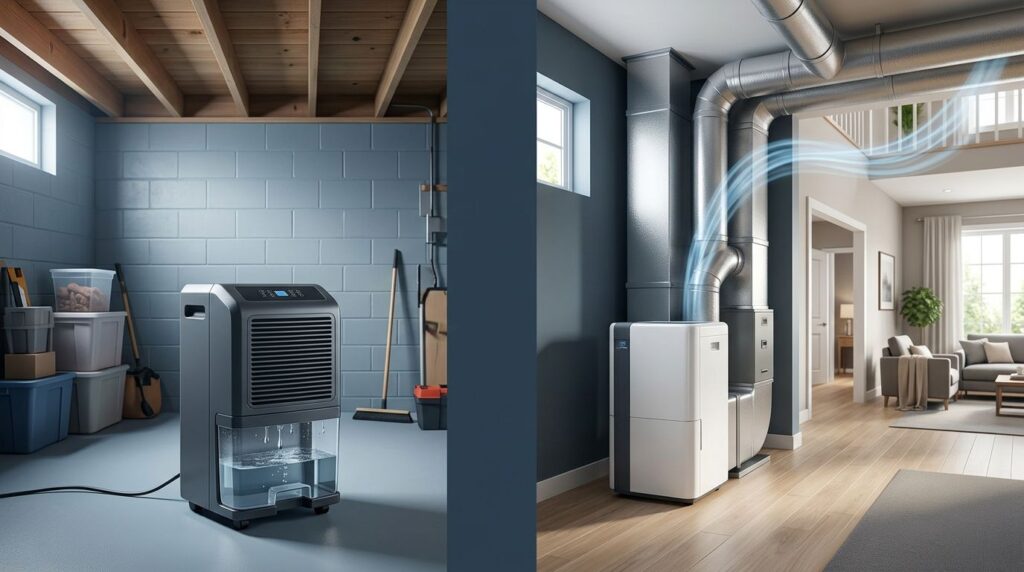
Alabama humidity doesn’t stay outdoors. It gets into bedrooms, closets, bathrooms, and the spaces where your AC already works hardest, especially given the heavy moisture levels typical of this climate zone. If your home feels cool but still sticky, a whole-house dehumidifier may solve a problem that a lower thermostat setting never will.
Achieving balanced humidity can protect every room in the house, from the main living areas down to the basement and crawl space. While a portable dehumidifier can help in the right room, a duct-connected system controls moisture across the entire layout. The better choice comes down to the size of the problem, the layout of the home, and whether your air conditioner is keeping up.
Key Takeaways
- Alabama’s high humidity can make homes feel clammy and uncomfortable even when the thermostat is set to a cool temperature.
- Portable dehumidifiers work well for localized moisture issues in single rooms, closets, or basements.
- Whole-house dehumidifiers connect directly to your HVAC system to provide balanced humidity and automatic drainage across the entire home.
- Addressing underlying equipment problems, such as oversized AC units or clogged condensate drains, is essential before installing a new moisture control system.
Why Alabama Homes Feel Damp Even With the AC Running
An air conditioning system removes some moisture as it cools the air. That doesn’t mean it can handle every humidity problem by itself, especially when high relative humidity overwhelms its capacity.
An AC system that is too large can cool the thermostat area quickly and shut down before it runs long enough to pull out much moisture. An undersized system may run for hours during a hot spell and still struggle. Dirty filters, blocked returns, frozen coils, and drainage issues can make the situation worse.
We often hear the same description: “The temperature is fine, but the house feels clammy.” That feeling matters. High indoor humidity can make 74 degrees feel warmer than it should.
Watch for these common signs:
- Musty odors return after cleaning, especially in closets, bathrooms, or lower levels.
- Windows fog up or sweat during humid weather.
- Towels stay damp for too long.
- The air feels heavy, even when the thermostat says the house is cool.
- Mold and mildew appear around vents, window frames, or other damp spots.
- Wood floors, doors, or furniture swell and stick more than usual.
- Indoor air quality drops, frequently triggering allergy symptoms for sensitive household members.
A cooler thermostat doesn’t fix excess humidity. It can make the house colder while the moisture problem stays put.
Before buying another appliance, check the basics. Replace a clogged filter with the correct size and type. Keep return air grilles clear of furniture, rugs, and curtains. A sectional pressed against a large return grille can restrict airflow across the entire system.
If the air conditioning system has weak airflow, a frozen evaporator coil, water near the air handler, or short cycles, humidity may be a symptom of an equipment problem. When your hvac system shows these warning signs, our air conditioning repair in Northport starts with finding the cause instead of guessing at a replacement part.
Whole-House Dehumidifier Versus Portable Dehumidifier
The main difference is coverage. A portable dehumidifier treats the air in the specific space where it sits, making it ideal for limited square footage. In contrast, a whole-house dehumidifier connects directly to your HVAC system or uses dedicated ductwork to remove moisture from multiple rooms at once.
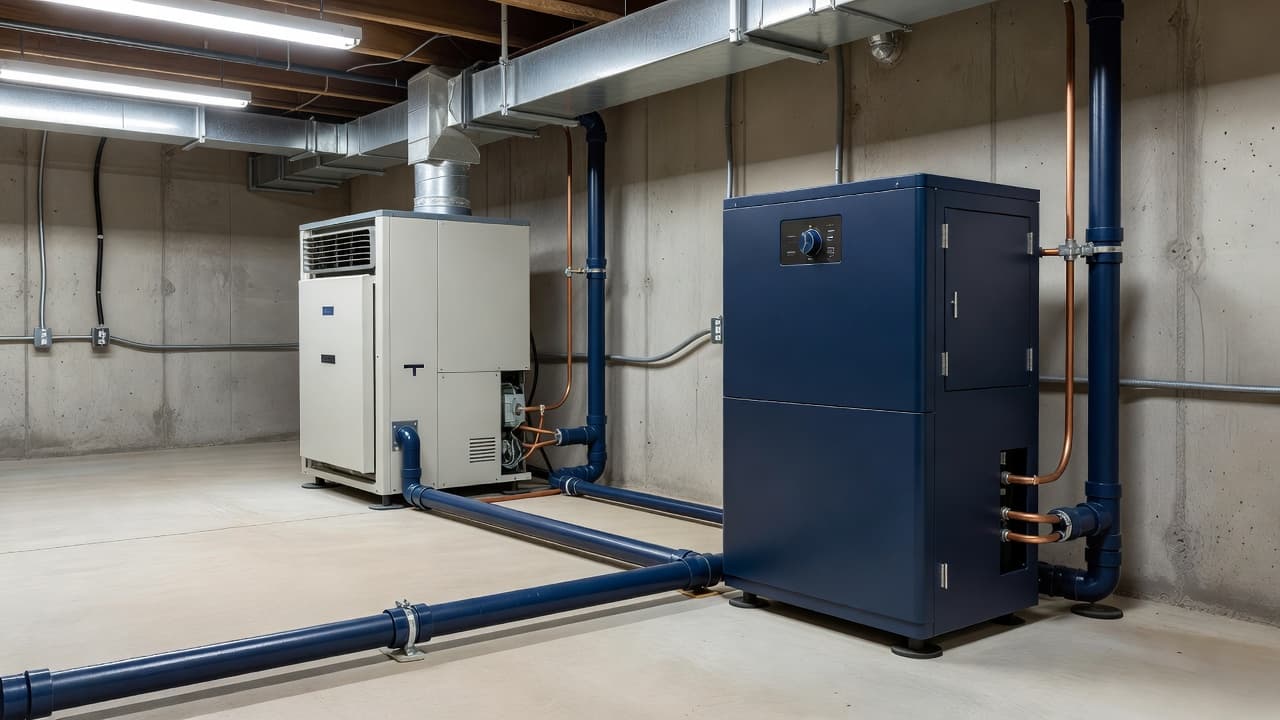
Here is the practical comparison homeowners usually need.
| Feature | Whole-house dehumidifier | Portable dehumidifier |
|---|---|---|
| Coverage | Most or all conditioned rooms | One room or a small area |
| Installation | Professional setup, continuous drainage, and duct connection | Plug it in and place it nearby |
| Water removal | Drains automatically when installed correctly | Bucket needs emptying unless a drain is available |
| Noise | Usually kept in a utility area | Audible in the room where it runs |
| Upfront cost | Higher due to equipment and installation | Lower purchase cost |
| Daily effort | Minimal after setup and maintenance | Regular bucket checks and cleaning |
A whole-home system is the better fit when dampness affects several rooms or returns every summer. It takes humidity control out of the living space and puts it where the rest of the heating and cooling equipment lives, improving overall energy efficiency and protecting your primary air conditioning system from overworking.
Portable models still have a place. A well-sized unit can help dry a laundry room, a basement and crawl space, a guest room, or a temporary trouble spot after a water issue. It is also useful when a homeowner needs a short-term solution while a larger repair is scheduled, often featuring continuous drainage options for convenience.
The downside is simple. One unit in a hallway cannot reliably dry far bedrooms, closed closets, and bathrooms behind shut doors. It may struggle to balance relative humidity across the entire house while running hard all day and filling a bucket faster than expected.
When a Portable Unit Is Enough
A portable dehumidifier makes sense when the moisture issue is limited to a single room or small square footage. Think of it as a room-by-room tool, not a replacement for a house-wide plan.
It is often a reasonable choice when:
- One bathroom stays damp after showers.
- A small basement and crawl space area feels musty during wet weather.
- A closet has poor air movement.
- You need temporary help after a minor leak, once the source is fixed.
- You are testing whether relative humidity is the real comfort issue in one area before preventing mold and mildew growth.
Place the unit where air can circulate around it. Don’t wedge it behind furniture or against a wall. Keep doors and windows closed in the room you are trying to dry, or the appliance will keep pulling moisture from the rest of the house.
Empty and clean the bucket as the manufacturer’s instructions require. A full bucket stops the machine. A neglected bucket can also develop odors. If the portable dehumidifier allows continuous drainage, make sure the hose slopes properly and cannot slip out of place.
Portable equipment cannot correct a clogged condensate drain, a leaking duct, or an AC system with poor airflow. If water is pooling around the indoor unit, deal with that first. A backed-up drain can damage ceilings, flooring, and drywall.
When a Whole-House Dehumidifier Makes More Sense
A whole-house dehumidifier is built for a recurring comfort problem, not a one-room nuisance. It draws humid air through the system, removes water, and returns drier air to the home, ensuring balanced humidity across large square footage. Many systems use a dedicated humidistat, so humidity control does not depend only on the thermostat.
This is often the right path when you have a larger home, several damp rooms, multiple occupants, pets, or a house that stays closed up during Alabama’s humid months. It can also help homes where the air conditioning system cools quickly but leaves the air sticky, while simultaneously improving indoor air quality and curbing allergy symptoms.
Properly integrated into your hvac system, a whole-house dehumidifier prevents mold and mildew from thriving in the basement and crawl space, treating the air that circulates through your return air ducts and air handler. Managing relative humidity also supports better energy efficiency and protects your evaporator coil from freezing up, with some setups even offering fresh air ventilation.
A properly installed system drains into an approved condensate line or pump. No bucket in the den. No daily trips to dump water. No appliance taking up floor space beside the sofa.
Installation needs more than a place to set the equipment. We look at duct condition, available space, electrical requirements, drainage, filter access, and how the existing AC is performing. A dehumidifier should support the hvac system, not cover up a fault that needs repair.
If your AC is oversized, poorly draining, or short cycling, adding moisture control without checking the equipment can leave the real problem untouched.
That is why our local HVAC technicians check the whole setup. We service Trane, Carrier, Rheem, Lennox, Goodman, and Mitsubishi systems across Northport, Tuscaloosa, Coker, Samantha, and nearby West Alabama communities.
Costs, Maintenance, and Energy Use
A portable unit costs less to buy. It also uses floor space, creates room noise, and needs attention every few days during humid weather. If you end up running several units across a large square footage, your utility bills will rise, and the lower purchase price may not feel like much of a savings.
A whole-house system has a higher upfront cost because it requires professional installation. The final price depends on the equipment capacity, duct access, drain route, electrical work, and whether your air conditioning system needs repairs or changes first. We provide clear upfront pricing, so you know what the work includes before approving it.
Neither option makes a leaky, poorly insulated home airtight. Neither fixes an air conditioning system that is low on refrigerant or has a failing blower. Still, balanced humidity can make the house feel more comfortable at a reasonable thermostat setting, which helps improve overall energy efficiency and reduces your utility bills.
Maintenance is straightforward but important. Check and replace the return air filter on schedule, and make sure you rely on continuous drainage to avoid manual emptying. During routine HVAC maintenance, we inspect the condensate line, evaporator coil, airflow, electrical connections, and signs of drainage trouble. When paired with your hvac system, a whole-house dehumidifier also supports better indoor air quality, fresh air ventilation, and relief from allergy symptoms.
For landlords and property managers, this work is worth doing before the hottest stretch of summer. A tenant complaint about wet air can point to a simple filter issue, a drain backup, or a bigger performance problem. Waiting until the system quits can turn a routine visit into an emergency AC repair call.
For dependable heating and air conditioning service, Northport HVAC provides honest recommendations, maintenance, repairs, and indoor air quality assessments without the hard sell.
Questions to Ask Before Choosing a System
Start with where the dampness appears. If it is limited to one enclosed area, a portable unit may be all you need. If every room feels sticky, the issue belongs in the HVAC conversation.
Ask these questions before you decide:
- Does the air conditioning system run long enough to remove moisture, or does it shut off quickly?
- Are humidity problems limited to one room or spread through the home in this humid climate zone?
- Is there water near the air handler, a musty smell from vents, or visible ice?
- Can a portable unit drain safely, or will someone need to empty it constantly?
- Is the house’s ductwork and drainage setup suitable for a whole-home installation?
- Has the hvac system had repeated AC repair Northport AL calls for weak cooling, short cycling, or frozen coils that drive up utility bills?
Tuscaloosa air conditioning systems face long cooling seasons and heavy moisture loads. A careful inspection can separate a humidity problem from a cooling failure, which saves money and frustration.
Frequently Asked Questions
Will lowering my thermostat fix high indoor humidity?
No, lowering your thermostat only makes the air colder while leaving the moisture trapped inside. This can result in a clammy home environment that still feels uncomfortable.
When should I choose a portable dehumidifier instead of a whole-house system?
A portable unit is best when your moisture issues are strictly limited to a single small space, such as a single bathroom, a specific closet, or a damp laundry area.
Do whole-house dehumidifiers require a lot of daily maintenance?
No, whole-house systems drain automatically into your home’s condensate lines and operate out of sight, meaning they do not require the daily bucket emptying associated with portable units.
The Right Moisture Control Starts With the Real Problem
A portable dehumidifier is a useful fix for a contained space. A whole-house dehumidifier is the stronger long-term choice when humidity affects comfort throughout the home, creating balanced humidity that you can feel in every room.
The goal is not to run more equipment. It is to make the air feel dry, steady, and comfortable by supporting better indoor air quality and fresh air ventilation without fighting the thermostat every day.