Furnace Blowing Cold Air? Find the Cause Before It Gets Worse
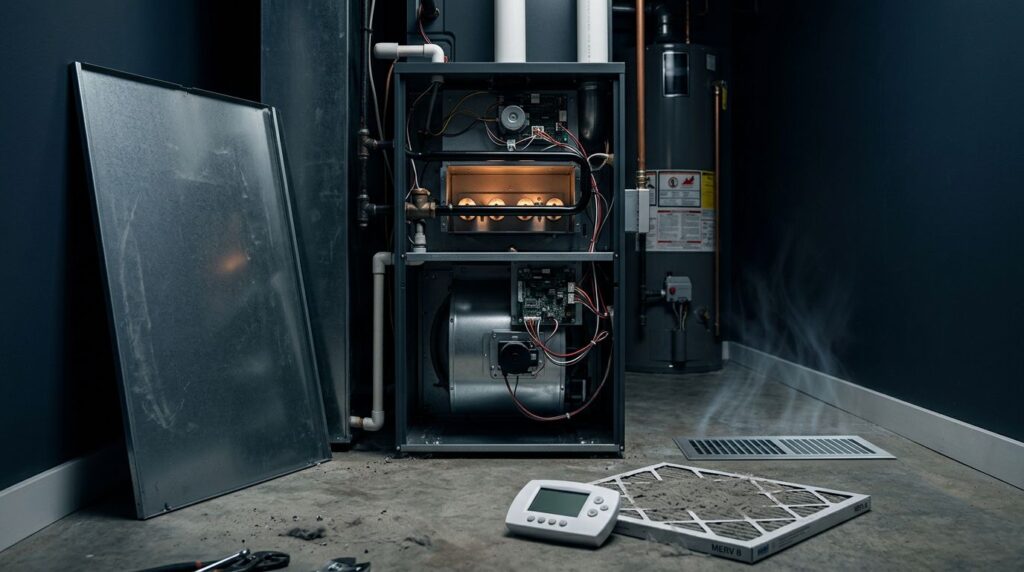
A cold blast from a running furnace is one of those problems that makes no sense at first. You hear the heating system running, the thermostat is set to heat, yet the vents feel like they’re moving basement air through the house.
A furnace blowing cold air often points to a setting, airflow problem, ignition failure, or safety shutoff. Some checks are safe to make yourself. Others need attention quickly, especially when gas or carbon monoxide may be involved.
Start with basic troubleshooting steps, then pay attention to how the system behaves.
Key Takeaways
- A furnace blowing cold air often stems from simple issues like the thermostat fan setting, a dirty air filter, or blocked vents.
- The blower can continue running even if the burners fail to ignite, which means a working fan does not prove the system is making heat.
- Common mechanical and electrical causes include a dirty flame sensor, a broken igniter, airflow restrictions, or a tripped safety switch.
- Safety concerns such as gas odors, yellow burner flames, soot, or carbon monoxide alarms require an immediate furnace shutdown and professional help.
When a Furnace Blowing Cold Air Means the Burners Never Lit
The blower can run even when the furnace isn’t making heat. That distinction matters. A furnace has separate parts for producing heat and moving air, so a working blower doesn’t prove the burners are on.
Set the thermostat to “heat” and raise the temperature at least 3 to 5 degrees above the room temperature. Then wait a few minutes. Many systems have a built-in delay before the blower fan starts.
If the thermostat fan is set to “on,” change it to “auto.” The “on” setting runs the fan continuously, even between heating cycles. That means it pushes unheated air through the ducts whenever the burners are off.
Check the thermostat screen for a low-battery warning if your model uses batteries. A thermostat with fading batteries can create strange heating behavior, including missed calls for heat.
Next, listen near the furnace. A normal gas furnace cycle usually goes like this during a standard heating cycle:
- The thermostat calls for heat.
- The inducer motor starts.
- The igniter heats up or sparks.
- The gas burners light.
- The blower starts after the heat exchanger warms.
If you hear the furnace start but never hear burners ignite, the failure may involve the igniter, gas valve, pressure switch, control board, or a safety control. If the burners light and shut off within a few seconds, a dirty flame sensor is a common cause.
A blower running normally can hide a heating failure. Warm air starts with successful ignition, not with the fan.
Older furnaces may have a pilot light. If yours has one and it won’t stay lit, don’t keep trying to relight it. A failed thermocouple, gas supply issue, or worn pilot assembly needs a proper diagnosis.
Start With Airflow, Filters, and Basic Settings
Airflow problems can make a furnace protect itself. When the system can’t move enough air across the heat exchanger, internal temperatures climb. The high-limit switch shuts off the burners to prevent overheating, while the blower may keep running to cool the equipment down.
A dirty filter is the first thing we’d check. Pull it out and inspect it under good light. If it’s gray, packed with pet hair, or visibly coated in dust, replace it with the correct size and type.
Don’t swap in the thickest air filter you can find without checking what your system can handle. Higher-rated filters catch smaller particles, but they can also reduce airflow. For many homes, a basic pleated filter changed on time works better than a dense filter left in place for months.
Walk through the house and check the air vents too. Open supply registers in the rooms you use, and make sure furniture, rugs, or curtains aren’t blocking return grilles or accessible ductwork. A large sectional pressed against a return can starve the system of air all day.
Look for these signs that poor airflow may be part of the problem:
- The furnace runs, then the air turns cool before the thermostat reaches its setting.
- Several vents have weak airflow.
- The furnace cabinet feels unusually hot.
- The system starts and stops more often than usual, which is known as short cycling.
- You can’t remember the last filter change.
We see the same airflow mistakes during Tuscaloosa air conditioning visits. Heating and cooling systems both need clear returns, open vents, and clean filters to move air as designed.
If a new filter and correct thermostat setting don’t change anything, leave the furnace cabinet closed. Don’t bypass a limit switch or tape down a safety control. Those parts are there because overheating can damage equipment and create a real safety risk.
The Furnace Parts That Commonly Cause Cold Air
A furnace doesn’t need a major breakdown to blow cold air. One worn sensor or electrical part can stop the heating sequence.
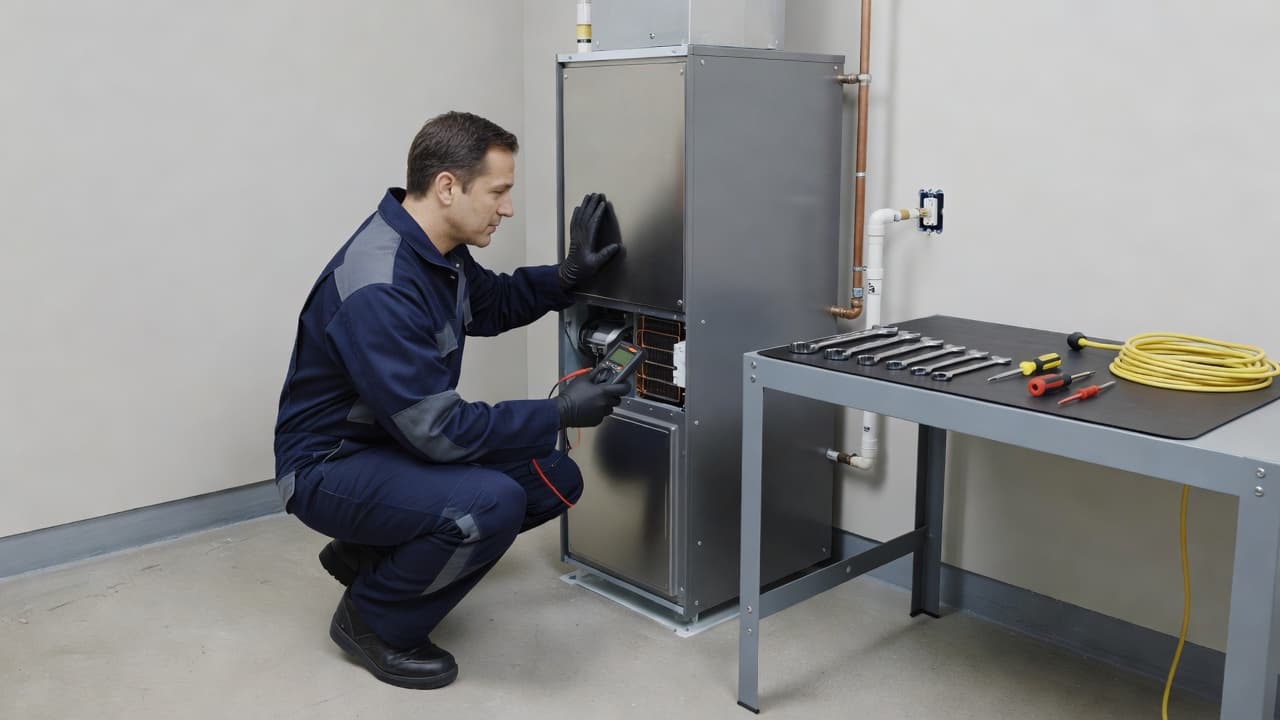
The flame sensor is a small metal rod near the burners. Its job is to confirm that the burner flame is present. When it gets coated with residue, the furnace may light briefly and then shut the gas off. The blower can continue running, which leaves you with cold air at the vents.
An igniter can also fail without warning. Modern hot-surface igniters glow bright orange before the burners light. They are fragile, and touching one with bare hands or attempting a rough repair can shorten its life.
Pressure switches, inducer motors, and a blocked condensate line can also stop a high-efficiency furnace. These furnaces create water during normal operation. If the drain is blocked or a condensate safety switch detects a backup, the furnace may refuse to ignite.
Electrical issues are another possibility. A tripped circuit breaker, loose connection, failing control board, or damaged blower relay can make the equipment act unpredictably. Electric furnaces also rely on heat strips, and a failed element or tripped breaker can leave the fan moving cool air.
The pattern matters more than the noise. A furnace that never lights has a different problem than one that lights, runs for ten minutes, and fails to deliver warm air.
We service Trane, Carrier, Rheem, Lennox, Goodman, and Mitsubishi systems, but the right repair still starts with testing the actual failed component. Guessing at parts is expensive, and it often leaves the original problem behind.
When Cold Air Calls for Immediate Action
Not every cold-air problem is an emergency. A thermostat set to “fan on” is annoying, but it isn’t dangerous. A gas smell, soot, or a carbon monoxide alarm is different.
Leave the home and call your gas utility or 911 if you smell gas. Don’t use light switches, phones, candles, or appliances inside the building. Even a small spark can be hazardous if gas is present.
Turn the furnace off and arrange service if you notice yellow or flickering burner flames, black soot around the unit, loud banging at startup, repeated breaker trips, or a carbon monoxide alarm. A gas furnace should feature mostly blue flames for proper operation.
Carbon monoxide has no smell or color. Headache, dizziness, nausea, confusion, or flu-like symptoms that improve after leaving the home can be warning signs. Get everyone outside and seek emergency help.
Never keep resetting a furnace that shuts down on a safety control. Repeated resets can turn a manageable repair into equipment damage.
Every home with fuel-burning equipment should have working carbon monoxide alarms near sleeping areas. Test them regularly and replace them according to the manufacturer’s instructions.
For urgent heating problems in Northport, Tuscaloosa, Coker, Samantha, and nearby communities, Northport HVAC offers 24/7 emergency furnace repair. Emergency AC repair is common during Alabama summers, but a failed heating system deserves the same quick response when the temperature drops.
What a Professional Furnace Diagnosis Should Include
A service call should give you a clear answer, not a vague recommendation. An hvac professional inspects the heating cycle, thermostat operation, airflow, electrical connections, burners, ignition components, safety switches, and venting where applicable.
Once we find the cause, we explain what failed and what the repair involves before work begins. You should know the price before approving a furnace repair, whether the issue is a flame sensor, igniter, blower motor, control board, or another part.
A repair often makes sense when it restores dependable heat without putting you back in the same spot next month. If an older system has repeat failures, major rust, a cracked heat exchanger, or mounting repair costs, replacement may be worth discussing.
For dependable help with ignition failures, airflow issues, and unsafe heating symptoms, see our heating and furnace services in Northport. We provide upfront pricing and straightforward recommendations, without trying to force a replacement when a repair is the better answer.
Regular furnace maintenance helps catch many cold-air causes early. A furnace tune-up gives us time to inspect the filter setup, clean components, check electrical connections, test safeties, and spot burner or blower issues before the first hard cold snap.
Frequently Asked Questions
Why is my furnace blowing cold air even though it is running?
Your furnace may be running because the blower fan is pushing air through the ducts while the burners have failed to ignite or have shut off for safety reasons. Check your thermostat fan setting to ensure it is set to “auto” rather than “on,” which keeps the fan running constantly.
How do I know if my furnace burners are actually lighting?
Listen near the furnace during a heating cycle to hear if the inducer motor starts, the igniter glows, and the burners light up after a call for heat. If you hear the system start but never hear the burners ignite or stay lit, you likely have an ignition or sensor failure.
Can a dirty air filter cause a furnace to blow cold air?
Yes, a clogged or dirty air filter restricts airflow across the heat exchanger, causing internal temperatures to climb dangerously. To protect the equipment, the high-limit switch automatically shuts off the burners while the blower continues to run, resulting in cold air.
When should I call an emergency professional for my furnace?
You should turn off your furnace and seek immediate help if you smell gas, notice yellow or flickering burner flames, see black soot around the unit, or if your carbon monoxide alarm sounds. Never keep resetting a furnace that repeatedly trips its safety controls.
Warm Air Starts With the Right Diagnosis
A furnace can run and still fail to produce warm air because the blower, burners, and safety controls don’t all do the same job. Check the thermostat, fan setting, filter, and vents first. Then pay close attention to whether the burners ever light.
A furnace blowing cold air isn’t a problem to ignore for long. A simple setting may be behind it, but repeated shutdowns, gas odors, unusual flames, and carbon monoxide alarms need prompt professional help.