Why an Air Conditioner Freezes Up in Alabama
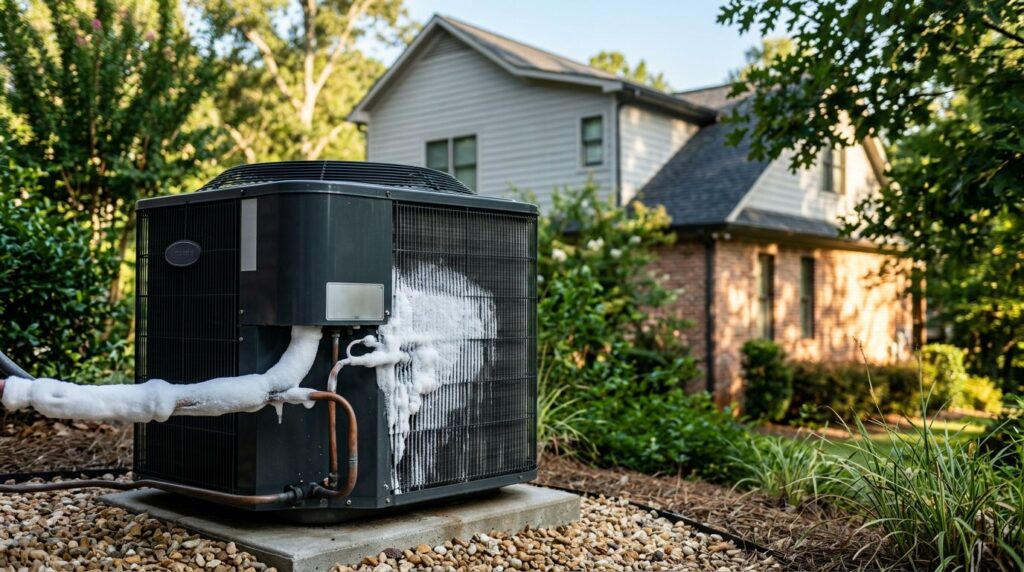
Seeing your air conditioner freezing up during an Alabama summer is a common but serious issue. The system is supposed to pull heat from your home, not turn its indoor coil into a frozen block.
A frozen AC won’t cool well, and letting it run can turn a small airflow issue into a larger repair. Turn the cooling system off when you see ice, then find out why it froze before starting it again.
The good news is that most freeze-ups come back to a handful of issues we can identify and fix.
Key Takeaways
- Turn off the system immediately: If you notice ice on your AC, switch it to “OFF” to stop the ice from growing and prevent permanent compressor damage.
- Common causes are preventable: Many freeze-ups stem from restricted airflow caused by dirty air filters, blocked return vents, or closed supply registers.
- Refrigerant issues require pros: If your filter is clean and airflow is clear, low refrigerant due to a hidden leak is likely the culprit and requires a trained technician to diagnose and repair.
- Thawing takes time: Always allow the unit to thaw completely by running only the fan before attempting to turn the cooling back on to avoid recurring ice buildup.
What Happens When an AC Coil Freezes
Your central air conditioner moves heat through refrigerant and airflow. Warm indoor air passes across the evaporator coil, which is the indoor component typically located near your furnace or air handler. The coil absorbs heat, and the blower carries the resulting warm air back through the house.
When you experience blocked airflow, the coil drops in temperature much lower than it should. Moisture from the air lands on the cold surface and freezes. That frost builds layer by layer until air can barely move through the unit.
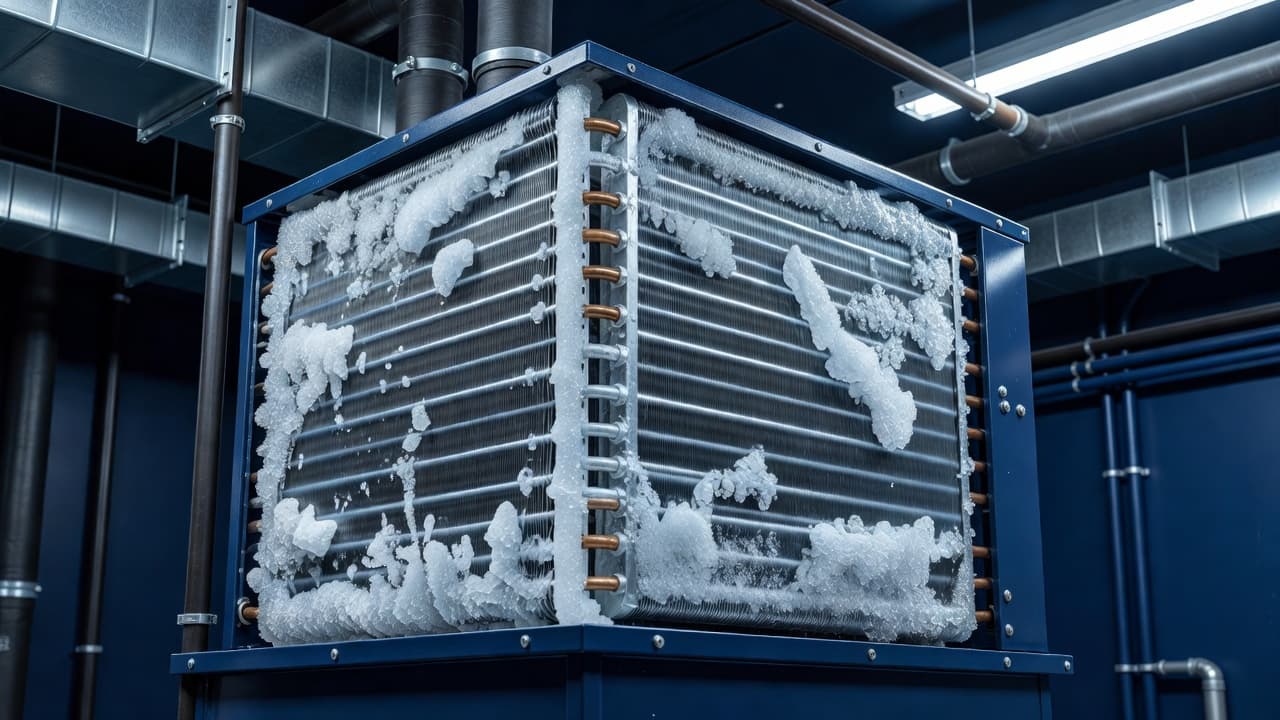
Low refrigerant can create a similar problem. Refrigerant pressure directly affects coil temperature. When the charge is too low because of a leak, the coil can become cold enough to freeze the humidity in your home air.
You may notice a few warning signs before seeing visible ice:
- Air from the vents feels weak or warmer than normal.
- The outdoor unit runs, but indoor temperatures keep climbing.
- Visible ice appears on the insulated refrigerant lines outside.
- Water drips around the indoor unit after the ice begins melting.
- The system runs for long stretches without catching up.
Persistent ice buildup can also hide the original issue. Because the ice blocks airflow, the system becomes less effective as it continues to run. We need the coil fully thawed before we can get a clear reading on what caused the trouble.
A frozen air conditioner is not a sign that the system is working extra hard. It is a sign that heat and airflow are no longer moving the way they should.
Restricted Airflow Is a Common Cause of Frozen ACs
A dirty air filter is responsible for many air conditioner freezing up calls in Northport and Tuscaloosa. When a filter becomes packed with dust, pet hair, or construction debris, it causes blocked airflow by choking the return system. The blower may still run, but not enough warm house air reaches the evaporator coil to keep it functional.
Start by checking your filter. If it looks gray, matted, or bowed inward, replace it with the correct size and type. Remember that a dirty air filter can restrict air even if the system is designed for high-efficiency operation, so ensure your MERV rating is appropriate for your unit.
Our guide to changing HVAC filters can help you set a realistic replacement schedule for Alabama homes. Houses with pets, smokers, frequent visitors, or dusty renovations often need more frequent checks.
Other Airflow Problems We Find
A clean filter does not rule out a general airflow problem. Closed supply vents, blocked return vents, dirty evaporator coils, a weak blower fan, and failing blower capacitors can all reduce circulation.
We also see blocked return vents where furniture has been pushed against large grilles. A sofa may look fine in the room, but it can keep the whole system from pulling enough air. Leave returns open and clear, especially during the hottest months.
Duct issues matter too. A disconnected, crushed, or leaking duct can reduce airflow to part of the home. This is common in attics and crawlspaces, where damage may sit unnoticed until the AC starts struggling.
Do not close several vents to force more cold air into one room. That move can raise duct pressure and reduce system airflow, which often makes the ice buildup on your coil significantly worse.
During a heating and cooling service visit, we check the filter, blower fan operation, coil condition, duct airflow, thermostat settings, and electrical components. That process gives us an answer instead of a guess.
Low Refrigerant Usually Means There Is a Leak
Your air conditioner does not consume refrigerant like a car consumes gasoline. If you are dealing with low refrigerant levels, there is almost certainly a refrigerant leak somewhere within the sealed system.
That leak might be located at a coil, a refrigerant line, a connection, or another component. You might even notice hissing or bubbling sounds near the unit, which are common indicators that a refrigerant leak is present. While adding more refrigerant can restore cooling temporarily, it does not actually fix the underlying issue.
A refrigerant leak causes the evaporator coil to become extremely cold. As the temperature drops, moisture freezes across the evaporator coil, which restricts airflow and causes the system to ice over shortly after you restart it.
We use professional diagnostic tools to evaluate system performance and pinpoint the exact cause of the failure. Working with refrigerant requires specialized training, precise measurements, and careful repair decisions based on the condition of your equipment.
The age of the system is a major factor in our recommendations. An older unit with a significant leak may lead us to perform a repair and replacement comparison. A newer system is often a better candidate for a targeted repair. We evaluate the whole picture, including the repair history, the overall condition of the equipment, comfort problems in your home, and your budget.
Northport HVAC works on Trane, Carrier, Rheem, Lennox, Goodman, and Mitsubishi mini-split systems. We explain exactly what failed, what the repair involves, and the total price before any work begins.
Alabama Weather Can Add to the Problem
Alabama’s intense humidity gives a working air conditioner plenty of moisture to remove. When airflow or refrigerant performance is compromised, that moisture rapidly accumulates as frost on an excessively cold evaporator coil.
Summer heat does not cause the ice by itself, but it does make a weak system show its performance flaws much faster. A unit that barely kept up in May may freeze when a humid July afternoon pushes it to run for hours. During these long cycles, your outdoor condenser coil works overtime to transfer heat out of your home. If that process is hindered by the heavy moisture in the air, the entire system can struggle to maintain a balance.
Running the AC when outdoor temperatures are unusually cool can also freeze a system. This sometimes happens during spring or fall, especially overnight. Many standard systems are not built to cool a home at low outdoor temperatures without specialized controls.
Thermostat settings can contribute as well. Setting the thermostat far below the actual indoor temperature will not cool the home faster. It only keeps the equipment running longer. If the system already has a restriction or a refrigerant issue, those extended cycles can bring on a freeze-up.
For Tuscaloosa air conditioning systems, scheduling routine maintenance before the summer heat arrives gives us a chance to catch dirty coils, weak capacitors, drainage issues, and airflow trouble early. Investing in an annual tune-up is the best way to ensure your unit is ready for the season. It is much easier to correct a minor problem during a check-up than it is to address a major failure when the house is hot and the coil is covered in solid ice.
What to Do When Your Air Conditioner Is Frozen
Don’t chip ice from the refrigerant lines or coil. Coils are thin, and a slip with a tool can turn a simple service call into a costly refrigerant leak.
Take these steps to safely thaw the unit:
- Turn the thermostat from COOL to OFF. This stops the compressor and prevents more ice from forming.
- Set the fan to ON. The indoor blower can move room-temperature air across the coil and help it thaw. If the blower will not run, turn the system fully off.
- Check the air filter and open the vents. Replace a dirty filter, clear return grilles, and make sure supply vents are not closed.
- Watch for water as it melts. Put towels around the indoor unit if needed. A thawing coil can produce a surprising amount of water.
- Wait until all visible ice is gone. Depending on how much ice has formed, the thawing process can take several hours. You should wait until no visible ice remains before attempting to restart the system.
Do not restart the cooling system if the coil freezes again, airflow remains weak, or the house cannot cool. Repeated freeze-ups put extra strain on the unit and increase the risk of permanent compressor damage, which is one of the more expensive parts of the system to replace.
If cooling is out during severe heat, reaching out to a professional HVAC technician for AC repair in Northport AL provides a clear path to a quick diagnosis. Same-day availability depends on your location, technician availability, safety conditions, and the specific repairs needed.
When a Frozen AC Needs Professional Repair
A fresh filter may solve a simple airflow restriction, but ice that returns needs expert attention. A qualified HVAC technician can thoroughly test airflow, inspect the blower and coil, evaluate refrigerant-related performance, and check safety controls. If the issues persist, a skilled HVAC technician will look for signs of mechanical failure within the electrical components or the motor that could be causing the system to struggle.
Call for emergency AC repair when the system has frozen repeatedly, the refrigerant lines are iced over, water is reaching ceilings or drywall, or vulnerable people in the home cannot safely tolerate the heat. Landlords and property managers should also act quickly when a freeze-up affects a tenant living space or creates a water damage risk.
We also recommend service if you hear buzzing, clicking, or grinding from the equipment. These sounds may point to a mechanical failure or an electrical problem that is reducing airflow.
Prioritizing routine maintenance is the best way to prevent the usual causes of ice buildup. During these visits, we inspect electrical connections, clean accessible components, check condensate drainage, verify thermostat operation, and look for early signs of trouble. A clean, well-serviced system has a much better chance of getting through a humid Alabama summer without a surprise shutdown.
Frequently Asked Questions
Why does my AC freeze up only at night?
Your air conditioner may freeze at night if the outdoor temperature drops significantly, as many standard systems aren’t designed to operate effectively in cooler conditions. Additionally, if the unit runs for extended periods without cycling off, the evaporator coil may eventually drop below freezing temperatures.
Can I just add more refrigerant to fix a frozen AC?
No, adding refrigerant is not a permanent fix because it does not address the underlying leak in the system. A technician must locate and repair the leak, as a low charge is a symptom of a damaged component that will continue to cause problems if ignored.
Is it safe to run my AC with the fan set to ‘ON’ while it’s frozen?
Yes, setting your thermostat fan to ‘ON’ is recommended during the thawing process because it forces room-temperature air across the coil. This helps melt the ice more quickly than leaving the system entirely powered down, provided the blower fan is functioning correctly.
Will closing vents in unused rooms help my AC work better?
Actually, closing vents can worsen ice buildup by increasing duct pressure and reducing the total airflow needed for the evaporator coil to function properly. It is best to keep all supply and return vents open and clear of furniture to maintain balanced system pressure.
Keep the Ice From Coming Back
A frozen air conditioner is usually telling us something plain: the system cannot move enough air, or its refrigerant performance is off. Turning it off, allowing it to thaw, and avoiding a rushed restart protects the equipment.
The fastest fix is not always the right fix. While you might be tempted to force a quick solution, addressing the root cause of ice buildup is essential to prevent future malfunctions. Scheduling an inspection with a professional HVAC technician remains the most reliable way to ensure your system functions efficiently and to avoid recurring problems when West Alabama heat settles in. A clear diagnosis protects your comfort, your home, and the parts that keep your AC running for years to come.