Why Your AC Freezes Up at Night and What to Do
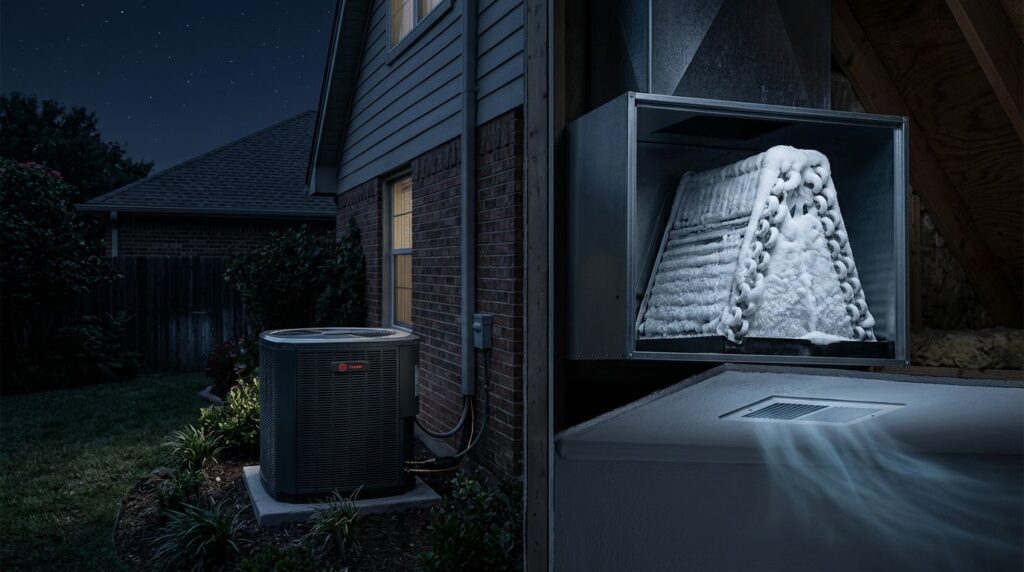
An air conditioning system can run for hours, make the house feel less humid, and then suddenly leave you with weak airflow and a coil wrapped in ice. An AC freezing up is never normal, even when it happens after dark.
Nighttime temperatures do not usually freeze a healthy AC system. Instead, the cooler evening air can expose a problem that has been building all day, such as restricted airflow, a refrigerant issue, or a blower that is starting to fail.
The first move is simple: stop the cooling cycle before a frozen coil turns into water damage or a more expensive repair.
Key Takeaways
- Ice is a symptom, not a fix: A frozen evaporator coil indicates an underlying issue like restricted airflow, low refrigerant, or mechanical failure; continuing to run the system will only cause more damage.
- Address airflow first: A dirty, clogged air filter is the most common cause of freezing; check and replace your filter, and ensure all vents and return grilles remain unobstructed.
- Avoid the temptation to chip away ice: Never use sharp tools to remove ice from the coil, as this can puncture refrigerant lines and lead to costly, irreparable damage.
- Turn the system off immediately: As soon as you notice ice buildup or weak airflow, switch your AC to the ‘Off’ position to allow the unit to thaw safely and prevent water damage or compressor failure.
A Frozen AC Coil Means Something Is Off Balance
Your indoor evaporator coil is designed to absorb heat from the air moving through your home. While the refrigerant inside this evaporator coil naturally gets cold, it should never build up a thick layer of ice.
Ice forms when the temperature drops below freezing while humidity and moisture from household air continue to collect on the surface. Instead of transitioning into water and draining away, that trapped moisture freezes layer by layer.
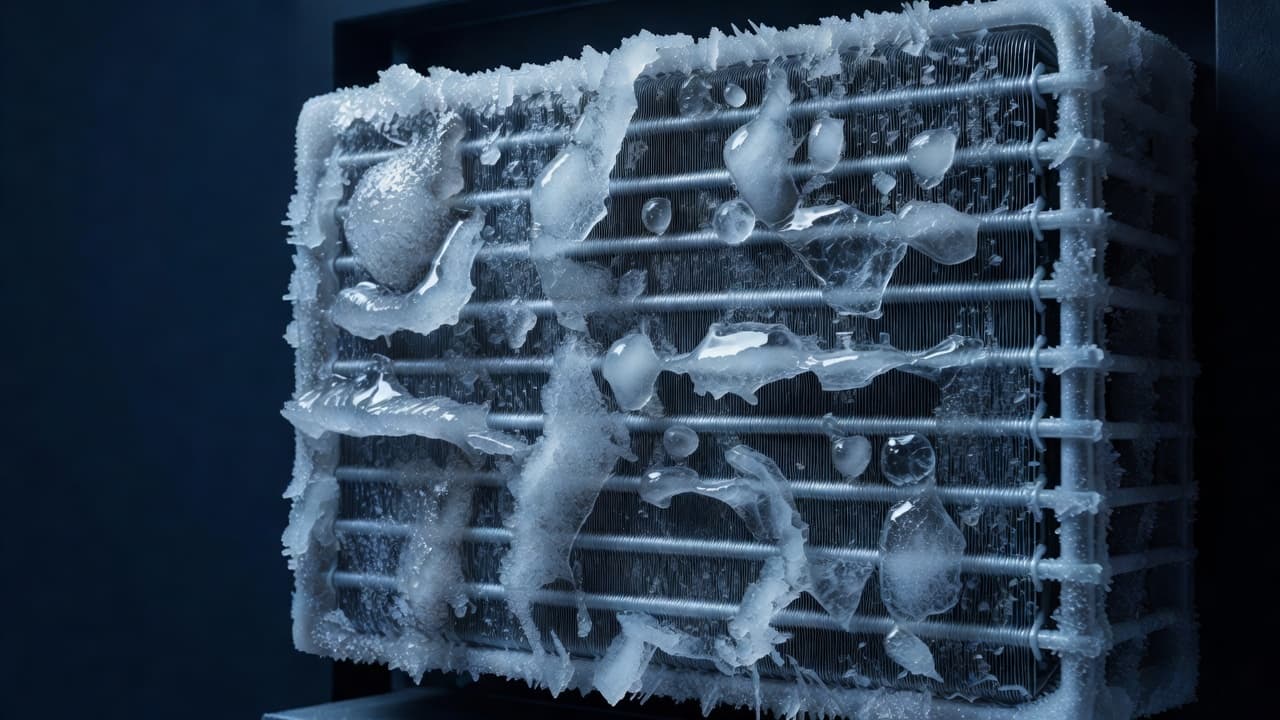
A frozen coil cannot effectively pull heat from the house. As a result, airflow through the system becomes weak, rooms remain uncomfortably warm, and the system may run constantly without reaching the desired temperature. Once the ice begins to melt, excess water can overflow from the drain pan or cause leaks near your indoor unit.
Ice is a symptom, not the repair. Turning the AC back on before finding the cause usually freezes it again.
In Northport and Tuscaloosa, the pattern often starts late in the evening. The system has already worked hard through a hot Alabama afternoon, and a borderline filter, a dirty coil, or a low refrigerant charge finally causes the system to fail overnight.
Restricted Airflow Is the Most Common Reason
Your AC system relies on a consistent supply of warm air pulled from your home to move across the evaporator coil. When this airflow drops, the coil temperature plunges, eventually leading to ice buildup. Think of it like running a ceiling fan covered by a heavy blanket; the equipment is still powered on, but it cannot perform its job effectively.
A dirty air filter is the most frequent culprit behind these airflow issues. A filter packed with dust, pet hair, or construction debris can restrict the system enough to cause freezing. We see this often in rental properties, homes with multiple pets, and households where the correct filter size is difficult to source.
Check these common trouble spots before assuming the system has a refrigerant leak:
- Replace a dirty air filter with a fresh one of the correct size and type.
- Open all supply vents and ensure furniture or rugs are not covering return grilles.
- Verify that your indoor blower motor sounds normal and not weaker than usual.
- Look for crushed, disconnected, or damaged flexible ductwork in accessible attics or crawlspaces.
- Clear away any blocked vents, leaves, grass clippings, or stored items from the outdoor condenser unit.
Keep in mind that closing vents is not an effective way to save on energy costs. Shutting off several rooms increases duct pressure and significantly reduces the total airflow your system requires to function. While one closed vent is rarely a disaster, a home with multiple closed vents, obstructed returns, and a neglected filter creates the perfect conditions for a frozen system.
A dirty component can also cause this problem. The evaporator coil sits inside the indoor cabinet, where it is not always easy to see. Dust and debris stick to its damp surface, forming a dense mat that prevents air from passing through. We clean and inspect this area during routine maintenance, which is why we often address airflow restrictions rather than treating a frozen coil as a refrigerant issue by default.
Low Refrigerant Can Make an AC Freeze at Night
Refrigerant does not get used up like gasoline. If your system is low, it usually means there is a refrigerant leak or an installation issue that requires professional attention.
When refrigerant pressure drops too low, the evaporator coil becomes colder than it should. Moisture freezes on the coil, airflow falls off, and the ice spreads. The unit may still blow cool air for a while, which makes this problem easy to miss.
Signs that point toward low refrigerant or a refrigerant leak include:
- The AC has frozen more than once.
- Cooling became gradually weaker over days or weeks.
- You hear a hissing sound near the indoor coil or the refrigerant lines.
- The larger insulated copper line has ice on it.
- The system runs for long periods but cannot hold the thermostat setting.
Do not add more refrigerant without finding the reason it was low. A recharge might get the system cooling for a short time, but the underlying refrigerant leak will continue to cost you comfort and money.
We check system performance, electrical components, airflow, coil condition, and pressure readings for common refrigerants like R410A before recommending a repair. That matters with Trane, Carrier, Rheem, Lennox, Goodman, and Mitsubishi mini-split equipment alike. The brand changes, but the need for a clear diagnosis does not.
For repeated freezing, professional AC repair in Northport and Tuscaloosa can separate a simple airflow issue from a leak, a faulty metering device, or a failing part.
Other Problems That Can Freeze the Coil
Airflow and refrigerant are the usual culprits, but a few mechanical problems can produce the same icy result. A weak blower fan may run but fail to move enough air. A failing capacitor can prevent the blower from reaching full speed. A loose belt can affect older belt driven equipment.
The thermostat can also create trouble if it is set unusually low for long stretches. Lowering the setting does not make an AC cool faster. It only asks the system to run longer. In a home with poor airflow or an existing refrigerant issue, that extra runtime can be enough to freeze the coil after midnight, potentially leading to compressor damage if liquid refrigerant makes its way back to the motor.
A dirty condenser coil can add strain, too. The unit outside must release heat effectively. When dirt, cottonwood, leaves, or grass restrict it, cooling performance suffers. This does not always cause ice on its own, but it can make a weak system less forgiving.
Here is a quick look at the clues we use during a service call:
| What you notice | What may be happening | What to do |
|---|---|---|
| Weak air from every vent | Dirty filter, frozen coil, or blower problem | Turn cooling off and check the filter |
| Ice on the copper line | Frozen evaporator coil or low refrigerant | Do not keep running cooling |
| Water near the indoor unit | Ice has thawed or drain is backed up | Protect nearby flooring and call for help |
| AC runs but home stays warm | Airflow, refrigerant, or outdoor unit issue | Schedule a diagnosis |
The same system can have more than one problem. For example, a neglected filter can expose a coil that was already dirty. That is why guessing from a single symptom can lead to the wrong repair.
What We Should Do When the AC Is Frozen
Do not chip the ice with a screwdriver, knife, or anything sharp. Evaporator coils and refrigerant lines damage easily, and one puncture can turn a small issue into a major repair.
Take these steps instead:
- Set the thermostat to Off or turn the cooling mode off.
- Leave the thermostat fan set to On if the blower is moving air normally.
- Check and replace the air filter if it is dirty.
- Open blocked vents and return grilles.
- Place towels near the indoor unit if melting water from the visible ice could reach flooring or ceilings.
- Let the coil defrost fully before restarting cooling.
Thawing can take several hours. A heavily iced coil may need most of the night. Restarting the system too early can lead to compressor damage, as the unit may refreeze the moisture before it has a chance to recover.
If you smell burning, see damaged wiring, hear loud electrical buzzing, or have water near electrical equipment, leave the system off. Those are not wait-and-see problems.
For homeowners dealing with a frozen unit after hours, emergency AC repair is the right call when the heat is unsafe, the system is leaking heavily, or the equipment shows electrical warning signs. Northport HVAC offers 24/7 service based on location, technician availability, safety conditions, and the repair needed.
When a Service Call Is the Better Choice
A one-time freeze after a severely clogged filter may resolve once the coil thaws and the filter is replaced. If it freezes again, runs poorly, or has ice on the refrigerant lines, it needs a proper inspection by a qualified HVAC professional.
Our local technicians check more than the obvious ice. We test airflow, thermostat operation, drains, electrical connections, coil condition, safety controls, and the overall performance of your air conditioning system. Then we explain what failed, why it matters, and what the repair options are before work begins.
That is useful for homeowners, landlords, and property managers who need a straight answer. A frozen coil at a rental property can become a ceiling stain or damaged flooring by morning. Fast action protects both the equipment and the building.
For practical troubleshooting and service options around town, see our Tuscaloosa air conditioning repair guidance. We provide AC repair Northport AL homeowners can understand, with upfront pricing and no hidden fees.
Keep Your Heating and Cooling System From Icing Up Again
Regular HVAC maintenance catches the small problems that lead to late-night shutdowns. During a professional tune-up, we inspect electrical connections, verify proper airflow, examine coil cleanliness, clear the condensate drain line, and look for signs that your heating and cooling system is struggling. Routine HVAC maintenance is the best way to keep your equipment running efficiently throughout the year.
Filter changes matter, but there is no single schedule for every home. A house with two dogs, heavy foot traffic, and allergy concerns may need more frequent changes than a lightly occupied home. Check the filter monthly until you know how quickly yours loads up.
Keep return vents clear, avoid closing off large sections of the house, and do not crowd the outdoor unit with shrubs or storage. Those small habits help the entire system, whether you have a standard air conditioner or a heat pump, breathe much easier and prevent the air from icing up again.
Frequently Asked Questions
Can I just use a hair dryer to melt the ice faster?
It is generally not recommended to use a hair dryer or any external heat source to melt the ice. You risk damaging the delicate fins of the evaporator coil or melting plastic components; simply turning the system off and allowing it to thaw naturally is the safest and most effective method.
Why does my AC only freeze up at night?
Nighttime freezing often occurs because the system has been struggling against restricted airflow or low refrigerant throughout the hot day. Once the evening air cools down, the temperature difference causes the already struggling system to finally cross the freezing threshold, leading to visible ice accumulation.
Should I add more refrigerant if the AC is freezing?
No, you should never add refrigerant without a professional diagnosis. Low refrigerant is almost always caused by a leak, and simply recharging the system will not solve the underlying problem, which will continue to result in poor performance and recurring freezes.
How long does it take for a frozen AC unit to thaw?
A heavily iced evaporator coil can take several hours to defrost completely, and sometimes it may require most of the night. Do not restart the air conditioning until all signs of ice are gone, as running the system while ice remains can lead to severe compressor damage.
Stop the Ice Before It Stops Your Comfort
A frozen evaporator coil is your system asking for attention. Restricted airflow, low refrigerant, and blower problems are common causes, and none of these issues improve by forcing the unit to keep running.
Turn the cooling off, let the ice melt, and check the air filter for clogs. If your AC freezing up continues to be an issue, a professional diagnosis is always better than spending another long, uncomfortable night with a system that cannot cool.