How to Protect Your AC After a Power Outage
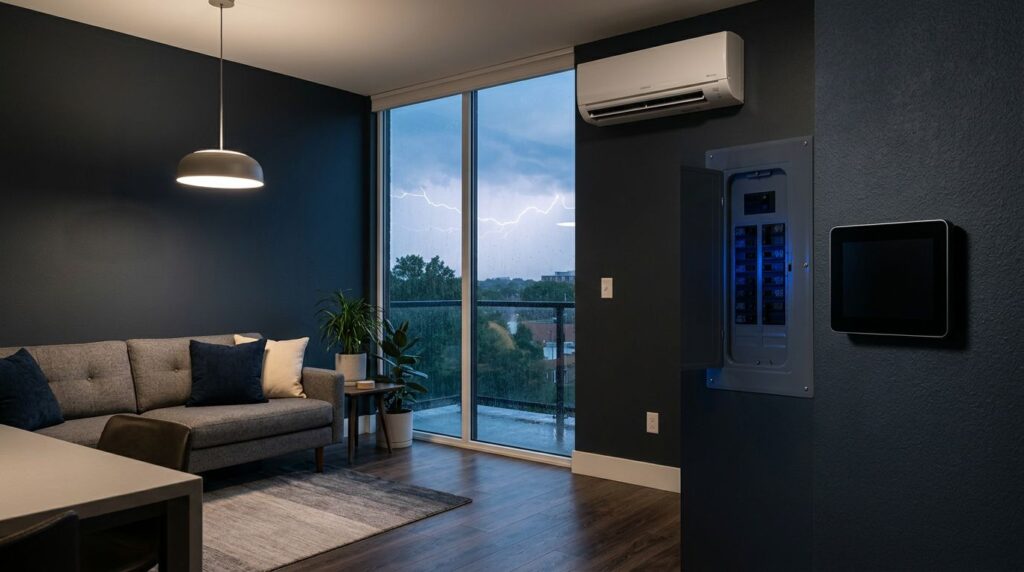
When the electricity returns following an AC power outage, it is tempting to turn the thermostat down immediately to cool your home as quickly as possible. However, that rapid restart can be incredibly taxing on your cooling equipment, particularly after a long outage, a severe lightning storm, or several frequent power flickers.
A sudden power outage can negatively affect sensitive components like the compressor, the thermostat, the circuit breaker, and various electrical controls. The safest move is to give your system a few minutes to stabilize, then bring it back online in a controlled, gradual way.
A little patience after an AC power outage can prevent a minor electrical glitch from escalating into a complex or expensive repair.
Key Takeaways
- Switch your thermostat to the off position before restoring cooling after a power outage.
- Wait until the electrical supply is completely stable before attempting to restart your air conditioner.
- Check your circuit breakers once, but avoid repeatedly resetting a breaker that continues to trip.
- Monitor your system for burning smells, unusual sounds, weak airflow, or warm air output.
- Invest in professional surge protection and consistent routine maintenance to minimize the risk of future damage.
What a Power Outage Can Do to an Air Conditioner
An air conditioner does not like abrupt electrical changes. A full power outage shuts everything down, but the bigger concern is often what happens as electricity returns to the home.
Voltage may surge or fluctuate for a short period. That can stress sensitive parts inside the outdoor unit, including the contactor, capacitor, circuit board, and compressor. Modern thermostats and variable-speed systems also rely on electronics that can be affected by a power spike.
A brief flicker can be harder on a system than a clean outage. The AC may try to restart several times while power is unstable. That is like trying to start a car over and over with a weak battery. Eventually, something can give.
In Northport and Tuscaloosa, weather-related outages from severe summer storms often bring heavy rain, lightning, and sudden interruptions. The AC is usually working hard before the storm arrives. If the system restarts immediately after power returns, the compressor may still be under pressure.
Our AC needs a short reset period after a power outage, even when it looks like everything is back to normal.
The good news is that most systems recover without damage. We just need to avoid forcing a restart before the electricity supply settles down.
First Steps When the Power Comes Back
Before you worry about your cooling system, take a moment to report an outage to your local provider. Most utility company websites feature an official outage map that displays estimated restoration times for your area. Knowing when your power will be fully stable helps you determine exactly how long you should keep your air conditioning system powered down.
When you regain electricity, start by checking your thermostat. If you have advance warning of an outage, set the thermostat to off. If the power has already been restored, switch it off immediately. This simple step prevents the AC from pulling a heavy electrical load while the grid is still recovering, and it gives the compressor time to equalize internal pressure.
Wait at least 10 to 15 minutes after the power returns before switching the thermostat back to a cooling mode. If the lights are dimming, flickering, or if power is intermittent, keep the system off longer. You want to ensure you have a steady, reliable supply of electricity.
During this waiting period, take a walk around your property to check for damage. Look near the outdoor condenser for standing water, fallen branches, damaged disconnect boxes, or loose electrical wires. Most importantly, stay clear of any downed power lines in your yard or near your equipment.
Never touch damaged wiring or a flooded condenser. Water and electricity are a dangerous combination that requires professional handling. If the outdoor unit was submerged or the electrical disconnect appears wet, keep the system off and contact a technician. The equipment may need to dry completely and undergo a professional inspection before it can safely run again.
How to Restart an AC Safely After an Outage
Once your electricity service is stable, you can safely bring the system back online without rushing the process. Most central air systems have a built-in delay, but following these safety tips will help protect your equipment during the restart.
- Check the thermostat display. Replace the batteries if the screen is blank and your thermostat requires them. Confirm that the unit is set to Cool and the temperature is adjusted below the current room temperature.
- Inspect the electrical panel. Locate the breaker marked for the air handler, furnace, or AC condenser. If the breaker tripped during the power outage, move the switch fully to Off, then back to On one time.
- Restore cooling at the thermostat. Set the fan to Auto and lower the temperature a few degrees below the room temperature. Avoid setting the temperature extremely low, as this does not cool your home any faster and can place unnecessary strain on the system.
- Listen and wait. The indoor blower usually starts first, while the outdoor unit often activates after a short delay. Give the system at least 10 minutes to cycle through before deciding it is not working correctly.
- Check the supply vents. You should feel steady, cool air flowing after the system has run for several minutes. The outdoor unit should sound normal, without any loud, strained, or metallic noises.
A breaker that trips again is a major warning sign. Leave it in the Off position and schedule AC repair in Northport AL rather than resetting it repeatedly. Constant resets can damage internal wiring, overheat vital components, or mask a serious electrical failure.
The same caution applies to a blown fuse at the outdoor disconnect. Fuses do not fail without a underlying cause. A trained technician should determine why the failure occurred before installing any replacements to ensure your home remains safe.
Signs the AC May Have Been Damaged
Some outage-related damage shows up right away. Other problems appear later, when the system runs through the hottest part of the afternoon. Before you begin troubleshooting your equipment, always check the outage status and restoration status of your provider. Whether you are served by a major company like Atlantic City Electric or Appalachian Power, or a local Alabama utility, these online portals provide the most accurate information on when power is stable enough for your cooling system.
Pay attention to changes that were not there before the outage:
- The AC runs but blows warm or barely cool air.
- The outdoor unit hums but the fan does not spin.
- The breaker trips after the system starts.
- We hear buzzing, grinding, banging, or repeated clicking.
- The thermostat is blank, frozen, or will not call for cooling.
- There is a burning smell near the air handler, vents, or outdoor unit.
- The system starts and stops every few minutes.
A humming condenser with a fan that will not turn is often a reason to shut the system down. The unit may have a failed capacitor, a damaged motor, or a compressor that cannot start.
If we smell burning insulation or see smoke, turn the thermostat off, shut off the AC breaker if it is safe to reach, and call for emergency AC repair. Do not try to restart the system for one more test.
For Tuscaloosa air conditioning systems, a fast inspection can make a major difference during summer heat. A damaged capacitor or contactor may be a manageable repair. Letting a struggling compressor keep running can turn that repair into a replacement conversation.
Check More Than the Outdoor Unit
The condenser gets most of the attention, but an outage can affect the entire heating and cooling system. Your indoor air handler or furnace may have a separate breaker, control board, or condensate safety switch that requires inspection.
If the indoor blower does not run, check the furnace or air handler breaker. Make sure the service switch near the unit has not been bumped off. Many homeowners mistake that small switch for a light switch, especially in garages, closets, and utility rooms.
We should also check the air filter. A dirty filter does not cause an outage, but it can make a recovering AC work much harder. If airflow is already restricted, the system will struggle to cool the home, which often leads to spikes in your energy bill. When your equipment runs inefficiently for extended periods, you may notice a significant increase in your costs depending on your current supply rate. If your home is serviced by providers like Atlantic City Electric, monitoring these usage spikes is essential to maintaining an affordable monthly budget.
Ductwork matters too. Older homes around Northport, Coker, and West Alabama can lose a surprising amount of cooled air through leaky or poorly insulated ducts. After an outage, that weak airflow becomes more noticeable because the house has stored heat in walls, floors, furniture, and attic spaces.
The AC may need a while to catch up. That is normal. A system that never catches up, however, is not. If you find that your unit is consuming excessive energy without reaching the desired temperature, it may be time to have a professional evaluate the system’s performance.
Protect the System Before the Next Storm
While we cannot prevent utility repairs or unexpected grid failures, we can take proactive steps to protect our HVAC systems before the next outage occurs. A high-quality whole-home surge protector installed at your electrical panel can shield many household circuits, but protecting the electricity service connection at your home is just as vital as safeguarding the AC unit itself.
An HVAC-specific surge protector adds another layer of defense at the outdoor condenser or indoor equipment. It is designed to preserve the sensitive electrical components that keep your system running smoothly. Providers like Atlantic City Electric often offer guidance on surge protection options available within their service territory, and a licensed electrician or qualified HVAC technician can recommend the right setup for your specific home and equipment.
This level of protection is especially important for newer systems equipped with advanced control boards, communicating thermostats, or variable-speed motors. Major brands such as Trane, Carrier, Rheem, Lennox, Goodman, and Mitsubishi mini-splits all rely on sophisticated electrical components that deserve this added security.
Routine maintenance also plays a critical role. During a seasonal tune-up, technicians can inspect electrical connections, capacitors, contactors, wiring condition, drain safety switches, and overall operation. Loose connections and worn parts are far more likely to fail when power quality fluctuates.
If you rely on a portable generator, never connect it directly to your home electrical system without proper equipment. A transfer switch and correct generator sizing are essential to power HVAC equipment safely. Many portable generators lack the capacity to handle the high startup demand of a central AC system, which could lead to further damage.
When It Is Time to Call for AC Repair
A healthy system should restart normally once stable power returns. If your unit does not, waiting through another hot afternoon rarely fixes the problem.
Call for professional assistance when the breaker trips, the unit refuses to start, cooling output is weak, or the system makes unfamiliar noises. You should also reach out for an inspection if the AC was exposed to floodwater or if lightning struck close to your property. Our technicians evaluate how power grid fluctuations have impacted the affected areas, providing you with real-time information regarding your system’s status. Regardless of your specific service territory, it is vital to seek help promptly if your equipment fails to cycle on correctly.
Northport HVAC provides residential and commercial service across Northport, Tuscaloosa, Coker, Samantha, and surrounding West Alabama communities. Our licensed, insured, and NATE-certified technicians can diagnose post-outage problems on all major system brands and explain the necessary repair steps before work begins.
For urgent cooling failures, emergency AC repair is available around the clock. Clear pricing and a direct diagnosis matter most when the house is heating up and you need straight answers.
Frequently Asked Questions
How long should I wait before turning my AC back on after a power outage?
You should wait at least 10 to 15 minutes after power has been restored before attempting to restart your system. This waiting period allows the electrical supply to stabilize and helps the compressor equalize internal pressure, which prevents unnecessary strain on your equipment.
Why does my circuit breaker keep tripping after the power returns?
If your breaker trips immediately after you reset it, this indicates an underlying electrical fault caused by the power surge. You should leave the breaker in the off position to prevent further damage to your HVAC components and contact a professional technician for an inspection.
Should I reset my AC if the thermostat screen is blank?
If the screen is blank, first check if your thermostat requires battery replacements that may have been affected by the power fluctuation. If new batteries do not restore the display or the unit still fails to respond, it may indicate a deeper electrical issue that requires professional diagnostic services.
Is it safe to run my AC if it is making unusual noises?
No, you should turn the system off immediately if you hear loud buzzing, grinding, or banging sounds after a power restoration. Unusual noises often signal that a motor, capacitor, or compressor has been damaged, and continuing to run the system could lead to more costly repairs or a total unit failure.
Keep the Restart Calm and Controlled
Power returning feels like the end of the problem. For your air conditioner, it is the moment when good habits matter most. Turn the thermostat off, wait for stable electricity, restart the system once, and pay attention to how it responds.
A careful restart protects the compressor, reduces electrical stress, and gives you a better chance of avoiding an unnecessary repair.
When the AC does not recover normally, shut it down and get help before a manageable problem gets worse. To prepare for the next power outage, stay informed by signing up to get alerts from your utility provider. Many services offer an interactive outage map where you can track the estimated restoration time for your area, helping you stay ahead of the next event.